
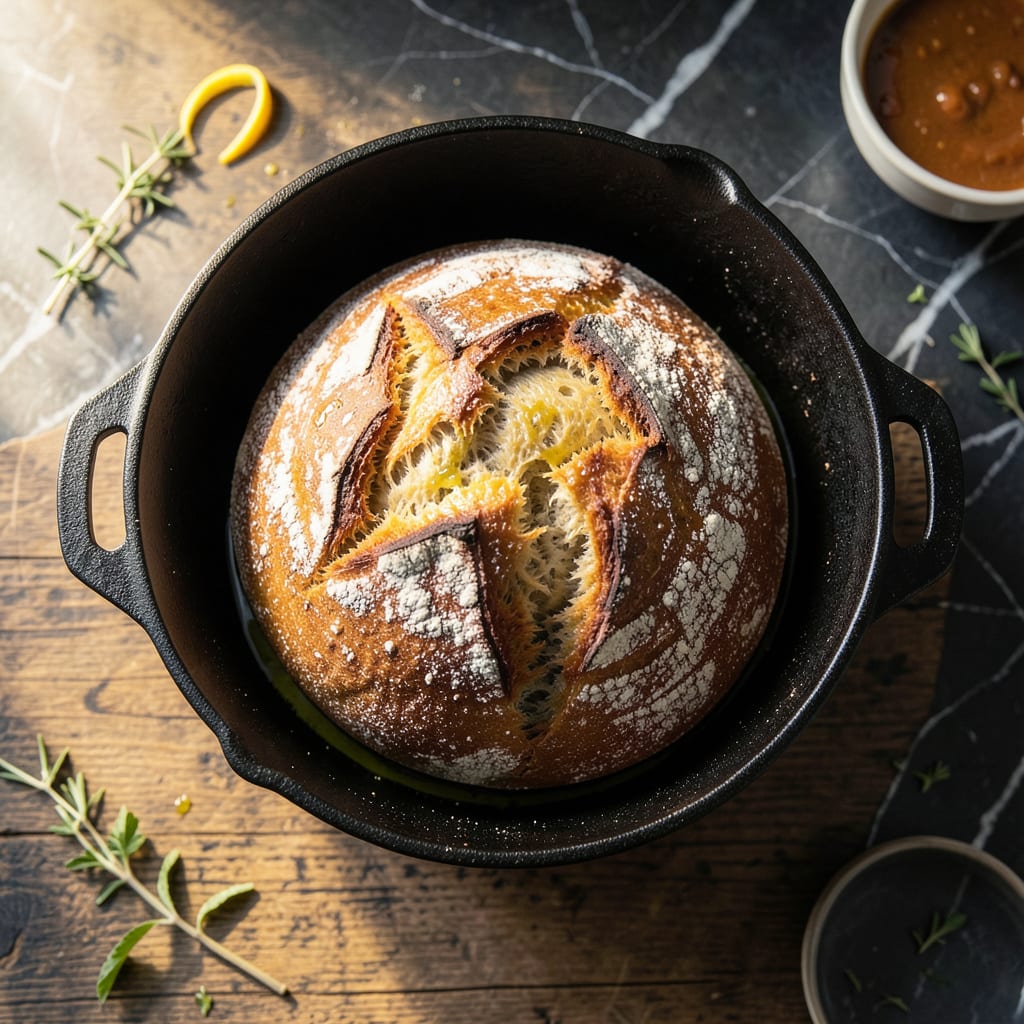
There’s something magical about baking bread in a Dutch oven—the steam trapped inside creates a crusty exterior while keeping the interior soft and airy. I’ve perfected this method over years of trial and error.
This technique requires no special skills, just a heavy pot with a lid and about 45 minutes of baking time. The result is a restaurant-quality loaf that rivals any artisanal bakery.
Ingredients for Bread in Pot
Simple ingredients yield a bakery-quality loaf with crusty exterior and airy crumb.
| Ingredient | Amount | Notes |
|---|---|---|
| Bread Flour 🌾 | 3 ½ cups | High protein content preferred |
| Active Dry Yeast 🍞 | 2 ¼ tsp | One 0.25 oz packet |
| Warm Water 💧 | 1 ½ cups | 110°F to 115°F ideal |
| Kosher Salt 🧂 | 2 tsp | Diamond Crystal preferred |
| Granulated Sugar 🍚 | 2 tsp | Feeds yeast for activation |
| Olive Oil 🫒 | 2 tbsp | For bowl and dough |
| Cornmeal 🌽 | 2 tbsp | For dusting parchment |
| All-Purpose Flour 🌾 | ½ cup | For dusting work surface |
The flour is critical here. King Arthur Bread Flour is the gold standard for its consistent protein content (12.7%), which develops the gluten structure needed for that perfect chew. Yeast freshness matters—check the expiration date and store unopened packets in the freezer for longevity. For the Dutch oven, Lodge or Le Creuset provide the ideal heat retention and even baking.
No bread flour? All-purpose flour works at a 1:1 ratio, though the texture will be slightly less chewy. Out of yeast? A sourdough starter can substitute (use 1 cup active starter in place of yeast and water). The cornmeal prevents sticking—polenta works too. Sugar can be swapped for honey or maple syrup at the same quantity.
Store flour in an airtight container in a cool, dark place for up to 6 months. Yeast keeps in the freezer for 1 year. Baked loaves stay fresh wrapped in foil at room temperature for 2-3 days.
Why You’ll Love This Recipe
- One Pot Wonder: I just mix flour, yeast, warm water, salt, and sugar in a Dutch oven—no kneading, no fuss.
- Crusty Perfection: The pot creates a golden, crackly crust with a soft, airy center that’s honestly hard to resist.
- Weeknight Hero: Between us, it’s my secret for fresh bread with zero effort, even on a busy Tuesday.
- Budget Friendly: A few pantry staples and time do all the work, and leftovers make killer sandwiches the next day.
Step-by-Step Instructions for Bread in Pot
Master the technique of baking artisan-quality bread with minimal effort using this Dutch oven method.
Step 1: Activate the Yeast and Begin the Dough
In a large mixing bowl, combine the 2.25 tsp Active Dry Yeast, 2 tsp Granulated Sugar, and 1.5 cups Warm Water. Let this mixture sit for 5-7 minutes until it becomes frothy and cloudy—this confirms your yeast is active and ready to work.
Add 3.5 cups Bread Flour and 2 tsp Kosher Salt to the yeast mixture. Stir with a wooden spoon until a shaggy dough forms. The dough will be sticky and rough at this stage, but resist the urge to add more flour. This high-hydration ratio is key to achieving that open, airy crumb.
Step 2: Knead and First Rise
Turn the dough out onto a surface lightly dusted with 0.5 cup All-Purpose Flour. Knead for 8-10 minutes until smooth and elastic. The dough should spring back slowly when pressed with a finger. If it sticks, add a light dusting of flour, but be sparing—too much will make your bread dense.
Form the dough into a ball and place it in a clean bowl coated with 1 tbsp Olive Oil. Turn to coat the dough, then cover with a damp towel. Let it rise in a warm, draft-free spot for 1-2 hours or until doubled in volume. You’ll know it’s ready when it holds an indent when gently pressed.
Step 3: Shape and Second Rise
Punch down the risen dough to release the air, then shape it into a round loaf. Place it seam-side down on a piece of parchment paper dusted with 2 tbsp Cornmeal. This prevents sticking and adds a subtle crunch to the crust.
Cover loosely with the damp towel and let it rise again for 30-45 minutes. The dough should spring back slowly when poked. Preheat your Dutch oven in a 475°F oven during the last 20 minutes of this rise—this ensures it’s screaming hot when the dough goes in.
Step 4: Bake to Perfection
Carefully transfer the dough (still on the parchment) into the preheated Dutch oven. Use a sharp knife or razor to score the top of the dough in a shallow X pattern. This allows the bread to expand properly during baking.
Cover with the lid and bake for 30 minutes. Then, remove the lid and bake for another 15-20 minutes until the loaf is deep golden brown and the internal temperature reaches 205-210°F. The crust should be firm and hollow-sounding when tapped.
Step 5: Cool and Serve
Remove the bread from the Dutch oven and let it cool on a wire rack for at least 1 hour. I know it’s tempting to slice in immediately, but cooling allows the crumb structure to set. If you cut too soon, the bread will be gummy.
Once cooled, your loaf will have a crisp, crackly crust and a soft, open interior. Brush the top with the remaining 1 tbsp Olive Oil for extra shine if desired. Serve warm with butter or your favorite toppings.
Pro Tips For Making Bread In Pot
- Test Your Yeast: Always bloom your active dry yeast in warm water with sugar first—if it doesn’t foam within 5-10 minutes, your bread won’t rise, and you’ll waste flour. I learned this the hard way after a few dense loaves.
- Use Bread Flour: Skip all-purpose flour; bread flour’s higher protein content gives the structure needed for a chewy, tall loaf in the pot. Sounds minor, but it actually changes the outcome.
- Preheat the Pot: Place your Dutch oven in the oven while it preheats for at least 30 minutes—this guarantees a hot surface for that perfect crust. My first few attempts stuck because I skipped this.
- Score the Dough: Right before baking, slash the top of the dough with a sharp knife or razor. It’s not just for looks; it lets the bread expand without cracking in weird places.
Creative Variations of This Dish
Herb-Infused Artisan
Add 2 tbsp chopped fresh rosemary and 1 tbsp fresh thyme to your dough during the kneading stage. These herbs release their aromatic oils during baking, creating a fragrant loaf that pairs perfectly with olive oil dipping. I love the rustic look of herb speckles throughout the crumb. 🌿
Cheesy Garlic Pull-Apart
After the first rise, gently fold in 1 cup shredded sharp cheddar and 3 minced garlic cloves. Shape into a round, then score deeply in a crosshatch pattern before baking. The cheese creates stretchy, gooey layers that pull apart beautifully.
Whole Wheat Version
Replace 1.5 cups bread flour with whole wheat flour for a nuttier, denser loaf. Increase the water by 2-3 tbsp since whole wheat absorbs more liquid. The result has a heartier texture and deeper flavor that I find perfect for sandwiches.
Sourdough Starter Swap
Substitute the yeast and water with 1 cup active sourdough starter. Reduce the first rise to 4-6 hours at room temperature, or refrigerate overnight for enhanced flavor development. This gives you that tangy sourdough character without maintaining a starter long-term.
Sweet Honey Oat
Mix in ¼ cup rolled oats and replace sugar with 2 tbsp honey. Add 1 tsp cinnamon to the dry ingredients. This variation creates a slightly sweet, hearty bread that’s amazing toasted with cream cheese. 🍯
Seeded Multigrain
Stir in ¼ cup mixed seeds (sunflower, pumpkin, flax) during the final kneading. Brush the top with 1 egg white before baking for extra shine. The seeds add crunch and nutritional boost, plus they make your loaf look bakery-professional.
Nutrition Facts
Frequently Asked Questions
What if my dough doesn’t rise?
Check your yeast first—it may be expired. Ensure your water is 110-115°F. If the room is cold, place the bowl near a warm spot, like on top of the fridge.
Can I use a different pot?
A heavy oven-safe pot with a lid works, but Dutch ovens are ideal for heat retention. Avoid thin metal pots—they won’t create the same steam environment.
Why is my bread dense inside?
Over-kneading or too much flour can cause this. Stick to 8-10 minutes of kneading and resist adding extra flour. Let the dough stay slightly sticky.
How do I know when it’s done?
The loaf should be deep golden brown with an internal temp of 205-210°F. Tap the bottom—it should sound hollow.

- 4C Bread Crumbs Meatballs Recipe: Crispy Crust and Juicy Centers - September 25, 2026
- 6 Oz Chocolate Chip Cookie Recipe: Perfectly Balanced Crispy Edges and Chewy Hearts - September 25, 2026
- 6-Inch Coffee Cake Recipe: Vanilla Bean Swirls and Buttery Streusel Topping - September 25, 2026