
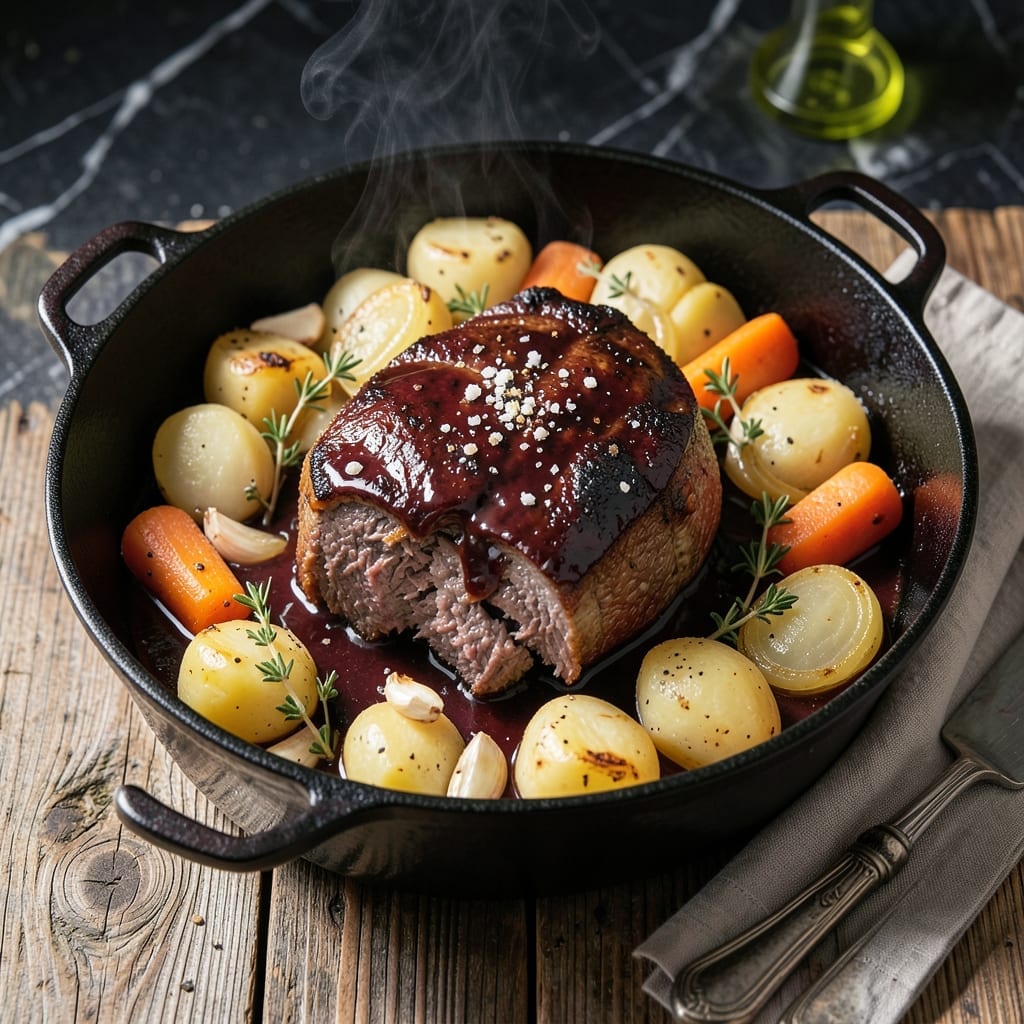
This pot roast transforms tough cuts into fall-apart tender perfection through slow cooking with bold red wine. The cabernet adds depth and richness that elevates every bite.
I developed this method to create a meal that feels special enough for Sunday dinner but simple enough for any day. The wine reduces into a velvety sauce that coats the beef and vegetables beautifully.
What emerges is melt-in-your-mouth beef with carrots and potatoes that soak up the wine-infused juices. The aroma alone will have everyone gathering in the kitchen.
Serve with crusty bread to soak up every last drop of the savory sauce. Here’s how to make this impressive dish.
Ingredients for Cabernet Pot Roast
Rich, wine-infused flavors start with these hearty, simple ingredients. Nothing complicated here.
| Ingredient | Amount | Notes |
|---|---|---|
| Chuck Roast 🥩 | 3 lb | Boneless, well-marbled preferred |
| Cabernet Sauvignon 🍷 | 2 cups | Dry, bold red wine |
| Carrots 🥕 | 4 whole | Peeled, cut into chunks |
| Yukon Gold Potatoes 🥔 | 1 ½ lb | Peeled, quartered |
| Yellow Onion 🧅 | 1 whole | Large, roughly chopped |
| Garlic Cloves 🧄 | 5 cloves | Smashed for robust flavor |
| Beef Broth 🥣 | 1 cup | Low-sodium preferred |
| Tomato Paste 🍅 | 2 tbsp | For depth of flavor |
| Fresh Thyme Sprigs 🌿 | 3 whole | Or 1 tsp dried thyme |
| Fresh Rosemary Sprig 🌿 | 1 whole | Or 1 tsp dried rosemary |
| Bay Leaf 🍃 | 1 whole | Dried, for aroma |
| Olive Oil 🫒 | 2 tbsp | For searing beef |
| Kosher Salt 🧂 | 1 ½ tsp | Divided for seasoning |
| Black Pepper 🌶️ | 1 tsp | Freshly ground preferred |
| All-Purpose Flour 🌾 | 2 tbsp | For thickening sauce |
The beef is everything here. Chuck roast is the way to go—it turns buttery after hours in the wine (the good stuff, not cooking wine). I grab mine from Costco or Whole Foods when they’ve got a good sale. Look for deep red color with plenty of marbling. The wine should be something you’d actually drink—Cabernet Sauvignon brings the right boldness.
No red wine? Beef broth plus a splash of balsamic vinegar gets you close. Out of fresh thyme? Dried at one-third the amount works. If Yukon Golds aren’t around, russet potatoes hold up fine (just peel them). The tomato paste is worth the can—those squeeze tubes at Trader Joe’s keep forever. Skip the pre-cut carrots; whole ones taste sweeter.
Leftovers taste even better the next day—and they freeze like a dream. Store in the fridge for 4-5 days or freeze for 3 months. I always double the batch so there’s extra sauce for dipping that crusty bread.
Why You’ll Love This Recipe
- One Pot Wonder: I toss in the chuck roast, veggies, and cabernet, then let the oven do the rest.
- Rich & Deep: The wine soaks into the beef, making every bite melt-in-your-mouth tender.
- Sunday Dinner Ready: It’s fancy enough for guests but unfussy enough for a lazy afternoon.
- Leftovers for Days: Honestly, the flavors taste even better the next day in sandwiches or stews.
Step-by-Step Instructions for Wine-Infused Pot Roast
Here’s how to transform tough chuck into fall-apart tender perfection with bold wine flavor.
Step 1: Sear the Chuck Roast for Depth of Flavor
Pat the 3 lb Chuck Roast dry with paper towels and season generously with 1 tsp Black Pepper and 1 tsp Kosher Salt. I always let it sit at room temperature for 30 minutes first—this ensures even cooking.
Heat the 2 tbsp Olive Oil in a Dutch oven over medium-high heat. When it shimmers, add the chuck roast and sear for 4-5 minutes per side until deeply browned. You’ll know it’s ready to flip when it releases easily from the pot. This creates a flavorful crust that forms the base of your sauce.
Step 2: Build the Aromatic Base
Remove the roast and set aside. In the same pot, add the 1 whole Yellow Onion, 4 whole Carrots, and 5 cloves Garlic Cloves. Cook for 3-4 minutes until the onion softens slightly and the garlic becomes fragrant.
Stir in the 2 tbsp Tomato Paste and cook for 1 minute until it darkens slightly. This step intensifies the tomato flavor and prevents a raw taste in the final dish. Then sprinkle the 2 tbsp All-Purpose Flour over everything and stir to coat the vegetables—this will thicken your sauce later.
Step 3: Deglaze and Add Liquids
Pour in the 2 cups Cabernet Sauvignon, scraping the browned bits from the bottom of the pot with a wooden spoon. These bits are packed with flavor and will dissolve into your sauce. Let it simmer for 2-3 minutes until the liquid reduces slightly.
Add the 1 cup Beef Broth, 3 whole Fresh Thyme Sprigs, 1 whole Fresh Rosemary Sprig, and 1 whole Bay Leaf. Return the chuck roast to the pot along with any accumulated juices. The liquid should come about halfway up the meat—add a splash of water if needed.
Step 4: Slow Cook to Tender Perfection
Bring the liquid to a simmer, then cover the pot and transfer it to a 325°F oven. Cook for 2.5-3 hours until the chuck roast is fork-tender. I check at the 2.5-hour mark—you want it to pull apart easily with a fork.
Add the 1.5 lb Yukon Gold Potatoes during the last 45 minutes of cooking so they absorb the wine flavor without turning mushy. The potatoes should be tender but still hold their shape when pierced with a knife.
Step 5: Rest and Serve
Remove the chuck roast and vegetables with a slotted spoon and transfer to a serving platter. Tent loosely with foil to keep warm. Skim any excess fat from the sauce and adjust seasoning with the remaining ½ tsp Kosher Salt if needed.
Let the roast rest for 10-15 minutes before serving. This allows the juices to redistribute, ensuring every bite is moist and flavorful. Serve the roast with the vegetables and a generous ladle of the rich wine sauce over the top.
Pro Tips For Making Cabernet Pot Roast
- Sear the Chuck First: I learned this the hard way—browning the chuck roast in batches over high heat before braising adds depth that skipping it just can’t match. Use about 2 tablespoons of oil and don’t crowd the pan.
- Deglaze with Cabernet: After searing, pour in a full cup of the Cabernet Sauvignon to scrape up those browned bits—it’s where half the flavor lives. Sounds weird, but it works.
- Cut Potatoes Evenly: Yukon Golds cook faster than you think, so slice them into 2-inch chunks to guarantee they soften at the same rate as the carrots.
- Skip the Cheap Wine: After burning a batch with cooking wine, I finally figured out that a drinkable Cabernet actually changes the outcome—skip anything labeled “cooking wine.”
Storing and Reheating cabernet pot roast
Refrigerator Storage
Let your pot roast cool for no more than 2 hours before transferring to airtight containers. I use glass containers with locking lids. Store in the fridge at 40°F or below for up to 4-5 days. The wine flavors will continue to develop. ❄️
Freezer Storage
This dish freezes beautifully for up to 3 months without losing quality. I recommend portioning into quart-size freezer bags—they stack neatly and thaw quickly. Leave 1 inch of headspace for expansion and press out excess air to prevent freezer burn.
Stovetop Reheating
This is my go-to method for best texture. Transfer the roast and sauce to a heavy pot, add ¼ cup water or beef broth, and heat over medium-low heat for 15-20 minutes. Stir occasionally to prevent sticking. 🔥
Microwave Reheating
For quick meals, microwave individual portions covered with a damp paper towel. Heat on 70% power for 2-3 minutes, stir, then continue in 1-minute intervals until reaching 165°F. Add a splash of water if the sauce looks too thick.
Nutrition Facts
Frequently Asked Questions
What’s the best cut of beef for this?
Use chuck roast—it’s well-marbled and becomes fork-tender after slow cooking. Avoid lean cuts like round, as they can dry out. Look for 3 lb pieces with good fat distribution.
Can I use a different wine?
Yes, but stick to dry reds like Merlot or Pinot Noir. Avoid sweet wines—they’ll make the sauce cloying. Always use something you’d drink; cooking wine lacks depth.
Why rest the roast before serving?
Resting for 10-15 minutes lets juices redistribute, so every bite stays moist. Skipping this step means juices will spill onto the plate, not your fork.
How do I thicken the sauce?
If it’s too thin, simmer uncovered for 5-10 minutes to reduce. For quicker results, mix 1 tbsp cornstarch with water, then stir into the sauce.

- 4C Bread Crumbs Meatballs Recipe: Crispy Crust and Juicy Centers - September 25, 2026
- 6 Oz Chocolate Chip Cookie Recipe: Perfectly Balanced Crispy Edges and Chewy Hearts - September 25, 2026
- 6-Inch Coffee Cake Recipe: Vanilla Bean Swirls and Buttery Streusel Topping - September 25, 2026