
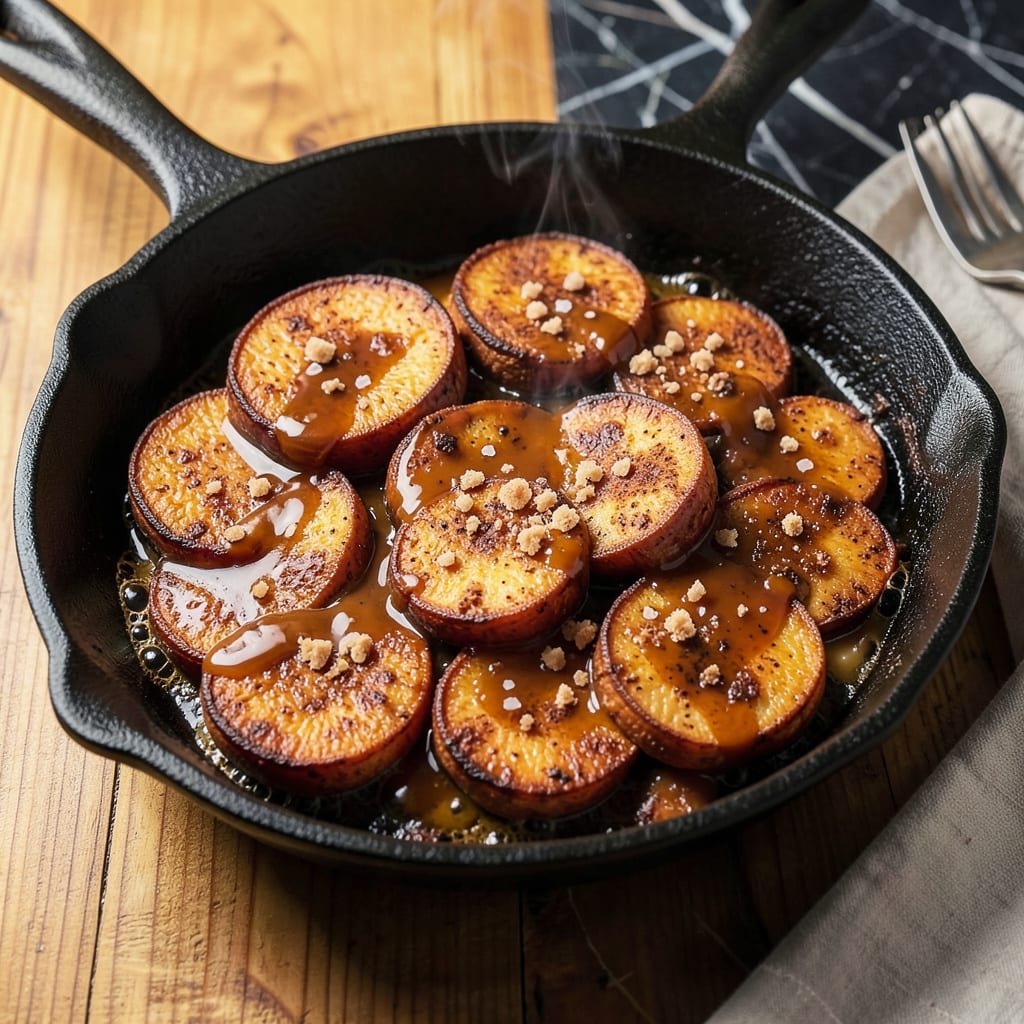
When you need a holiday-worthy side dish without turning on the oven, these stove-top candied sweet potatoes deliver rich caramelized flavor in just 30 minutes. The method is straightforward: simmer tender sweet potato slices in a buttery brown sugar glaze until they develop a glossy, syrupy coating and become fork-tender.
What sets this recipe apart is the precise balance of sweetness and spice. Cinnamon and vanilla deepen the caramel notes, while a touch of salt prevents the dish from becoming cloying. The result is a versatile side that pairs equally well with roasted turkey or grilled pork chops, proving that impressive holiday flavors don’t require hours in the kitchen.
Ingredients for Candied Sweet Potatoes Recipe Stove Top
These nine ingredients transform into a holiday-worthy side with caramelized depth and perfect balance.
| Ingredient | Amount | Notes |
|---|---|---|
| Sweet Potatoes 🍠 | 2 ½ lb | Peeled, sliced into 1/2-inch rounds |
| Unsalted Butter 🧈 | ½ cup | Cut into tablespoons for even melting |
| Light Brown Sugar 🍚 | ¾ cup | Packed for accurate measurement |
| Ground Cinnamon 🌿 | 1 ½ tsp | Freshly opened for maximum potency |
| Pure Vanilla Extract 💧 | 1 tsp | High-quality for depth of flavor |
| Kosher Salt 🧂 | ½ tsp | Diamond Crystal preferred for balance |
| Orange Juice 🍊 | ¼ cup | Freshly squeezed for brightness |
| Pecans 🌰 | ½ cup | Chopped, toasted for garnish |
| Heavy Cream 🥛 | 2 tbsp | Optional for richer glaze |
| Fresh Parsley 🌿 | 2 tbsp | Chopped, for fresh finish |
The sweet potatoes are the foundation—select firm, medium-sized specimens with smooth skin (avoid bruised or overly fibrous varieties). Light brown sugar is critical for that deep caramel flavor; Domino or C&H brands offer consistent quality. The butter should be unsalted European-style (like Plugrá or Kerrygold) for better browning control. Cinnamon loses potency quickly, so opt for freshly purchased from bulk sections or Penzeys for maximum aroma. The vanilla extract must be pure—avoid imitation products that introduce artificial notes.
For dietary adaptations, coconut oil replaces butter at a 1:1 ratio, while maple syrup can substitute brown sugar (reduce liquid elsewhere by 1 tbsp). The orange juice may be swapped with apple cider for a different acid profile. Omit pecans for nut-free versions, or use toasted pumpkin seeds for crunch. Heavy cream isn’t essential—coconut cream works for vegan versions, or simply increase butter by 1 tbsp. The salt quantity is precise; Diamond Crystal kosher salt measures differently than table salt (use half the amount if substituting).
Prepared glaze keeps 5 days refrigerated in an airtight container, though the potatoes are best served immediately. Toast pecans separately and store at room temperature for 1 week to maintain crispness. The dish reheats well with a splash of water to revive the glaze, covered at 350°F for 15 minutes. For make-ahead convenience, prepare the glaze up to 2 days ahead and simmer potatoes just before serving. Always use a heavy-bottomed skillet to prevent scorching during the caramelization process.
Why You’ll Love This Recipe
- One-Pot Magic: Between us, I’ve burned more sweet potatoes in the oven than I’d like to admit. This stovetop version? Just melt butter, toss in the rest, and stir occasionally—no oven, no fuss, no forgotten pans smoking up the kitchen.
- That Caramelized Crust: Here’s what sold me—the way the brown sugar and butter bubble into this glossy, crackly glaze while the cinnamon and vanilla sneak in with warmth. First bite, you’ll hit that crispy edge, then the soft, buttery center. Ridiculous.
- Holiday or Tuesday: I make these for Thanksgiving, sure, but also when I need something fast to pair with rotisserie chicken or meatloaf. They reheat like a dream, so I double the batch and stash half for lunches. (Yes, even cold straight from the fridge.)
- Five-Ingredient Luxury: Honestly, it feels like cheating. Sweet potatoes, butter, sugar, cinnamon, vanilla—stuff I already have. No fancy tools, no last-minute grocery runs. And it tastes like you slow-cooked it all day, not 20 minutes while scrolling through emails.
Step-by-Step Instructions for Candied Sweet Potatoes
This stovetop method delivers perfectly caramelized sweet potatoes with minimal effort and maximum flavor.
Step 1: Prepare the Sweet Potatoes
Peel the 2.5 lb sweet potatoes and slice them into ½-inch thick rounds for even cooking. I prefer this thickness because it allows the potatoes to soften completely while maintaining their shape during the caramelization process.
Place the sliced potatoes in a large, heavy-bottomed skillet or Dutch oven. The even heat distribution from these pans prevents hot spots that could burn the sugar later. Arrange them in a single layer if possible—this ensures each piece cooks uniformly and develops that perfect caramelized exterior.
Step 2: Create the Caramelized Glaze
Add the 0.5 cup unsalted butter, 0.75 cup light brown sugar, 1.5 tsp ground cinnamon, 1 tsp pure vanilla extract, and 0.5 tsp kosher salt to the skillet with the potatoes. Pour in the 0.25 cup orange juice—this adds brightness and helps dissolve the sugar initially.
Cook over medium heat for 10-12 minutes, stirring gently every 2-3 minutes. You’ll notice the butter and sugar melt together first, then begin to bubble and thicken. The mixture should transform from liquid to a glossy, amber-colored glaze that coats the potatoes beautifully. Resist the urge to stir too frequently—this allows the sugar to caramelize properly.
Step 3: Simmer Until Tender and Glazed
Once the glaze forms, reduce the heat to medium-low and cover the skillet. Let the potatoes simmer for 12-15 minutes, stirring just once halfway through. The steam created under the lid helps soften the potatoes while the glaze continues to develop.
After this covered cooking time, remove the lid and increase the heat back to medium. Cook for an additional 5-7 minutes, stirring occasionally, until the glaze thickens to a syrupy consistency and the potatoes are fork-tender. You’ll know they’re done when a fork slides in easily but the slices still hold their shape.
Step 4: Finish with Cream and Garnishes
For an extra-rich glaze, stir in the 2 tbsp heavy cream and let it simmer for 1-2 minutes until fully incorporated. The cream adds a velvety texture to the caramelized sugar without making it overly sweet. Taste and adjust the seasoning if needed—though the balance of sweet, salty, and citrus should be perfect.
Transfer the candied sweet potatoes to a serving dish and immediately sprinkle with the 0.5 cup pecans and 2 tbsp fresh parsley. The pecans add a satisfying crunch that contrasts beautifully with the tender potatoes, while the parsley provides a fresh, bright finish to cut through the richness of the dish.
Regional Styles of This Recipe
Southern Comfort Style
In the South, candied sweet potatoes are a Thanksgiving staple, often called “yams” even though they’re technically sweet potatoes. The key difference is using dark brown sugar instead of light for deeper molasses notes. I also add 1/4 tsp nutmeg alongside the cinnamon for warmth. The glaze gets finished with 2 tbsp bourbon (I prefer Maker’s Mark) stirred in at the end—it burns off the alcohol but leaves that rich oak flavor. 🔥
For texture, Southern cooks often mash the potatoes slightly after cooking, creating a creamy yet chunky consistency. Serve with extra glaze drizzled over the top and a sprinkle of crumbled bacon for that classic sweet-and-savory contrast. The bourbon addition makes this version particularly popular at Kentucky Derby parties.
Caribbean Island Twist
The Caribbean takes candied sweet potatoes in a tropical direction by swapping orange juice for 1/2 cup coconut milk and adding 1 tsp grated lime zest to the glaze. I discovered this version on a trip to Jamaica where they call it “sweet potato rundown.” The coconut milk creates a richer, creamier sauce while the lime brightens all the flavors.
Instead of pecans, use 1/2 cup toasted coconut flakes for garnish, and add 1/4 tsp allspice to the spice mix. This variation pairs beautifully with jerk chicken or grilled fish. The coconut-lime combination makes it feel like a vacation on a plate—perfect for summer cookouts.
New England Maple
Up north, maple syrup replaces some of the brown sugar, giving a distinct autumnal flavor. I use 1/4 cup pure maple syrup (preferably Grade B for robust flavor) and reduce the brown sugar to 1/2 cup. The cooking process remains the same, but the final glaze has that unmistakable maple depth.
For garnish, New England versions often include 1/4 cup chopped walnuts instead of pecans, and sometimes a sprinkle of sea salt flakes for contrast. This variation feels especially cozy served alongside roasted turkey or ham during fall holidays. The maple syrup also makes it slightly less sweet than traditional versions.
Southwestern Spiced
In Texas and New Mexico, candied sweet potatoes get a smoky kick with 1/2 tsp chipotle powder and 1/4 tsp smoked paprika added to the glaze. I balance the heat with an extra 1 tbsp honey to round out the flavors. The orange juice gets replaced with 1/4 cup pineapple juice for a different fruit brightness.
Garnish with pumpkin seeds instead of pecans and add crumbled cotija cheese for a salty finish. This version works wonderfully as a side for tacos or grilled meats. The smoky-spicy-sweet combination makes it a crowd-pleaser at Tex-Mex gatherings.
Midwestern Marshmallow
The Midwest loves its marshmallow-topped sweet potatoes, even on the stovetop. After the potatoes are glazed and tender, I transfer them to a broiler-safe dish, top with 1 cup mini marshmallows, and broil for 1-2 minutes until golden. The trick is watching closely—they burn quickly!
For extra richness, some Midwestern cooks stir 1/4 cup cream cheese into the glaze before adding the marshmallows. This creates a tangy contrast to the sweetness. It’s the ultimate comfort food version, perfect for potlucks where you want to impress with minimal effort.
Pacific Northwest
Out west, they incorporate local flavors like hazelnuts instead of pecans and add 1 tsp espresso powder to deepen the caramel notes. I also like to finish with flaky sea salt (like Jacobsen) for that sweet-salty contrast. The espresso doesn’t make it taste like coffee—it just enhances the caramelization.
This version often uses local honey (like Black Forest from Oregon) instead of some brown sugar. The hazelnuts get toasted with 1 tsp rosemary for an herbal note. It’s a sophisticated take that pairs well with Pacific Northwest wines like Pinot Noir. ✨
Nutrition Facts
Frequently Asked Questions
Can I make this ahead of time?
You can prepare the glaze up to 2 days ahead and store it refrigerated. Cook the potatoes fresh for best texture, as they soften when reheated. If making completely ahead, undercook potatoes slightly and reheat gently with a splash of water.
What’s the best way to store leftovers?
Transfer cooled potatoes and glaze to an airtight container and refrigerate for up to 5 days. Reheat in a skillet with 2 tbsp water over medium-low heat until warmed through, stirring gently to revive the glaze.
Why did my glaze turn grainy?
Grainy glaze usually means the sugar crystallized. Prevent this by stirring minimally during initial cooking and ensuring the brown sugar is fully dissolved before adding other ingredients. If it happens, a splash of hot water can help smooth it out.
Can I use a different sweetener?
Maple syrup or honey work well—use 3/4 cup to replace brown sugar. Note that honey burns faster, so reduce heat slightly. For sugar-free, try monk fruit sweetener, but expect a slightly different texture in the glaze.
How do I prevent the potatoes from breaking apart?
Slice them into 1/2-inch rounds and avoid over-stirring. Use a wide spatula when turning. If they’re still too soft, reduce covered cooking time by 2-3 minutes and let them finish uncovered.

- 8 Bean Soup Recipe Crock Pot: Hearty Vegetable Medley in One Pot - September 25, 2026
- 4C Bread Crumbs Meatballs Recipe: Crispy Crust and Juicy Centers - September 25, 2026
- 6 Oz Chocolate Chip Cookie Recipe: Perfectly Balanced Crispy Edges and Chewy Hearts - September 25, 2026