
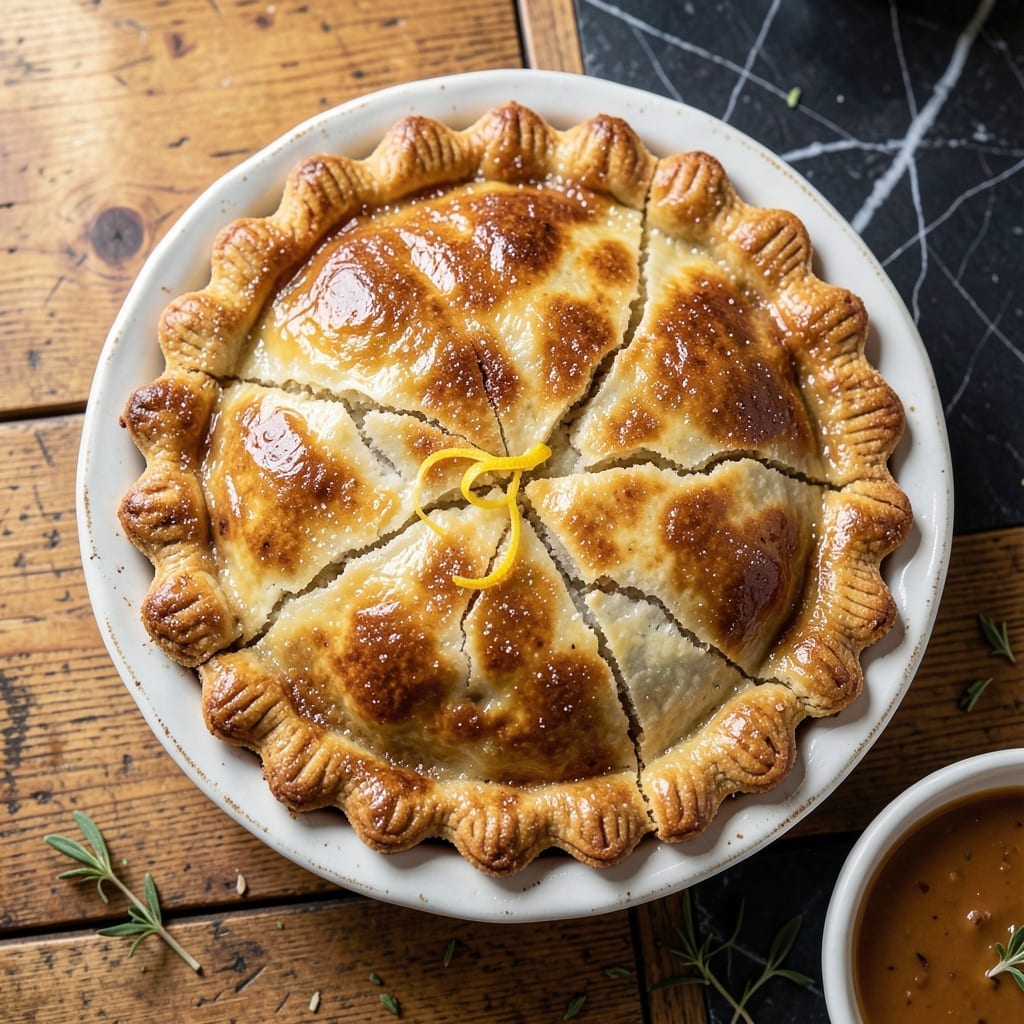
This butter crust delivers the flaky, golden layers that make chicken pot pie unforgettable. The key is cold ingredients and minimal handling—this prevents tough, dense pastry.
I developed this method after years of testing ratios and techniques. The all-butter base creates superior flavor and texture compared to shortening-based crusts. It bakes up tender yet sturdy enough to hold rich fillings.
You’ll achieve perfect layers by folding the dough like a book between rolls. This creates pockets that expand during baking, resulting in that coveted flaky structure every time.
Use this for classic chicken pot pie or any savory pie. The recipe makes enough for a double crust, so you can create a beautiful lattice top if desired.
Ingredients for Chicken Pot Pie Crust Recipe Butter
Cold butter and minimal handling create those coveted flaky layers for your savory pie.
| Ingredient | Amount | Notes |
|---|---|---|
| All-Purpose Flour 🌾 | 2 ½ cups | Plus extra for dusting |
| Unsalted Butter 🧈 | 1 cup | Cold, cut into cubes |
| Ice Water 💧 | ½ cup | Plus extra as needed |
| Sea Salt 🧂 | 1 tsp | Fine grain preferred |
| Granulated Sugar 🍚 | 1 tsp | Optional, for color |
| Large Egg 🥚 | 1 whole | For egg wash finish |
| White Vinegar 🍋 | 1 tsp | Helps tenderize dough |
The butter is non-negotiable here. European-style unsalted butter (like Plugrá or Kerrygold) has higher fat content—82% vs. 80% in standard brands—which means flakier layers. If your kitchen is warm, chill the flour for 30 minutes before starting. This prevents the butter from melting prematurely. The vinegar might seem odd, but it inhibits gluten formation, guaranteeing a tender crust.
No unsalted butter? Use salted and reduce the added salt by half. Need to make this ahead? Prep the dough, wrap tightly in plastic, and refrigerate for 1-2 days. For a richer flavor, substitute 1-2 tbsp of the ice water with vodka—it evaporates during baking, leaving behind extra flakiness. The egg wash is optional but gives that golden sheen everyone loves.
Dough can be frozen for up to 3 months—slice into discs before freezing for easy single-crust use. Thaw overnight in the fridge before rolling. Baked crusts keep at room temperature for 2 days in an airtight container, but they’re best used fresh from the oven.
Why You’ll Love This Recipe
- No-Fuss Dough: I just dump flour, cold butter, and ice water in a bowl, pulse it a few times, and it’s ready—no fancy techniques.
- Buttery Perfection: The unsalted butter makes the crust flaky and rich, with just a pinch of sugar to balance it out.
- Freezer Friendly: I make a double batch and freeze half for next time—saves me when I’m in a pinch.
- Pantry Staples: All-purpose flour and butter are things I always have, so this crust happens even on busy nights.
Step-by-Step Instructions for Chicken Pot Pie Crust
Here’s the method for achieving perfectly flaky, golden layers that complement any savory filling.
Step 1: Cut Cold Butter into Flour Mixture
In a large bowl, whisk together the 2.5 cups All-Purpose Flour, 1 tsp Sea Salt, and 1 tsp Granulated Sugar. This ensures even distribution of the leavening agents and seasoning throughout the dough.
Add the 1 cup Unsalted Butter (cold and cut into cubes) to the flour mixture. I use a pastry cutter or my fingers to work the butter into the flour until the mixture resembles coarse crumbs with pea-sized butter pieces visible. This step creates the flaky layers, so keep the butter cold and work quickly.
Step 2: Incorporate Liquid Ingredients to Form Dough
Create a well in the center of the flour-butter mixture. Add the 0.5 cup Ice Water and 1 tsp White Vinegar to the well. Using a fork, gradually incorporate the liquid into the dry ingredients, mixing just until the dough begins to come together.
The vinegar helps tenderize the dough, while the ice water keeps the butter from melting prematurely. The dough will be slightly shaggy—that’s perfect. If it seems too dry, add ice water 1 tablespoon at a time until it just holds together when pressed.
Step 3: Chill the Dough for Optimal Texture
Turn the dough out onto a lightly floured surface and gently shape it into a disk about 1 inch thick. Wrap it tightly in plastic wrap and refrigerate for at least 1 hour (or up to 2 days).
This chilling step is non-negotiable. It allows the gluten to relax, makes the dough easier to roll out, and ensures the butter stays solid, which is critical for creating those coveted flaky layers. Don’t skip this step—your crust depends on it.
Step 4: Roll and Prepare for Baking
On a lightly floured surface, roll out the chilled dough to a 12-inch circle about ⅛-inch thick. For a double-crust pie, divide the dough in half and roll each portion separately. The dough should be smooth and elastic, not sticking or tearing.
Transfer the rolled dough to your pie dish, letting it overhang slightly at the edges. For a top crust, brush the edges with water, then place the second round of dough on top, crimping the edges to seal. Cut a few slits in the top crust to allow steam to escape during baking.
Step 5: Add Egg Wash and Bake to Golden Perfection
In a small bowl, beat the 1 whole Large Egg with 1 tablespoon of water to create an egg wash. Brush this mixture evenly over the top crust and edges. This gives the crust a beautiful golden-brown finish and adds a slight sheen.
Bake according to your pot pie recipe instructions, typically at 375-400°F for 30-40 minutes, until the crust is golden brown and the filling is bubbly. The egg wash ensures a professional-looking finish that’s as delicious as it is beautiful.
Pro Tips For Making Chicken Pot Pie Crust Recipe Butter
- Chill the Butter: Cut your unsalted butter into small cubes and refrigerate for 10 minutes before mixing—this keeps the fat solid longer, creating flakier layers in your crust.
- Use Ice Water: I learned this the hard way: even slightly warm water can melt the butter prematurely, so toss a few ice cubes in your measuring cup and let it sit for 2 minutes before adding.
- Don’t Overwork Dough: After adding the ice water, mix just until the dough comes together—overworking it develops gluten, which makes the crust tough instead of tender.
- Rest Before Rolling: Give the dough a solid 30 minutes in the fridge before rolling it out; this relaxes the gluten and prevents shrinking during baking.
Make-Ahead Tips for Leftovers
Prep Ahead for Stress-Free Baking
This dough can be made 1-2 days in advance and refrigerated. Wrap it tightly in plastic wrap to prevent drying out. I often prep mine the night before for fresh-baked pies the next day. 💡
Freeze for Future Use
For longer storage, freeze the dough in 1-inch thick discs for up to 3 months. Thaw overnight in the fridge before rolling. This is perfect for holiday baking when time is short.
Pre-Rolled Convenience
You can also roll out the dough, then freeze flat between parchment paper. This saves 15-20 minutes of prep time later. Stack with parchment between each sheet to prevent sticking.
Assemble Unbaked Pies
Assemble your entire pot pie (crust and filling), then freeze unbaked. Wrap tightly in foil and plastic. Bake from frozen at 400°F for 50-60 minutes.
Par-Bake Crusts
For extra crisp bottom crusts, par-bake your bottom layer for 10 minutes at 375°F. Cool completely before adding filling. This prevents the dreaded soggy bottom.
Leftover Storage
Baked crusts keep at room temperature for 2 days in an airtight container. Reheat in a 350°F oven for 5-10 minutes to restore crispness. 🔥
Nutrition Facts
Frequently Asked Questions
Why is cold butter important for the crust?
Cold butter creates flaky layers by melting during baking, forming pockets of steam. If warm, it blends into the flour, resulting in a dense texture. Keep it chilled until ready to use.
Can I use salted butter instead?
Yes, but reduce the added salt by half. Salted butter works but may make the crust slightly saltier. Unsalted gives you more control over seasoning.
How do I prevent a soggy bottom crust?
Par-bake the bottom layer for 10 minutes at 375°F before adding filling. This creates a barrier, ensuring crispness even with wet fillings.
What if my dough cracks while rolling?
Press the edges together gently to seal. If it tears, patch with extra dough. Chilling the dough longer makes it more pliable and less likely to crack.

- 6 Oz Chocolate Chip Cookie Recipe: Perfectly Balanced Crispy Edges and Chewy Hearts - September 25, 2026
- 6-Inch Coffee Cake Recipe: Vanilla Bean Swirls and Buttery Streusel Topping - September 25, 2026
- 1 Hour Soup Recipe: Velvety Richness Without the Wait - September 25, 2026