
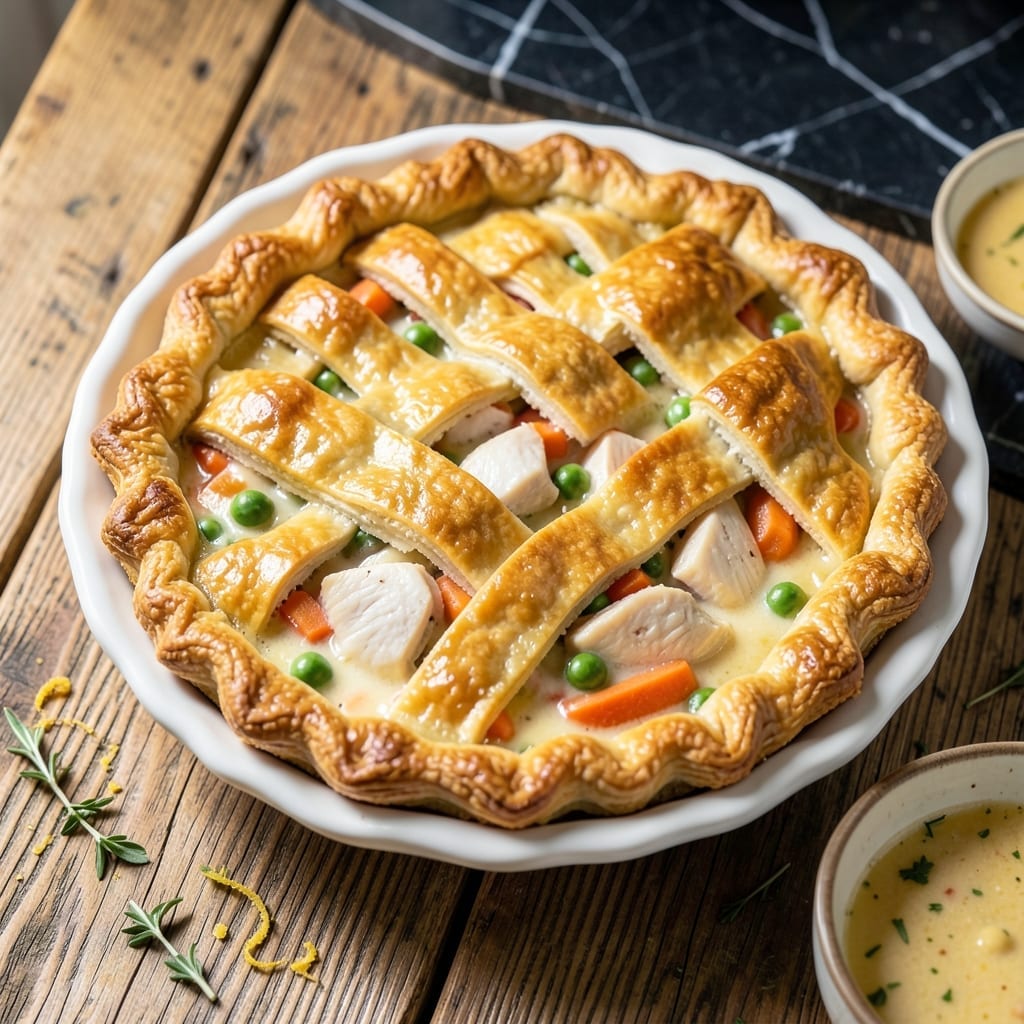
Achieving a flaky crust without shortening is entirely possible with the right technique. This method relies on cold butter and precise handling to create those coveted layers.
The key is cutting butter into flour until pea-sized crumbs form, then using ice water to bind the dough just until it comes together. Overworking the dough is the enemy of flakiness.
When baked, this crust delivers golden, tender layers that perfectly complement the rich chicken pot pie filling. The butter creates steam as it melts, separating the dough into distinct flakes.
No special equipment is needed—just a bowl, pastry cutter, and your hands. The result is a professional-quality crust that proves you don’t need shortening for exceptional texture.
Ingredients for Chicken Pot Pie Crust Recipe No Shortening
Cold butter and careful handling create those perfect flaky layers without any shortening.
| Ingredient | Amount | Notes |
|---|---|---|
| All-Purpose Flour 🌾 | 2 ½ cups | Plus extra for dusting work surface |
| Unsalted Butter 🧈 | 1 cup | Very cold, cut into small cubes |
| Salt 🧂 | 1 tsp | Fine sea salt preferred |
| Granulated Sugar 🍚 | 1 tsp | Optional, for slight sweetness |
| Ice Water 💧 | ½ cup | Plus extra as needed |
| Chicken Breast 🍗 | 1 ½ lb | Boneless, skinless, cubed |
| Chicken Stock 🥣 | 2 cups | Low-sodium preferred |
| Heavy Cream 🥛 | ½ cup | Full-fat for richness |
| Carrots 🥕 | 2 whole | Peeled and diced |
| Celery Stalks 🌿 | 2 whole | Diced, leaves reserved for garnish |
| Yellow Onion 🧅 | 1 whole | Medium, finely diced |
| Garlic Cloves 🧄 | 3 cloves | Minced for depth of flavor |
| Frozen Green Peas 🌱 | 1 cup | No need to thaw |
| Fresh Thyme 🌿 | 1 tbsp | Chopped, or 1 tsp dried |
| Black Pepper 🌶️ | ½ tsp | Freshly ground for best flavor |
The butter is the foundation here—use a high-quality European-style for superior flavor and higher fat content. Plugra or Kerrygold work exceptionally well. Ensure it’s ice-cold when cutting into the flour; warm butter will ruin the flakiness. The flour should be all-purpose, but for extra tenderness, replace 1/4 cup with cake flour (worth the extra minute).
No pastry cutter? Two forks or even your fingers work fine for cutting butter into flour—just move quickly to keep everything cold. If you’re out of chicken stock, vegetable stock with a splash of soy sauce adds depth. For a richer filling, swap heavy cream for half-and-half at half the quantity. Fresh thyme can be replaced with dried, but use one-third the amount.
Pre-made dough keeps in the fridge for 2-3 days or freezes for 1 month. The filling actually benefits from sitting overnight—flavors meld beautifully. Reheat individual slices at 350°F for 10-12 minutes to restore crispness.
Why You’ll Love This Recipe
- No Fuss Dough: This comes together in one bowl with just flour, butter, and ice water—no shortcuts, no stress.
- Buttery Layers: The cold butter creates flaky, golden-brown layers that melt in your mouth.
- Freezer Friendly: I make a double batch and freeze one for last-minute pot pies.
- Budget Savvy: All-purpose flour and butter keep this crust affordable without sacrificing quality.
Step-by-Step Instructions for Chicken Pot Pie Crust
Master the technique for achieving perfectly flaky layers without shortening or lard.
Step 1: Combine Dry Ingredients and Chill Equipment
In a large mixing bowl, whisk together the 2.5 cups all-purpose flour, 1 tsp salt, and 1 tsp granulated sugar until evenly distributed. The sugar is optional but adds subtle sweetness that complements savory fillings beautifully. Place this bowl, along with your rolling pin and work surface, in the freezer for 10 minutes to chill.
Chilling everything prevents the butter from melting prematurely when you begin incorporating it. This is the foundation of flakiness—cold butter creates steam pockets during baking that separate the dough into distinct layers.
Step 2: Cut in Cold Butter Using the Right Technique
Add the 1 cup unsalted butter (cut into small cubes and kept very cold) to the chilled flour mixture. Using a pastry cutter or your fingertips, work the butter into the flour until the mixture resembles coarse crumbs with pea-sized butter pieces visible throughout. I prefer fingertips because they give you better control over the texture.
The key here is speed and minimal handling. You want to coat the butter pieces with flour, not melt them into the mixture. If the butter starts to soften, pause and return the bowl to the freezer for 5 minutes before continuing. You should still see distinct butter pieces when finished.
Step 3: Incorporate Ice Water Gradually
Create a well in the center of your flour-butter mixture. Add 0.5 cup ice water 1 tablespoon at a time, mixing gently with a fork after each addition. You may not need all the water—stop when the dough just begins to come together. The mixture should look shaggy, not smooth.
Overworking the dough at this stage develops gluten, which makes the crust tough rather than flaky. If the dough seems too dry, add ice water by the teaspoon until it holds together when pressed. The cold water helps keep the butter solid while the gluten forms just enough to hold the crust together.
Step 4: Form, Chill, and Roll the Dough
Turn the dough out onto a lightly floured surface and gently shape it into a disk. Wrap this tightly in plastic wrap and refrigerate for at least 1 hour (or up to 2 days). This chilling period allows the gluten to relax and the butter to firm up completely.
When ready to use, roll the chilled dough on a well-floured surface to ⅛-inch thickness. The dough should be cold but pliable. If it cracks during rolling, press the edges together gently and continue. For a standard pot pie, you’ll need a bottom crust and a top crust, so divide the dough accordingly before chilling.
Pro Tips For Making Chicken Pot Pie Crust Recipe No Shortening
- Chill the Butter: Cut the butter into small cubes and freeze for 15 minutes before mixing—I learned this the hard way after my first few crusts turned out flat and tough.
- Use Ice-Cold Water: Measure your water, then add ice cubes to it while prepping; use only the water, not the melted ice, for a flakier crust.
- Don’t Overwork Dough: Mix just until the dough comes together, even if it looks shaggy—overmixing develops gluten, and your crust will be chewy instead of tender.
- Rest Before Rolling: Wrap the dough and refrigerate for at least 30 minutes (an hour is better) to relax the gluten—this makes rolling out much easier and prevents shrinking during baking.
Flavor Customization for This Recipe
Herb Infusions
Add 1 tbsp chopped fresh rosemary or 1 tsp dried thyme to your flour before cutting in the butter. These herbs pair beautifully with chicken and add depth to the crust’s flavor profile. I often use rosemary for a piney note that complements the richness.
Cheese Twist
For a cheesy crust, mix in ½ cup grated sharp cheddar or Parmesan with the flour. The cheese adds a savory element that enhances the filling. Just be sure to keep everything cold to prevent the cheese from melting prematurely. 🧀
Spiced Crust
Incorporate ½ tsp smoked paprika or ¼ tsp cayenne for a subtle kick. These spices add warmth without overpowering the dish. I find paprika gives a lovely color and mild heat that works well with the filling.
Citrus Zest
Add 1 tsp lemon or orange zest to brighten the crust’s flavor. The citrus adds a refreshing contrast to the rich filling. This works particularly well if your pot pie includes lighter ingredients like peas or carrots.
Nutty Crunch
For extra texture, fold in ¼ cup finely chopped pecans or almonds after cutting in the butter. The nuts add crunch and richness that pairs wonderfully with the buttery layers. Toast the nuts first for maximum flavor. 💛
Sweet and Savory
Increase the sugar to 1 tbsp and add ½ tsp cinnamon for a sweet-savory crust. This variation works surprisingly well with chicken pot pie, adding a subtle warmth that complements the filling’s savory notes.
Nutrition Facts
Frequently Asked Questions
Can I use margarine instead of butter?
Yes, but use margarine with at least 80% fat content and keep it ice-cold. The texture won’t be quite as flaky, but it will still work. Butter gives the best flavor and layers though.
Why does the dough need to chill before rolling?
Chilling relaxes the gluten and re-solidifies the butter. This prevents shrinking during baking and ensures distinct flaky layers. Skip this step and you’ll get a tough crust.
How do I prevent a soggy bottom crust?
Brush the bottom crust with 1 egg white before adding filling. Also, bake on a preheated sheet at 400°F for 10 minutes before adding the top crust.
Can I make this crust ahead?
The dough keeps in the fridge for 2 days or frozen for 1 month. Thaw overnight in the fridge before rolling. This actually improves the texture!

- 6 Oz Chocolate Chip Cookie Recipe: Perfectly Balanced Crispy Edges and Chewy Hearts - September 25, 2026
- 6-Inch Coffee Cake Recipe: Vanilla Bean Swirls and Buttery Streusel Topping - September 25, 2026
- 1 Hour Soup Recipe: Velvety Richness Without the Wait - September 25, 2026