
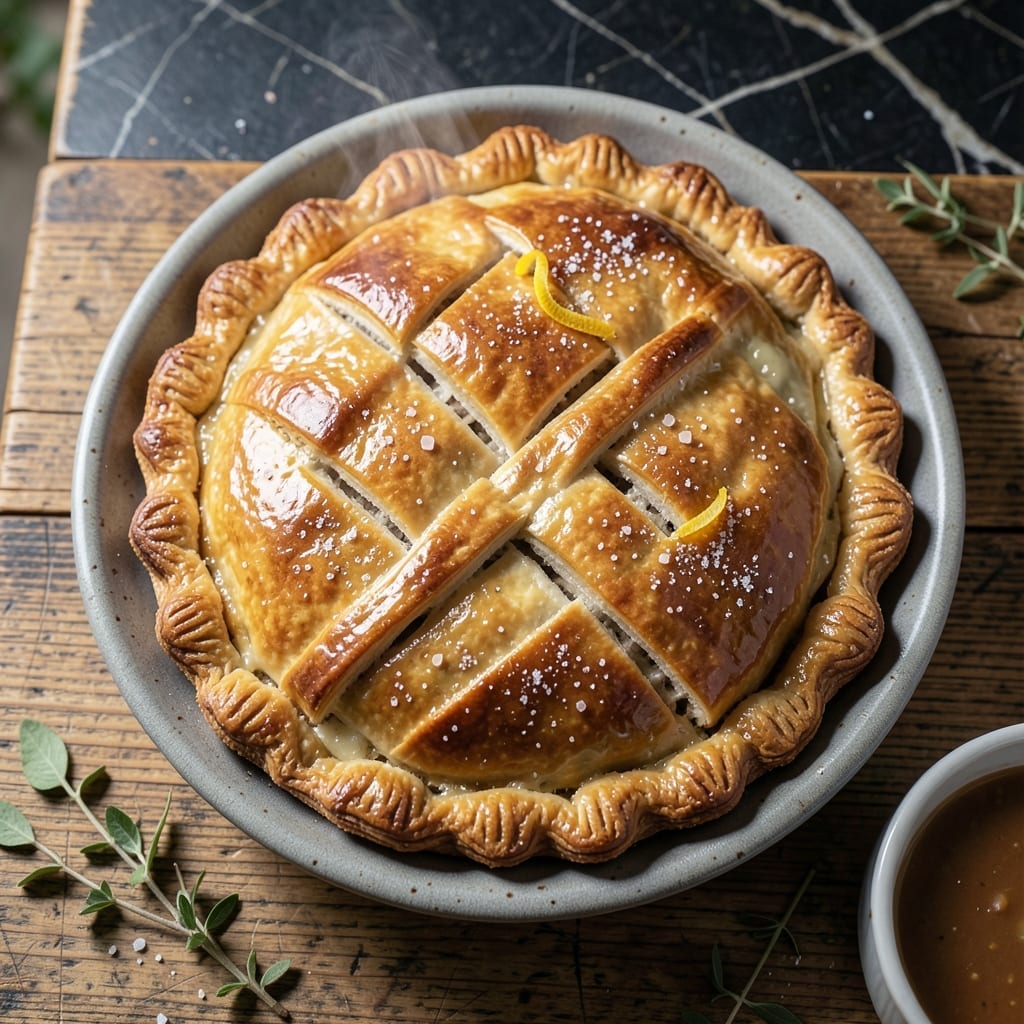
This flaky crust elevates chicken pot pie from simple comfort food to restaurant-quality perfection. The secret lies in cold butter and precise layering, creating a golden, tender shell that holds up to the hearty filling.
I developed this recipe after years of testing different pastry techniques. The key is working quickly to prevent the butter from melting, which ensures those buttery layers that make each bite unforgettable.
Baking at 375°F creates a crisp, golden finish while keeping the interior soft enough to complement the savory chicken and vegetable filling. The result is a crust that’s sturdy yet delicate.
This isn’t just a top layer—it’s what transforms a good pot pie into an extraordinary one. The contrast between the crisp crust and creamy filling makes every bite satisfying.
Ingredients for Chicken Pot Pie Crust
Cold butter, minimal ingredients, maximum flakiness for your savory pot pie filling.
| Ingredient | Amount | Notes |
|---|---|---|
| All-Purpose Flour 🌾 | 2 ½ cups | Plus extra for dusting surface |
| Unsalted Butter 🧈 | 1 cup | Cold, cubed for layering |
| Ice Water 💧 | ½ cup | Plus 1-2 tbsp as needed |
| Kosher Salt 🧂 | 1 tsp | Diamond Crystal preferred |
| Granulated Sugar 🍚 | 1 tsp | Balances savory filling |
| Large Egg 🥚 | 1 whole | For egg wash finish |
| Heavy Cream 🥛 | 1 tbsp | Optional for richer egg wash |
| White Vinegar 🍶 | 1 tbsp | Tenderizes the gluten |
The butter must stay cold—Land O’Lakes or Plugrá are reliable for consistent fat content. King Arthur Flour is ideal for all-purpose, but any unbleached brand works. Measure your flour by spooning into the cup, not scooping directly from the bag (prevents dense crust). The vinegar inhibits gluten formation, ensuring that tender texture mentioned in the intro.
No unsalted butter? Salted works in a pinch—just omit the added kosher salt. For a richer flavor, replace 2 tbsp of the ice water with vodka (alcohol evaporates, water stays). Egg wash can be just egg, but adding heavy cream deepens the golden color. If avoiding eggs, use melted butter brushed on top before baking.
Dough can rest in the fridge for up to 2 days or freeze for 3 months. Baked crust stays crisp for 24 hours at room temperature, but it’s best served fresh. Always use a light touch when handling—overworking develops tough gluten.
Why You’ll Love This Recipe
- Five Ingredients Only: I love that this crust comes together with just flour, butter, ice water, salt and a touch of sugar—no fancy pantry hunting.
- Buttery Flake Perfection: The cold butter creates layers so crisp and flaky that every bite feels like a little celebration.
- Freezer Friendly: I always make a double batch and freeze one—it’s my secret shortcut for future pot pies or even fruit tarts.
- Budget Stretcher: A pound of flour and a stick of butter gives me two crusts for the price of one store-bought pie shell.
Step-by-Step Instructions for Chicken Pot Pie Crust
Master this layered crust technique and your savory filling will have the perfect flaky, buttery casing.
Step 1: Prepare the Dry Ingredients
In a large mixing bowl, whisk together the 2.5 cups All-Purpose Flour, 1 tsp Kosher Salt, and 1 tsp Granulated Sugar until evenly combined. The sugar here is subtle but important—it balances the savory filling and enhances caramelization as the crust bakes to a golden brown.
This is your base for flakiness. Make sure the flour is well aerated and there are no lumps in the mixture. I prefer Diamond Crystal kosher salt for its clean flavor and consistent grain size, but any fine kosher salt will work.
Step 2: Cut in the Cold Butter
Add the 1 cup Unsalted Butter, which must be cold and cut into ½-inch cubes, to the flour mixture. Using a pastry cutter or your fingers, work the butter into the flour until the mixture resembles coarse crumbs with pea-sized butter pieces visible throughout.
This step creates the layers that make the crust flaky. The key is maintaining cold butter—if it starts to melt or soften, chill the mixture for 10 minutes before proceeding. You should see distinct butter pieces; if they disappear into the flour, you’ve overmixed.
Step 3: Add Liquid and Form the Dough
Create a well in the center of the flour-butter mixture. Add the 0.5 cup Ice Water and 1 tbsp White Vinegar. The vinegar tenderizes the gluten, preventing a tough crust. Using a fork, gently mix from the center outward until the dough just comes together.
It will look shaggy and slightly dry—that’s correct. Turn the dough onto a lightly floured surface and knead gently just until it forms a cohesive ball, about 4-5 turns. Overworking will develop gluten and make the crust tough instead of tender.
Step 4: Chill and Roll for Layers
Divide the dough into two equal portions, flatten into discs, and wrap each in plastic. Refrigerate for at least 1 hour or up to 24 hours. This chilling step relaxes the gluten and solidifies the butter, ensuring maximum flakiness.
When ready to use, roll one disc on a floured surface to a 12-inch round, about ⅛-inch thick. For the bottom crust, transfer to a pie dish, press gently into the edges, and trim the overhang to ½ inch. Save the other disc for the top crust.
Step 5: Finish and Bake to Perfection
For the top crust, roll the second disc and place it over the filling. Crimp the edges to seal, then cut 4-5 slits in the center to allow steam to escape. Brush the surface with an egg wash made from the 1 whole Large Egg and 1 tbsp Heavy Cream for a rich, deep golden finish.
Bake according to your filling recipe, typically at 375-400°F until the crust is golden brown and the filling is bubbling. The egg wash ensures a beautiful sheen and professional appearance, while the sugar in the dough promotes even browning.
Pro Tips For Making Chicken Pot Pie Crust
- Chill the Butter: Cut your unsalted butter into small cubes and refrigerate for 15 minutes before mixing—this keeps it from melting into the flour and guarantees flaky layers.
- Use Ice-Cold Water: I learned this the hard way: even slightly warm water makes the dough tough, so keep your water in the freezer until the last second.
- Don’t Overwork Dough: Mix just until the dough comes together; over-handling develops gluten, and suddenly your crust is chewy, not tender.
- Rest Before Rolling: Give the dough a solid 30 minutes in the fridge after shaping—it relaxes the gluten and rolls out smooth without cracking.
Creative Variations of This chicken pot pie crust
Herb-Infused Crust
Mix 1 tbsp fresh thyme and 1 tsp rosemary into the flour before adding butter. The herbs infuse the dough with aromatic depth that pairs beautifully with chicken and vegetables. I also add ½ tsp black pepper for a subtle kick. 🌿
Cheesy Top Layer
For an extra-rich top crust, fold ½ cup shredded cheddar into the dough before rolling. This creates a golden, crispy cheese cap that browns beautifully. Use sharp cheddar for bold flavor, and brush with egg wash for maximum shine.
Whole Wheat Twist
Replace 1 cup of all-purpose flour with whole wheat flour for a nuttier texture. This version adds fiber while keeping the crust flaky. I recommend King Arthur white whole wheat for a milder taste that doesn’t overpower the filling.
Spiced Crust
Add ½ tsp smoked paprika and ¼ tsp cayenne to the dry ingredients for warmth. This works especially well with spicy chicken fillings. The paprika also deepens the golden color as it bakes.
Lard-Based Version
Swap ½ cup butter for ½ cup leaf lard for an ultra-tender texture. Lard creates a flakier crust than butter alone. I use Leaf lard from Fatworks for consistent quality and clean flavor. 💫
Gluten-Free Option
Use 2 cups gluten-free 1:1 flour blend (like Bob’s Red Mill) with 1 tsp xanthan gum. The dough will be more delicate, so roll between parchment paper. Chill thoroughly before baking to prevent crumbling.
Nutrition Facts
Frequently Asked Questions
Why do I need to keep the butter cold?
Cold butter creates steam during baking, which forms flaky layers. If it melts too soon, your crust will be dense instead of light and tender.
Can I make this dough ahead of time?
Yes! The dough can rest in the fridge for up to 2 days or be frozen for 3 months. Thaw overnight in the fridge before rolling.
What if my crust turns out tough?
Overworking the dough develops gluten, making it tough. Use a light touch when mixing and kneading, and stop as soon as it comes together.
How do I prevent a soggy bottom crust?
Pre-bake the bottom layer for 10 minutes before adding the filling. Also, ensure your filling isn’t too wet when assembling.

- 4C Bread Crumbs Meatballs Recipe: Crispy Crust and Juicy Centers - September 25, 2026
- 6 Oz Chocolate Chip Cookie Recipe: Perfectly Balanced Crispy Edges and Chewy Hearts - September 25, 2026
- 6-Inch Coffee Cake Recipe: Vanilla Bean Swirls and Buttery Streusel Topping - September 25, 2026