
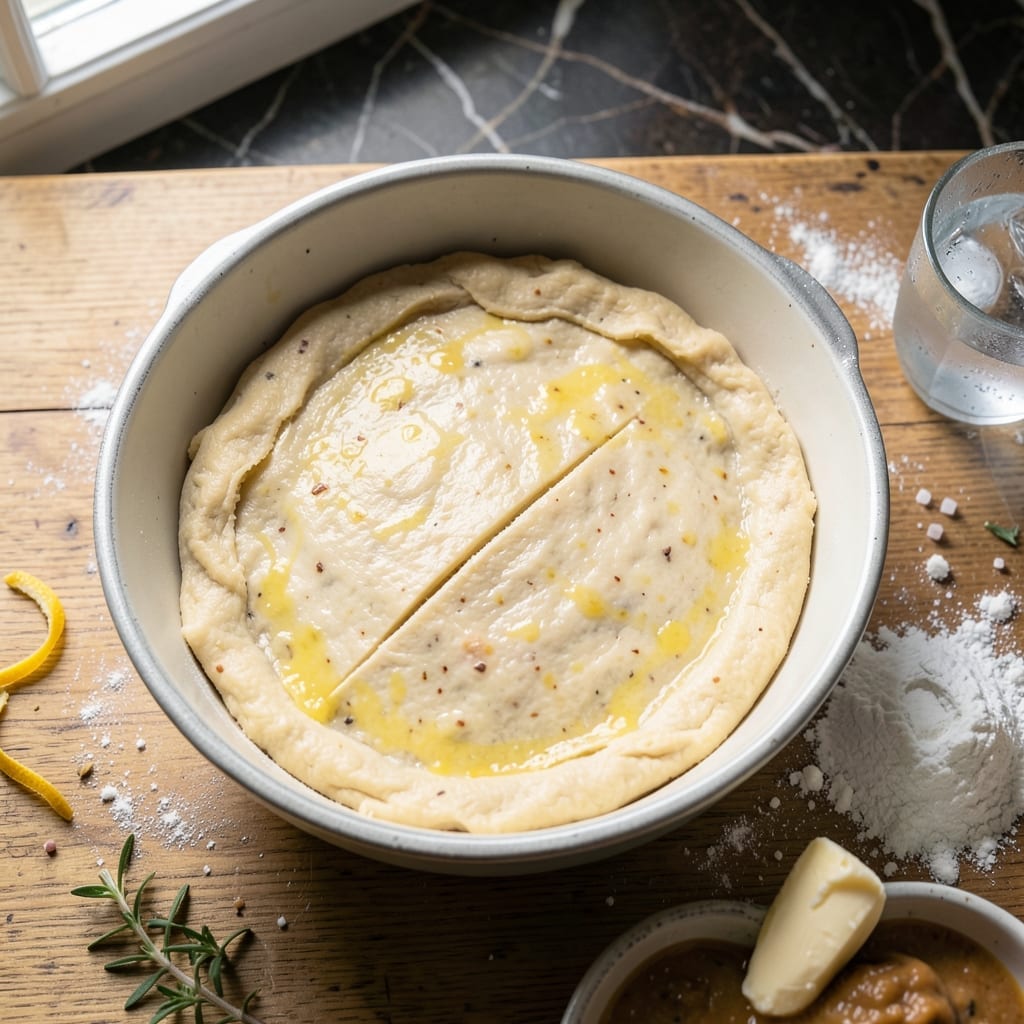
There’s nothing quite like the golden, flaky layers of homemade pot pie dough to elevate a classic comfort dish. This recipe delivers a buttery, tender crust that perfectly encases a rich, savory filling.
I’ve refined this technique to ensure the dough stays light yet sturdy enough to hold its shape. The key is using cold ingredients and minimal handling to create those flaky layers that make every bite irresistible.
What you’ll get is a classic pot pie with a crust so good, it steals the show. The filling is creamy, hearty, and packed with flavor, making this the ultimate comfort food.
Perfect for family dinners or cozy weekends. Let’s begin.
Ingredients for Chicken Pot Pie Dough
Classic comfort starts with buttery layers and a hearty filling. Nothing complicated here.
| Ingredient | Amount | Notes |
|---|---|---|
| All-Purpose Flour 🌾 | 2 ½ cups | Plus extra for dusting |
| Unsalted Butter 🧈 | 1 cup | Cold, cut into cubes |
| Ice Water 💧 | ½ cup | Plus more as needed |
| Kosher Salt 🧂 | 1 tsp | Diamond Crystal preferred |
| Granulated Sugar 🍚 | 1 tsp | Optional, for color |
| Egg Yolk 🥚 | 1 whole | For egg wash finish |
| Heavy Cream 🥛 | 2 tbsp | For brushing (or milk) |
| Chicken Breast 🍗 | 1 ½ lb | Boneless, skinless, diced |
| Unsalted Butter 🧈 | ½ cup | For filling roux |
| Yellow Onion 🧅 | 1 whole | Medium, finely diced |
| Carrots 🥕 | 2 whole | Medium, diced |
| Celery Stalks 🌿 | 2 pieces | Diced, with leaves |
| Garlic Cloves 🧄 | 3 cloves | Minced for filling |
| All-Purpose Flour 🌾 | ¼ cup | For thickening roux |
| Chicken Broth 🥫 | 2 cups | Low-sodium preferred |
| Frozen Peas 🌱 | 1 cup | No need to thaw |
The butter is non-negotiable for flaky layers. Use European-style if you can find it—the higher fat content makes a difference. Plugrá or Kerrygold are excellent choices. Keep everything ice-cold, and don’t overwork the dough. The flour should be standard all-purpose; no need for specialty types. For the filling, free-range chicken has better flavor, but any boneless breast works.
No unsalted butter? Salted works—just skip the added kosher salt in the dough. Fresh out of peas? Corn or green beans are great swaps. For the broth, Better Than Bouillon paste makes a rich base if you’re not using homemade. The egg wash can be milk or cream in a pinch (though the yolk gives that golden sheen). If your dough cracks, patch it with extra scraps—no one will notice.
Dough keeps wrapped in plastic for 2 days in the fridge or 1 month frozen. The filling actually improves overnight—flavors meld beautifully. Baked pie stays fresh for 3 days (reheat in oven to crisp the crust). Freeze unbaked pies for 2 months.
Why You’ll Love This Recipe
- One-Bowl Wonder: I mix everything in a single bowl—flour, cold butter, a pinch of sugar—no fancy gadgets, just my hands and 10 minutes.
- Buttery Crisp: That flaky crust from the cold butter and ice water? It shatters just right with every bite.
- Freezer Friendly: I roll out extra dough, freeze it flat, and pull it out whenever I need a quick pie top.
- Pantry Staples: All-purpose flour, butter, salt—stuff I already have, so I’m never stuck without a dough option.
Step-by-Step Instructions for Chicken Pot Pie Dough
Master these fundamental techniques to create a flaky, golden crust that elevates this classic comfort dish.
Step 1: Prepare the Dough Ingredients
In a large bowl, combine the 2.5 cups All-Purpose Flour, 1 tsp Kosher Salt, and 1 tsp Granulated Sugar. Whisk until evenly distributed. The sugar adds subtle color to the crust, while the salt enhances flavor depth.
Cut the 1 cup Unsalted Butter into ½-inch cubes and keep it chilled until ready to use. Cold butter is critical—it creates steam during baking, producing those coveted flaky layers. I always use a bench scraper to portion the butter evenly.
Step 2: Incorporate Butter into Flour
Add the chilled butter cubes to the flour mixture. Using a pastry cutter or your fingertips, work the butter into the flour until the mixture resembles coarse crumbs with some pea-sized butter pieces remaining visible. This process should take 3-5 minutes.
Don’t overwork the mixture—those visible butter flakes will melt during baking, creating air pockets that make the crust flaky. The texture should look uneven, not smooth. If the butter starts to warm, pause and chill the bowl for 5 minutes before continuing.
Step 3: Bind with Ice Water
Create a well in the center of the flour-butter mixture. Add the 0.5 cup Ice Water, 1 tablespoon at a time, mixing gently with a wooden spoon until the dough just begins to come together. You may not need all the water—stop when the dough holds when pressed.
The dough will look shaggy, but resist the urge to add more liquid. Overworking or excess water develops gluten, resulting in a tough crust. Lightly dust your work surface with extra flour before turning out the dough.
Step 4: Chill and Rest the Dough
Turn the dough onto a lightly floured surface and gently shape it into a disk about 1 inch thick. Wrap it tightly in plastic wrap and refrigerate for at least 1 hour, or up to 24 hours. This chilling period allows the butter to re-solidify and the gluten to relax.
For best results, divide the dough into two equal portions before chilling—one for the bottom crust and one for the top. When ready to use, let the dough sit at room temperature for 5-10 minutes to soften slightly before rolling, making it easier to handle without cracking.
Pro Tips For Making Chicken Pot Pie Dough
- Chill the Butter: Cut your butter into 1/2-inch cubes and freeze for 15 minutes before mixing—I learned this the hard way after my first few pies came out tough instead of flaky.
- Use Ice-Cold Water: Fill a glass with water and ice cubes, then measure from that for the dough. Sounds weird, but it works: warm water = tough crust, and nobody wants that.
- Don’t Overmix: Stop mixing as soon as the dough just comes together, even if it looks shaggy. After burning three batches to crispy frustration, I finally figured out overworking = dense, chewy crust.
- Rest Before Rolling: Give the dough a solid 30 minutes in the fridge before rolling—my grandmother swore by this, and she was right: it relaxes the gluten and prevents shrinking during baking.
Common Mistakes When Making chicken pot pie dough
Overworking the Dough
The most common mistake is handling the dough too much, which develops gluten and results in a tough crust. Stop mixing as soon as the dough comes together—it should look shaggy, not smooth. I use a light touch and cold hands to prevent warming the butter. 💡
Warm Butter Catastrophe
If your butter isn’t ice-cold when incorporated, the crust will be dense instead of flaky. Keep butter cubes chilled until the last moment, and work quickly. I even chill my mixing bowl for 10 minutes beforehand as extra insurance.
Too Much Water
Adding excess water makes the dough sticky and hard to roll. Use ice water sparingly, 1 tablespoon at a time, until the dough just holds together. The perfect amount is usually slightly less than you think you need.
Skipping the Chill
Rushing the resting period leads to shrinkage and cracking. Chill the dough for at least 1 hour—this relaxes the gluten and re-solidifies the butter. I’ve learned patience here pays off with a perfectly flaky texture.
Uneven Rolling
Rolling the dough inconsistently causes thin spots that burn or thick spots that stay raw. Roll from the center outward, turning the dough 90 degrees after each pass to maintain even thickness. Dust lightly with flour to prevent sticking.
Overfilling the Pie
Too much filling causes the crust to sag or burst. Use about 4 cups of filling for a standard 9-inch pie dish. Leave a ½-inch border when adding the top crust to allow for expansion during baking.
Nutrition Facts
Frequently Asked Questions
Can I use shortening instead of butter?
Yes, but butter provides better flavor. Shortening creates a flakier texture but lacks richness. Use the same amount, and ensure it’s ice-cold before incorporating.
How do I prevent a soggy bottom crust?
Blind-bake the bottom crust for 10 minutes before adding filling. Also, ensure your filling isn’t too wet—thicken it properly with a roux.
Why did my dough crack while rolling?
This usually means it’s too cold or dry. Let it warm slightly at room temperature for 5-10 minutes before rolling. If it’s dry, sprinkle 1 tsp of ice water and knead lightly.
Can I make the dough ahead of time?
Wrap tightly and refrigerate for up to 2 days or freeze for 1 month. Thaw overnight in the fridge before using.

- 4C Bread Crumbs Meatballs Recipe: Crispy Crust and Juicy Centers - September 25, 2026
- 6 Oz Chocolate Chip Cookie Recipe: Perfectly Balanced Crispy Edges and Chewy Hearts - September 25, 2026
- 6-Inch Coffee Cake Recipe: Vanilla Bean Swirls and Buttery Streusel Topping - September 25, 2026