
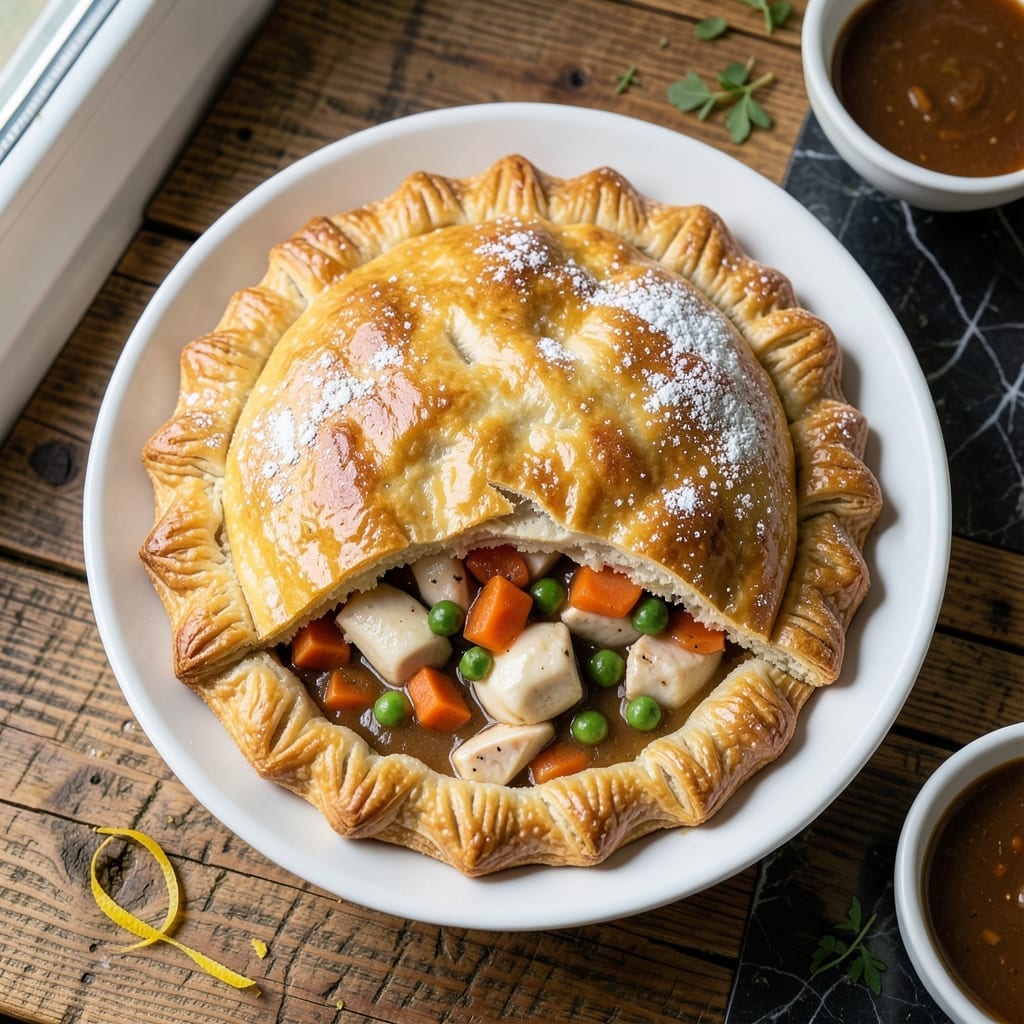
There’s nothing quite like the satisfaction of a homemade chicken pot pie with its flaky golden crust and rich, creamy filling. This recipe delivers the perfect balance of textures and flavors that define classic comfort food at its finest.
The secret lies in the pastry technique—cold butter and minimal handling create those desired flaky layers that shatter with every bite. Meanwhile, the filling achieves its signature creamy consistency through a careful roux-based sauce that coats the chicken and vegetables beautifully.
What emerges from the oven is a dish that looks as impressive as it tastes: a towering, golden-brown crust encasing a bubbling, aromatic filling. The contrast between the crisp pastry and velvety interior makes every forkful a revelation.
This is the kind of meal that turns an ordinary dinner into something truly memorable. Here’s how to create this timeless classic in your own kitchen.
Ingredients for Chicken Pot Pie Pastry
Crafting the perfect crust and velvety filling requires these quality ingredients for timeless comfort.
| Ingredient | Amount | Notes |
|---|---|---|
| All-Purpose Flour 🌾 | 2 ½ cups | Plus extra for dusting surface |
| Unsalted Butter 🧈 | 1 cup | Cold, cubed for flakiness |
| Ice Water 💧 | ½ cup | Plus 1 tbsp as needed |
| Kosher Salt 🧂 | 1 tsp | Diamond Crystal preferred |
| Boneless, Skinless Chicken Breasts 🍗 | 1 ½ lb | Cubed into bite-sized pieces |
| Carrots 🥕 | 2 whole | Peeled, diced medium |
| Yellow Onion 🧅 | 1 whole | Finely diced for even distribution |
| Celery Stalks 🌿 | 2 whole | Diced, leaves reserved for garnish |
| Frozen Peas 🌱 | 1 cup | No need to thaw first |
| Garlic Cloves 🧄 | 3 cloves | Minced for depth of flavor |
| Fresh Thyme Leaves 🌿 | 2 tsp | Or 1 tsp dried thyme |
| Fresh Rosemary 🌿 | 1 tsp | Finely chopped, stems discarded |
| Chicken Stock 💧 | 1 ½ cups | Low-sodium preferred for control |
| Heavy Cream 🥛 | ½ cup | Full-fat for creamy texture |
| All-Purpose Flour 🌾 | ¼ cup | For roux thickening |
| Unsalted Butter 🧈 | 2 tbsp | For cooking vegetables and roux |
The pastry demands cold, high-quality butter—Plugrá or European-style for superior flakiness. King Arthur Flour is ideal for the crust, though any unbleached all-purpose works. For the chicken, air-chilled breasts from Whole Foods or your local butcher yield the best texture. Fresh thyme and rosemary make a difference (look for vibrant green sprigs at the market). Avoid pre-cut vegetables—they lose moisture and texture.
No fresh herbs? Use dried at one-third the amount. Substitute rotisserie chicken for raw to save time—just shred 3 cups. Swap celery for fennel for a subtle anise note. Heavy cream can be half-and-half (less rich but still creamy) or whole milk in a pinch. For a vegetarian version, replace chicken with mushrooms or chickpeas and use vegetable stock.
The pastry dough rests best overnight in the fridge (24 hours maximum). Completed pie keeps 3-4 days refrigerated—reheat in a 350°F oven until crust crisps. Freeze unbaked pies for up to 1 month; thaw overnight before baking. Always use fresh butter for pastry—never margarine.
Why You’ll Love This Recipe
- One Bowl Wonder: I just dump flour, cold butter, and ice water in a bowl—no fancy tools, no mess.
- Buttery Perfection: That flaky crust from the butter and the tender chicken inside? Pure comfort in every bite.
- Feeds a Crowd: I make two pies at once—one for dinner, one for the freezer. My family never complains.
- Budget Friendly: Chicken breasts and pantry staples stretch far, and leftovers taste even better the next day.
Step-by-Step Instructions for Chicken Pot Pie Pastry
Master the technique for creating the perfect flaky pastry and rich, creamy filling for this classic dish.
Step 1: Prepare the Flaky Pastry Dough
In a large bowl, combine the 2.5 cups all-purpose flour and 1 tsp kosher salt. Cut in the 1 cup cold unsalted butter (cubed) using a pastry cutter or your fingertips until the mixture resembles coarse crumbs with pea-sized butter pieces visible.
Gradually add the 0.5 cup ice water, 1 tablespoon at a time, mixing gently with a fork until the dough just comes together. Be careful not to overwork it—visible butter flecks are essential for flakiness. The dough should hold when pressed but not be sticky.
Shape into two equal discs, wrap in plastic, and refrigerate for at least 1 hour. This chilling step prevents shrinking and ensures distinct flaky layers when baked.
Step 2: Cook the Chicken and Vegetable Filling
In a large Dutch oven, cook the cubed 1.5 lb boneless, skinless chicken breasts in 2 tbsp unsalted butter over medium-high heat until no longer pink, about 6-8 minutes. Remove and set aside.
In the same pot, add the diced 2 whole carrots, 1 whole yellow onion, and 2 whole celery stalks. Sauté for 5 minutes until softened. Add the minced 3 cloves garlic cloves, 2 tsp fresh thyme leaves, and 1 tsp fresh rosemary, cooking for 1 minute until fragrant.
Step 3: Create the Creamy Sauce
Sprinkle the 0.25 cup all-purpose flour over the vegetables and stir to coat. Gradually whisk in the 1.5 cups chicken stock and 0.5 cup heavy cream. Bring to a simmer and cook for 3-4 minutes until the mixture thickens enough to coat the back of a spoon.
Return the chicken to the pot along with the 1 cup frozen peas. Simmer for 2-3 minutes until everything is heated through and the sauce has a velvety consistency. Season to taste with additional salt if needed, remembering the pastry will add its own saltiness.
Step 4: Assemble and Bake to Golden Perfection
On a lightly floured surface, roll out one pastry disc to fit a 9-inch pie dish. Transfer to the dish, pressing gently into the bottom and sides. Pour in the chicken and vegetable filling, mounding slightly in the center.
Roll out the second pastry disc and place it over the filling. Crimp the edges to seal, then cut several slits in the top crust to allow steam to escape. Brush the surface with a little beaten egg if desired for extra shine.
Bake at 375°F for 45-50 minutes until the crust is golden brown and the filling is bubbling. Let rest for 10 minutes before serving to allow the filling to set.
Pro Tips For Making Chicken Pot Pie Pastry
- Chill the Butter: Cut your unsalted butter into small cubes and freeze for 15 minutes before mixing—this keeps it from melting into the flour, which is the only way to get that flaky crust we all want.
- Ice Water Only: Use the coldest water possible, straight from the ice bath, and add it 1 tablespoon at a time; I learned this the hard way after my first three pies came out tough as boot leather.
- Don’t Overwork Dough: Stop mixing as soon as the dough just comes together, even if it looks shaggy—overworking develops gluten, and nobody wants a chewy pot pie crust.
- Pre-Cook the Chicken: Poach or sear your chicken breasts first, then shred and fold into the filling; this prevents dry, overcooked meat in the final bake and actually saves time.
Common Mistakes When Making chicken pot pie pastry
Overworking the Dough
Resist the urge to knead or overmix your pastry dough. The moment you develop gluten by handling it too much, your crust loses that coveted flaky texture. I stop mixing as soon as the dough just holds together—visible butter pieces are your friend here.
Using Warm Butter
Your butter must stay ice cold throughout the process. If it starts to soften or melt, it will blend into the flour instead of creating those distinct layers. I chill my mixing bowl and even the flour briefly before starting.
Skipping the Rest
Rushing the chilling step is a common mistake. The dough needs at least 1 hour in the fridge to relax the gluten and firm up the butter. I often let mine rest overnight for even better results.
Filling Too Wet
Your filling should be thick enough to mound slightly. If it’s soupy, it will make the bottom crust soggy. I cook my roux for the full 3-4 minutes to ensure proper thickening.
Also, don’t skip straining excess liquid from your vegetables before adding them to the sauce. 💡
Improper Venting
Forgetting to cut steam vents in the top crust can lead to a collapsed pie. I use a sharp knife to cut 4-5 slits in a decorative pattern. This allows steam to escape while keeping the crust intact.
Baking Temperature
Baking at too low a temperature will give you a pale, undercooked crust. I always preheat my oven to 375°F and use the center rack. If your oven runs hot, check at 40 minutes for doneness.
Nutrition Facts
Frequently Asked Questions
Can I use store-bought pie crust instead?
Yes, but homemade tastes far better. Store-bought works in a pinch—just thaw it first and follow the same assembly steps.
Why did my bottom crust turn out soggy?
Prevent this by ensuring your filling is thick before baking. Also, blind-bake the bottom crust for 10 minutes at 375°F if time allows.
How can I make the crust extra flaky?
Keep butter ice cold and handle dough minimally. Fold the dough like a book before chilling for added layers.
Can I add other vegetables to the filling?
Try mushrooms, potatoes, or green beans. Just ensure they’re cooked through before assembling to avoid excess moisture.

- 4C Bread Crumbs Meatballs Recipe: Crispy Crust and Juicy Centers - September 25, 2026
- 6 Oz Chocolate Chip Cookie Recipe: Perfectly Balanced Crispy Edges and Chewy Hearts - September 25, 2026
- 6-Inch Coffee Cake Recipe: Vanilla Bean Swirls and Buttery Streusel Topping - September 25, 2026