
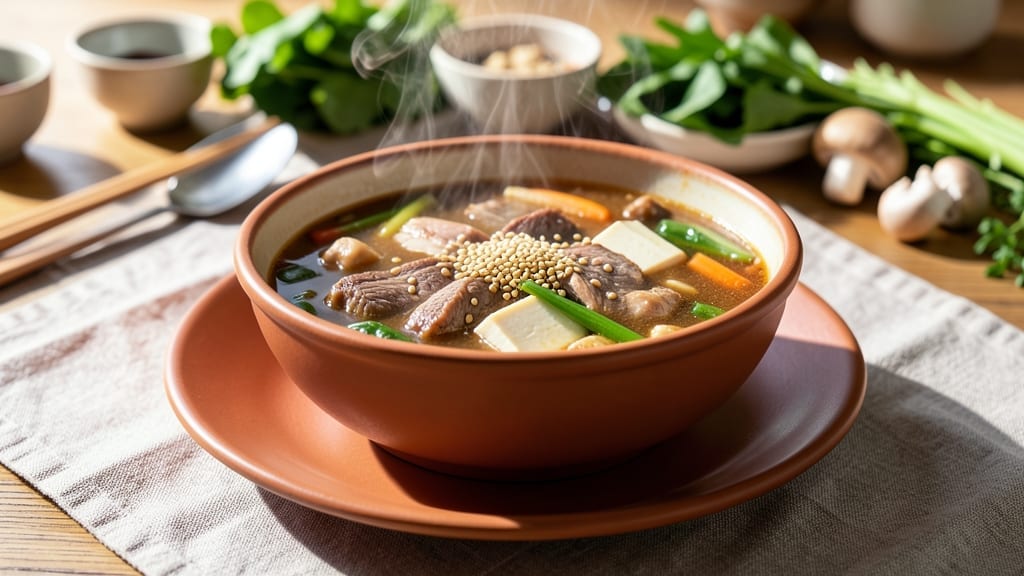
This Chinese hot pot recipe transforms your kitchen into an interactive dining experience where every guest customizes their meal with fresh ingredients simmering in bold, aromatic broth.
The secret lies in balancing heat and depth—whether you prefer a clear, spicy, or mixed broth—while maintaining precise temperature control for tender proteins and crisp vegetables. I’ve perfected this method over years of hosting gatherings, ensuring the broth remains rich and flavorful without burning delicate additions.
The beauty of hot pot is its adaptability—choose from thinly sliced meats like beef or lamb, seafood such as shrimp or scallops, or vegetarian options like tofu and mushrooms. Each ingredient cooks in minutes, allowing everyone to assemble their perfect bite.
The key technique involves using a stovetop pot with a built-in heater or a heavy-bottomed wok to maintain even heat, preventing scorching while keeping the broth bubbling.
What you’ll achieve is a communal feast where the aroma of simmering broth fills the air, and every bite is fresh, hot, and bursting with flavor. The dipping sauces—spicy chili oil, tangy vinegar, or sesame-based—elevate each ingredient, while garnishes like cilantro and scallions add brightness.
This isn’t just a meal; it’s an experience that brings people together around the table.
Perfect for weeknight dinners or special occasions, this recipe scales effortlessly to feed a crowd or a small group. The broth can be prepped ahead, and ingredients prepped in advance, so all you need to focus on is the moment everyone gathers to cook and enjoy.
Let’s get started on creating your own hot pot night.
Ingredients for china hot pot
Adaptable ingredients designed to create a communal feast with bold, customizable flavors.
| Ingredient | Amount | Notes |
|---|---|---|
| Beef Chuck Roast 🥩 | 2 lb | Thinly sliced against grain |
| Shrimp 🦐 | 1 ½ lb | Large, peeled, deveined |
| Extra-Firm Tofu 🥬 | 1 lb | Pressed, cubed, firm |
| Mushrooms 🍄 | 1 ½ lb | Shiitake or oyster, sliced |
| Napa Cabbage 🥬 | 1 whole | Thinly sliced, core removed |
| Scallions 🧅 | 1 bunch | White and green parts separated |
| Fresh Cilantro 🌿 | ½ cup | Chopped, for garnish |
| Spicy Chili Oil 🌶️ | ½ cup | For dipping sauce |
| Sesame Oil 🫒 | ¼ cup | For finishing |
| Star Anise 🌶️ | 2 whole | For broth infusion |
| Dried Red Chili Peppers 🔥 | 4 whole | For broth heat |
| Fresh Ginger 🧄 | ½ cup | Julienned, peeled |
| Garlic Cloves 🧄 | 8 cloves | Smashed, peeled |
| Dried Sichuan Peppercorns 🌶️ | 1 tbsp | Lightly toasted |
| Chicken Broth 💧 | 4 cups | Low-sodium, homemade preferred |
| Rice Wine 🍷 | ½ cup | Dry, for broth balance |
| Soy Sauce 🥫 | ¼ cup | Dark, for umami depth |
| Sesame Seeds 🌾 | 2 tbsp | Toasted, for garnish |
The broth foundation demands quality ingredients. Chicken broth should be homemade for optimal depth—Kitchen Basics or Pacific Foods brands excel in clarity and flavor. For the Sichuan peppercorns, Penzeys Spices offers the most authentic toasted variety, though any reputable Asian market will carry excellent options. Fresh ginger and garlic should be vibrant, with no signs of sprouting or discoloration. The star anise and dried chilies can be sourced from bulk bins at Whole Foods or Trader Joe’s, where they maintain their aromatic potency longer than pre-packaged options. For proteins, prioritize thinly sliced beef chuck from the butcher counter—it cooks faster and absorbs flavors better than pre-cut packages.
No Sichuan peppercorns? Substitute with a pinch of black pepper plus a dash of ground coriander for warmth without the signature numbing effect. Fresh ginger becomes less potent when dried—use half the amount if substituting. For the tofu, extra-firm is non-negotiable—silken or regular will disintegrate in the broth. Shrimp can be swapped for lobster tails or scallops if available, though they’ll require slightly less cooking time. The rice wine can be omitted entirely if avoiding alcohol, though it adds critical balance to the broth’s acidity. For vegetarian options, king oyster mushrooms hold up beautifully when sliced thickly and cooked briefly.
Broth components should be stored separately before assembly. Dried spices and aromatics keep indefinitely in airtight containers, while fresh ginger and garlic last 2 weeks in the fridge wrapped tightly. Prepped proteins and vegetables should be stored in sealed containers with paper towels to absorb moisture—this extends freshness to 3 days. The broth itself can be made a day ahead and reheated gently; add fresh aromatics like star anise and ginger just before serving to maintain peak flavor. For leftovers, portion ingredients into individual serving containers with a small amount of broth to prevent drying during reheating.
Why You’ll Love This Recipe
- One-Pot Magic: The broth simmers in the same pot where everything else cooks—no extra dishes, no stress. Just toss in the beef, shrimp, and veggies, and let the flavors meld together while you sip tea and chat. (Yes, even on a Tuesday night.)
- Umami Bomb: That slow-cooked beef chuck? It practically falls apart at the touch of a spoon. Pair it with the earthy mushrooms and crisp Napa cabbage, and suddenly, your table tastes like a bustling Beijing restaurant—without the jet lag.
- Budget Crowd-Pleaser: A single chuck roast stretches to feed six, and the tofu and shrimp add protein without breaking the bank. Honestly, my wallet thanks me every time I make this—especially when leftovers turn into lunch the next day.
- Weeknight Flexibility: Need a meal in 45 minutes? Done. Hosting a last-minute dinner party? Double the broth. It’s the kind of dish that adapts to whatever life throws at you—no fuss, no apologies. (My kids call it “easy food,” but I call it genius.)
Step-by-step instructions for spicy broth preparation
Mastering the broth is where the magic begins—this aromatic foundation transforms simple ingredients into a vibrant, customizable hot pot experience.
Toast Aromatics for Deep Flavor Development
In a clean, dry pot, combine the 2 whole star anise, 4 whole dried red chili peppers, and 1 tbsp dried Sichuan peppercorns. Toast over medium-low heat for 3-4 minutes until the spices release their fragrance and the Sichuan peppercorns begin to sizzle gently. This step unlocks their essential oils—critical for that signature numbing-spicy depth.
Remove the spices immediately once they’re aromatic but not burning. Add the 8 smashed garlic cloves and 0.5 cup julienned fresh ginger to the same pot. Cook for an additional 1 minute until the garlic turns golden and the ginger softens slightly. This quick sear prevents bitterness while building complex flavor layers. Keep these aromatics in the pot—they’ll infuse the broth as it simmers.
Build the Broth Base with Precision
Pour in the 4 cups chicken broth and bring to a rolling boil over high heat. Once boiling, reduce to a gentle simmer and add the 0.5 cup rice wine and 0.25 cup soy sauce. Stir once to combine, then let it reduce by one-third—approximately 10-12 minutes. This concentration intensifies the umami and balances the heat without overpowering the broth.
Add the 0.25 cup sesame oil during the last 2 minutes of simmering. The oil should emulsify slightly, creating a delicate sheen on the surface. Remove from heat immediately after—sesame oil burns quickly at high temperatures, and you want its nutty aroma preserved, not scorched. Skim off any foam that rises to the surface for a cleaner, more refined broth.
Prepare Customizable Ingredients for Cooking
While the broth simmers, slice the 2 lb beef chuck roast against the grain into ¼-inch thick strips. Press the 1 lb extra-firm tofu between paper towels for 15 minutes to remove excess moisture, then cut into 1-inch cubes. Trim the 1 whole napa cabbage by removing the core and slicing into ¼-inch thick half-moons. Separate the 1 bunch scallions into white and green parts—reserve the whites for broth enhancement and chop the greens for garnish.
Slice the 1.5 lb mushrooms into ¼-inch thick rounds and separate the 1.5 lb shrimp into large, peeled, deveined halves. Keep all prepared ingredients at room temperature until ready to cook. This ensures even heat distribution when they hit the boiling broth. The shrimp and tofu should cook quickly, while the beef and mushrooms will need 2-3 minutes of active simmering to reach optimal tenderness.
Assemble and Customize the Hot Pot
Return the broth to a gentle simmer over medium heat. Add the white parts of the scallions to the broth and let them steep for 2 minutes to infuse additional sweetness. Arrange the prepared ingredients around the pot—place the beef strips, tofu cubes, and mushroom slices in a single layer closest to the heat source. The shrimp should be added last, as they cook in just 1-2 minutes to avoid overcooking.
Use long-handled tongs or chopsticks to cook ingredients in small batches, ensuring each piece reaches the center of the broth where heat is most concentrated. The beef should turn deep pink with a slight sheen, the tofu should float golden and firm, and the shrimp should curl slightly at the edges. For added heat, drizzle 0.5 cup spicy chili oil over the surface just before serving—this creates a dramatic, flavorful finish.
Finish with Garnishes and Serving Suggestions
Remove the pot from heat and let it rest for 2 minutes to allow flavors to meld. Sprinkle 2 tbsp toasted sesame seeds and 0.5 cup chopped fresh cilantro over the broth just before serving. The sesame seeds add a toasty crunch, while the cilantro brightens the rich, spicy flavors with a fresh contrast.
Serve the hot pot with individual bowls of steamed rice or noodles for dipping. Encourage guests to customize their experience by adding ingredients in stages—start with tofu and mushrooms for mild flavors, then progress to beef and shrimp for bolder tastes. The broth should be steaming hot, with a fragrant aroma that carries 10 feet away—a sign of perfectly balanced spices and umami depth.
Pro Tips For Making China Hot Pot
- SEAR THE BEEF FIRST: Skip the “everything in the pot at once” approach—cut the beef chuck into 1-inch cubes, pat them very dry, and sear them in a hot wok with 1 tablespoon of oil until deep brown (about 3 minutes). This builds flavor that won’t dissolve into the broth later. I used to toss it raw, and the soup always tasted watery by the end.
- BLANCH THE CABBAGE: Napa cabbage needs a quick 30-second blanch in boiling water before hitting the pot—this softens the core without turning it mushy. Drain and shock in ice water, then slice. Sounds fussy, but raw cabbage will fight you for texture the whole time.
- DON’T OVERCROWD THE SHRIMP: Shrimp cook in seconds—add them in batches, spaced 30 seconds apart, or they’ll turn rubbery before the center is done. A crowded pot steams them instead of searing. I learned this after serving a batch that looked like sad, gray rubber bands.
- PREP TOFU LIKE A PRO: Press the extra-firm tofu for 20 minutes, then cube it and steam for 5 minutes in a bamboo basket over the pot’s broth. This keeps it from absorbing flavor like a sponge while adding a subtle silkiness. Dry-pan-frying it first? That’s how you get crispy edges—but only if you’re patient enough to let them crisp.
Common mistakes when making this dish
Overcrowding the Pot
One of the biggest mistakes is overloading the hot pot with too many ingredients at once. When the pot becomes crowded, the broth temperature drops significantly, leading to uneven cooking and mushy textures.
I’ve seen guests dump everything in at once—beef, shrimp, tofu, and vegetables—only to end up with undercooked shrimp and overcooked cabbage.
Instead, cook ingredients in small batches of 2-3 types at a time, giving each piece space to cook properly in the center of the broth where heat is most concentrated. 🔥
Skipping the Broth Reduction
The reduction step is non-negotiable for developing deep flavor. Many home cooks pour in the broth and immediately start cooking ingredients, but this results in a watery, flavorless base. Always reduce the broth by one-third (about 10-12 minutes) to concentrate the umami and balance the heat.
If you’re short on time, simmer the broth uncovered on high heat to speed up the process—just be prepared to stir occasionally to prevent scorching. 💡
Using Pre-Cut or Frozen Ingredients
Pre-cut proteins and frozen vegetables can make hot pot prep easier, but they compromise texture and flavor. Thinly sliced beef chuck should be freshly cut against the grain for tenderness, while frozen shrimp or mushrooms release excess water into the broth, diluting its richness.
If you must use frozen ingredients, thaw them completely and pat them dry with paper towels before cooking. For the best results, visit your butcher for thinly sliced beef and choose fresh, firm seafood from the market. ❄️
Ignoring the Aromatics Toast
Skipping the 3-4 minute toast of star anise, Sichuan peppercorns, and dried chilies robs your broth of its signature depth. These spices need to sizzle gently to release their essential oils, which infuse the broth with complex, aromatic flavors.
I’ve tasted hot pots where the aromatics were added raw, and the result was a flat, one-dimensional broth. Toast them over medium-low heat until fragrant but not burning—this step is what transforms a good broth into an extraordinary one. 🌶️
Adding Sesame Oil Too Early
Sesame oil has a low smoke point and burns quickly, which is why it should only be added in the last 2 minutes of broth reduction. I’ve seen home cooks add it at the beginning, only to end up with a bitter, acrid broth.
The oil should emulsify slightly, creating a delicate sheen on the surface—this indicates it’s been incorporated properly. If the broth smells burnt, start over with fresh aromatics and a new batch of oil. 🫒
Not Maintaining Consistent Heat
Temperature fluctuations are the enemy of even cooking. Many home cooks struggle to maintain a gentle simmer throughout the meal, leading to unevenly cooked ingredients and broth that either boils over or cools down. Use a heavy-bottomed pot or a dedicated hot pot burner to stabilize heat.
If your pot lacks a built-in heater, place it on the back burner of your stove and adjust the flame as needed to keep the broth at a steady low boil. A thermometer can help—ideal broth temperature is around 185-195°F. 🌡️
Nutrition facts
Frequently asked questions
What’s the best pot for making authentic Chinese hot pot at home?
A heavy-bottomed wok or a dedicated electric hot pot burner with a built-in heater works best. For stovetop options, choose a pot with a tight-fitting lid and at least 4-5 quarts capacity to accommodate broth and ingredients. If using an electric burner, look for one with adjustable temperature controls to maintain a gentle simmer—this prevents scorching while keeping ingredients cooking evenly.
Can I make the broth ahead of time and reheat it later?
Yes, but with a few key adjustments. Prepare the broth completely (including reduction) and let it cool, then refrigerate for up to 3 days or freeze for 1 month. When reheating, bring it to a gentle simmer and add fresh aromatics like star anise and ginger for 5 minutes before serving. Never boil frozen broth—this can break the emulsified oils and make it cloudy. For best results, reheat only what you need and keep the rest refrigerated.
How do I adjust the spice level for picky eaters?
Start by reducing the dried red chili peppers to 2-3 peppers instead of 4, and omit the Sichuan peppercorns entirely—they contribute a numbing heat. For extra mildness, replace the spicy chili oil with a neutral oil and serve a separate bowl of mild soy sauce or hoisin for dipping. You can also strain the broth through a fine-mesh sieve to remove visible spices before serving. The broth will still have depth without overwhelming heat.
What are some vegetarian-friendly ingredient swaps?
Replace beef with thinly sliced king oyster mushrooms or extra-firm tofu pressed and marinated in soy sauce. For seafood, use fresh water prawns or lobster tails if available. Load up on vegetables like bok choy, water chestnuts, or daikon radish—they hold up well in hot pot. For umami, add shiitake mushrooms soaked in hot water or a splash of vegetable bouillon to the broth. These swaps keep the dish hearty and satisfying.
Why does my broth turn cloudy or separate after cooking?
Cloudiness usually means the broth wasn’t reduced enough or the aromatics weren’t toasted properly. For separation, it’s often from adding sesame oil too early or using low-quality broth. To fix it, strain the broth through a fine-mesh sieve lined with cheesecloth, then reheat gently. For future batches, ensure you skim foam during reduction and add sesame oil only in the last 2 minutes. Using homemade chicken broth also prevents cloudiness.

- Baked Potatoes in Crock Pot Recipe: Buttery Interiors and Crispy Top Magic - November 1, 2026
- Braised Beef Short Ribs Recipe: Crock Pot Fall-Off-Bone Magic in 6 Hours - November 1, 2026
- Crock Pot Cocoa Recipe: Velvety Warmth With Hidden Spice Magic - November 1, 2026