
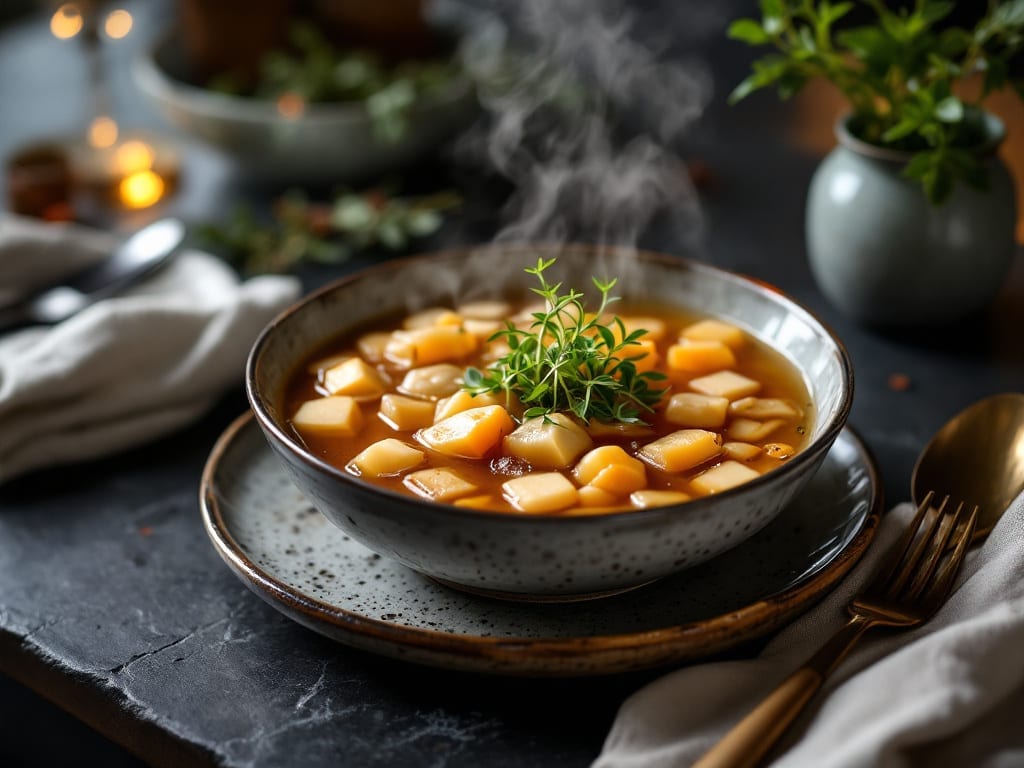
This Chinese herbal hot pot broth recipe turns a simple pot of water into a fragrant, spice-infused elixir that brings people together around the table.
This recipe captures the essence of communal dining, where every ingredient simmers together to create a deeply aromatic base perfect for dipping vegetables, tofu, or proteins.
The blend of star anise, goji berries, and dried mushrooms infuses the broth with layers of earthy, sweet, and umami flavors that define hot pot culture.
The beauty of this broth lies in its versatility—it serves as the foundation for vegetarian or meat-inclusive meals, depending on your guests’ preferences. Simmering the herbs and spices for at least 30 minutes unlocks their full potential, creating a rich, golden liquid that’s both nourishing and deeply satisfying.
The customizable nature of hot pot means you can adapt this broth to suit any dietary need while keeping the experience rich and flavorful.
What you’ll achieve is a fragrant, deeply aromatic broth that’s perfect for dipping fresh vegetables, silken tofu, or your choice of protein. The slow simmering process ensures every ingredient contributes to a harmonious blend of flavors, resulting in a dish that’s as comforting as it is impressive.
Whether you’re hosting a gathering or simply craving a warm, hearty meal, this broth delivers the essence of Chinese hot pot tradition.
Serve with an assortment of fresh ingredients and dipping sauces for a complete hot pot experience. The communal nature of this dish makes it ideal for sharing, turning a simple meal into a memorable event. Here’s how to craft the perfect herbal hot pot broth from scratch.
Ingredients for chinese herbal hot pot broth
Fragrant, aromatic, and deeply comforting—this broth brings the heart of Chinese hot pot to your table.
| Ingredient | Amount | Notes |
|---|---|---|
| Dried Shiitake Mushrooms 🍄 | 4 whole | Stems removed, dried variety |
| Star Anise Pods 🌟 | 2 whole | Whole pods, crushed lightly |
| Goji Berries 🍇 | ½ cup | Dried, organic preferred |
| Dried Tangerine Peel 🍊 | 1 tbsp | Thinly sliced, organic |
| Fresh Ginger Root 🧅 | 2 tbsp | Grated, organic preferred |
| Silken Tofu 🥬 | 8 oz | For serving, cut into cubes |
| Dried Dried Rehmannia Root 🌿 | 1 tbsp | Traditional Chinese herb |
| Cinnamon Sticks 🌿 | 1 whole | 1-inch piece broken off |
| Green Tea Leaves 🍵 | 1 tbsp | Loose-leaf preferred |
| Vegetable Stock 💧 | 6 cups | Homemade or quality store-bought |
| Sesame Oil 🫒 | 1 tbsp | Toasted, for aroma |
| Sea Salt 🧂 | 1 tsp | Fine grain preferred |
| White Peppercorns 🌶️ | ½ tsp | Crushed lightly |
| Fresh Bamboo Shoots 🌱 | 1 cup | Sliced, for serving |
The dried shiitake mushrooms and star anise are absolute game-changers here. Grab organic dried shiitake from an Asian market—they’re often sold in bulk bins, and the flavor is next-level. Star anise? Whole Foods or Penzeys have the best quality. The goji berries should be plump and dark—avoid anything dusty or shriveled. Fresh ginger root needs to be firm and aromatic; peel it just before grating for maximum punch. For the tofu, Silken Hill brand is my go-to—it’s silky smooth and holds up perfectly for dipping.
No shiitake mushrooms? Dried porcini mushrooms work in a pinch, but reduce to half the amount. Star anise unavailable? Anise seeds are a solid swap. The dried tangerine peel can be tricky to find—substitute 1 tsp orange zest if needed. For the vegetable stock, homemade is ideal, but Pacific Foods or Imagine brands are great store-bought options. The sesame oil is just for aroma—add it at the very end to preserve its nutty flavor. Fresh bamboo shoots? Baby corn works too, but the texture’s a bit different.
This broth tastes even better the next day as flavors meld. Store in the fridge for up to 5 days—the aroma alone will make your kitchen smell amazing. For freezing, portion into ice cube trays and pop them into a bag. 3 months max in the freezer, and it reheats beautifully. The tofu and bamboo shoots keep well in the fridge for 5 days too, so prep everything ahead for a stress-free gathering.
Why You’ll Love This Recipe
- No-Chop Simplicity: I swear by this broth because it’s literally dump-and-simmer. Soak the dried shiitake and goji berries in hot water for 10 minutes—no knives, no fuss—while you slice the ginger and toss in the whole star anise and tangerine peel. The mushrooms rehydrate right in the pot, and the broth builds flavor as you go.
- Umami-Packed Depth: That first sip? Chef’s kiss. The shiitake mushrooms add a meaty richness, while the star anise and tangerine peel give it this warm, citrusy backbone that lingers. Honestly, the goji berries might seem odd at first, but they sweeten the broth just enough to balance the ginger’s bite—like a cozy hug in a bowl.
- Weeknight or Weekend Star: This broth works for everything. Use it for hot pot on a lazy Friday, ladle it over noodles when you’re exhausted, or even sip it straight as tea when you’re under the weather. (Yes, even on a Tuesday night.) The leftovers? Freeze them in ice cube trays—perfect for quick flavor boosts later.
- Pantry Magic: Between us, this recipe is my budget-friendly secret weapon. Dried ingredients last forever, and a single batch stretches into multiple meals. I’ve made it for date nights, sick days, and even as a gift (in a thermos, because why not?). The cost per serving? A fraction of takeout, but way more satisfying.
Step-by-step instructions for Chinese herbal hot pot broth
This fragrant broth transforms simple ingredients into an aromatic elixir perfect for any gathering.
Prepare the Herbal Base
In a large pot, combine the 6 cups vegetable stock, 4 whole dried shiitake mushrooms, 2 whole star anise pods, and 1 whole cinnamon stick. Bring to a gentle simmer over medium heat for 10 minutes. The broth should smell earthy and slightly sweet—this is your aromatic foundation.
Add the 1 tbsp dried tangerine peel, 1 tbsp dried rehmannia root, and 1 tbsp green tea leaves. Stir gently to distribute the herbs evenly. Let it simmer uncovered for another 10 minutes, allowing the flavors to meld. The liquid should develop a deep amber hue and a complex herbal aroma—this is where the magic happens.
Infuse with Fresh Aromatics
Reduce heat to low and add the 2 tbsp fresh ginger root and 0.5 cup goji berries. Stir once more to incorporate. Let the broth simmer gently for 15 minutes, skimming any foam that rises to the surface. The ginger will release its sharp, zesty notes while the goji berries contribute a subtle sweetness—this balance is essential for the broth’s depth.
Here’s the thing—don’t rush this step. The longer the herbs steep, the more nuanced the flavor becomes. You’ll know it’s ready when the broth smells rich and inviting, with layers of spice, citrus, and earthiness. If it smells too sharp, add a pinch of sea salt to round out the flavors.
Finish with Seasoning and Oil
Strain the broth through a fine-mesh sieve into a clean pot, pressing gently on the herbs to extract every last drop of flavor. Discard the solids. Return the strained broth to the stove and add the 1 tbsp sesame oil and 0.5 tsp white peppercorns. Stir well to combine.
Taste and adjust seasoning with the 1 tsp sea salt if needed. The broth should be seasoned but not overpowering—it’s the backbone of your hot pot, so balance is key. The sesame oil adds a nutty aroma that ties everything together. Keep the broth warm at 160-170°F until ready to serve.
Serve with Fresh Ingredients
When ready to serve, slice the 8 oz silken tofu into cubes and arrange on a platter with the 1 cup fresh bamboo shoots. Ladle the hot broth into individual bowls, allowing guests to add their own proteins and vegetables as desired. The contrast of the silky tofu and crisp bamboo shoots against the fragrant broth creates an unforgettable experience.
This broth is where the real gathering begins. The herbal notes linger on the tongue, inviting conversation and second helpings. Serve with an assortment of dipping sauces and fresh herbs on the side for an elevated hot pot experience.
Pro Tips For Making Chinese Herbal Hot Pot Broth
- Soak Shiitakes Overnight: I learned this the hard way—those dried shiitakes won’t rehydrate properly if you just toss them in boiling water. Give them 8-12 hours in warm water (not scalding) to plump them up fully, then use the soaking liquid in your broth. The texture and flavor are worlds apart when you skip the rush.
- Toast Ginger First: Fresh ginger root needs a quick sear before hitting the broth. Slice it thin, then dry-toast in a pan for 30 seconds until fragrant—this unlocks its oils and prevents bitterness. (Yes, even if you’re impatient like me, don’t skip this.)
- Don’t Overcrowd the Pot: Herbal broths need room to breathe. If you pack in all your star anise, tangerine peel, and goji berries at once, the flavors won’t meld—just stew in their own juices. Start with half the herbs, simmer 10 minutes, then add the rest to balance the depth.
- Strain Twice: This isn’t the prettiest method, but it’s the tastiest. After simmering, strain the broth through a fine-mesh sieve first to catch big bits, then a cheesecloth for a silky finish. (Your future self will thank you when the broth isn’t cloudy.)
Make-ahead tips for this recipe
Broth Prep Timeline
The key to stress-free hot pot nights is prepping the broth 24 hours ahead. I simmer the base ingredients—shiitake, star anise, and cinnamon—then refrigerate the strained broth. The flavors deepen overnight, and you’ll wake up to a kitchen smelling like a Chinese herbal pharmacy.
Just reheat gently over low heat until steaming, then adjust seasoning with a pinch of salt. 🌿
Herb Storage Tips
Store dried herbs like star anise, goji berries, and rehmannia root in airtight containers with a silica gel packet to prevent moisture. I keep mine in the fridge for up to 6 months—the cool temperature preserves their potency.
Fresh ginger? Wrap it in a damp paper towel and store in a plastic bag for 2 weeks. The longer you store these, the more concentrated their flavors become. 🧅
Tofu Prep Ahead
Cut the silken tofu into cubes and marinate in a mix of 1 tbsp soy sauce, 1 tsp sesame oil, and ½ tsp white pepper for 30 minutes before serving. Store marinated tofu in the fridge for up to 2 days—the flavors meld beautifully.
For extra crispiness, pan-fry the tofu cubes in 1 tsp neutral oil for 2 minutes per side right before serving. 🥬
Broth Freezing Hacks
Freeze broth in ice cube trays for portion control—just pop out what you need when ready to use. Label bags with the date and “Herbal Hot Pot Broth” to avoid mix-ups. Thaw overnight in the fridge, then reheat on the stovetop over medium-low heat for 10 minutes.
The texture remains silky smooth, and the aroma is just as vibrant as fresh. Perfect for spontaneous gatherings! ❄️
Vegetable Prep Station
Slice all your fresh ingredients—bamboo shoots, napa cabbage, bell peppers—into uniform pieces and store in separate resealable containers in the fridge. I keep them in a single tray for easy transport to the hot pot table.
Pre-cutting everything saves 15 minutes during the meal, letting you focus on the communal experience. 🍴
Sauce Assembly
Mix your dipping sauces the day before and store them in small jars. A classic combo includes 1 part soy sauce, 1 part rice vinegar, ½ part sesame oil, and a pinch of sugar.
For spicy lovers, add 1 tsp chili crisp. Keep sauces refrigerated and stir well before serving—the flavors intensify over time. 🍜
Nutrition facts
Frequently asked questions
Can I make this broth without star anise?
If you can’t find star anise, substitute with 1 teaspoon anise seeds or ½ teaspoon fennel seeds for a similar aromatic profile. The key is to maintain the herbal depth—just omit the star anise entirely if needed, but the broth will taste slightly less complex. For extra warmth, add a pinch of ground cinnamon.
How do I adjust this recipe for a larger gathering?
Double all ingredients, including the 6 cups vegetable stock (use 12 cups total), and simmer in a larger pot. For extra flavor, add 1 additional dried shiitake mushroom and 1 more cinnamon stick. Keep the broth warm in a slow cooker or electric pot set to 160°F while serving. The communal aspect of hot pot works best with plenty of broth—aim for 1.5 cups per person.
What are the best proteins to add to this vegetarian broth?
For a fully plant-based experience, try mushroom medleys (shiitake, oyster, or king oyster), silken tofu (pan-fried for crispiness), or sea vegetables like wakame. For umami depth, add dried abalone or wood ear mushrooms (soaked first). If you include meat, shrimp or chicken work beautifully—they absorb the herbal notes perfectly.
Why does my broth taste bitter?
Bitterness usually comes from overcooking the herbs or using too much green tea. Reduce simmering time to 25 minutes total and cut the tea to ½ tablespoon. Balance with a pinch of sugar or more fresh ginger. Strain the broth immediately after simmering to avoid extracting bitter compounds from the herbs. Always taste as you go!
Can I use this broth for other dishes besides hot pot?
Use it as a base for herbal stir-fries, noodle soups, or even steamed dumplings. The rich umami works well in rice bowls or as a marinade for proteins. For extra depth, reduce the broth by half to make a glaze. Just avoid boiling it again after straining—reheat gently to preserve the delicate herbal notes.

- Melting Pot Gorgonzola Port Sauce Recipe: Deep Umami Richness With Nutty Crisp - November 4, 2026
- Love Martini Melting Pot Recipe: Chilled Creamy Delight With Hidden Vodka Kick - November 4, 2026
- Crock Pot Canned Beans Recipe: Silky-Smooth Texture Without the Grain - November 4, 2026