
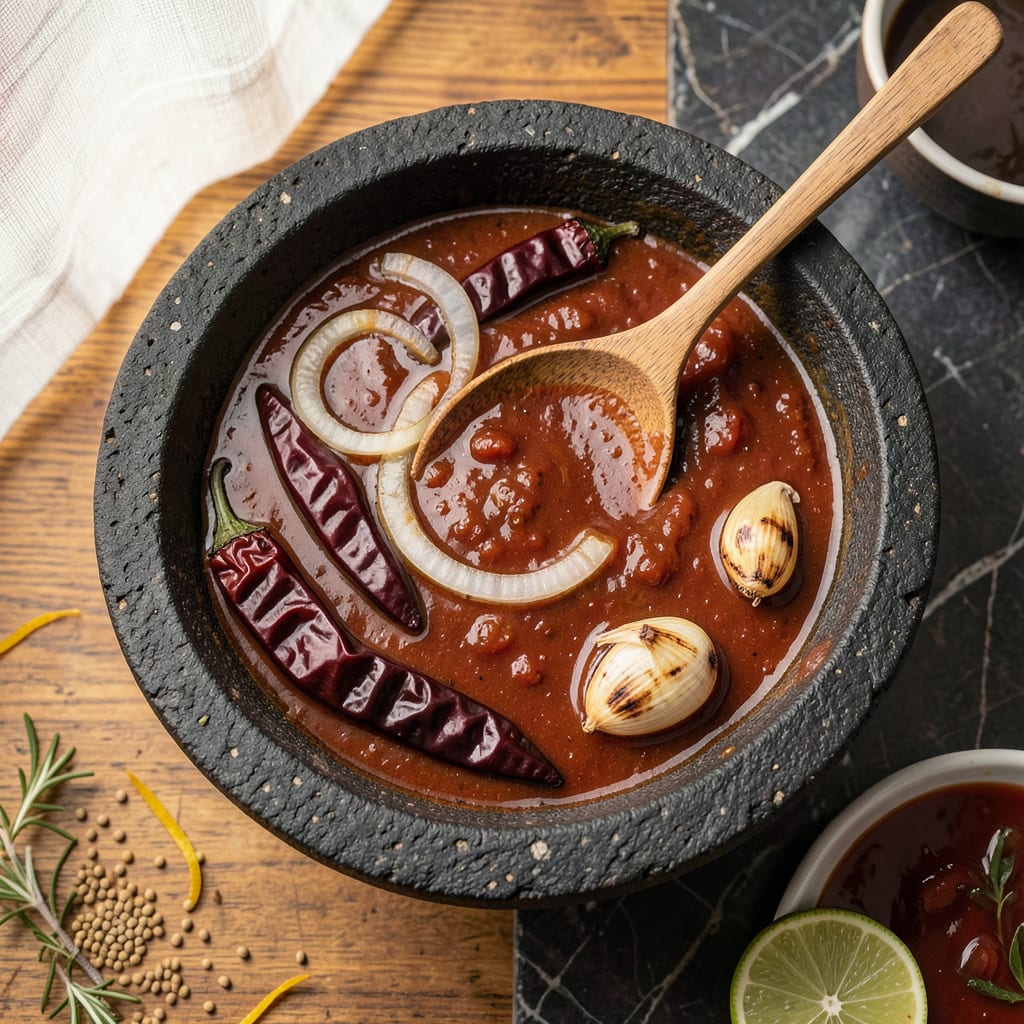
This smoky, versatile chipotle adobo sauce transforms ordinary dishes into restaurant-quality creations with just a few simple ingredients. The deep, complex flavor comes from dried chipotle peppers rehydrated and blended with aromatic spices, creating a rich paste that delivers both heat and smoky sweetness.
Perfect for marinades, braises, or as a bold finishing touch, this sauce keeps for weeks in the refrigerator, ready to elevate tacos, soups, or grilled meats. The balanced combination of heat and smokiness makes it a professional-grade condiment that home cooks can easily master.
Ingredients for Chipotle Adobo
These ten professional-grade ingredients create a restaurant-quality chipotle adobo sauce with authentic smoky depth and balanced heat.
| Ingredient | Amount | Notes |
|---|---|---|
| Dried Chipotle Peppers 🌶️ | 6 whole | Stems and seeds removed |
| Boiling Water 💧 | 1 ½ cups | For rehydrating peppers |
| White Onion 🧅 | ½ whole | Roughly chopped |
| Garlic Cloves 🧄 | 4 cloves | Peeled and smashed |
| Apple Cider Vinegar 🍏 | 2 tbsp | For acidity balance |
| Tomato Paste 🍅 | 2 tbsp | High-quality double-concentrated |
| Ground Cumin 🌿 | 1 tsp | Freshly toasted preferred |
| Dried Mexican Oregano 🍃 | 1 tsp | Crumbled between fingers |
| Sea Salt 🧂 | 1 tsp | Fine grain, Diamond Crystal preferred |
| Coconut Sugar 🥥 | 1 tsp | Or substitute maple syrup |
The dried chipotle peppers are non-negotiable for authentic flavor. Optimal quality requires whole, plump peppers with visible seeds—avoid powdered substitutes. Mexican grocery stores or Penzeys Spices offer superior quality compared to standard supermarket brands. For the tomato paste, double-concentrated Italian brands like Amoretti or Mutti provide the necessary richness without watery dilution. The Mexican oregano must be specifically labeled as such; regular oregano lacks the citrusy complexity.
For heat adjustment, reduce peppers to 4-5 for milder sauce or add 1-2 for intense heat. No apple cider vinegar? White wine vinegar at half the quantity maintains acidity without overpowering. Coconut sugar can be replaced with maple syrup or agave nectar at a 1:1 ratio. If fresh garlic isn’t available, roasted garlic paste (1 tbsp per 4 cloves) works well. Professional kitchens often add a pinch of ground cloves (1/8 tsp) for additional depth—consider this for complex applications.
The completed sauce maintains peak flavor for 3-4 weeks refrigerated in airtight containers. For extended storage, portion into ice cube trays and freeze for 6-12 months. The oil layer that forms on top is natural—simply stir before use. Standard practice is to reserve the rehydrating liquid as a smoky cooking broth for beans or grains, maximizing ingredient utilization.
Why You’ll Love This Recipe
- No Blender Needed: I love that this comes together with just a knife and a bowl. Soak the dried peppers, chop the onion and garlic, then let the vinegar do the work—no fancy equipment, no fuss.
- Smoky-Sweet Heat: That first whiff when the garlic hits the warm peppers? Instant craving. The apple cider vinegar cuts through the smokiness while the adobo mellows into this deep, slightly sweet heat that lingers just right.
- Taco Night’s Secret Weapon: Between us, I double the batch every time. It’s my shortcut for marinades, braising liquids, even stirring into mayo for sandwiches. One recipe, five meals—including those “I don’t want to cook” nights.
- Pantry Stable, Wallet Friendly: Dried chipotles last forever, and the rest are kitchen staples. I spent $3 on ingredients that made enough adobo for three weeks of meals. Honestly, it’s the kind of recipe that makes me feel smug about my grocery budget.
Step-by-Step Instructions for Chipotle Adobo
This method transforms dried peppers into a deeply flavorful sauce with balanced heat and smokiness.
Step 1: Rehydrate the Chipotle Peppers
Place the 6 whole dried chipotle peppers in a heatproof bowl and cover with the 1.5 cups boiling water. Ensure the peppers are fully submerged by pressing them down gently with a spoon. Let them soak for 20-25 minutes until completely softened and pliable.
The water will darken significantly as the peppers rehydrate, releasing their deep red color and smoky aroma. This soaking process is crucial for developing the sauce’s signature texture and intensity. Drain the peppers, reserving ½ cup of the soaking liquid for later use in the sauce.
Step 2: Char the Aromatics
Heat a dry skillet over medium-high heat. Add the 0.5 whole white onion (roughly chopped) and 4 cloves garlic (peeled and smashed). Cook for 8-10 minutes, stirring occasionally, until the onion develops deep brown char marks and the garlic softens.
This charring step adds a crucial layer of complexity to the sauce. The caramelized edges of the onion will contribute sweetness that balances the peppers’ heat, while the garlic mellows into a nutty richness. Remove from heat when the aromatics are deeply colored but not burnt.
Step 3: Blend the Sauce Base
Transfer the rehydrated peppers, charred aromatics, 2 tablespoons apple cider vinegar, 2 tablespoons tomato paste, 1 teaspoon ground cumin, 1 teaspoon dried Mexican oregano, 1 teaspoon sea salt, and 1 teaspoon coconut sugar to a blender. Add the reserved ½ cup soaking liquid.
Blend on high for 1-2 minutes until completely smooth. The mixture should be thick but pourable, with no visible pepper skins remaining. Stop to scrape down the sides as needed. The sauce will darken to a rich mahogany color as it emulsifies.
Step 4: Reduce and Concentrate Flavors
Pour the blended sauce into a clean saucepan and bring to a gentle simmer over medium heat. Cook for 10-12 minutes, stirring frequently, until the sauce reduces by about 25% and develops a glossy sheen.
As it simmers, the sauce will thicken slightly and the flavors will meld together. You’ll notice the smoky aroma becoming more pronounced while the vinegar’s sharpness mellows. The finished sauce should coat the back of a spoon but still pour easily.
Step 5: Cool and Store Properly
Transfer the hot sauce to a clean glass jar or airtight container. Let it cool to room temperature, which typically takes about 1 hour. The sauce will continue to thicken slightly as it cools.
Store in the refrigerator for up to 2 weeks, or freeze for 3 months. The flavors will deepen over the first 24 hours, so for best results, prepare this sauce a day before using. Always use a clean spoon when serving to prevent contamination.
Best Sauces and Condiments for This chipotle adobo
Classic Mexican Crema
The cool, tangy contrast of Mexican crema perfectly balances this sauce’s smoky heat. I mix 1 cup sour cream with 2 tbsp lime juice and ½ tsp salt for an authentic touch. Drizzle over tacos or grilled meats after adding the adobo for a restaurant-quality finish. 💫
Fresh Cilantro-Lime Slaw
A bright, crunchy slaw cuts through the richness beautifully. Toss 3 cups shredded cabbage with ¼ cup chopped cilantro, 2 tbsp lime juice, and 1 tbsp olive oil. The acidity and freshness make every bite with your adobo sauce sing.
Pickled Red Onions
Quick-pickled onions add vibrant color and tangy crunch. Thinly slice 1 red onion and soak in ½ cup white vinegar, 1 tbsp sugar, and 1 tsp salt for 30 minutes. These keep for 2 weeks and elevate any dish using your smoky sauce.
Avocado Crema
Blend 1 ripe avocado with ½ cup Greek yogurt, 2 tbsp lime juice, and ¼ tsp cumin until smooth. This creamy, cooling topping works wonders with the adobo’s heat. I love this combo on breakfast tacos or as a dip for roasted veggies. 🥑
Queso Fresco Crumbles
The mild, salty crumble of queso fresco provides the perfect textural contrast. Sprinkle ¼ cup over finished dishes right before serving. The cheese melts slightly from the warm sauce, creating little pockets of creamy goodness in every bite.
Toasted Pepitas
For nutty crunch, toast ¼ cup pepitas in a dry skillet over medium heat for 3-4 minutes until golden. The earthy flavor complements the smoky adobo beautifully, adding both texture and visual appeal to your finished dishes.
Nutrition Facts
Frequently Asked Questions
How long does homemade chipotle adobo keep?
When stored in an airtight container, your sauce will stay fresh in the refrigerator for 3-4 weeks. For longer storage, freeze in ice cube trays for up to 6 months. The flavors actually deepen over time, making it even better after a few days.
Can I use canned chipotles in adobo instead?
Yes, but the flavor will differ significantly. Canned versions include vinegar and spices, so reduce added vinegar to 1 tbsp and omit salt. Use 3-4 canned peppers for similar heat levels. The texture will be smoother but less complex than homemade.
Why does my sauce taste bitter?
Bitterness usually comes from over-charred aromatics or pepper seeds. Next time, char the onion/garlic to deep brown (not black) and remove all seeds before blending. A pinch of coconut sugar (extra ½ tsp) can balance any lingering bitterness.
What’s the best way to adjust heat levels?
Start with 4 peppers for mild heat or add up to 8 peppers for intense spice. For extra control, blend all peppers but add the sauce gradually when cooking. The tomato paste and sugar help mellow the heat while keeping the smoky flavor.
Can I make this without blending?
For a chunky version, finely chop rehydrated peppers and charred aromatics by hand. Simmer everything together for 15-20 minutes to soften the pieces. The texture will be rustic but equally flavorful—perfect for stews or braises.

- 8 Bean Soup Recipe Crock Pot: Hearty Vegetable Medley in One Pot - September 25, 2026
- 4C Bread Crumbs Meatballs Recipe: Crispy Crust and Juicy Centers - September 25, 2026
- 6 Oz Chocolate Chip Cookie Recipe: Perfectly Balanced Crispy Edges and Chewy Hearts - September 25, 2026