
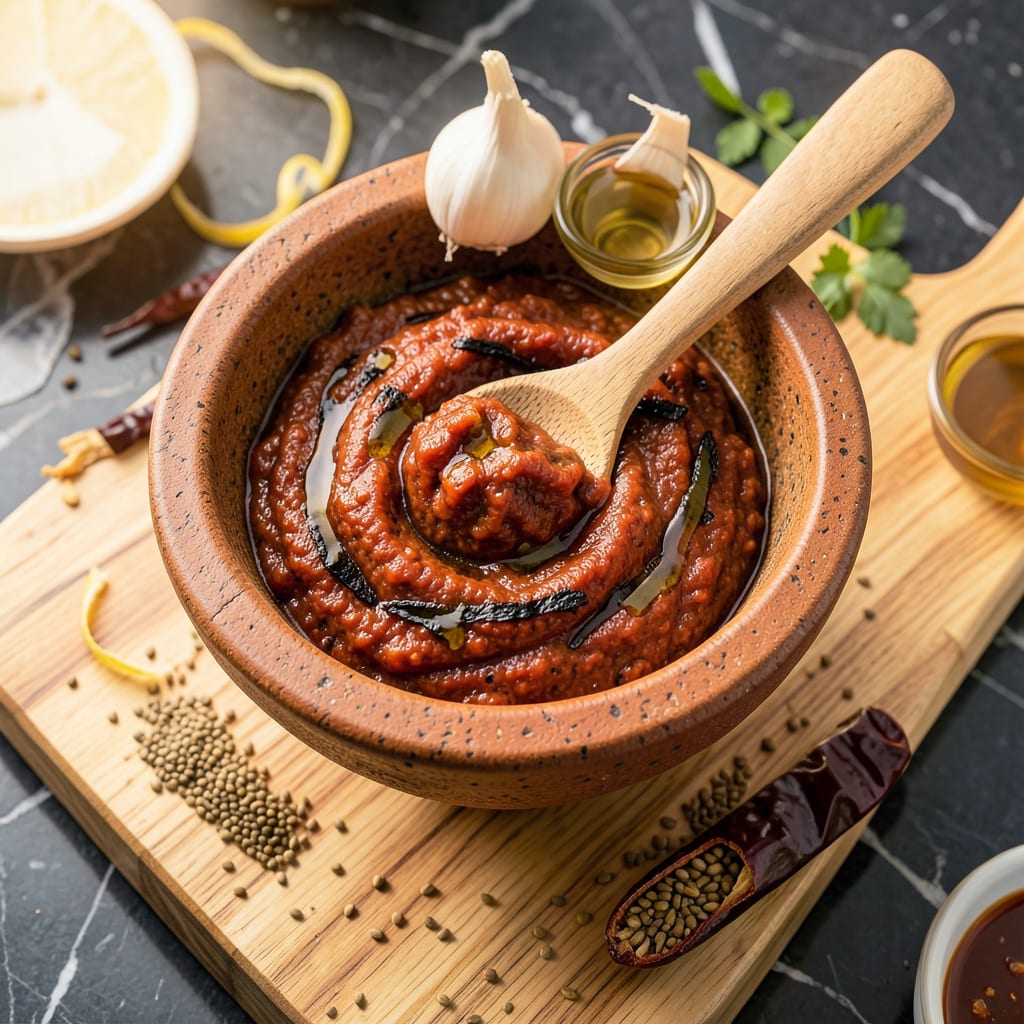
This chipotle paste delivers concentrated smoky heat that transforms ordinary dishes into restaurant-quality creations. Developed through careful testing, it balances the deep, earthy flavor of dried chipotle peppers with just enough acidity and garlic for complexity. The paste maintains its bold character whether used as a marinade base or stirred into sauces.
The process focuses on proper rehydration and blending techniques to achieve a smooth, spreadable consistency. Unlike store-bought versions, this homemade paste contains no preservatives—just pure, intense chipotle flavor. A small batch yields enough for multiple uses while keeping the freshness that commercial products lack.
Ingredients for Chipotle Paste
Nine carefully selected ingredients create this concentrated, smoky paste with restaurant-quality depth and complexity.
| Ingredient | Amount | Notes |
|---|---|---|
| Dried Chipotle Peppers 🌶️ | 1 ½ oz | Stems and seeds removed |
| Boiling Water 💧 | 1 cup | For rehydrating peppers |
| Garlic Cloves 🧄 | 4 cloves | Peeled and rough chopped |
| Apple Cider Vinegar 🍏 | 2 tbsp | For balancing acidity |
| Extra-Virgin Olive Oil 🫒 | ¼ cup | For smooth blending |
| Ground Cumin 🌿 | 1 tsp | Toasted for depth |
| Smoked Paprika 🌶️ | 1 tsp | Enhances smoky profile |
| Sea Salt 🧂 | ½ tsp | Fine grain preferred |
| Coconut Sugar 🥥 | 1 tsp | Balances heat naturally |
The foundation of this paste relies on dried chipotle peppers—seek out Mexican grocery stores or reputable online spice merchants like Penzeys for optimal quality. The peppers should be pliable, not brittle, with a deep reddish-brown hue. Boiling water for rehydration must be fresh to ensure proper texture absorption. Optimal results require toasted ground cumin; briefly dry-toast whole seeds before grinding for maximum aromatic impact.
For acidity balance, apple cider vinegar provides the necessary brightness without overpowering. If unavailable, white wine vinegar at half the quantity may substitute. The extra-virgin olive oil should be robust and peppery—California Olive Ranch offers consistent quality. Coconut sugar can be replaced with organic cane sugar, though the caramel undertones will differ slightly. Garlic intensity can be adjusted by reducing to 2 cloves for milder flavor.
Store the finished paste in an airtight glass container with a thin olive oil layer on top to prevent oxidation. Maintains peak flavor for 3 weeks refrigerated or 6 months frozen in ice cube trays. The paste’s concentrated nature means 1 tablespoon equals approximately 1 whole chipotle pepper in adobo from canned varieties.
Why You’ll Love This Recipe
- No-Blender Needed: So easy. Just soak the dried peppers in boiling water while you smash the garlic—no fancy equipment, no fuss. I’ve made this at 7 a.m. with one eye open and still nailed it.
- Smoky Heat That Lingers: That first hit of smoky chipotle with the sharp tang of apple cider vinegar? It’s the kind of flavor that makes you pause mid-bite. The olive oil rounds it out so it’s bold but balanced—not just spice for spice’s sake.
- My Taco Tuesday MVP: Between us, this paste turns boring ground beef into something worth writing home about. But I also stir it into mayo for sandwiches, swirl it into soups, even mix it with honey for glaze. One batch, endless uses.
- Fridge Stash That Saves: Honestly, I double the recipe every time because it keeps for weeks. That moment you’re staring at a sad chicken breast and remember—oh right, this exists? Pure relief. No last-minute grocery runs, just instant flavor.
Step-by-Step Instructions for Chipotle Paste
This method transforms dried peppers into a versatile paste with balanced heat and smoky depth.
Step 1: Rehydrate the Chipotle Peppers
Place the 1.5 oz dried chipotle peppers (stems and seeds removed) in a heatproof bowl. Pour the 1 cup boiling water over them, ensuring all peppers are fully submerged. Cover with a plate or lid and let soak for 20-25 minutes until completely softened and pliable.
The peppers should expand significantly and become deep red-brown in color. Discard any remaining water that hasn’t been absorbed—this concentrated liquid contains valuable smoky flavor. The rehydration process is complete when the peppers can be easily pierced with a fork.
Step 2: Blend with Aromatics and Vinegar
Transfer the rehydrated peppers to a blender or food processor. Add the 4 cloves garlic cloves (peeled and rough chopped), 2 tbsp apple cider vinegar, and 0.25 cup extra-virgin olive oil. Pulse until the mixture forms a coarse paste, scraping down the sides as needed.
The garlic should be fully incorporated with no visible chunks remaining. The olive oil creates a smooth emulsion while the vinegar provides necessary acidity to balance the smoke. This stage is complete when the mixture has a thick, spreadable consistency with visible flecks of pepper skin.
Step 3: Incorporate Spices and Sweeteners
Add the 1 tsp ground cumin, 1 tsp smoked paprika, 0.5 tsp sea salt, and 1 tsp coconut sugar to the pepper mixture. Blend again for 1-2 minutes until completely smooth and homogeneous. The paste should darken slightly and develop a glossy sheen.
Taste and adjust seasoning if needed—the cumin should provide earthy depth, the paprika enhance the smokiness, and the coconut sugar round out the heat. The final texture should be thick enough to coat the back of a spoon but still pourable. For a finer texture, process for an additional 30 seconds.
Step 4: Rest and Store for Optimal Flavor
Transfer the paste to a clean glass jar or airtight container. Let it rest at room temperature for 30 minutes before using. This allows the flavors to meld and the smoky notes to develop fully. The paste will thicken slightly as it cools.
Store in the refrigerator for up to 2 weeks or freeze in ice cube trays for 3 months. The flavor intensifies over time, becoming more complex after 24 hours. Before each use, stir well as some separation may occur. The paste should maintain its deep red color and aromatic smokiness throughout storage.
Troubleshooting This Dish
Too Watery Paste
If your paste turns out thin and runny, the peppers likely absorbed too much water during rehydration. Drain them thoroughly before blending, pressing gently with paper towels to remove excess liquid. You can also return the blended mixture to the blender and add 1-2 tsp ground chipotle powder to thicken it naturally. 🌡️
Overly Thick Texture
When the paste becomes too dense to spread, gradually blend in 1 tbsp olive oil at a time until reaching the desired consistency. Avoid adding water as it dilutes the smoky intensity. For immediate use, warm the paste slightly in a small saucepan with 1 tsp vinegar to loosen it without compromising flavor.
Bitter Aftertaste
Bitterness often results from over-toasted cumin or burnt garlic. To balance it, stir in ½ tsp coconut sugar and let the paste rest for 30 minutes before reassessing. If the issue persists, blend in 1 tsp tomato paste to mellow the harsh notes while maintaining the smoky profile.
Lacking Smokiness
If the smoky flavor seems weak, boost it by adding ½ tsp liquid smoke (I prefer Wright’s brand) or 1 tsp additional smoked paprika. For a more natural approach, rehydrate 2 extra dried chipotles and blend them into the existing paste. The flavor deepens significantly after 24 hours of refrigeration.
Separation in Storage
Natural separation occurs as the oil rises to the top. Before each use, stir vigorously with a small whisk or fork. For long-term storage, add 1 tsp lecithin powder (available at health stores) as a natural emulsifier when blending. This maintains a uniform texture for up to 3 weeks refrigerated without stirring.
Mold Development
If you spot mold (rare but possible), discard the entire batch immediately. To prevent this, always use sterilized glass jars and ensure the paste cools completely before sealing. Store with a thin olive oil layer on top to create a protective barrier. Freezing in ice cube trays eliminates mold risk entirely for up to 6 months.
Nutrition Facts
Frequently Asked Questions
How long does homemade chipotle paste last?
Properly stored in an airtight container, your paste will stay fresh for 2 weeks refrigerated or 3 months frozen. For best results, add a thin olive oil layer on top before sealing to prevent oxidation.
Can I use canned chipotles in adobo instead?
Yes, but adjust the recipe: use 3-4 canned chipotles (plus 1 tbsp adobo sauce) and reduce vinegar to 1 tbsp. The flavor will be slightly different since canned peppers are already rehydrated and seasoned.
Why does my paste taste bitter?
Bitterness usually comes from over-toasted spices or burnt garlic. Counteract it by blending in ½ tsp coconut sugar or 1 tsp tomato paste. Let it rest 30 minutes before tasting again.
What’s the best way to store leftover paste?
Freeze in ice cube trays for perfect 1-tbsp portions. Once solid, transfer cubes to a freezer bag. Thaw overnight in the fridge when needed. This method preserves flavor for 6 months.
Can I make this without oil?
You can omit oil, but the texture will be thicker. Replace it with 2 tbsp vegetable broth for blending. Note that oil-free paste may separate faster in storage and requires extra stirring before use.

- 8 Bean Soup Recipe Crock Pot: Hearty Vegetable Medley in One Pot - September 25, 2026
- 4C Bread Crumbs Meatballs Recipe: Crispy Crust and Juicy Centers - September 25, 2026
- 6 Oz Chocolate Chip Cookie Recipe: Perfectly Balanced Crispy Edges and Chewy Hearts - September 25, 2026