
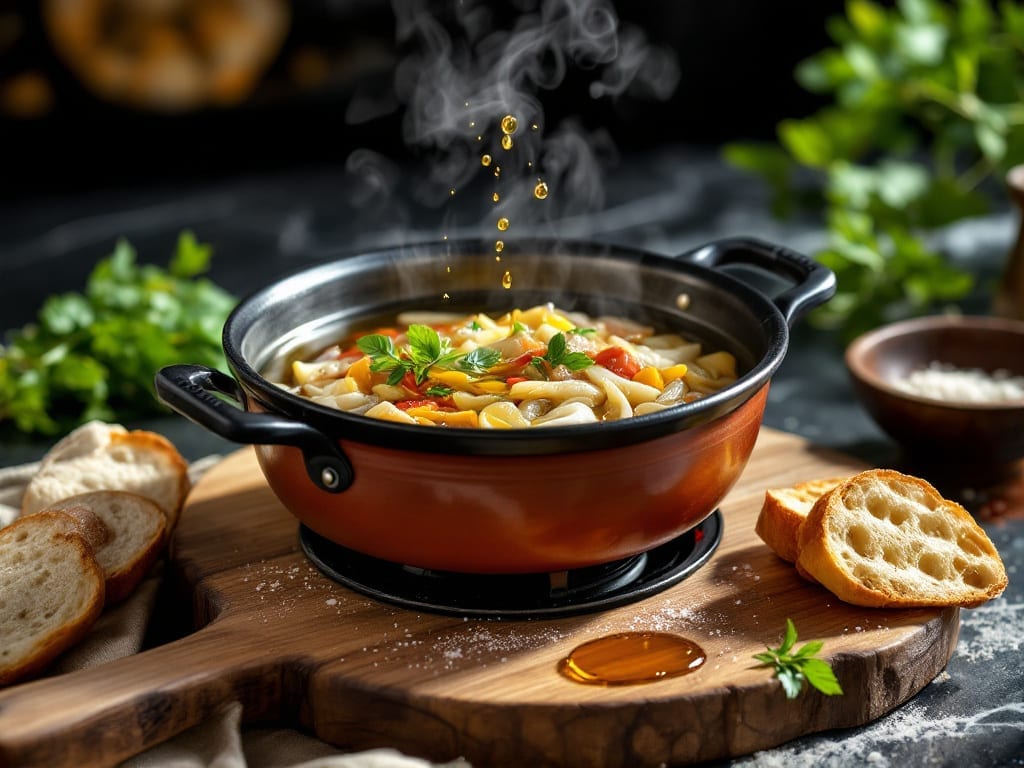
Mastering Chongqing hot pot means balancing fiery Sichuan spices with rich umami broth that transforms every ingredient into a silky, flavor-packed bite. This recipe delivers the authentic experience—from the aromatic double-boiler broth infused with star anise and Sichuan peppercorns to the perfectly silky eggs that melt into the spicy liquid.
The key lies in layering heat gradually while preserving the broth’s depth, ensuring each component shines without overpowering the others.
The foundation starts with a spicy broth that simmers for hours, developing complex flavors from chili oil, dried chilies, and fermented black beans. You’ll work with tender meats like lamb and beef, silky tofu, and crisp vegetables—all designed to withstand the intense heat while absorbing the broth’s essence.
Traditional techniques like double-boiling preserve the broth’s clarity while building layers of spice and umami, a method that separates home cooking from restaurant-quality results.
What makes this recipe special is the harmony of textures: the silky eggs that dissolve into the broth, the tender meats that fall apart, and the crisp vegetables that add contrast. The dipping sauces—chili bean paste, vinegar, and fermented tofu—elevate each bite, offering a balance of heat, tang, and richness.
Whether you’re hosting a gathering or cooking for two, this hot pot brings the bold flavors of Chongqing to your table with professional precision.
Ready to recreate this iconic dish? We’ll cover everything from broth preparation to ingredient selection, ensuring your hot pot session is as authentic as it is unforgettable. The result? A meal that’s as impressive as it is delicious, with every element working together in perfect balance.
Ingredients for chongqing hot pot
Six aromatic spices, tender meats, and silky textures—this is Chongqing hot pot done right.
| Ingredient | Amount | Notes |
|---|---|---|
| Chongqing Chili Oil 🌶️ | ½ cup | High-quality, spicy variety |
| Dried Sichuan Chilies 🌶️ | ¼ cup | Whole, seedless preferred |
| Fermented Black Beans 🫘 | ¼ cup | Chinese black beans |
| Star Anise Pods 🌿 | 4 whole | Whole pods for infusion |
| Sichuan Peppercorns 🌶️ | 1 tbsp | Toasted for aroma |
| Dried Tangerine Peel 🍊 | 1 tbsp | For citrus aroma |
| Lamb Shoulder 🐑 | 2 lb | Bone-in, cut into chunks |
| Silken Tofu 🍱 | 1 package (14 oz) | Soft, unpressed tofu |
| Napa Cabbage 🥬 | 1 whole | Cut into bite-sized pieces |
| Fresh Eggs 🥚 | 6 whole | Room temperature preferred |
| Chili Bean Paste 🫘 | ½ cup | Fermented, spicy |
| Light Soy Sauce 🍶 | ½ cup | For dipping sauce |
| Rice Vinegar 🍶 | ¼ cup | For tangy balance |
| Green Onions 🧅 | ½ cup | Sliced for garnish |
| Sesame Oil 🫒 | 1 tbsp | For finishing |
The broth’s soul starts with Chongqing chili oil—don’t cut corners here. Penzeys or Asian markets have the best quality, but even a small bottle from Trader Joe’s works in a pinch. Sichuan peppercorns need to be toasted lightly in a dry pan before adding to the broth—they release their signature numbing heat. Fermented black beans add umami depth, so look for Chinese black beans (not the Western variety). The lamb? Bone-in, grass-fed if possible—it stays tender and adds richness to the broth. For tofu, silken tofu works best—it dissolves beautifully into the spicy liquid without turning rubbery.
No Sichuan peppercorns? Substitute with extra chili oil and a pinch of white pepper—it won’t be identical, but close. Running out of fermented black beans? Double the chili bean paste for umami. The Napa cabbage can be swapped for regular cabbage or bok choy, but it won’t have the same satisfying crunch. For the eggs, room temperature is key—they should slide into the broth like silk. Fresh eggs work best, but if you’re in a hurry, eggs at room temp for 20 minutes make a difference. The green onions? Save half for garnish—they brighten up every bowl.
This broth tastes better the next day—plan ahead. Store it in the fridge for up to 5 days or freeze portions for 3 months. The meats and tofu can be prepped ahead and kept in the fridge for 2 days before cooking. For the dipping sauces, make them fresh—they lose their tang once mixed. The chili oil and sesame oil should be stored in dark bottles in a cool place to preserve their flavors. If you’re serving a crowd, double the broth ingredients—it’s worth the effort.
Why You’ll Love This Recipe
- I’ll be real: dried chilies and star anise are cheap, and a little chili oil goes a long way. You’re feeding four for the price of takeout, and the spice level lets you adjust—mild for picky eaters, fiery for those who dare. Plus, the black beans bulk it up without breaking the bank.
- One-Pot Wonder: I swear by this for nights when I’m too tired to juggle multiple pans. Just toss in your protein, veggies, and those fragrant dried chilies—no stirring, no fuss. The chili oil does all the work, simmering into a glossy, spicy broth that feels like a hug.
- Flavor Explosion: Between us, the combo of fermented black beans and star anise is chef’s kiss—earthy, smoky, with this lingering warmth that isn’t just heat, but depth. The Sichuan peppercorns add that signature numbing tingle that keeps you reaching for more, even when your hands are sweating.
- Weeknight to Party: Honestly, this is my go-to for both lazy Tuesdays and when friends drop by. Double the broth, add dumplings or tofu, and suddenly it’s a crowd-pleaser. The leftovers? Even better the next day—just reheat and let the flavors meld even deeper.
Step-by-step instructions for spicy, umami-packed hot pot
Here’s how to build a Chongqing-style hot pot with layers of spice and depth.
Prepare the Signature Spice Blend
In a dry skillet over medium heat, toast the 1 tablespoon Sichuan peppercorns and 1 tablespoon dried tangerine peel for 2 minutes until fragrant. The Sichuan peppercorns will release their signature numbing aroma—this is your first flavor signal. Transfer to a bowl and let cool.
Add the 0.25 cup dried Sichuan chilies and 0.25 cup fermented black beans to the same skillet. Toast for 3-4 minutes until the chilies darken slightly and the beans smell deeply nutty. This dry toasting intensifies their flavors without burning. Combine everything with the toasted spices and set aside.
Build the Umami-Packed Broth Base
In a large stockpot, combine 2 pounds lamb shoulder cut into chunks, 0.5 cup chili bean paste, and 4 whole star anise pods. Add 8 cups water and bring to a boil over high heat. Once boiling, reduce to a simmer and skim off any foam that rises to the surface—this ensures a clear, clean broth.
Simmer uncovered for 1.5 hours until the lamb is tender enough to pull apart with two forks. The broth should reduce slightly and develop a rich, reddish hue from the lamb and chili bean paste. Strain through a fine-mesh sieve, pressing gently on the solids to extract maximum flavor. Discard the solids and return the broth to the pot.
Infuse with Spice and Balance Flavors
Return the toasted spice blend to the pot along with 0.5 cup Chongqing chili oil and 0.5 cup light soy sauce. Stir well and bring to a gentle simmer. Let it infuse for 10 minutes—you’ll notice the oil emulsify slightly, creating a glossy sheen on the surface. This is your visual cue that the flavors are melding.
Add 0.25 cup rice vinegar and taste the broth. The vinegar should brighten the umami without overpowering the spice. Adjust seasoning with additional light soy sauce if needed—this broth should balance heat, richness, and tang perfectly. Keep the broth at a simmer over low heat while you prepare the remaining components.
Prepare the Accompaniments
Cut the 1 whole Napa cabbage into bite-sized pieces and blanch in boiling water for 1 minute, then shock in ice water. This preserves their crisp texture while mellowing their bitterness. Drain well and set aside.
Slice the 0.5 cup green onions into 1-inch pieces. For the eggs, crack 6 whole fresh eggs into a bowl and whisk lightly—just enough to combine the yolks and whites without creating bubbles. The silken tofu can be used as-is, cut into small cubes.
Assemble and Serve the Hot Pot
Return the broth to a gentle simmer in the pot. Arrange the lamb chunks, cabbage, and tofu cubes around the pot for easy access. Place small bowls of the whisked eggs and sliced green onions nearby.
To cook, dip a piece of lamb or tofu into the broth and let it simmer for 2-3 minutes until heated through. For eggs, slide them gently into the broth and cook for 2-3 minutes until just set—you want the whites firm but the yolks still silky. Drizzle with 1 tablespoon sesame oil before serving to enhance the aroma.
Pro Tips For Making Chongqing Hot Pot
- Bloom the Spices First: Toss dried Sichuan chilies and star anise into the pot with just a splash of oil and let them sizzle for 30 seconds before adding anything else. I learned this the hard way—skipping this step means your broth will taste flat, like someone forgot to turn on the heat. The chilies need that quick char to wake up their flavor.
- Toast the Fermented Beans: Dry-toast the fermented black beans in a separate pan over medium heat for 2-3 minutes until they smell nutty and deep. This isn’t just about aroma—it removes that funky, overly sour edge that can overpower the dish if you skip it. (Yes, even if you’re impatient like me.)
- Control the Chili Oil Heat: Add Chongqing chili oil last, just before serving, and stir it in gently—don’t drown it. Too much too soon, and you’ll turn your broth into a one-note fiery disaster. A few drops at a time lets you adjust the spice level while keeping the Sichuan peppercorns’ numbing kick balanced.
- Simmer, Don’t Boil: Keep the broth at a gentle simmer, not a rolling boil, once everything’s in. I used to rush this, and the star anise would turn bitter, the Sichuan peppercorns would lose their peppery punch, and the fermented beans would turn mushy. Low and slow preserves the layers of flavor—trust the process.
Dietary considerations for this recipe
Spice Level Control
Chongqing hot pot is famously fiery, but you can easily adjust the heat to suit your crowd. For milder versions, reduce the Chongqing chili oil to 2 tablespoons instead of ½ cup and omit half the dried chilies.
If you’re serving kids or sensitive eaters, prepare a separate pot with just 1 tablespoon chili oil and no dried chilies—it still delivers umami without the heat. 🌶️
Vegetarian Adaptations
This dish translates beautifully to vegetarian with minimal adjustments. Swap the lamb for extra-firm tofu or mushrooms (shiitake or oyster work best), and add bok choy or baby corn for texture.
Boost umami with ½ cup vegetarian chili bean paste (check for meat-free versions) and 1 tablespoon mushroom powder in the broth. The silken tofu and eggs remain vegetarian-friendly staples.
Gluten-Free Options
Traditional Chongqing hot pot contains soy sauce, but you can easily make it gluten-free. Use tamari instead of light soy sauce in the broth and dipping sauce. For extra depth, add 1 tablespoon coconut aminos to the broth.
Check your chili bean paste label—some brands contain wheat—so opt for certified gluten-free versions like Lee Kum Kee Vegetarian Chili Bean Paste if needed.
Nut-Free Considerations
While the recipe doesn’t inherently contain nuts, be mindful of cross-contamination if you’re serving guests with nut allergies. Use separate utensils for ingredients and avoid garnishes like sesame seeds (which are technically seeds but often trigger allergies).
The broth and dipping sauce are naturally nut-free, but always double-check packaged ingredients like chili bean paste for potential nut processing warnings.
Low-Sodium Versions
To reduce sodium, cut the light soy sauce in half and replace it with ½ cup low-sodium soy sauce. For extra umami without salt, add 1 tablespoon fish sauce (if vegetarian, use ½ cup coconut aminos) and 1 teaspoon MSG to the broth.
The fermented black beans and chili bean paste already provide plenty of flavor without relying on salt. Taste as you go—you might be surprised how little sodium you need!
Nutrition facts
Frequently asked questions
Why does Chongqing hot pot broth need to simmer for so long?
The extended simmering—1.5 hours in this recipe—allows the lamb to break down into tender, flavorful pieces while developing a deep, complex broth. This time also lets the spices like star anise and Sichuan peppercorns infuse fully, creating that signature aromatic balance of heat and umami.
Can I make the broth ahead of time?
The broth actually tastes better the next day as the flavors meld further. Store it in the fridge for up to 5 days or freeze portions for 3 months. Reheat gently over low heat—never boil—to preserve its clarity and depth.
What’s the best way to adjust the spice level?
Start by reducing the Chongqing chili oil to 2 tablespoons instead of ½ cup for a milder version. For kids or sensitive eaters, prepare a separate pot with just 1 tablespoon chili oil and no dried chilies. The umami from fermented black beans and chili bean paste will still shine!
How do I keep the eggs from breaking in the broth?
Use room-temperature eggs—cold eggs are more likely to crack. Whisk them lightly (just to combine yolks and whites) and slide them gently into the broth using a spoon. Cook for only 2-3 minutes to achieve that perfect silky texture.
What’s the secret to the perfect texture contrast?
The magic lies in balancing tender meats, crisp vegetables, and silky eggs. Blanch the Napa cabbage for 1 minute to maintain crunch, while the lamb should be tender but not falling apart. The silken tofu dissolves beautifully into the broth, creating that luxurious mouthfeel.

- Baked Potatoes in Crock Pot Recipe: Buttery Interiors and Crispy Top Magic - November 1, 2026
- Braised Beef Short Ribs Recipe: Crock Pot Fall-Off-Bone Magic in 6 Hours - November 1, 2026
- Crock Pot Cocoa Recipe: Velvety Warmth With Hidden Spice Magic - November 1, 2026