
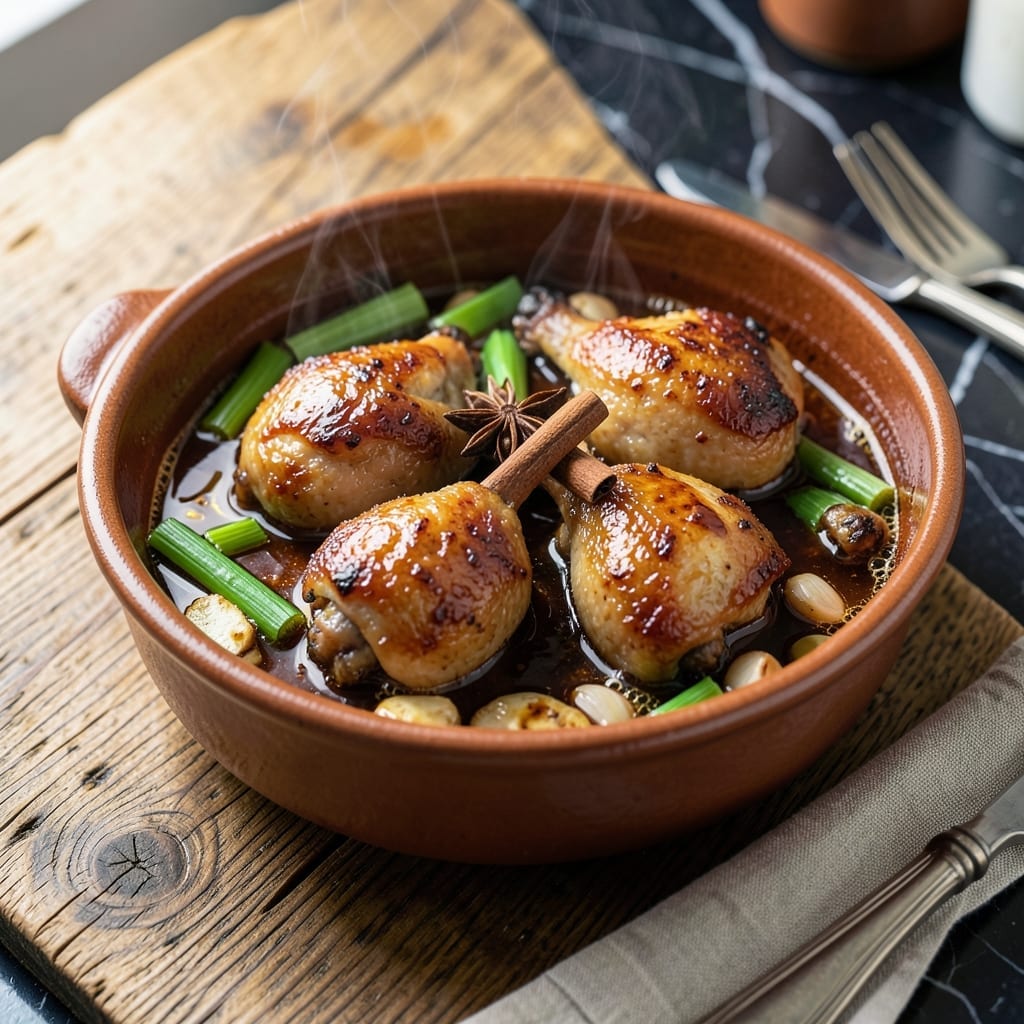
There’s an unmatched depth of flavor that comes from slow-braising duck in a traditional clay pot. This method transforms tough meat into fall-apart tender perfection while infusing every bite with aromatic richness.
The clay pot’s porous surface distributes heat evenly, creating a gentle cooking environment that preserves moisture. I’ve refined this technique to balance the duck’s natural richness with traditional Asian seasonings, resulting in a dish that’s both comforting and authentic.
What emerges is meat so tender it nearly melts, surrounded by a deeply flavored sauce that soaks into every piece. The clay pot adds a subtle earthiness that complements the duck’s natural sweetness.
This dish brings restaurant-quality results to your home kitchen with minimal effort. The process is straightforward, but the flavors are anything but simple.
Ingredients for Clay Pot Duck
Traditional clay pot braising transforms duck into fall-apart tender perfection with aromatic Asian spices.
| Ingredient | Amount | Notes |
|---|---|---|
| Duck Legs 🦆 | 4 whole | Skin-on, excess fat trimmed |
| Soy Sauce 🫒 | ½ cup | Low-sodium preferred for balance |
| Shaoxing Wine 🍶 | ⅓ cup | Or dry sherry as substitute |
| Rock Sugar 🍬 | 1 oz | Crushed for even dissolution |
| Star Anise Pods ⭐ | 2 whole | Lightly toasted for aroma |
| Cinnamon Stick 🌰 | 1 whole | 2-inch piece, broken in half |
| Ginger Root 🌿 | 2 oz | Peeled, sliced into coins |
| Garlic Cloves 🧄 | 6 cloves | Lightly smashed, peeled |
| Green Onions 🌱 | 4 whole | Cut into 2-inch pieces |
| Dried Shiitake Mushrooms 🍄 | 4 whole | Rehydrated, stems discarded |
| Black Peppercorns 🌶️ | 1 tsp | Lightly crushed |
| Five-Spice Powder 🌿 | ½ tsp | Freshly measured for potency |
| Water 💧 | 2 cups | Or enough to cover duck |
The duck is non-negotiable here. Muscovy duck legs are ideal for their rich fat content and meaty texture. Find them at Asian specialty markets or order online from D’Artagnan. The clay pot itself should be untaeled terracotta—soak it in water for 15 minutes before use to prevent cracking. Shaoxing wine is essential for authenticity, but dry sherry works in a pinch.
No Shaoxing wine? Dry white wine with a teaspoon of sugar mimics the profile. Rock sugar can be swapped for brown sugar in a 1:1 ratio. Fresh ginger and garlic are mandatory—powdered versions won’t deliver the depth. If star anise is unavailable, a pinch of ground anise works, but whole pods are far superior. Five-spice powder must be fresh; old spices lose their punch fast.
Braised duck keeps in the fridge for 3-4 days and reheats beautifully. The flavors deepen overnight, so it’s actually better the next day. Freeze for up to 3 months in airtight containers. The rendered duck fat is liquid gold—strain and save for roasting potatoes (worth the extra minute).
Why You’ll Love This Recipe
- Set and Forget: I just toss the duck legs with soy sauce and Shaoxing wine in the clay pot, then let the oven do the work—no babysitting required.
- Sticky Sweet Magic: The rock sugar caramelizes with the star anise, coating the meat in this ridiculously good glossy glaze.
- Weekend or Wednesday: Honestly, it feels fancy enough for company but I’ve made it on a random Tuesday with zero stress.
- Leftovers? Even Better: The flavors deepen overnight, so I always make extra—my lunch the next day is something to actually look forward to.
Step-by-Step Instructions for Clay Pot Duck
Master this traditional technique for fall-off-the-bone tenderness with authentic aromatic depth.
Step 1: Par-Blaze the Duck Legs
Heat a clay pot or heavy Dutch oven over medium-high heat until hot. Add the 4 whole Duck Legs skin-side down and sear undisturbed for 5-6 minutes until the skin renders its fat and turns deep golden brown.
This initial browning develops the maillard reaction, creating complex flavors that define the dish. Flip the legs and sear the other side for 3-4 minutes. Remove the duck and set aside—the skin should be crisp but the meat still raw inside.
Pour off all but 1 tablespoon of the rendered fat, which will serve as the flavor base for your braising liquid.
Step 2: Build the Aromatic Foundation
In the same pot, add the 2 oz Ginger Root, 6 cloves Garlic Cloves, 4 whole Green Onions, 2 whole Star Anise Pods, 1 whole Cinnamon Stick, and 1 tsp Black Peppercorns. Stir constantly over medium heat for 2-3 minutes until fragrant.
The spices should release their essential oils into the fat, creating an intoxicating aroma. Add the 4 whole Dried Shiitake Mushrooms and 0.5 tsp Five-Spice Powder, stirring for another 30 seconds to bloom the spices without burning.
This step creates the soul of your dish—the layered aromatic profile that defines traditional clay pot cooking.
Step 3: Create the Braising Liquid
Pour in the 0.5 cup Soy Sauce and 0.33 cup Shaoxing Wine, using a wooden spoon to deglaze the pot, lifting all the browned bits from the bottom. Add the 1 oz Rock Sugar and 2 cups Water, stirring until the rock sugar begins to dissolve.
Bring the mixture to a boil, then reduce heat to low. The liquid should be deeply colored from the soy sauce and aromatic from the spices. Return the duck legs to the pot, skin-side up, ensuring they’re mostly submerged.
This balance of salty, sweet, and umami creates the perfect braising environment for the duck to become exceptionally tender.
Step 4: Braise to Perfection
Cover the pot and maintain a gentle simmer for 1.5-2 hours. The duck is done when the meat pulls away from the bone easily with a fork and the skin has absorbed the braising liquid’s rich color and flavor.
Check occasionally to ensure the liquid hasn’t reduced too much—you want enough to keep the duck partially submerged. If needed, add a splash of water to maintain the level.
The transformation is remarkable: tough connective tissue melts into gelatin, while the meat becomes impossibly tender and infused with the complex spice blend.
Step 5: Reduce and Serve
Once the duck is tender, remove the lid and increase heat to medium. Simmer uncovered for 10-15 minutes to reduce the sauce to a glossy, syrupy consistency that coats the back of a spoon.
Discard the star anise, cinnamon stick, and green onion pieces if desired, or leave them in for rustic presentation. Serve the duck legs with the reduced sauce spooned over the top, ensuring each portion gets an equal share of the mushrooms and braising liquid.
The final dish should have meat that falls from the bone at the slightest touch, with a sauce so rich and flavorful you’ll want to soak it up with every bite.
Pro Tips For Making Clay Pot Duck
- Parboil the Duck: I learned this the hard way—boiling the duck legs for 3-5 minutes first removes excess fat and impurities, so your clay pot doesn’t overflow with grease.
- Crush the Sugar: Rock sugar dissolves painfully slow, so smash it into smaller chunks before adding—this saves 10 minutes of stirring later.
- Skip the Lid: Resist the urge to cover the pot completely; leave a small gap to let the steam escape while keeping the braise concentrated.
- Rest Before Serving: After turning off the heat, let the duck sit in the liquid for 15 minutes before serving—this keeps the meat tender instead of tough.
Regional Styles of clay pot duck
Cantonese Style
In Guangdong, they use a sand pot (clay pot) for a more delicate approach. The duck is parboiled first to remove impurities, then braised with dried tangerine peel and lotus leaves for a subtle citrus note. The result is cleaner, with a lighter sauce that lets the duck’s natural flavor shine. 🗺️
Sichuan Spicy
Sichuan versions amp up the heat with Sichuan peppercorns and dried chilies in the braising liquid. The duck absorbs a numbing spiciness that’s balanced by the richness of the meat. I add 2 tbsp chili oil at the end for an extra kick.
Taiwanese Adaptation
Taiwanese clay pot duck often includes dried shiitake mushrooms and bamboo shoots for texture. The braising liquid is reduced further to create a sticky glaze. I’ve found adding 1 tbsp oyster sauce deepens the umami profile.
Vietnamese Carmélisé
In Vietnam, duck is caramelized in a clay pot with fish sauce and coconut water instead of Shaoxing wine. The result is a sweeter, more complex sauce. I use 3 tbsp coconut water for every ¼ cup fish sauce.
Japanese Influence
Japanese-style clay pot duck uses mirin and dashi in the braising liquid. The duck is often served with udon noodles to soak up the sauce. I add 1 tbsp mirin and ½ cup dashi for a lighter, umami-rich broth.
Nutrition Facts
Frequently Asked Questions
Do I need to soak the clay pot first?
Yes, always soak an unglazed clay pot in water for 15-20 minutes before use. This prevents cracking from thermal shock and helps distribute heat evenly.
Can I use a Dutch oven instead?
A Dutch oven works well as an alternative. It won’t impart the same earthy flavor but maintains even heat. Use low heat to mimic clay pot conditions.
How do I know when the duck is done?
The meat should pull away from the bone easily with a fork after 1.5-2 hours of braising. The skin will be deeply colored and infused with sauce.
Can I make this ahead of time?
The flavors deepen overnight. Store in the fridge for up to 3-4 days or freeze for 3 months. Reheat gently to preserve tenderness.

- 4C Bread Crumbs Meatballs Recipe: Crispy Crust and Juicy Centers - September 25, 2026
- 6 Oz Chocolate Chip Cookie Recipe: Perfectly Balanced Crispy Edges and Chewy Hearts - September 25, 2026
- 6-Inch Coffee Cake Recipe: Vanilla Bean Swirls and Buttery Streusel Topping - September 25, 2026