
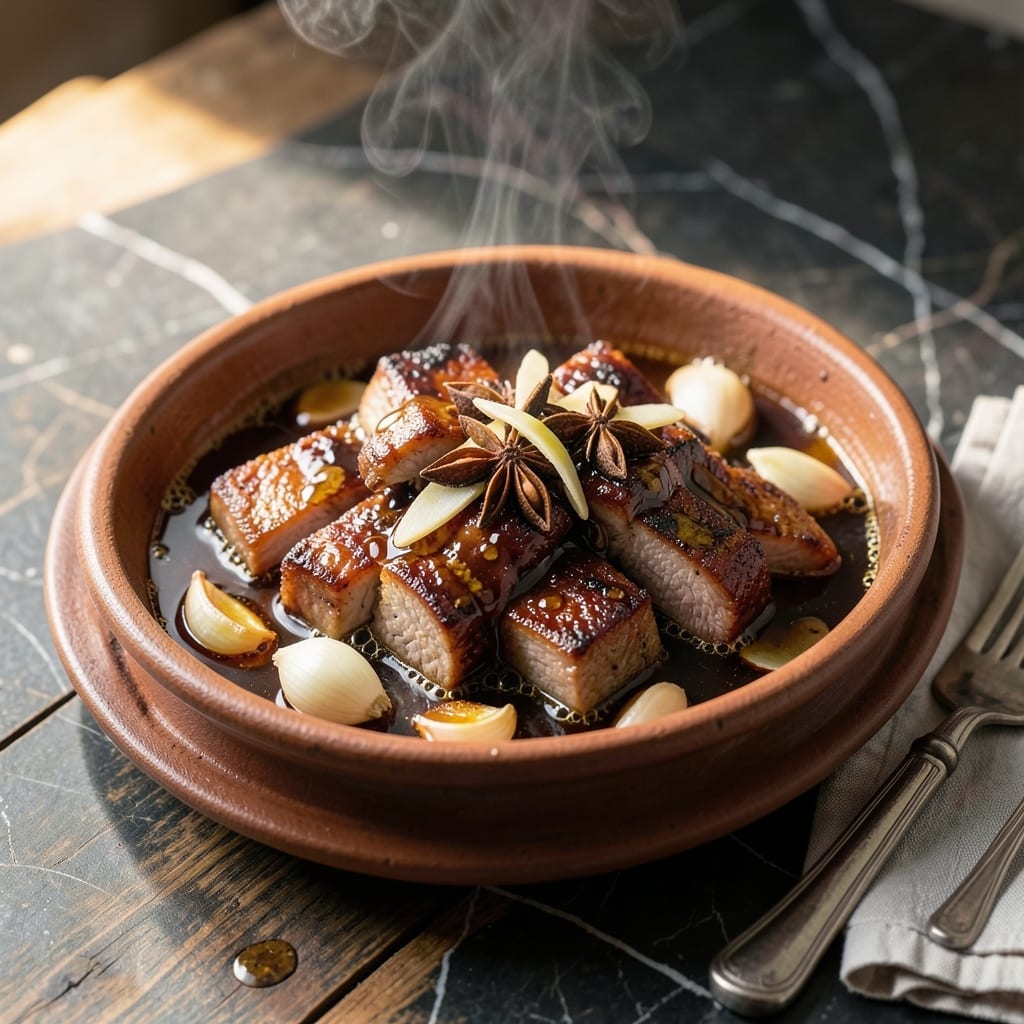
This Chinese-style braised pork loin transforms tough cuts into fall-apart tender meat with rich, aromatic depth. The clay pot locks in moisture while allowing steady, even heat distribution for perfect results every time.
The secret lies in the slow cooking process, where pork absorbs the complex flavors of soy sauce, star anise, and ginger. A brief sear before braising develops a caramelized crust that enhances the final texture.
What emerges is melt-in-your-mouth pork with a glossy, flavor-packed sauce that clings to each bite. The clay pot creates an ideal environment for this traditional technique, ensuring even cooking without hot spots.
Serve with steamed rice to soak up every drop of the savory braising liquid. This method delivers authentic results with minimal active cooking time.
Ingredients for Clay Pot Pork Loin
Rich aromatics and tender pork come together in this clay pot classic.
| Ingredient | Amount | Notes |
|---|---|---|
| Pork Loin 🥩 | 2 lb | Boneless, cut into large chunks |
| Light Soy Sauce 🫒 | ½ cup | Low-sodium preferred for balance |
| Dark Soy Sauce 🫒 | 2 tbsp | For color and depth |
| Star Anise Pods ⭐ | 2 whole | Whole, not ground |
| Fresh Ginger 🌿 | 2 tbsp | Peeled and sliced into coins |
| Garlic Cloves 🧄 | 6 cloves | Smashed, skin removed |
| Brown Sugar 🍚 | 3 tbsp | Light or dark works fine |
| Rice Wine 🍶 | ¼ cup | Shaoxing wine preferred |
| Green Onions 🧅 | 4 whole | Cut into 2-inch pieces |
| Dried Shiitake Mushrooms 🍄 | ½ oz | Rehydrated and sliced |
| Vegetable Oil 🫒 | 2 tbsp | High smoke point for searing |
| Rock Sugar 🍬 | 1 tbsp | Or substitute granulated sugar |
| Bay Leaf 🍃 | 1 whole | For aromatic depth |
| Water 💧 | 1 ½ cups | For braising liquid |
The pork loin is key here—look for boneless cuts with good marbling at your butcher or Whole Foods. Star anise and bay leaf are non-negotiable for authentic flavor, and fresh ginger makes a noticeable difference (the powdered stuff won’t cut it). A well-stocked Asian market will have everything you need, including Shaoxing wine and rock sugar.
No Shaoxing wine? Dry sherry works in a pinch. Out of rock sugar? Granulated sugar at half the amount is fine. Dried shiitake not available? Fresh shiitake or cremini mushrooms can be used instead. The soy sauce balance is crucial—don’t skip the dark soy, as it adds color and complexity.
This dish tastes even better the next day. Store leftovers in an airtight container for up to 4 days in the fridge, or freeze for 3 months. Reheat gently to preserve the tender texture.
Why You’ll Love This Recipe
- One Pot Wonder: I just toss the pork loin with soy sauces, star anise, and ginger in the clay pot and let it work its magic.
- Deep Umami Bomb: The combo of light and dark soy sauce with star anise gives this dish layers of rich, savory-sweet flavor that’s honestly hard to beat.
- Weeknight Hero: Between us, this is my go-to when I need a flavorful meal that feels special but takes almost no active time.
- Leftovers Win: The pork tastes even better the next day, and it reheats beautifully for lunches or quick dinners.
Step-by-Step Instructions for Clay Pot Pork Loin
This method delivers tender pork with deep, aromatic flavors using traditional Chinese techniques.
Step 1: Sear the Pork Loin
Heat the 2 tbsp vegetable oil in a clay pot or heavy Dutch oven over medium-high heat. When the oil shimmers, add the 2 lb pork loin chunks in a single layer, being careful not to overcrowd. Sear undisturbed for 3-4 minutes per side until all pieces develop a deep golden-brown crust.
This searing step creates the fond (browned bits) that will dissolve into your braising liquid, building layers of flavor. The pork will finish cooking later, so don’t worry about it being fully done at this stage. Remove the pork and set aside.
Step 2: Build the Aromatic Base
In the same pot, add the 2 tbsp fresh ginger coins, 6 cloves garlic cloves, 4 whole green onions, 2 whole star anise pods, and 1 whole bay leaf. Stir for 1-2 minutes until the aromatics release their fragrance and the garlic begins to turn light golden at the edges.
Next, add the 0.5 oz dried shiitake mushrooms (rehydrated and sliced) and cook for another 2 minutes. This toasts the spices and mushrooms, intensifying their flavors. Be careful not to burn the garlic—it should be fragrant, not bitter.
Step 3: Create the Braising Liquid
Pour in the 0.25 cup rice wine and deglaze the pot, scraping up any browned bits from the bottom. Add the 0.5 cup light soy sauce, 2 tbsp dark soy sauce, 3 tbsp brown sugar, 1 tbsp rock sugar, and 1.5 cups water. Stir well to combine and dissolve the sugars.
Bring the mixture to a gentle simmer over medium heat. Taste the liquid—it should be savory with a touch of sweetness. The dark soy sauce adds depth and color, while the light soy sauce provides the primary seasoning.
Step 4: Braise the Pork to Tenderness
Return the seared pork to the pot, along with any accumulated juices. The liquid should come about halfway up the pork pieces. Cover with a lid and reduce the heat to low. Simmer gently for 1.5 to 2 hours, turning the pork occasionally.
Check the pork after 1.5 hours. It’s done when the meat is fork-tender and easily pulls apart. If the liquid reduces too much during cooking, add a splash of water. The sauce should coat the back of a spoon when finished.
Step 5: Rest and Serve
Once the pork is tender, remove the pot from heat and let it sit covered for 10 minutes. This allows the pork to reabsorb some of the braising liquid, making it even more flavorful and juicy.
Discard the star anise pods and bay leaf before serving. The pork should be glazed with the rich, aromatic sauce. Serve hot with steamed rice to soak up the delicious braising liquid. The sauce will have deepened in color and flavor, with the pork absorbing all the complex aromatics.
Pro Tips For Making Clay Pot Pork Loin
- Preheat the Pot: Soak your clay pot in water for 15 minutes before heating—I learned this the hard way after cracking one from thermal shock. A damp cloth under the pot prevents direct flame contact.
- Score the Pork: Cut 1/4-inch slits into the fat cap of the loin so the soy-ginger marinade penetrates deeper. Sounds fussy, but it actually changes the outcome of the flavor distribution.
- Skip the Lid: Resist the urge to cover the pot completely—leave a small gap to let steam escape, or you’ll end up with boiled pork instead of that caramelized crust.
- Toast the Spices: Dry-toast the star anise in the pot for 30 seconds before adding liquid to wake up its aroma. My grandmother swore by this, and she was right.
Make-Ahead Tips for This Recipe
Prep Ahead Strategy
You can prep all aromatics the night before: peel and slice the 2 tbsp fresh ginger, smash the 6 garlic cloves, and cut the 4 green onions. Store them in a sealed container in the fridge. This saves 15 minutes on cooking day. 💡
Marinating Option
For even deeper flavor, marinate the pork in the soy sauce mixture for 4-12 hours before cooking. Combine 0.5 cup light soy sauce, 2 tbsp dark soy sauce, and 3 tbsp brown sugar in a bowl. The pork will absorb more of those rich flavors during braising.
Clay Pot Prep
If using a traditional clay pot, soak it in water for 30 minutes before cooking to prevent cracking. I learned this the hard way after my first pot developed hairline fractures. For modern clay pots, check the manufacturer’s instructions—some don’t require soaking.
Make-Ahead Cooking
This dish actually improves overnight. Cook the pork completely, then store it in its braising liquid in the fridge for up to 2 days. The flavors meld beautifully, and the pork becomes even more tender as it absorbs the sauce.
Freezing for Later
Cool the pork and sauce completely, then transfer to airtight containers. It freezes well for up to 3 months. Thaw overnight in the fridge before reheating. The texture holds up surprisingly well for a braised dish. ❄️
Reheating Tips
Gently reheat on the stovetop over low heat for 10-15 minutes, stirring occasionally. Add a splash of water if the sauce seems too thick. Avoid the microwave, as it can make the pork tough.
Nutrition Facts
Frequently Asked Questions
Can I use a regular pot instead of clay?
A heavy Dutch oven works well as a substitute. It retains heat similarly but may require slightly more liquid. The flavor will still develop beautifully over 1.5-2 hours of braising.
How do I prevent the sauce from being too salty?
Use low-sodium soy sauce and taste before adding extra seasoning. The sauce reduces during cooking, concentrating flavors. You can always adjust with a splash of water or a pinch of sugar.
What if my pork isn’t tender after 2 hours?
Continue cooking for another 30 minutes on low heat. Ensure there’s enough liquid covering the pork. If it’s still tough, the cut may have been too lean—marbling is key for tenderness.
Can I add vegetables to the pot?
Yes! Hardy veggies like carrots or daikon radish can be added during the last 45 minutes of cooking. They’ll soak up the delicious braising liquid.

- 6 Oz Chocolate Chip Cookie Recipe: Perfectly Balanced Crispy Edges and Chewy Hearts - September 25, 2026
- 6-Inch Coffee Cake Recipe: Vanilla Bean Swirls and Buttery Streusel Topping - September 25, 2026
- 1 Hour Soup Recipe: Velvety Richness Without the Wait - September 25, 2026