
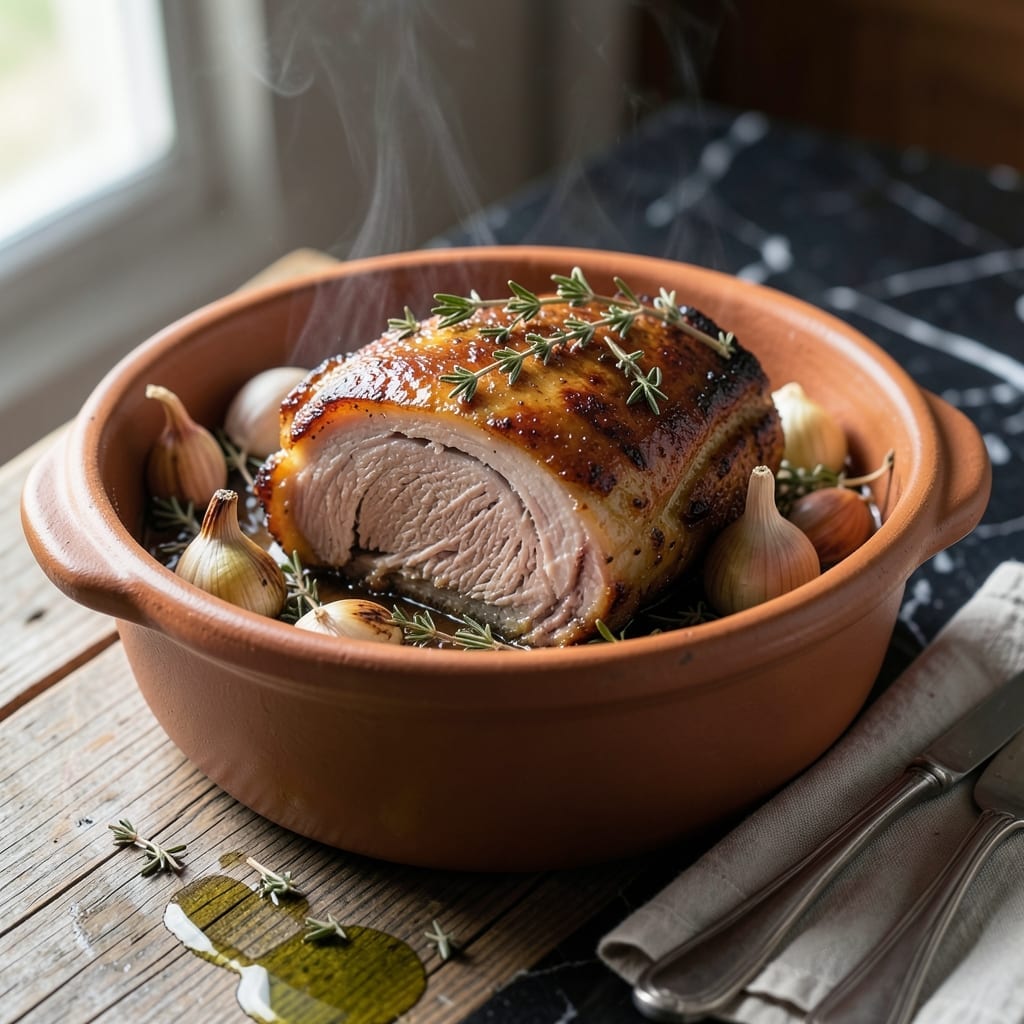
There’s something special about cooking with a clay pot—it transforms tough cuts into fall-apart tender perfection. This method has been used for centuries to create deeply flavorful roasts with minimal effort.
The clay pot’s porous material traps moisture, ensuring the pork stays juicy while developing a rich, savory crust. I’ve refined this technique to highlight the natural flavors of the meat with simple seasonings and a slow, steady heat.
What emerges is a roast with tender meat that practically melts in your mouth, infused with the earthy essence of the clay. The result is a dish that feels both rustic and refined, perfect for any occasion.
Serve with roasted vegetables or mashed potatoes to soak up every bit of the delicious juices. Let’s begin.
Ingredients for Clay Pot Pork Roast
Simple ingredients, dramatic results. The clay pot does all the heavy lifting here.
| Ingredient | Amount | Notes |
|---|---|---|
| Pork Shoulder 🐖 | 3 lb | Bone-in for extra flavor |
| Kosher Salt 🧂 | 2 tsp | Diamond Crystal preferred |
| Black Peppercorns 🌶️ | 1 tsp | Freshly cracked for best flavor |
| Dried Thyme 🌿 | 1 tbsp | Crushed between fingers |
| Dried Rosemary 🍃 | 1 tbsp | Crushed for aroma release |
| Garlic Cloves 🧄 | 6 cloves | Smashed, unpeeled |
| Yellow Onion 🧅 | 1 whole | Quartered for depth |
| Carrots 🥕 | 3 whole | Cut into large chunks |
| Olive Oil 🫒 | 2 tbsp | For searing pork |
| Chicken Stock 🍲 | 1 cup | Low-sodium preferred |
| Bay Leaves 🌿 | 2 whole | For aromatic depth |
| Dijon Mustard 🟡 | 1 tbsp | For crust formation |
The pork shoulder is non-negotiable—bone-in gives you that melt-in-your-mouth texture the clay pot is famous for. Costco has great prices on large cuts, or ask your butcher for a Boston butt (same thing, different name). Look for good marbling throughout. I always grab a little extra since leftovers make killer tacos. Don’t skip the bone—it adds depth to the juices that soak into everything.
No pork shoulder? Pork butt is identical (just a different cut name). Chicken thighs work in a pinch but won’t have the same richness. Out of fresh rosemary? Dried at half the amount. The Dijon can be swapped for whole-grain mustard if that’s what you’ve got. For the stock, Better Than Bouillon is my go-to—just dissolve a teaspoon in hot water. Baby carrots are fine if you’re in a hurry (just leave them whole).
The roast tastes even better the next day, so make extra. Stores in the fridge for 4-5 days or freezes for 3 months. I like to pull the meat off the bone and mix it with some of the juices for sandwiches (or those tacos I mentioned).
Why You’ll Love This Recipe
- One Pot Magic: I just season the pork shoulder with salt, pepper, thyme, and rosemary, then let the clay pot do the rest.
- Herb-Infused Bite: The rosemary and thyme crust on that tender pork shoulder is ridiculously good.
- Sunday to Tuesday: Roast a big shoulder on Sunday, and I’ve got pulled pork for tacos, sandwiches, or pasta all week.
- Budget Stretcher: Pork shoulder is cheap, and one clay pot roast feeds us for days—honestly, it’s my wallet’s best friend.
Step-by-Step Instructions for Clay Pot Pork Roast
Soak the clay pot first, then build layers of flavor with this slow-cooked method.
Step 1: Soak the Clay Pot and Prep the Pork
Submerge the clay pot and its lid in cold water for 15-30 minutes. This prevents cracking during cooking. Meanwhile, pat the 3 lb Pork Shoulder dry with paper towels—this ensures a proper sear. I always use bone-in for extra richness.
Rub the pork all over with the 2 tsp Kosher Salt, freshly cracked 1 tsp Black Peppercorns, 1 tbsp Dried Thyme, and 1 tbsp Dried Rosemary. Crush the dried herbs between your fingers first to release their oils. Let the seasoned pork sit at room temperature while the pot soaks.
Step 2: Sear and Layer the Aromatics
Heat the 2 tbsp Olive Oil in a skillet over medium-high heat. Sear the pork on all sides until deeply browned—about 3-4 minutes per side. This builds a flavorful crust. Transfer the pork to the soaked clay pot.
Add the 6 cloves Garlic Cloves (smashed but unpeeled), 1 whole Yellow Onion (quartered), and 3 whole Carrots (cut into large chunks) around the pork. These will infuse the dish with sweetness and depth as they cook down.
Step 3: Build the Braising Liquid and Start Cooking
Whisk the 1 tbsp Dijon Mustard into the 1 cup Chicken Stock until smooth. Pour this mixture over the pork and vegetables in the clay pot. Tuck the 2 whole Bay Leaves into the liquid—they’ll steep like tea, adding subtle complexity.
Cover the clay pot with its lid and place it in a cold oven. Set the temperature to 300°F. The gradual heat helps prevent thermal shock to the clay. This low-and-slow approach is the secret to that fall-apart tenderness.
Step 4: Braise to Perfection and Rest
Cook for 3-4 hours, checking occasionally to ensure the liquid hasn’t reduced too much. You’ll know it’s done when the pork shreds easily with a fork and the internal temperature reaches 195°F. The clay pot traps moisture, so the meat stays juicy.
Remove the pot from the oven and let the pork rest in its braising liquid for 20 minutes. This allows the juices to redistribute and the flavors to meld. The vegetables will be meltingly tender, and the sauce will be rich and deeply savory.
Pro Tips For Making Clay Pot Pork Roast
- Preheat the Clay Pot: Soak the clay pot in water for 15 minutes before preheating—this prevents cracking and helps the heat distribute evenly. I learned this the hard way after ruining my first pot.
- Score the Pork: Cut 1/2-inch deep slits into the pork shoulder before seasoning so the kosher salt, peppercorns, thyme, and rosemary penetrate deeper. Sounds weird, but it actually changes the outcome.
- Skip the Lid Early: Leave the lid off for the first 30 minutes to let the pork brown properly, then cover to trap moisture. My grandmother swore by this, and she was right.
- Rest Before Serving: Let the pork rest in the clay pot for 15-20 minutes after cooking—it keeps the juices from running all over the cutting board. I was skeptical until I tried it.
Flavor Customization for These Flavors
Herb Variations
Swap the dried thyme and rosemary for 1 tbsp dried sage and 1 tsp fennel seeds for an Italian-inspired twist. This combo pairs beautifully with the pork’s richness. I love how the fennel adds a subtle licorice note.
Spice It Up
For heat, add 1 tsp smoked paprika and ½ tsp cayenne pepper to the rub. This gives the crust a smoky kick without overpowering the dish. The clay pot will mellow the spice slightly as it cooks.
Sweet Glaze Option
Brush the pork with a mix of 2 tbsp honey and 1 tbsp soy sauce during the last 30 minutes of cooking. This creates a sticky, caramelized glaze that contrasts the savory braising liquid. 💫
Asian Fusion
Replace the Dijon mustard with 1 tbsp hoisin sauce and add 2 star anise pods to the braising liquid. This transforms the dish into a fragrant, umami-packed creation with deep Asian flavors.
Citrus Brightness
Add zest of 1 orange and 2 tbsp orange juice to the braising liquid for a bright, citrusy lift. This cuts through the richness and adds a refreshing note to each bite.
Mushroom Boost
Toss in 8 oz cremini mushrooms (halved) with the carrots and onions. They’ll soak up the braising liquid and add a meaty, earthy depth to the final dish. 🌟
Nutrition Facts
Frequently Asked Questions
Do I need to soak the clay pot before using it?
Yes! Soak both the pot and lid in cold water for 15-30 minutes before cooking. This prevents cracking from sudden temperature changes.
What can I use instead of a clay pot?
Try a Dutch oven or slow cooker for similar results. Use low heat and check liquid levels more often. The texture will differ slightly but stay tender.
How do I know when the pork is done?
It’s ready when it shreds easily with a fork at 195°F internal temp. The meat should pull away from the bone with no resistance.
Can I skip the searing step?
No – searing builds the flavorful crust and deepens the taste. Take the extra 3-4 minutes per side for best results.

- 6-Lb Pork Loin Roast Recipe: Herb-Crusted, Juicy Pink Heart in 3 Hours - September 25, 2026
- 6-Month-Old Smash Cake Recipe: Tiny Bites of Celebration Magic - September 25, 2026
- 3 Layer Spice Cake Recipe: Warm Vanilla, Chocolate, and Spiced Swirls - September 25, 2026