
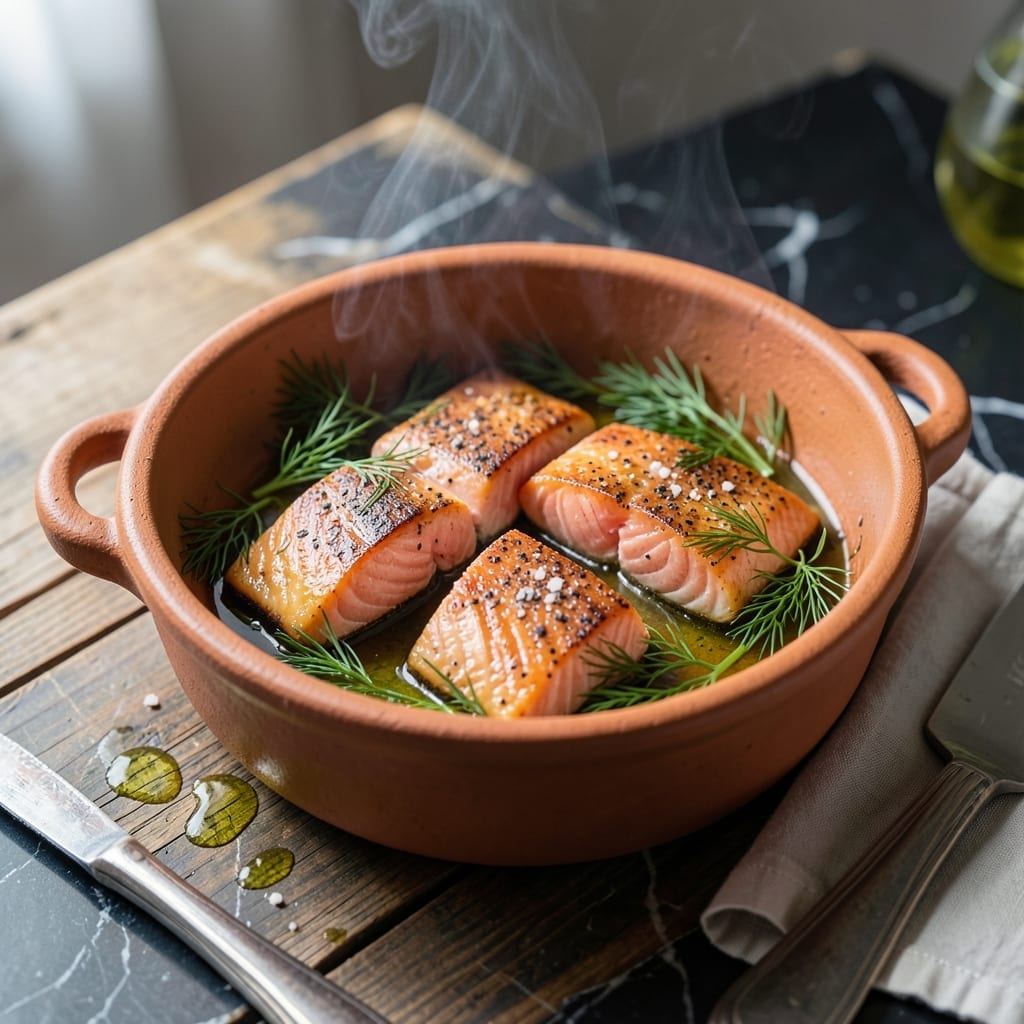
There’s something uniquely special about cooking salmon in a clay pot—the way it locks in moisture while infusing the fish with subtle earthy aromas. This method transforms a simple piece of salmon into a tender, fragrant centerpiece.
I’ve perfected this technique over years of testing, learning how the unglazed clay absorbs and redistributes heat for even cooking. The result is perfectly flaky salmon with enhanced natural flavors, requiring minimal effort.
The clay pot creates an ideal microclimate, steaming the salmon gently while allowing the skin to crisp beautifully. It’s a traditional approach that delivers restaurant-quality results at home.
With just a few ingredients and proper clay pot preparation, you’ll achieve salmon that’s moist, flavorful, and infused with subtle earthy notes. Here’s how to master this method.
Ingredients for Clay Pot Salmon
Simple yet elegant ingredients create a restaurant-quality clay pot salmon experience at home.
| Ingredient | Amount | Notes |
|---|---|---|
| Salmon Fillets 🐟 | 4 whole | Skin-on, center-cut preferred |
| Clay Pot 🍲 | 1 whole | Unglazed, soaked in water |
| Kosher Salt 🧂 | 1 ½ tsp | Diamond Crystal preferred |
| Freshly Ground Black Pepper 🌶️ | 1 tsp | Coarse grind ideal |
| Extra-Virgin Olive Oil 🫒 | 2 tbsp | High-quality, fruity notes |
| Fresh Dill 🌿 | ¼ cup | Chopped, stems removed |
| Lemon 🍋 | 1 whole | Zested and juiced |
| Garlic Cloves 🧄 | 4 cloves | Thinly sliced |
| Shallot 🧅 | 1 whole | Finely minced |
| Dry White Wine 🍷 | ¼ cup | Sauvignon Blanc or Pinot Grigio |
| Unsalted Butter 🧈 | 2 tbsp | Cubed, at room temperature |
| Fresh Thyme Sprigs 🍃 | 4 pieces | Leaves stripped |
The salmon quality is paramount. Wild-caught sockeye or king salmon from Whole Foods or your local fishmonger delivers superior flavor and texture. Ensure the fillets are fresh—look for vibrant color and a clean, ocean-like scent. The clay pot must be unglazed terra cotta; Emile Henry and La Chamba are trusted brands available at specialty cookware stores.
Substitutions are minimal but possible. No fresh dill? Fresh parsley or tarragon work well at equal amounts. Out of white wine? Dry vermouth or a splash of chicken stock (though less ideal) can substitute. The butter can be omitted for a lighter version, but it adds a luxurious finish that complements the clay-infused aromas perfectly.
Prep the clay pot by soaking it in water for 15-30 minutes before use to prevent cracking. Leftovers store well for 2-3 days in the fridge, though the salmon is best enjoyed fresh. The clay pot should be cleaned gently—no soap, just hot water and a brush.
Why You’ll Love This Recipe
- Minimal Effort: I just season, drizzle, and let the clay pot do the work—no flipping, no fuss.
- Buttery Richness: The clay pot locks in moisture so the salmon stays tender with that crisp olive oil edge.
- Weeknight Hero: Between us, this is my go-to for impromptu dinners that still feel special.
- Leftovers? Yes Please: Honestly, the flavors taste even better the next day in a salad or wrap.
Step-by-Step Instructions for Clay Pot Salmon
This method delivers perfectly cooked salmon with aromatic infusions in every bite.
Step 1: Prepare the Clay Pot and Salmon
Soak the clay pot in water for 15-20 minutes to prevent cracking during cooking. Meanwhile, pat the 4 whole salmon fillets dry with paper towels, then season both sides evenly with the 1.5 tsp kosher salt and 1 tsp freshly ground black pepper.
This drying step ensures the seasoning adheres properly and creates a better crust. The soaked clay pot will absorb moisture gradually, creating a steamy environment that keeps the salmon tender as it cooks.
Step 2: Build the Aromatic Base
Heat the 2 tbsp extra-virgin olive oil in the prepared clay pot over medium heat. Add the finely minced shallot and cook for 2-3 minutes until translucent and fragrant. Stir in the thinly sliced 4 cloves garlic cloves and cook for 30 seconds until just golden.
Add the 0.25 cup fresh dill and leaves from the 4 pieces fresh thyme sprigs, stirring to release their oils into the oil. This creates a flavor base that will infuse the salmon as it cooks. Remove the clay pot from heat temporarily while you add the salmon.
Step 3: Sear and Deglaze the Salmon
Return the clay pot to medium-high heat and place the seasoned salmon fillets skin-side down. Sear undisturbed for 3-4 minutes until the skin is crisp and golden. Carefully flip the fillets and sear the other side for 2 minutes.
Pour in the 0.25 cup dry white wine and the juice from the 1 whole lemon (about 2-3 tbsp), scraping up any browned bits from the bottom. Add the 2 tbsp unsalted butter and let it melt, basting the salmon with the aromatic liquid for 1-2 minutes.
Step 4: Finish in the Clay Pot
Reduce heat to low, cover the clay pot, and let the salmon cook for 5-7 minutes until the fish flakes easily with a fork and reaches an internal temperature of 145°F. The clay pot’s retained heat will gently finish the cooking process.
The salmon should be opaque throughout but still moist, with the skin crisp and the flesh infused with the lemon, wine, and herb flavors. The butter and olive oil create a rich, emulsified sauce that coats the fillets beautifully.
Step 5: Rest and Serve
Remove the clay pot from heat and let the salmon rest, covered, for 5 minutes. This allows the juices to redistribute and the flavors to meld. Garnish with additional fresh dill and a sprinkle of lemon zest from the 1 whole lemon before serving.
Serve the salmon directly from the clay pot at the table for a dramatic presentation. The clay pot retains heat exceptionally well, so the salmon will stay warm throughout the meal. Each serving should have a portion of the aromatic sauce spooned over the top.
Pro Tips For Making Clay Pot Salmon
- Preheat the Pot: Soak your clay pot in water for 15 minutes before cooking, then preheat it gradually on low—I learned this the hard way after cracking two pots by rushing the process.
- Dry the Salmon: Pat the fillets completely dry with paper towels before seasoning; after burning three batches, I finally figured out that excess moisture steams instead of sears.
- Skip Cold Salmon: Let the salmon sit at room temperature for 10-15 minutes before cooking, or it’ll cook unevenly—yes, even if you’re impatient like me.
- Oil Lightly: Use about 1 tablespoon of olive oil to coat the pot, not more; too much and the salmon poaches in oil instead of getting that delicate crust.
Regional Styles of This clay pot salmon
Moroccan Tagine Style
In Morocco, they use conical tagines for this dish, adding 1 tsp ground cumin and ½ tsp smoked paprika to the olive oil before searing the salmon. The slow steam in the clay pot makes the fish incredibly tender. 🌍
Japanese Donabe Approach
Japanese cooks use donabe clay pots, often including a 2-inch piece of kombu in the liquid for umami depth. The salmon is cooked at a slightly lower heat for 8-10 minutes to maintain delicate texture.
Mediterranean Herb Focus
Greek variations emphasize herbs, using 1 tbsp fresh oregano and 1 tsp dried rosemary alongside the dill. They often add ½ cup cherry tomatoes to the pot for a bright, acidic contrast.
French Butter Poaching
In Provence, they increase the butter to 4 tbsp and add 1 tbsp fresh tarragon. The salmon is poached in this rich butter-herb mixture at 160°F for 12 minutes. 💛
Indian Spiced Version
For an Indian twist, add 1 tsp turmeric, ½ tsp coriander, and 1 green chili to the aromatic base. The clay pot’s even heat perfectly distributes these bold spices through the fish.
Nutrition Facts
Frequently Asked Questions
Do I need to soak the clay pot first?
Yes, always soak the unglazed clay pot in water for 15-20 minutes before cooking. This prevents cracking from thermal shock when exposed to heat.
Can I use a regular pot instead?
While possible, a regular pot won’t replicate the clay pot’s moisture retention and even heat distribution. The unique earthy flavor infusion is also lost. Stick with clay for best results.
How do I prevent the salmon from sticking?
Ensure the clay pot is well-heated before adding salmon, and don’t move the fillets for at least 3-4 minutes. The skin will release naturally when ready.
What’s the best way to clean the clay pot?
Never use soap. Simply scrub with hot water and a soft brush, then dry thoroughly. For stubborn bits, soak in warm water before scrubbing.

- 4C Bread Crumbs Meatballs Recipe: Crispy Crust and Juicy Centers - September 25, 2026
- 6 Oz Chocolate Chip Cookie Recipe: Perfectly Balanced Crispy Edges and Chewy Hearts - September 25, 2026
- 6-Inch Coffee Cake Recipe: Vanilla Bean Swirls and Buttery Streusel Topping - September 25, 2026