
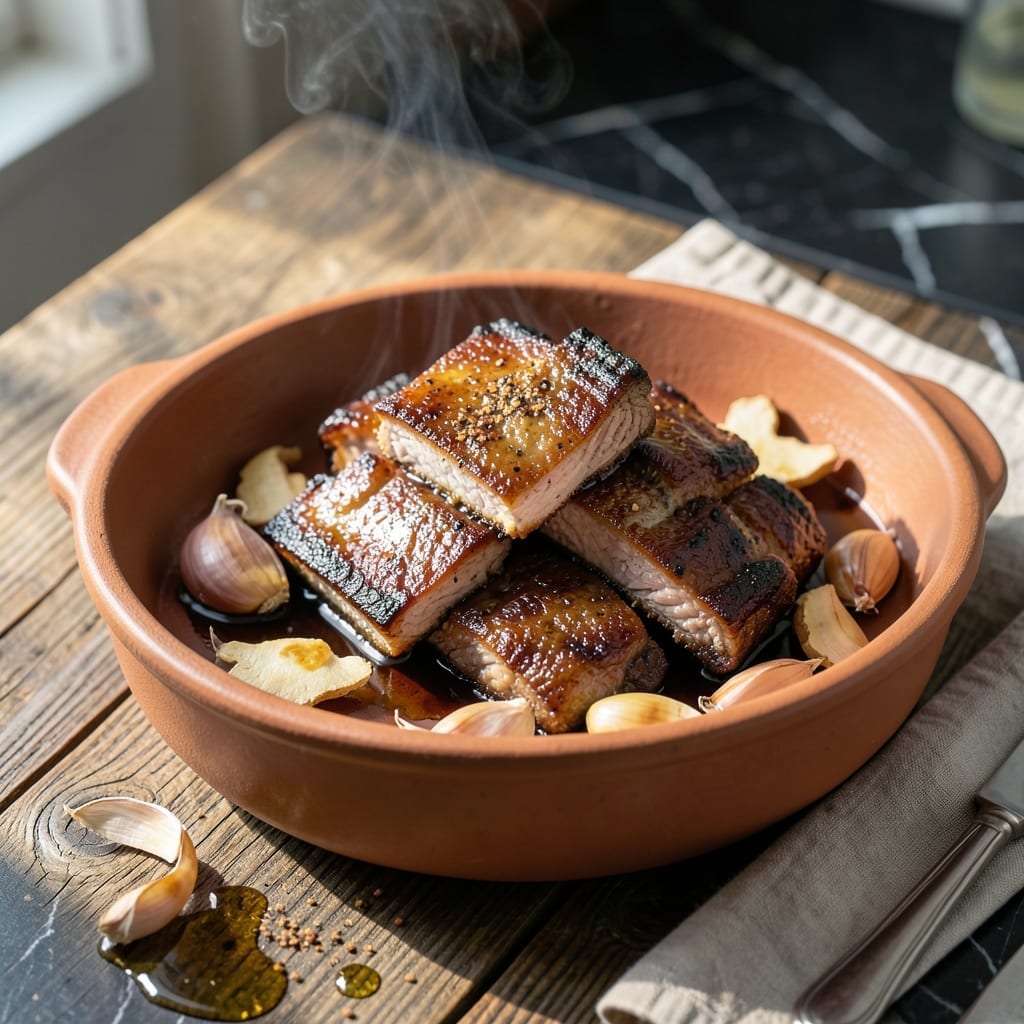
There’s something special about spare ribs slow-cooked in a clay pot—the heat circulates evenly, locking in moisture and deepening every flavor. This traditional technique transforms tough cuts into fall-off-the-bone tenderness without drying them out.
The clay pot’s porous surface allows steam to escape gradually while retaining natural juices, ensuring each bite is rich and succulent. A simple marinade of soy sauce, honey, and five-spice powder enhances the ribs without overpowering their natural taste.
What you get is a dish that’s aromatic, deeply savory, and impossibly tender. The ribs absorb the sauce as they cook, creating layers of flavor in every mouthful. It’s a foolproof method for achieving restaurant-quality results at home.
Perfect for family dinners or special occasions. Here’s how to make it right.
Ingredients for Clay Pot Spare Ribs
Quality pork spareribs and a few pantry staples create this aromatic, tender dish.
| Ingredient | Amount | Notes |
|---|---|---|
| Pork Spareribs 🍖 | 3 lb | Cut into individual ribs |
| Soy Sauce 🫒 | ½ cup | Low-sodium preferred |
| Honey 🍯 | ¼ cup | Pure, unprocessed variety |
| Five-Spice Powder 🌿 | 1 tbsp | Freshly ground for best flavor |
| Garlic Cloves 🧄 | 6 cloves | Minced finely |
| Fresh Ginger 🌱 | 1 tbsp | Grated or minced |
| Green Onions 🧅 | 4 whole | Thinly sliced, white and green parts separated |
| Dark Brown Sugar 🍚 | 2 tbsp | Packed firmly |
| Rice Wine 🍷 | 2 tbsp | Shaoxing wine preferred |
| Sesame Oil 🫒 | 1 tbsp | Toasted variety |
| Cornstarch 🌾 | 1 tbsp | Mixed with water for slurry |
| Water 💧 | 1 cup | For clay pot cooking |
| Kosher Salt 🧂 | 1 tsp | Diamond Crystal preferred |
| Ground Black Pepper 🌶️ | ½ tsp | Freshly ground |
Optimal quality requires well-marbled pork spareribs with a good fat cap—Costco or a trusted butcher provide consistent cuts. The five-spice powder should be vibrant and fragrant; Penzeys offers excellent blends. For the soy sauce, Kikkoman low-sodium balances saltiness without overwhelming. Fresh ginger and garlic are non-negotiable for depth of flavor, so avoid pre-minced jars.
No five-spice powder? Combine equal parts cinnamon, cloves, fennel, star anise, and Szechuan peppercorns. Maple syrup or brown sugar can substitute for honey, though flavor profiles will shift slightly. Dry sherry works in place of rice wine. For a gluten-free version, tamari replaces soy sauce seamlessly. The clay pot is essential—unglazed Donabe pots from Japan are ideal for even heat distribution.
Marinate the ribs for at least 4 hours or overnight for maximum flavor penetration. Leftovers keep in the fridge for 3-4 days and reheat well in a steamer or microwave. For longer storage, freeze the cooked ribs in their sauce for up to 3 months.
Why You’ll Love This Recipe
- One Pot Magic: I just dump everything in the clay pot—ribs, soy, honey, garlic—and let it do its thing.
- Sticky Sweet Perfection: The honey caramelizes with the soy and five-spice, creating this finger-licking glaze on fall-off-the-bone ribs.
- Crowd Pleaser: I’ve served this at casual dinners and holiday gatherings, and it disappears every single time.
- Budget Stretcher: Honestly, spareribs are cheap, and this feeds my family of four with leftovers for lunch the next day.
Step-by-Step Instructions for Clay Pot Spare Ribs
Master the technique for tender, fall-off-the-bone ribs with deep, aromatic flavor.
Step 1: Prepare and Marinate the Pork Spareribs
Begin by cutting the 3 lb Pork Spareribs into individual ribs if not already pre-cut. Pat them dry thoroughly with paper towels, then season evenly with 1 tsp Kosher Salt and 0.5 tsp Ground Black Pepper. This ensures the marinade adheres properly and penetrates deeply.
In a large bowl, combine the 0.5 cup Soy Sauce, 0.25 cup Honey, 1 tbsp Five-Spice Powder, 6 cloves minced Garlic Cloves, 1 tbsp Fresh Ginger, 2 tbsp Dark Brown Sugar, 2 tbsp Rice Wine, and 1 tbsp Sesame Oil. Stir until the honey and sugar dissolve completely, creating a glossy, well-incorporated marinade.
Step 2: Marinate and Prepare the Clay Pot
Add the seasoned ribs to the marinade, ensuring each piece is fully coated. Cover and refrigerate for at least 2 hours, or preferably overnight. This extended marination allows the bold flavors of the soy, honey, and spices to infuse the meat thoroughly.
While the ribs marinate, soak your clay pot in cold water for 15-20 minutes. This prevents cracking when exposed to direct heat. Drain the pot just before use, but do not dry it completely—a slight moisture layer is beneficial for even cooking.
Step 3: Layer and Cook the Ribs in the Clay Pot
Arrange the marinated ribs in the soaked clay pot, stacking them if necessary but leaving a little space between each piece for steam circulation. Pour any remaining marinade over the ribs, then add the 4 whole Green Onions (white parts at the bottom, green parts on top) for additional aroma.
Place the clay pot in a cold oven, then set the temperature to 325°F. Cook for 1.5 hours, then increase the heat to 375°F for the final 30 minutes. This gradual temperature increase ensures the ribs cook evenly without drying out, while the higher finish helps caramelize the glaze.
Step 4: Thicken the Sauce and Finish
Carefully remove the clay pot from the oven. Transfer the ribs to a serving platter, leaving the cooking liquid in the pot. Mix the 1 tbsp Cornstarch with 1 cup Water to create a slurry, then stir it into the cooking liquid in the pot.
Return the pot to the stovetop over medium heat and simmer for 3-5 minutes, stirring constantly, until the sauce thickens to a glossy, syrupy consistency. Pour this reduced sauce over the ribs, ensuring each piece is well-coated. Serve immediately while hot.
Pro Tips For Making Clay Pot Spare Ribs
- Parboil the Ribs: I learned this the hard way—blanching the spare ribs in boiling water for 3-4 minutes first removes impurities and keeps the clay pot sauce clean, not bitter.
- Toast the Spices: Lightly dry-toast the five-spice powder in the clay pot for 30 seconds before adding liquids; it wakes up the aromatics and deepens the flavor in the sauce.
- Skip the Overcrowding: Resist the urge to pack the pot with too many ribs—leave space between pieces so the sauce reduces properly and coats instead of steams.
- Glaze at the End: Brush the ribs with honey only in the last 10 minutes of cooking to prevent burning and give that sticky, glossy finish everyone loves.
Troubleshooting This Dish
Ribs Not Tender
If your ribs aren’t falling off the bone, they likely need more cooking time. The clay pot’s gradual heat works best with patience—I recommend extending the 325°F phase by 30-45 minutes. Also, ensure your pot was properly soaked beforehand. 💡
Sauce Too Thin
For a thicker glaze, simmer the cooking liquid uncovered for 5-7 minutes after removing the ribs. If it’s still watery, mix an extra ½ tbsp Cornstarch with 2 tbsp cold water and stir in gradually. Avoid boiling vigorously, as this can break the emulsion.
Clay Pot Cracking
Cracking usually happens if the pot wasn’t soaked or went from cold to hot too quickly. Always soak for 20 minutes in cold water, and start in a cold oven. If your pot is new, season it first by rubbing the interior with sesame oil and baking at 300°F for 1 hour. ⚡
Ribs Too Salty
If you used regular soy sauce instead of low-sodium, balance the flavor by adding 1 tbsp honey or 1 tbsp brown sugar to the sauce. You can also dilute with ¼ cup water or chicken stock. Taste as you adjust.
Uneven Cooking
Stacking ribs too tightly prevents steam circulation. Leave space between pieces and rotate the pot 180 degrees halfway through cooking. If your oven has hot spots, place the pot on the center rack for even heat distribution.
Sauce Burning
If the sauce starts to darken too much during the final 375°F phase, tent the pot loosely with foil. This protects the glaze while still allowing the ribs to caramelize. Check every 10 minutes to monitor progress.
Nutrition Facts
Frequently Asked Questions
Do I need to soak the clay pot first?
Yes, soaking prevents cracking. Submerge it in cold water for 15-20 minutes before use. This creates a moisture barrier that protects the pot from thermal shock when exposed to heat.
Can I use baby back ribs instead?
though cooking time may vary. Baby back ribs are leaner, so reduce the 325°F phase to 1 hour and check for doneness. The clay pot method works beautifully with any rib cut.
How do I know when the ribs are done?
The meat should pull away from the bone easily. If it doesn’t, extend cooking by 15-30 minutes. Internal temperature should reach 195-203°F for perfect tenderness.
Can I make this without a clay pot?
You can use a Dutch oven, but results will differ. The clay pot’s porous material creates a unique steam environment that’s hard to replicate. If substituting, add ½ cup water to mimic the moisture.

- 4C Bread Crumbs Meatballs Recipe: Crispy Crust and Juicy Centers - September 25, 2026
- 6 Oz Chocolate Chip Cookie Recipe: Perfectly Balanced Crispy Edges and Chewy Hearts - September 25, 2026
- 6-Inch Coffee Cake Recipe: Vanilla Bean Swirls and Buttery Streusel Topping - September 25, 2026