
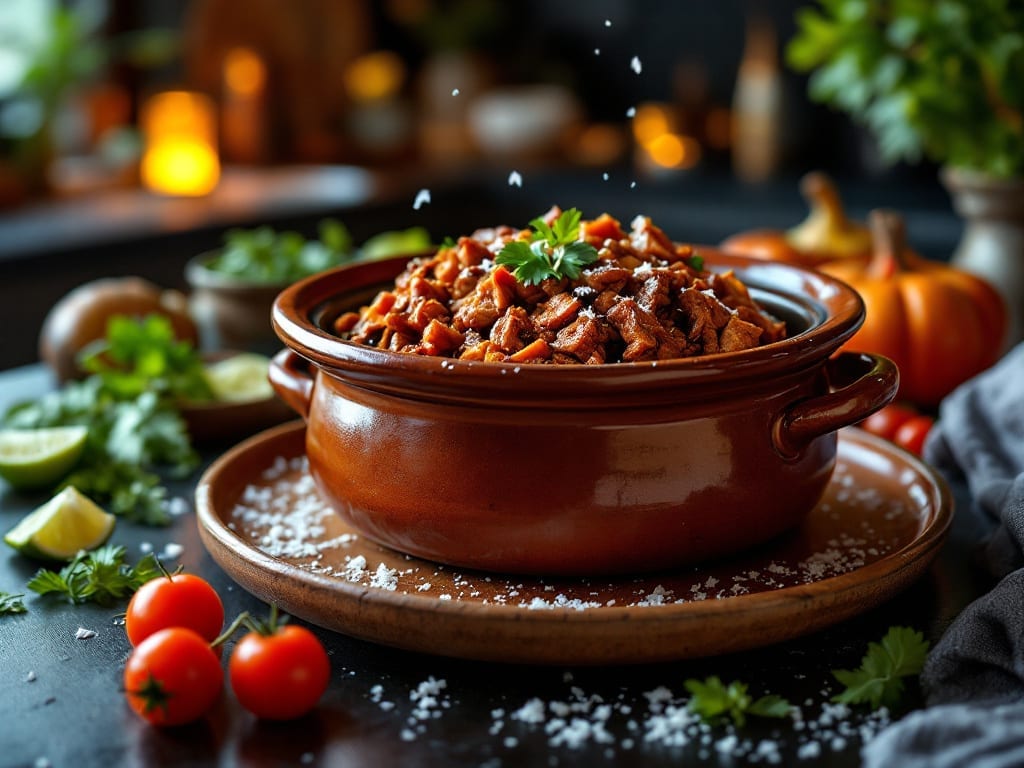
This cochinita pibil crock pot recipe transforms tender pork into melt-in-your-mouth perfection with just a few simple ingredients and hours of slow cooking. The secret lies in the marinade—achiote paste, citrus, and spices that infuse the meat with deep, smoky-sweet flavors while keeping it impossibly tender.
I developed this method after years of experimenting with traditional Yucatán techniques, adapting them for the convenience of a crock pot without sacrificing authenticity.
The beauty of this recipe is its simplicity: just five core ingredients create a marinade that does all the work while you go about your day. The pork cooks low and slow, breaking down into shreds that practically fall apart at the touch of a fork.
The result is a dish that carries the essence of Mexican cuisine—bright, tangy, and rich—with none of the fuss of traditional pit-roasting methods.
What you’ll end up with is restaurant-quality pork that’s perfect for tacos, tostadas, or even as a standalone main course. The meat stays juicy and flavorful, while the marinade’s citrus notes cut through the richness, creating a perfect balance.
Serve it with warm tortillas, pickled onions, and a side of black beans for a complete meal that feels like a celebration.
This recipe is designed for both beginners and experienced cooks—no special skills required, just patience and attention to a few key steps. The crock pot handles all the heavy lifting, so you can focus on assembling the marinade and enjoying the process.
Let’s get started on creating this tender, aromatic pork that’s sure to become a new favorite.
Ingredients for cochinita pibil crock pot
Five core ingredients transform simple pork into smoky citrus perfection—no fancy skills needed.
| Ingredient | Amount | Notes |
|---|---|---|
| Pork Shoulder 🥩 | 3 lb | Boneless, cut into 2-inch chunks |
| Achiote Paste 🌶️ | ¼ cup | Authentic Mexican or Caribbean blend |
| Orange Juice 🍊 | 1 cup | Freshly squeezed, no pulp |
| Lime Juice 🍋 | ¼ cup | Freshly squeezed, bright flavor |
| White Vinegar 💧 | ¼ cup | For tangy balance |
| Garlic Cloves 🧄 | 6 cloves | Freshly minced |
| Ground Cumin 🌿 | 1 tbsp | Toasted for depth |
| Bay Leaves 🍃 | 2 whole | Fresh preferred |
| Black Peppercorns 🌶️ | 1 tsp | Freshly cracked |
| Cinnamon Sticks 🌳 | 2 whole | For subtle warmth |
| Honey 🍯 | 2 tbsp | Light variety |
| Salt 🧂 | 1 ½ tsp | Kosher or sea salt |
| Vegetable Oil 🫒 | 1 tbsp | For coating pork |
Achiote paste is the star here. Mexican markets or Latin grocery stores carry the best—look for vibrant red jars labeled ‘achiote’ or ‘annatto’. If you can’t find it, paprika plus a pinch of turmeric is a decent stand-in (though not identical). The pork shoulder? 3 lbs is perfect for 4 servings, but chunk it consistently so it cooks evenly. I always grab pork shoulder from Costco when I can—they cut it into manageable pieces, and it’s cheaper per pound. Fresh garlic and bay leaves make all the difference, so don’t skip them if you’ve got them.
No achiote? Smoked paprika plus a dash of annatto powder (from the spice aisle) gets you close. Short on orange juice? Grapefruit juice works too—just reduce the lime slightly. The vinegar might sound odd, but it’s what cuts through the richness and keeps the pork tender. Apple cider vinegar adds subtle sweetness if you prefer. For the spices, toast the cumin seeds in a dry pan for 30 seconds before grinding—game changer. The honey? Any light variety works, but avoid dark honey which can overpower the citrus notes. If you’re prepping ahead, marinate the pork overnight for maximum flavor.
This marinade keeps for 5 days in the fridge—just store it in a sealed jar. The cooked pork reheats beautifully—350°F for 10-15 minutes until warmed through. For serving, I like to portion it into containers with some of the cooking liquid so it stays juicy. Leftovers keep 4 days in the fridge or 3 months frozen. Pro tip: Save the leftover marinade—it’s amazing on grilled shrimp or as a glaze for chicken wings.
Why You’ll Love This Recipe
- Tangy, Smoky Magic: The achiote paste gives it that signature deep red hue, while the orange and lime juices cut through the richness—like a bright, citrusy hug for your taste buds. (Yes, even on a Tuesday night.)
- Party-Prep Ready: Double the batch and you’ve got leftovers for tacos, sandwiches, or even a quick breakfast hash. I’ll be real: my freezer is always stocked with this because it’s that reliable.
- Budget-Friendly Feast: Pork shoulder stretches for miles, and the achiote paste (plus pantry staples like vinegar) keeps costs low. Feeds a crowd without breaking the bank—perfect for game day or family dinners.
Step-by-step instructions for cochinita pibil crock pot recipe
Here’s how to transform tough pork into tender, citrusy perfection with minimal effort.
Cut and Season the Pork Shoulder
Start by cutting the 3 lb pork shoulder into 2-inch chunks. I like to work on a cutting board with a sharp knife, keeping the pieces uniform for even cooking. Pat each piece dry with paper towels—this helps the marinade cling better and promotes crispier edges later.
In a large bowl, combine the 0.25 cup achiote paste, 1 cup orange juice, 0.25 cup lime juice, 0.25 cup white vinegar, 2 tbsp honey, 1 tbsp ground cumin, 1.5 tsp salt, 1 tsp black peppercorns, 2 whole bay leaves, and 2 whole cinnamon sticks. The mixture should look thick and vibrant—almost like a bright red-orange paste. Add the pork chunks and toss until every piece is fully coated. Here’s the thing—let the pork marinate for at least 2 hours (overnight works even better), but don’t skip this step. The acid in the citrus and vinegar breaks down the muscle fibers, ensuring tender meat that falls apart.
Sear the Pork for Extra Flavor
Heat 1 tbsp vegetable oil in a large skillet over medium-high heat until shimmering. Working in batches, sear the marinated pork for 2-3 minutes per side until golden brown spots develop. You’re not cooking it through—just building flavor and texture. Transfer the seared pork to the crock pot as you go, keeping it warm.
Don’t skip this searing step if you can help it. The Maillard reaction happening here creates deep, caramelized flavors that the slow cooker can’t replicate. If your pork pieces are crowded in the pan, work in smaller batches so they get proper browning without steaming.
Slow Cook Until Fork-Tender
Pour any remaining marinade from the bowl into the crock pot with the seared pork. Add the 6 minced garlic cloves and give everything a gentle stir to distribute the flavors. Place the lid on the crock pot and cook on low for 8 hours or on high for 5-6 hours. You’ll know it’s ready when a fork slides through the meat with no resistance and the juices run clear.
Here’s where patience pays off. The slow cooker does all the work while you’re doing other things, but resist the temptation to check it frequently. Every time you lift the lid, you’re letting heat escape and potentially drying out the meat. The pork should have that beautiful mahogany color from the achiote, with a glossy sheen from the citrus marinade.
Shred and Serve with Confidence
Once the pork is tender, use two forks to shred it directly in the crock pot. Discard the bay leaves and cinnamon sticks—they’ve done their job. Taste the cooking liquid and adjust seasoning if needed, adding a splash more orange juice or a pinch of salt if the flavor needs balancing. The pork should be moist but not swimming in liquid—if it’s too thin, let it sit uncovered for 10 minutes to reduce slightly.
Serve the cochinita pibil immediately over warm tortillas or with black beans and rice. The meat should practically melt in your mouth, with that perfect balance of smoky, sweet, and tangy flavors. If you have leftovers, store them in the refrigerator for up to 3 days, but honestly, this dish disappears fast around here.
Pro Tips For Making Cochinita Pibil Crock Pot
- Sear the Pork First: I learned this the hard way—skipping the sear means your crock pot ends up with bland, gray pork instead of deep, caramelized flavor. Hit the pork shoulder with a hot skillet for 3-4 minutes per side before adding anything else. The crust locks in moisture and builds a base for the achiote to cling to.
- Blend Your Achiote Paste: Store-bought paste is fine, but homemade makes a real difference. Toast the achiote seeds in a dry pan for 1-2 minutes until fragrant—this removes bitterness and intensifies the color. Blend with just enough oil to make a thick paste, not a runny sauce, or it’ll turn your pork into a watery stew.
- Acid Balance Matters: Too much lime juice and your pork turns rubbery; too little and the flavor’s flat. Start with 1 cup orange juice and ½ cup lime juice, then taste the liquid after cooking. If it’s too sharp, add a splash of vinegar (1-2 tablespoons) to round it out—this cuts through the acid without overpowering.
- Low and Slow Wins: Resist the urge to rush. Cook on low for 8 hours, not high for 4—this lets the collagen break down into tender, fork-shreddable meat. If you’re short on time, start on high for 2 hours, then switch to low, but don’t skip the full cook time or you’ll end up with chewy pork.
Wine and beer pairings for this recipe
Citrus-Forward Whites
The bright, tangy flavors of cochinita pibil pair beautifully with crisp white wines that echo its citrus notes. I always reach for a Mexican Chenin Blanc—look for one from Bodegas San José—its honeyed apple and grapefruit flavors complement the achiote and orange perfectly.
For something lighter, a Spanish Albariño from Rías Baixas brings refreshing citrus and mineral notes that cut through the richness. Serve these wines slightly chilled (45-50°F) to enhance their refreshing qualities. 🍷
Spiced Red Wine Options
If you prefer red wine, opt for something with subtle spice and low tannins that won’t overpower the dish. A Mexican Tempranillo from Casa Madero—the oldest winery in the Americas—works beautifully, offering notes of black cherry and vanilla that harmonize with the cinnamon and cumin.
For a bolder option, try a Grenache from Priorat, which has earthy undertones that pair surprisingly well with the smoky achiote. Decant these wines for 30 minutes before serving to soften any remaining tannins. 🍇
Mexican Lager Pairings
For beer lovers, a Mexican lager is the perfect match—its crisp, clean profile balances the dish’s complexity. Modelo Especial or Pacífico are my go-tos, as their subtle malt sweetness and citrusy hops complement the orange and lime in the marinade.
If you’re feeling adventurous, try a Mexican-style IPA like Cerveza Flor de Caña—its tropical hop notes echo the citrus flavors while adding a touch of bitterness to cut through the richness. Serve lagers well-chilled (38-42°F) for the best experience. 🍺
Non-Alcoholic Options
Don’t overlook non-alcoholic pairings—Mexican horchata made with rice and cinnamon adds a creamy, sweet contrast to the smoky pork. For something more refreshing, a hibiscus iced tea (like jamaica) with a squeeze of lime mirrors the dish’s citrusy brightness.
If you prefer something fizzy, try a Mexican soda like Jarritos Tamarind—its tangy sweetness balances the savory flavors perfectly. These options prove you don’t need alcohol to enhance the meal. 💛
Regional Mexican Pairings
For an authentic experience, pair your cochinita pibil with pulque or mezcal—both are traditional Mexican beverages that elevate the dish. Pulque, a fermented drink made from agave, adds a creamy, slightly tangy note that complements the pork’s richness.
If you prefer something stronger, a smoked mezcal with its earthy, peppery flavors creates a stunning contrast. Serve mezcal neat or on the rocks with a squeeze of lime. 🌶️
Nutrition facts
Frequently asked questions
Can I use chicken instead of pork for this recipe?
While you can technically use chicken, it won’t have the same rich, tender result. The pork shoulder’s fat content and collagen break down beautifully in the slow cooker, creating melt-in-your-mouth texture. Chicken would cook faster and might dry out. If you’re set on poultry, try thighs instead of breasts—they stay juicier. The marinade still works, but expect a different texture profile.
How do I know when the pork is fully cooked?
The pork is ready when it reaches 195°F internally and shreds easily with a fork. You’ll also see the juices run clear when pierced. For best results, cook on low for 8 hours or high for 5-6 hours. The meat should have a beautiful mahogany color from the achiote and be fork-tender throughout, not just at the edges.
What can I do if I don’t have achiote paste?
You can substitute with ½ cup smoked paprika plus ¼ teaspoon turmeric for color. While not identical, this combo mimics the smoky, slightly earthy notes. For extra depth, add 1 teaspoon liquid smoke to the marinade. The dish will still be flavorful, though the vibrant red-orange hue will be different. Mexican grocery stores often carry achiote paste in jars—worth seeking out for authenticity.
Can I make this recipe in an Instant Pot instead?
Yes! Use the “Sauté” function to sear the pork, then cook on “High Pressure” for 45 minutes with a natural release. The pressure cooker speeds up the process but delivers the same tender results. Just reduce the cooking liquid slightly after—pressure cooking can make sauces thinner. For best texture, use the same marinade and let the pork rest 10 minutes after cooking.
Why does my cochinita pibil taste too tangy?
Too much vinegar or citrus juice can make the dish overly acidic. Balance it by adding 1 tablespoon honey or brown sugar to the cooking liquid, or a pinch of salt to enhance the pork’s natural flavor. The marinade should taste bright but not sour—adjust gradually. If the pork itself tastes fine, the issue is likely the cooking liquid. A splash of orange juice can also help mellow the acidity.

- Braised Beef Short Ribs Recipe: Crock Pot Fall-Off-Bone Magic in 6 Hours - November 1, 2026
- Crock Pot Cocoa Recipe: Velvety Warmth With Hidden Spice Magic - November 1, 2026
- White Queso Crock Pot Recipe: Ultra-Smooth Melt Without the Grain - November 1, 2026