
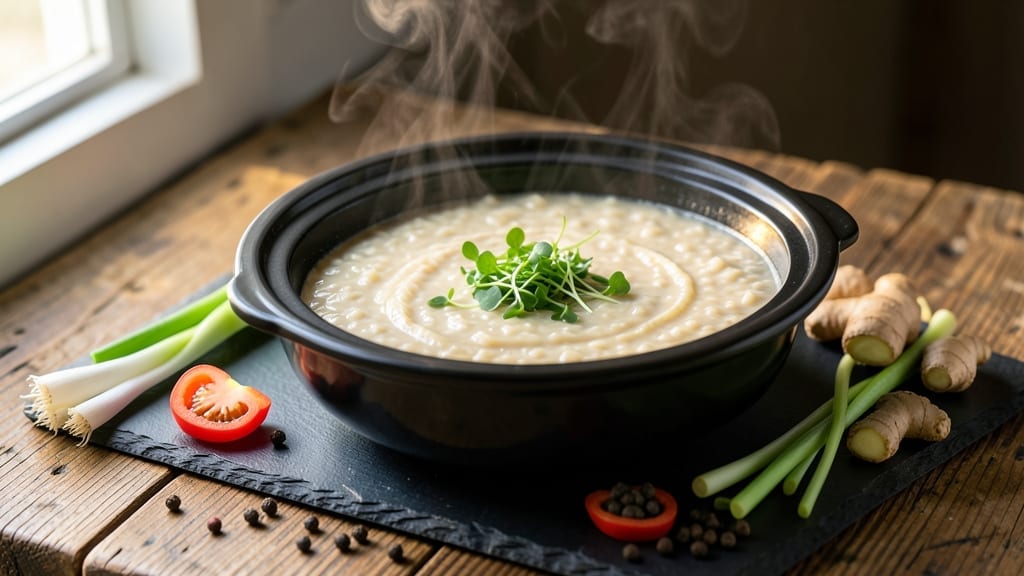
This crock pot congee recipe transforms simple rice into a luxurious, silky porridge that develops deep, savory complexity over 6 hours of slow cooking.
The beauty of this method lies in its hands-off approach—just combine rice, broth, and aromatics, then let the crock pot work its magic while you focus on other tasks. What starts as a basic mixture evolves into a restaurant-worthy dish with tender grains suspended in rich, flavorful liquid.
The key to perfect congee in a crock pot is patience and occasional stirring to prevent sticking. Unlike stovetop methods that require constant attention, this slow-cooked version develops a velvety texture and concentrated flavors without burning.
The long cooking time allows the rice to break down completely, creating that signature porridge consistency while absorbing all the savory notes from ginger, garlic, and optional proteins like pork or tofu.
By the time it’s ready, you’ll have a silky, comforting bowl that’s both nourishing and elegant—ideal for breakfast, brunch, or a light dinner. The aroma alone will draw everyone to the table, while the gentle warmth of each spoonful makes it a meal that feels like a hug.
This recipe proves that slow cooking can deliver restaurant-quality results with minimal effort.
Customize it with your favorite proteins or toppings—scallions, soft-boiled eggs, or crispy fried shallots all work beautifully. Here’s how to create this foolproof crock pot congee that’s perfect for any occasion.
Ingredients for congee recipe crock pot
Six simple ingredients transform into velvety congee with restaurant-worthy depth.
| Ingredient | Amount | Notes |
|---|---|---|
| Jasmine Rice 🍚 | 1 ½ cups | Uncooked, long-grain preferred |
| Chicken Broth 💧 | 6 cups | Low-sodium preferred, homemade or quality brand |
| Fresh Ginger 🌿 | 2 tbsp | Finely grated, aromatic variety |
| Garlic Cloves 🧄 | 4 cloves | Peeled, minced for even distribution |
| Pork Shoulder 🥩 | 1 lb | Boneless, cut into 1-inch cubes |
| Sesame Oil 🫒 | 1 tbsp | Toasted, for finishing aroma |
| Light Soy Sauce 🍶 | 2 tbsp | Kikkoman preferred for balance |
| White Pepper 🌶️ | ½ tsp | Freshly ground for subtle heat |
| Scallions 🧅 | ¼ cup | Thinly sliced, for garnish |
| Vegetable Oil 🫒 | 1 tbsp | Neutral flavor, for pork searing |
| Salt 🧂 | 1 tsp | Diamond Crystal preferred |
| Optional Soft-Boiled Eggs 🥚 | 4 whole | For serving, optional |
| Optional Crispy Fried Shallots 🧅 | ¼ cup | Store-bought or homemade |
The rice is the foundation—jasmine rice breaks down beautifully for that signature silky texture. Day-O brand from Asian markets is my go-to, but any long-grain rice works. The broth makes all the difference: homemade chicken broth has richer flavor, but Swanson or Pacific Foods low-sodium versions are solid shortcuts. Ginger and garlic? Freshly grated and minced—the difference between good and amazing. For the pork, bone-in shoulder adds extra flavor, but boneless is fine if you’re short on time. Look for well-marbled cuts at Whole Foods or your local butcher shop for best results.
No pork? Chicken thighs or tofu work beautifully—just adjust cooking time. Short on ginger? Substitute 1 tbsp ginger paste—it’s concentrated and keeps forever. The sesame oil is non-negotiable for that authentic aroma, but if you’re avoiding it, toasted peanut oil adds a similar nuttiness. For soy sauce, light soy gives the right balance—dark soy would overpower. The scallions can be swapped for green onions or chives if that’s what you’ve got. And if you’re feeling fancy, crispy fried shallots from Trader Joe’s take this to the next level.
This congee only gets better with time—6 hours is ideal, but it’s safe to cook for up to 8 hours on low. The longer it cooks, the more flavorful it becomes. Store leftovers in the fridge for up to 5 days—just reheat gently on the stove with a splash of water. Freezes beautifully for up to 3 months—portion into containers for quick meals. I always make a double batch because it disappears fast. Garnish with soft-boiled eggs and fried shallots right before serving for that restaurant touch.
Why You’ll Love This Recipe
- Rich Without the Work: That pork shoulder? It melts into tender, flavorful shreds, turning this into a hearty bowl without needing fancy techniques. The jasmine rice soaks up all the savory broth, giving you that perfect creamy texture with zero extra effort.
- Leftovers That Feel Fresh: Congee actually gets better the next day—thicker, more concentrated flavor, and still warm in minutes. I make a big batch on Sundays and reheat portions all week; it’s my go-to for lazy mornings or post-work exhaustion.
- Budget Meal, Big Payoff: Pork shoulder and rice are cheap, but the ginger and garlic make it taste like a restaurant dish. Honestly, I’d rather eat this simple, well-seasoned congee than overpriced takeout any day. Plus, it stretches across multiple meals without breaking the bank.
Step-by-step instructions for crock pot congee
A slow-cooked masterpiece that builds flavor hour by hour—here’s how to turn simple ingredients into restaurant-quality porridge.
Sear the Pork Shoulder for Maximum Flavor
Heat a large skillet over medium-high heat and add the 1 tablespoon vegetable oil. Once shimmering, add the 1 lb pork shoulder cut into 1-inch cubes, working in batches if needed. Sear until deeply browned on all sides—this creates the Maillard reaction that forms the flavor foundation. You’re looking for golden-brown crusts with caramelized edges, which should take about 8-10 minutes total. Transfer the seared pork to your Crock Pot using a slotted spoon.
Here’s the thing—don’t skip this searing step. The pork will become tender during the long cook, but those browned bits are pure umami gold that infuses the entire congee. If your pork releases easily from the pan, it’s ready. If it sticks, add another ½ tablespoon vegetable oil and let it cook longer.
Layer Aromatics and Build the Base
In the same skillet (no need to clean it—those browned bits are flavor), add the 4 cloves minced garlic cloves and 2 tablespoons finely grated fresh ginger over medium heat. Sauté for 1-2 minutes until fragrant—you should smell that bright, zesty aroma. Immediately transfer these aromatics to the Crock Pot along with the seared pork.
Add the 1.5 cups jasmine rice, 6 cups chicken broth, 2 tablespoons light soy sauce, and 1 teaspoon salt to the Crock Pot. Stir gently just to combine—you want the rice to settle naturally rather than being forced into a uniform layer. The rice should be mostly submerged, with just the tips peeking above the liquid. This ensures even cooking without burning.
Cook Low and Slow for Maximum Tender Texture
Place the lid on the Crock Pot and cook on LOW for 6 hours. This long, gentle cook time transforms the rice into that signature silky, almost liquid texture while allowing the pork to become fork-tender. Don’t be tempted to rush it—congee is all about patience. The rice should break down completely, creating a velvety porridge rather than distinct grains.
About 30 minutes before serving, add the 0.5 teaspoon white pepper and give it a gentle stir. The pepper adds a subtle, warm heat that complements the savory depth. If you’re using the optional toppings, prepare the 4 whole soft-boiled eggs and 0.25 cup crispy fried shallots now—they’ll be ready when the congee finishes.
Finish with Sesame Oil and Garnish
Once the congee reaches that perfect creamy, almost custard-like consistency, remove it from the Crock Pot and let it sit for 5 minutes. This resting period allows the flavors to meld completely. Just before serving, drizzle in the 1 tablespoon toasted sesame oil and stir gently. The oil should disperse evenly, adding a nutty aroma and rich finish.
Ladle the congee into bowls and top each serving with thinly sliced scallions, crispy fried shallots, and soft-boiled eggs if using. The contrast of textures—silky porridge, crunchy shallots, and creamy eggs—makes this dish irresistible. Serve immediately while still warm, as congee tastes best fresh from the pot.
Pro Tips For Making Congee Recipe Crock Pot
- Pre-Cook the Pork: I learned this the hard way—throwing raw pork shoulder into the crock pot with rice and broth just makes the congee taste like soup. Instead, sear the pork in a skillet until it’s deeply browned, then shred it before adding to the crock pot. The Maillard reaction adds depth that no slow cooker alone can deliver.
- Toast the Jasmine Rice: Skip this, and your congee will taste bland and gummy. Dry-toast the jasmine rice in a separate pan for 2-3 minutes until it smells nutty and golden—just before it turns translucent. This step removes excess starch and gives the congee that silky, restaurant-quality texture.
- Don’t Overfill the Crock Pot: Crowding the pot turns congee into a sad, watery mess. Use the 1:6 rice-to-liquid ratio (1 cup rice to 6 cups broth) and resist the urge to add more broth later. If it’s too thick, thin it with a splash of hot water at the end—adding liquid mid-cook just dilutes the flavor.
- Grate Ginger Fine: Sounds weird, but it works: use a microplane or the smallest holes of a box grater for the ginger. Big chunks mean you’ll taste raw spiciness instead of warm, aromatic sweetness. Pulse it in a food processor first if you’re lazy, but don’t skip this—your congee will taste like it’s missing something.
Dietary considerations for this congee recipe crock pot
Gluten-Free Adaptations
This crock pot congee recipe is naturally gluten-free as long as you use certified gluten-free soy sauce and check your broth label. I recommend San-J Tamari or Kikkoman Gluten-Free Soy Sauce—both provide that essential umami without gluten.
For extra safety, always verify that your rice (like Day-O brand) and broth are certified gluten-free. The pork and other toppings like eggs are inherently safe, making this a worry-free option for gluten-sensitive eaters. 🌾
Vegetarian Versions
Swap the pork for extra-firm tofu or chicken thighs to keep it vegetarian. Press and cube the tofu first—it absorbs flavors better when seared. I like using organic tofu from Trader Joe’s because it holds up well during the long cook.
For extra depth, add shiitake mushrooms with the aromatics. The texture becomes slightly different but still incredibly comforting and satisfying. 🌱
Low-Sodium Options
To reduce sodium, use homemade chicken broth—it lets you control the salt content completely. For store-bought, choose brands like Pacific Foods Low-Sodium or Imagine Low-Sodium Broth. Reduce the soy sauce to 1 tablespoon and add a pinch of white miso paste for umami depth without extra salt.
Taste as you go and adjust gradually to keep flavors balanced. 🧂
Dairy-Free Considerations
This recipe is already dairy-free, but if you’re adding toppings, opt for dairy-free alternatives. Use coconut milk yogurt instead of traditional yogurt drizzles, or swap soft-boiled eggs for tofu scramble if needed. The congee itself remains perfectly dairy-free while still delivering rich, satisfying flavors. 🥛
Protein Swaps
Need something different? Try shrimp for a lighter option—just add them in the last 30 minutes of cooking. For heartier versions, use beef chuck roast instead of pork. I’ve also made a mushroom and spinach version that’s packed with umami from shiitake mushrooms and wilted greens.
Each protein brings its own unique texture and flavor profile to the dish. 🍤
Sweet Variations
For dessert-style congee, swap the pork for lychee canned in syrup and use coconut milk instead of broth. Add red bean paste and a touch of rock sugar for a traditional sweet version.
The texture remains silky, but the flavors transform into something warm and comforting—perfect for breakfast or a special treat. 🍬
Nutrition facts
Frequently asked questions
Why does crock pot congee need such a long cooking time?
The extended 6-hour low cook is essential for transforming rice into that signature silky texture. This slow process allows the grains to break down completely while absorbing all the savory flavors from the broth and aromatics. Rushing it on high heat would create a mushy, uneven consistency rather than the velvety porridge you want.
Can I use instant rice instead of jasmine rice?
Instant rice won’t give you the same luxurious texture—it lacks the starch needed for that authentic porridge consistency. For best results, stick with jasmine or short-grain rice. If you’re in a pinch, you could use arborio rice (like risotto rice), but it will have a slightly firmer bite. The long cook time helps create that signature silky mouthfeel.
What if my congee is too thick or too thin?
If it’s too thick, stir in 2-4 tablespoons warm broth or water and let it simmer for another 30 minutes on low. For thin congee, simmer uncovered on high for 15-20 minutes to evaporate excess liquid. The ideal consistency should be like thick pudding—creamy but still spoonable. Adjust gradually to avoid overcorrecting.
Can I make this recipe in a smaller crock pot?
Yes, but you may need to adjust the cooking time. For a 3-4 quart crock pot, reduce the rice to 1 cup and broth to 3 cups, then cook for 4-5 hours on low. The liquid-to-rice ratio should remain about 4:1 for proper texture. Just be sure to stir occasionally to prevent sticking.
How do I store and reheat leftovers?
Store congee in an airtight container in the fridge for up to 5 days. To reheat, transfer to a saucepan with 2 tablespoons water or broth and warm gently over low heat, stirring constantly. Never microwave—it creates a grainy texture. For best results, reheat only what you’ll serve immediately.

- Crock Pot Round Steak Recipe: Slow-Sear Crust With Juicy Center - November 6, 2026
- Candied Sweet Potatoes Crock Pot Recipe: Caramelized Sweetness With Zero Effort - November 6, 2026
- Steak Recipe Crock Pot: Juicy, Caramelized Crust in 4 Hours - November 6, 2026