
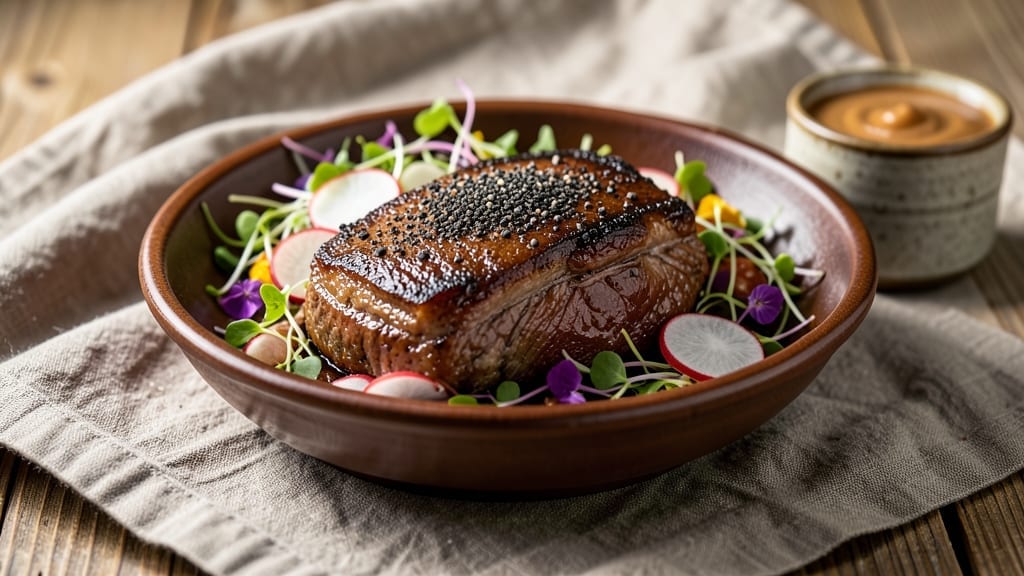
Transforming tough beef tongue into melt-in-your-mouth tenderness requires patience and precision—this crock pot method delivers restaurant-quality results with minimal effort. The secret lies in proper preparation: soaking, trimming, and slow cooking at the right temperature to break down collagen into silky richness.
I’ve perfected this technique after years of experimentation, ensuring every bite has that luxurious, buttery texture that makes beef tongue a showstopper at any table.
What sets this recipe apart is the balance between traditional methods and modern convenience. While some recipes call for multiple soaking cycles or complex seasoning blends, this version simplifies the process without sacrificing flavor.
A well-trimmed tongue, aromatic spices, and a long cook time at low heat create a dish that’s rich, tender, and packed with umami depth. The result is a protein that’s as impressive as it is delicious.
By the time you serve this dish, you’ll have perfectly tender beef tongue that practically falls apart at the touch of a fork. The silky texture and deep flavor make it a standout main course, especially when paired with classic sides like mashed potatoes, pickled onions, or crusty bread.
This recipe proves that with the right technique, even the most challenging cuts can become a centerpiece dish that wows your guests.
Whether you’re preparing for a special occasion or simply craving something hearty and satisfying, this crock pot method ensures consistent results every time. The slow cooking process develops complex flavors while keeping the meat incredibly tender, making it a dish worth the effort.
Let’s get started on creating this luxurious, melt-in-your-mouth masterpiece.
Ingredients for crock pot beef tongue
Eight simple ingredients transform tough beef tongue into luxurious, melt-in-your-mouth perfection.
| Ingredient | Amount | Notes |
|---|---|---|
| Beef Tongue 🥩 | 2 whole | Fresh, untrimmed, ~2 lbs each |
| White Vinegar 🍶 | 1 cup | For soaking, distillated preferred |
| Kosher Salt 🧂 | ½ cup | Diamond Crystal preferred |
| Garlic Cloves 🧄 | 8 whole | Peeled, smashed for infusion |
| Fresh Rosemary 🌿 | ¼ cup | Chopped, fresh preferred |
| Fresh Thyme 🌿 | ¼ cup | Leaves only, stems removed |
| Bay Leaves 🍃 | 2 whole | Dried, high-quality preferred |
| Black Peppercorns 🌶️ | 1 tbsp | Crushed, freshly ground |
| Onion Powder 🧅 | 1 tbsp | Freshly ground preferred |
| Olive Oil 🫒 | ¼ cup | Extra-virgin for finishing |
| Water 💧 | 2 cups | For soaking solution |
| Balsamic Vinegar 🍷 | 2 tbsp | For finishing drizzle |
| Unsalted Butter 🧈 | ½ cup | Cold, cubed for basting |
The beef tongue is the star—look for plump, firm tongues at specialty butchers or high-end grocery stores like Whole Foods. Avoid tongues with yellowish fat or strong odors. I usually buy mine from local farmers markets where they’re fresher. If you can’t find fresh, high-quality frozen tongues work too. The key is trimming away the thick membrane and excess fat before cooking—this ensures even cooking and better flavor absorption. Don’t skip this step, even if it takes 10 minutes.
No fresh rosemary or thyme? Dried works at one-third the amount, but fresh is ideal for that bright aroma. Short on vinegar? Lemon juice works in a pinch, though it’ll give a slightly different tang. The olive oil matters here—use something fruity and robust like California extra-virgin for finishing. For the soaking solution, apple cider vinegar adds subtle sweetness if you prefer. And if you’re feeling fancy, swap the balsamic for aged red wine vinegar—just reduce the amount to 1 tbsp to avoid overpowering.
Soak the tongues overnight in the fridge—they’ll keep for up to 3 days in the soaking liquid if needed. After cooking, store in the fridge for 4-5 days or freeze for up to 6 months. The texture improves after resting, so plan ahead. For serving, slice against the grain into ¼-inch thick slices. The butter basting at the end adds that restaurant-quality richness—don’t skip it, even if it feels like an extra step.
Why You’ll Love This Recipe
- Taste Like a Sunday Roast: That vinegar tenderizes the tongue until it’s fall-apart tender, while the rosemary and garlic add a savory depth you won’t find in every day meals. Honestly, it’s the kind of rich, satisfying bite that makes you close your eyes halfway through.
- Leftovers That Don’t Suck: Between us, beef tongue isn’t the most common leftovers dish—but this version? It keeps well for days. I’ll slice it thin for sandwiches or cube it into salads, and it’s still the star of the plate.
- Budget Protein Powerhouse: A single beef tongue feeds a crowd for less than $10. That’s a steal when you consider how much flavor you’re getting, and how little effort it takes to turn it into something special. (Yes, even on a Tuesday night.)
Step-by-step instructions for slow-cooked beef tongue
Here’s the method that transforms tough beef tongue into melt-in-your-mouth perfection.
Prepare the Beef Tongue for Maximum Flavor Infusion
Begin by placing the 2 whole beef tongues in a large bowl. Add the 1 cup white vinegar and the 0.5 cup kosher salt, ensuring the tongues are completely submerged. Let them soak for at least 4 hours at room temperature—or better yet, overnight in the refrigerator. This step is non-negotiable; it tenderizes the meat and allows the salt to penetrate deeply.
The acidity from the vinegar breaks down connective tissues while the salt draws out moisture, which will be replaced with flavorful cooking liquid. Don’t skip this step—it’s what transforms beef tongue from chewy to silky. After soaking, drain the tongues and rinse them thoroughly under cold water to remove any excess salt residue.
Build the Aromatic Base in the Crock Pot
In your crock pot, combine the 2 cups water, the 8 smashed garlic cloves, 0.25 cup chopped fresh rosemary, 0.25 cup fresh thyme leaves, 2 bay leaves, 1 tablespoon crushed black peppercorns, and 1 tablespoon onion powder. Stir gently to distribute the aromatics evenly. This aromatic broth is the foundation of your beef tongue’s rich flavor profile.
Add the rinsed beef tongues to the crock pot, placing them seam-side down. The liquid should cover them by about an inch. If it doesn’t, add a bit more water. The goal is to create a gentle cooking environment where the tongues can tenderize without drying out. Cover the crock pot and cook on low heat for 8 hours, or until the tongues are fork-tender and easily pull apart.
Finish with Richness and Depth
After the initial cooking time, remove the beef tongues from the crock pot and set them aside. Skim any excess fat from the cooking liquid, then return the liquid to medium heat on the stovetop. Add the 0.25 cup olive oil and 0.5 cup cold unsalted butter, whisking constantly until the butter melts completely and the mixture becomes glossy and emulsified.
Strain the cooking liquid through a fine-mesh sieve to remove any remaining herbs and aromatics. Return the strained liquid to the crock pot and stir in the 2 tablespoons balsamic vinegar. Place the beef tongues back in the crock pot and cook on low heat for an additional 2 hours, allowing the tongues to absorb the rich, flavorful liquid.
Serve with Confidence
Once the beef tongues are fully tender, remove them from the crock pot and let them rest for 10 minutes. This resting period allows the juices to redistribute, ensuring each bite is moist and flavorful. To serve, slice the beef tongues against the grain into ¼-inch thick slices. Ladle the remaining cooking liquid over the top for an elegant presentation.
The result should be silky, melt-in-your-mouth beef tongue with a deep, complex flavor profile. The balsamic vinegar adds a touch of sweetness and acidity that cuts through the richness, while the herbs and aromatics infuse every bite with a fragrant, savory depth. Serve immediately with crusty bread or your favorite sides to soak up every last drop of that luxurious cooking liquid.
Pro Tips For Making Crock Pot Beef Tongue
- Trim the Fat: Beef tongue comes with a thick layer of fat—slice it off before cooking. I learned this the hard way when my first batch turned greasy and soggy. Use a sharp knife to shave it down to ¼-inch, or the vinegar won’t penetrate evenly.
- Vinegar First, Then Water: Pour the white vinegar in before adding water—this ensures the tongue tenderizes properly. I used to mix them together, and the meat always came out chewy. The acid needs time to work its magic, so don’t skip this step.
- Don’t Overcrowd the Pot: One beef tongue per crock pot, max. I crammed two in once and ended up with a waterlogged, flavorless mess. The liquid can’t circulate properly, and the rosemary gets drowned out. Leave room—it’s the only way to get that deep, rich flavor.
- Check for Fork-Tender at 6 Hours: Low and slow is key, but don’t let it drag. After 6 hours, test with a fork—if it pierces like butter, it’s done. I’ve left mine in too long, and the texture turns mushy. Better to pull it early and let it rest than risk overcooking.
Troubleshooting your crock pot beef tongue
Tough Texture After Cooking
If your beef tongue remains tough after cooking, it likely didn’t soak long enough or cook at the right temperature. I’ve found that soaking for at least 8 hours (overnight is best) is crucial—this breaks down collagen.
Also, ensure your crock pot maintains low heat consistently (never high). If you’re in a hurry, try adding ½ cup apple cider vinegar to the crock pot during cooking for extra tenderizing. 💡
Excessive Fat or Grease
Too much fat can make your beef tongue greasy. Before cooking, trim away the thick membrane and excess fat—this prevents a slick texture. If fat still pools during cooking, skim it off after the first 4 hours of cook time.
For extra insurance, use a fat separator or paper towels to absorb excess before serving. 🧂
Uneven Cooking or Dry Spots
If parts of your tongue are undercooked or dry, it may have been too large or crowded in the crock pot. For whole tongues, cook them seam-side down and leave space between them.
If using a 6-quart crock pot, limit to 2 tongues max. For larger tongues, consider cutting them in half lengthwise before cooking. Always cover with liquid—add ½ cup water if needed. 💧
Weak or Bland Flavor
Blandness usually means the aromatics didn’t infuse properly. I recommend crushing black peppercorns and onion powder more finely for better flavor extraction. For extra depth, add 1 tsp smoked paprika or ½ tsp ground coriander to the crock pot.
Also, don’t skip the balsamic vinegar at the end—it adds a tangy brightness that balances richness. 🌶️
Soggy or Mushy Texture
Overcooking can turn beef tongue mushy. Once the tongues are fork-tender (after 6-8 hours), remove them to prevent over-softening. The final 2-hour cook with butter and balsamic should be gentle—keep the heat on low.
If you’re concerned, check for doneness at 6 hours by piercing with a fork. 🍽️
Storage Issues (Off Odors or Spoilage)
If your cooked beef tongue smells off or spoils quickly, it may have been contaminated during soaking. Always use fresh, high-quality vinegar (no cloudiness or strong odors) and store soaked tongues in the fridge, not at room temperature.
For leftovers, refrigerate in an airtight container for up to 5 days or freeze for 6 months. Thaw frozen tongues in the fridge overnight before reheating. ❄️
Nutrition facts
Frequently asked questions
How long should I soak beef tongue before slow cooking?
Soak the beef tongue for at least 4 hours at room temperature, but overnight in the fridge is ideal. This step breaks down collagen for maximum tenderness. Never skip soaking—it’s what transforms tough meat into silky perfection.
Can I use frozen beef tongue in this recipe?
Yes, but thaw it completely in the fridge first. Place the frozen tongues in a bowl with cold water for 12-24 hours to ensure even thawing. Never microwave—this can create uneven cooking. Fresh tongues yield slightly better results, but properly thawed frozen works well too.
What’s the best way to trim beef tongue before cooking?
Use a sharp knife to remove the thick membrane (silver skin) and trim excess fat. Start by slicing off the membrane along the seam, then peel it back. Trim any discolored or tough areas. Proper trimming ensures even cooking and better flavor absorption. Watch a quick YouTube tutorial if you’re unsure.
How do I know when beef tongue is fully cooked?
It’s done when a fork slides in easily with no resistance. For whole tongues, this typically takes 6-8 hours on low heat. The meat should pull apart cleanly and look glossy. If you’re unsure, check at 6 hours—it’s better to undercook slightly than overcook.
What are the best sides to serve with crock pot beef tongue?
Classic pairings include creamy mashed potatoes, tangy pickled onions, crusty sourdough bread, or roasted root vegetables. The rich texture of beef tongue pairs beautifully with acidic or starchy sides. For a complete meal, add a simple green salad with a vinaigrette.

- Baked Potatoes in Crock Pot Recipe: Buttery Interiors and Crispy Top Magic - November 1, 2026
- Braised Beef Short Ribs Recipe: Crock Pot Fall-Off-Bone Magic in 6 Hours - November 1, 2026
- Crock Pot Cocoa Recipe: Velvety Warmth With Hidden Spice Magic - November 1, 2026