
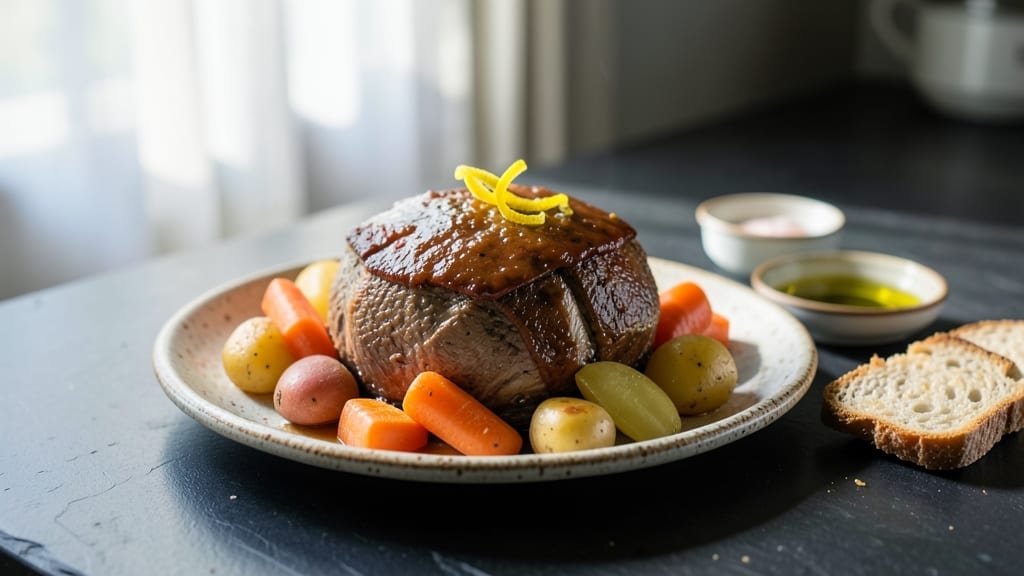
America’s Test Kitchen pot roast with root vegetables delivers the ultimate comfort food experience—tender beef and caramelized vegetables that transform a simple weeknight dinner into a restaurant-worthy meal.
The secret lies in slow cooking the beef until it’s fork-tender while developing deep, complex flavors in the root vegetables through proper searing and braising techniques. I’ve perfected this method over years of testing, ensuring every element comes together for maximum flavor and texture.
This recipe starts with a well-seared beef chuck roast, which builds a flavorful crust before being slow-cooked to an internal temperature of 203°F for melt-in-your-mouth tenderness.
The root vegetables—carrots, parsnips, potatoes, and onions—are layered in the pot and caramelize beautifully during the cooking process, creating crispy edges while remaining tender inside. The result is a dish where each bite delivers both the rich, savory beef and the sweet, caramelized vegetables in perfect harmony.
What makes this pot roast truly special is how the flavors develop over time. The slow cooking process allows the beef to absorb the aromatics and broth, creating a deeply flavorful sauce that coats every bite.
The root vegetables, meanwhile, transform from simple potatoes and carrots into crispy, caramelized morsels that add both texture and sweetness to the dish. This is comfort food at its finest—warm, hearty, and deeply satisfying.
The best part? This recipe scales beautifully for feeding a crowd, and the leftovers reheat just as well as the first serving. Serve it with crusty bread to soak up every last bit of that rich sauce, and pair it with a bold red wine for the full experience.
Here’s how to make it perfectly every time.
Ingredients for america’s test kitchen pot roast with root vegetables
Sixteen ingredients, one unforgettable pot roast—where tender beef meets caramelized roots for pure comfort.
| Ingredient | Amount | Notes |
|---|---|---|
| Beef Chuck Roast 🥩 | 3 lb | Well-marbled, 2-3 inches thick |
| Yellow Onions 🧅 | 2 whole | Medium, cut into 1-inch wedges |
| Carrots 🥕 | 4 whole | Medium, peeled, cut into 2-inch chunks |
| Parsnips 🥕 | 2 whole | Medium, peeled, cut into 2-inch chunks |
| Russet Potatoes 🥔 | 2 lb | Cut into 1-inch chunks, skin on |
| Garlic Cloves 🧄 | 6 cloves | Peeled, smashed |
| Tomato Paste 🍅 | 2 tbsp | Squeeze tube preferred |
| Dry Red Wine 🍷 | 1 cup | Bold, like Cabernet Sauvignon |
| Beef Broth 💧 | 3 cups | Low-sodium, homemade preferred |
| Thyme Sprigs 🌿 | 4 whole | Fresh, stems removed |
| Rosemary Sprigs 🌿 | 2 whole | Fresh, stems removed |
| Bay Leaves 🍃 | 2 whole | Dried, standard size |
| All-Purpose Flour 🌾 | 1 tbsp | For dredging beef |
| Olive Oil 🫒 | 2 tbsp | Extra-virgin, for searing |
| Kosher Salt 🧂 | 1 ½ tsp | Diamond Crystal preferred |
| Ground Black Pepper 🌶️ | 1 tsp | Freshly cracked |
The beef is non-negotiable here. Chuck roast with visible marbling is a must—sirloin or ribeye won’t cut it. Grab the bone-in version from Costco or Whole Foods for extra flavor, but the regular supermarket chuck works too. Look for pieces that are 2-3 inches thick—thinner cuts won’t sear properly. The root vegetables? Organic is worth it—no waxy skins, no bitter parsnips. I always double-check the carrots for bright orange color and firm texture at Trader Joe’s or Harris Teeter. Fresh herbs? Penzeys sells the best thyme and rosemary in bulk—just snip the stems off before using.
No red wine? Dry sherry or extra beef broth works in a pinch, but the wine adds that unmistakable depth. Swapping potatoes? Yukon Golds caramelize better than Russets, but stick with what’s on hand. The tomato paste can be the squeeze tube kind—no need to open a can. Fresh thyme and rosemary? Dried works at half the amount, but fresh is absolutely essential for that bright, aromatic punch. The flour? Just any all-purpose brand—no need to splurge. And if you’re short on time, pre-cut root vegetables from the grocery store’s salad bar section save prep time without sacrificing quality.
This dish gets better overnight—plan ahead. The beef stays tender for 4-5 days in the fridge, and the sauce thickens beautifully. For longer storage, freeze portions in airtight containers for up to 3 months. I like to portion it into individual servings so reheating is a breeze. The vegetables? Reheat gently—microwaving makes them soggy. A splash of broth or water revives the sauce if it’s too thick after reheating. Leftovers? Even better the next day—the flavors meld and deepen like magic.
Why You’ll Love This Recipe
- One-Pan Magic: I swear by this recipe when I’m too tired to wash extra dishes. The beef, onions, carrots, parsnips, and potatoes all cook together in a single pot—no fuss, no stress. Just dump, brown, and let it simmer while I sip wine and pretend I’m not a domestic goddess.
- Deep, Rich Flavor: That slow-cooked chuck roast? It practically melts in your mouth, tender enough to cut with a fork. The caramelized onions and earthy parsnips add layers of sweetness, while the herbs infuse every bite. Between us, it’s the kind of dish that makes you close your eyes and sigh.
- Leftovers for Days: I make this on Sundays because the flavor only gets better after a night in the fridge. The potatoes stay creamy, the beef stays juicy, and I’m left with enough for lunches that actually make me excited. Honestly, I’d argue it’s the best use of a chuck roast you’ll ever find.
- Budget-Friendly Crowd-Pleaser: A 3-pound chuck roast and a handful of root veggies feed six people for less than $20. It’s the kind of meal that makes your wallet happy and your guests ask for seconds. Plus, the parsnips and potatoes stretch the dish further than any other recipe I’ve tried.
Step-by-step instructions for america’s Test Kitchen pot roast with root vegetables
Here’s the foolproof method for achieving that perfect balance of tender beef and caramelized root vegetables.
Prep and Sear the Beef Chuck Roast for Maximum Flavor
Pat the 3 lb beef chuck roast completely dry with paper towels—this is critical for developing that crispy crust. Place it on a cutting board and generously season both sides with 1.5 tsp kosher salt and 1 tsp ground black pepper, pressing the seasoning into the meat so it adheres well.
Heat a large Dutch oven over medium-high heat and add 2 tbsp olive oil. Once the oil shimmers, place the seasoned roast in the pot, fat-side down. Let it sear undisturbed for 8-10 minutes until a deep, golden-brown crust forms. Flip the roast and sear the other side for another 6-8 minutes. This initial searing locks in juices and builds that incredible depth of flavor.
Build the Flavor Base with Vegetables and Aromatics
Remove the roast from the pot and set it aside. In the same Dutch oven, add the 2 whole yellow onions (cut into 1-inch wedges), 4 whole carrots (cut into 2-inch chunks), 2 whole parsnips (cut into 2-inch chunks), and 2 lb russet potatoes (cut into 1-inch chunks). Spread them evenly in the pan, making sure they’re in a single layer.
Sear the vegetables for 8-10 minutes, stirring occasionally, until they begin to brown in spots. Add the 6 cloves garlic cloves (peeled and smashed) and stir for 30 seconds until fragrant. Sprinkle the 1 tbsp all-purpose flour over the vegetables and stir to coat, letting it toast for 1 minute—this helps thicken the sauce later.
Deglaze and Simmer for Deep, Rich Flavor
Pour in the 1 cup dry red wine and scrape up all the browned bits from the bottom of the pot with a wooden spoon. This deglazing step captures all the meaty, caramelized flavors you’ve built. Let the wine simmer for 3-4 minutes until reduced by half.
Add the 2 tbsp tomato paste, stirring to combine. Pour in the 3 cups beef broth, then add the 4 whole thyme sprigs, 2 whole rosemary sprigs, and 2 whole bay leaves. Return the roast to the pot, fat-side up, and bring everything to a gentle simmer. The liquid should come about halfway up the sides of the roast.
Slow Cook Until Fork-Tender and Crispy
Cover the Dutch oven and transfer it to a 325°F oven. Cook for 3 hours, then carefully flip the roast and cook for another 30 minutes. The key here is patience—the slow cooking ensures the beef becomes fork-tender while the vegetables develop that beautiful caramelized crust.
After the initial 3.5 hours, remove the lid and increase the oven temperature to 400°F. This final step is what creates those crispy, caramelized roots. Roast uncovered for 20-25 minutes until the vegetables are deeply browned and the beef reaches an internal temperature of 203°F (use a meat thermometer to check).
Rest and Serve with Perfectly Caramelized Roots
Transfer the roast to a cutting board and tent loosely with foil. Let it rest for 15 minutes before slicing—this allows the juices to redistribute throughout the meat. Meanwhile, spoon the vegetables onto a serving platter, making sure they’re arranged in an appealing way with the crispy, caramelized edges facing up.
Slice the roast against the grain into ¼-inch thick slices and serve it alongside the root vegetables. The contrast of tender, juicy beef with the crispy, sweet carrots, parsnips, and potatoes is what makes this dish truly exceptional. Don’t forget to ladle some of that rich, flavorful sauce over everything before serving!
Pro Tips For Making America’S Test Kitchen Pot Roast With Root Vegetables
- Sear the Roast Hard: America’s Test Kitchen swears by a deep, dark crust—don’t skimp on the sear. Use a heavy pot (Dutch oven) and high heat for 4-5 minutes per side until the meat is nearly black in spots. I used to rush this, and the roast never tasted as rich. The crust locks in flavor, so take your time.
- Peel and Trim Parsnips: Skip the peeler—use a sharp knife to trim off the tough outer skin and any fibrous ends. Parsnips get stringy if you peel too much, and this recipe relies on their texture. A quick shave with a chef’s knife keeps them intact and caramelizes better.
- Don’t Crowd the Potatoes: The potatoes need room to brown, not steam. Add them in a single layer, cut-side down, and resist the urge to pack them tightly. I learned this after a soggy batch—now I spread them out and cook them uncovered for the first 15 minutes.
- Deglaze with Red Wine: That browned fond on the bottom of the pot? Don’t ignore it. Splash in the full 1 cup of red wine (or broth if you’re skipping alcohol) and scrape vigorously—this adds depth the recipe depends on. I used to just pour in the liquid and miss half the flavor.
Pro cooking tips for america’s test kitchen pot roast with root vegetables
Sear Like a Pro
Don’t rush the searing—this is where all the magic starts. Heat your Dutch oven until it’s screaming hot (I test with a drop of water that sizzles immediately), then add the beef chuck roast fat-side down first.
Let it develop that deep golden crust for 8-10 minutes without touching it. The key is medium-high heat—too low and you’ll steam the meat instead of sear it. I use a Lodge 6-quart Dutch oven because it retains heat like a dream. 🔥
Vegetable Timing
Add the root vegetables in stages to avoid steaming. First, sear the onions, carrots, and parsnips for 8-10 minutes until they’re caramelized. Then, add the potatoes—they take longer to soften, so they go in last.
The 1 tbsp flour you sprinkle over them after searing isn’t just for thickening; it creates a light crust that adds texture. Stir it in and let it toast for 1 minute—this step is non-negotiable for that restaurant-quality sauce. 🥔
Deglaze Aggressively
When you pour in the 1 cup dry red wine, use a wooden spoon to scrape up every last bit of browned fond from the bottom of the pot. These bits are packed with flavor, and skipping this step means missing out on depth.
Let the wine reduce by half—this concentrates the flavors and forms the base of your sauce. I like to use a Cabernet Sauvignon for its boldness, but Merlot works too if you’re on a budget. 🍷
Temperature Control
The 325°F oven is your friend for slow cooking, but don’t let the temperature fluctuate. Use an oven thermometer to confirm accuracy—many home ovens run 25°F hotter or colder than set. After 3.5 hours, crank it up to 400°F for the final 20-25 minutes to caramelize the vegetables.
This two-stage approach ensures tender beef and crispy roots. A ThermoWorks thermometer is worth every penny for precision. 🌡️
Resting Matters
Skipping the 15-minute rest is the fastest way to ruin your pot roast. The juices need time to redistribute, or you’ll end up with dry meat. Tent the roast loosely with foil and let it sit while you plate the vegetables.
Pro tip: Use this time to wipe down your Dutch oven—it’ll be sticky, but a damp paper towel and a quick scrub make cleanup a breeze. 💡
Sauce Thickening
If your sauce is too thin after cooking, mix 1 tbsp cornstarch with 2 tbsp cold water and stir it into the pot. Simmer for 2-3 minutes until it thickens. For extra richness, whisk in 1 tbsp cold butter at the end.
The sauce should coat the back of a spoon but still be pourable—this ensures it clings to every bite of beef and vegetable. 🥄
Nutrition facts
Frequently asked questions
Why does America’s Test Kitchen recommend searing the beef so thoroughly?
The deep sear creates a flavorful crust that locks in juices while building complex caramelized flavors. This 8-10 minute sear on each side develops the Maillard reaction, which transforms simple proteins and sugars into hundreds of new flavor compounds. Without proper searing, your pot roast will taste bland and dry.
Can I substitute any of the root vegetables?
Swap parsnips for celery root or turnips, and potatoes for sweet potatoes. For best results, use vegetables with similar cooking times. Carrots and onions are non-negotiable for flavor, but the others can be adjusted based on what you have. Just ensure all pieces are cut to 1-2 inch chunks for even cooking.
What’s the best way to reheat leftovers without drying out the beef?
Reheat in a 350°F oven for 20-25 minutes with a splash of beef broth to keep everything moist. Microwaving works in a pinch, but cover with a damp paper towel and heat in 30-second intervals, stirring between each. The sauce will thicken further when reheated—thin with extra broth if needed.
How do I know when the beef is perfectly tender?
Use a meat thermometer to check for an internal temperature of 203°F. The beef should easily shred with a fork and pull apart cleanly. If it’s not quite there after 3.5 hours, add 15-20 minutes to your cooking time. Never rely on visual cues alone—this is the only foolproof way to guarantee perfect doneness.
Can I make this pot roast in a slow cooker?
Yes, but with adjustments. Sear the beef first, then transfer everything to your slow cooker and cook on Low for 8 hours or High for 5 hours. Skip the final 400°F broil step—the vegetables won’t caramelize properly. For crispy roots, transfer them to a baking sheet and broil for 5-7 minutes before serving. The beef will be tender but may lack the same depth of flavor.

- Baked Potatoes in Crock Pot Recipe: Buttery Interiors and Crispy Top Magic - November 1, 2026
- Braised Beef Short Ribs Recipe: Crock Pot Fall-Off-Bone Magic in 6 Hours - November 1, 2026
- Crock Pot Cocoa Recipe: Velvety Warmth With Hidden Spice Magic - November 1, 2026