
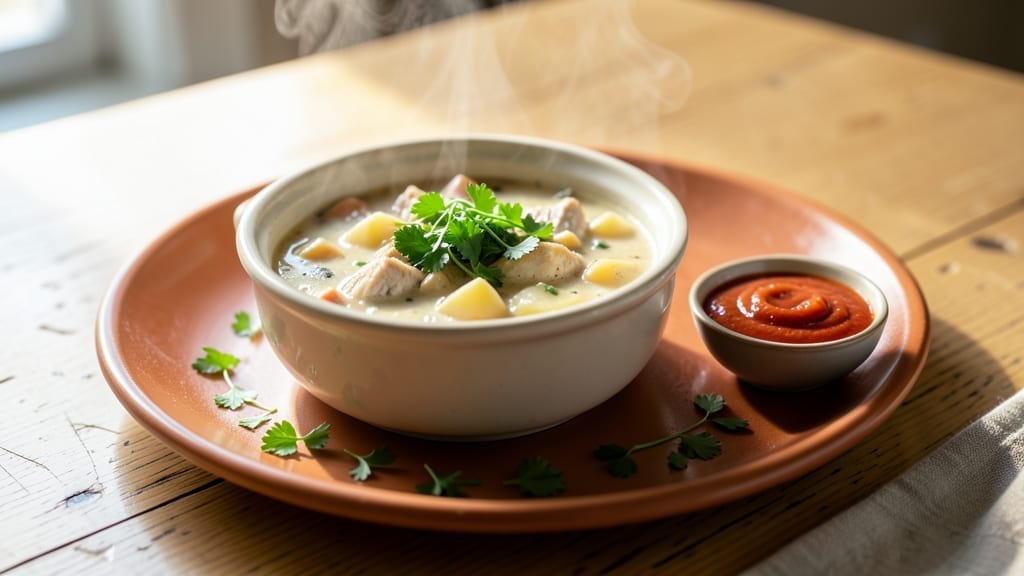
This Crock Pot fish chowder recipe transforms weeknight dinners into comforting, restaurant-quality meals with minimal effort. The slow simmer creates melt-in-your-mouth flaky fish and tender potatoes while developing deep, savory flavors that fill your home with warmth.
I’ve perfected this version to balance creaminess with just the right amount of tang, using simple ingredients that come together effortlessly in one pot.
The beauty of this recipe lies in its simplicity—no fancy techniques required. You’ll start with fresh fish fillets, potatoes, and celery that cook perfectly in the slow cooker while absorbing the rich broth and herbs.
A touch of cream at the end adds that velvety texture we all love, but I’ll show you how to make it dairy-free if needed. The result is a hearty, satisfying bowl that’s perfect for chilly evenings or family gatherings.
What makes this chowder truly special is how it transforms tough cuts of fish into flaky, buttery perfection while keeping the broth rich and flavorful. The slow cooking process ensures every ingredient melds together, creating a dish that’s both comforting and impressive.
Best of all, it’s ready in under an hour with almost no active time—just dump, cook, and enjoy.
Serve it with a sprinkle of fresh parsley, a side of crusty bread, or even a dollop of sour cream for extra richness. This recipe scales easily, so whether you’re feeding two or six, you’ll have a steaming bowl of chowder that feels like a hug in every bite.
Let’s get started on creating your own slow-cooked masterpiece.
Ingredients for crock pot fish chowder
Fresh fish, tender veggies, and slow-cooked comfort in one pot.
| Ingredient | Amount | Notes |
|---|---|---|
| White Fish Fillets 🐟 | 1 ½ lb | Cod or haddock preferred, skinless |
| Russet Potatoes 🥔 | 2 medium | Peeled, cut into 1-inch cubes |
| Celery Stalks 🧅 | 3 whole | Trimmed, cut into 1-inch pieces |
| Carrots 🥕 | 2 medium | Peeled, cut into 1-inch chunks |
| Yellow Onion 🧅 | 1 medium | Diced, yellow or white |
| Garlic Cloves 🧄 | 4 cloves | Minced, fresh preferred |
| Fish or Seafood Stock 💧 | 4 cups | Low-sodium preferred |
| Heavy Cream 🥛 | ½ cup | Full-fat for best texture |
| Butter 🧈 | 2 tbsp | Unsalted, for richness |
| Dried Thyme 🌿 | 1 tsp | Or 1 tbsp fresh thyme |
| Bay Leaves 🌿 | 2 whole | Remove before serving |
| Salt 🧂 | 1 tsp | Adjust to taste |
| Black Pepper 🌶️ | ½ tsp | Freshly ground preferred |
| Lemon Juice 🍋 | 1 tbsp | Freshly squeezed |
| Fresh Parsley 🌿 | ¼ cup | Chopped, for garnish |
The fish is the star here, so pick cod or haddock—they stay flaky and never dry out. Trader Joe’s or Whole Foods usually have great options, but any fishmonger works. Look for fillets that are firm to the touch with no fishy smell. The potatoes should be Russets—they hold up best to slow cooking. Skip the pre-cut bags; whole potatoes are cheaper and less waterlogged. For the stock, Knorr or Pacific brand are solid choices, but homemade is always better if you’ve got time.
No heavy cream? Coconut milk or cashew cream works beautifully for a dairy-free version. Short on thyme? Dried oregano at half the amount gives a similar earthy note. The butter matters here—unsalted, European-style adds the most flavor. If you’re using fresh herbs, double the amount of dried. The lemon juice is key for brightness, so don’t skip it. For extra richness, stir in 1 tbsp of cream cheese at the end—it melts perfectly into the chowder without curdling.
This chowder tastes even better the next day—make extra and freeze portions. Store leftovers in the fridge for 4-5 days or freeze for 3 months. The broth thickens as it cools, so add a splash of milk or water when reheating. Garnish with fresh parsley right before serving—it keeps the colors bright and adds a fresh finish. Serve with crusty bread or oyster crackers for the full experience.
Why You’ll Love This Recipe
- Creamy Without the Stress: That velvety broth from the fish, potatoes, and carrots? It’s chef’s kiss without the heavy cream. The onions and celery add depth, but the real magic is how the fish flakes perfectly—no dry, rubbery bits here.
- Lunchbox Magic: Between us, this chowder reheats like a dream. Pack it in thermoses for work lunches or school lunches—kids will actually eat it. (Yes, even the picky ones. My son’s secret weapon.)
- Budget-Friendly Catch: White fish is affordable, potatoes stretch the meal, and frozen veggies work just as well. I’ve made this for under $15 for six servings—way better than takeout, and it feeds a crowd without breaking the bank.
Step-by-step instructions for slow-cooked fish chowder
Here’s how to create a rich, comforting chowder with perfectly flaky fish every time.
Sauté the Vegetable Base
In a large skillet, melt the 2 tbsp butter over medium heat. Add the 1 medium yellow onion and cook for 3-4 minutes until softened and translucent. Add the 2 medium carrots and 3 whole celery stalks, cooking for another 5 minutes until they begin to soften.
Stir in the 4 cloves garlic cloves and cook for 30 seconds until fragrant. This step builds the flavor foundation—don’t skip it. Transfer the sautéed vegetables to your slow cooker and set them aside for now. The residual heat will help distribute their flavors as the chowder simmers.
Build the Flavorful Broth
Add the 4 cups fish or seafood stock to the slow cooker with the sautéed vegetables. Stir in the 1 tsp dried thyme, 2 whole bay leaves, 1 tsp salt, and 0.5 tsp black pepper. The thyme and bay leaves will infuse the broth with deep, aromatic flavors as it cooks.
Add the 2 medium russet potatoes, cut into 1-inch cubes. These will break down into tender, creamy chunks during the slow cooking process. Cover the slow cooker and cook on low heat for 4 hours, allowing the potatoes to soften completely and the broth to develop rich, layered flavors.
Finish with Cream and Fish
After 4 hours, stir in the 0.5 cup heavy cream and 1 tbsp lemon juice. The lemon brightens the dish while the cream adds luxurious richness. Add the 1.5 lb white fish fillets (cod or haddock work best) and cook for an additional 1-2 hours on low heat. The fish should cook just until it flakes easily with a fork—overcooking will turn it rubbery.
Here’s the key: The fish should be opaque and flake easily when tested with a fork. If it’s still translucent in the center, cook for another 10-15 minutes. Remove the 2 whole bay leaves before serving to avoid any bitter notes.
Garnish and Serve
Ladle the chowder into bowls and garnish each serving with 0.25 cup fresh parsley. The parsley adds a fresh, bright contrast to the creamy, savory broth. Serve immediately while the fish is still flaky and the broth is steaming hot.
This chowder tastes even better the next day, so make extra if you can. The flavors meld beautifully as it sits, and the fish continues to absorb the rich broth. The perfect balance of creamy, savory, and bright makes this a true comfort dish.
Pro Tips For Making Crock Pot Fish Chowder
- CHOP POTATOES UNEVENLY: Cut those Russets into 1.5-inch chunks—some bigger, some smaller. I used to slice them uniformly and ended up with mushy bits and rock-hard centers. Uneven sizes mean even cooking, and that’s what you want in a chowder where every bite should be tender.
- SALT THE POTATOES FIRST: Toss the raw potato chunks in a pinch of salt before they hit the crock pot. My grandmother swore by this, and she was right: it keeps them from turning bland later, especially when you’re slow-cooking for hours. Yes, even if you’re impatient like me.
- ADD FISH LATE: Fish cooks in minutes, not hours—so toss it in just 15 minutes before serving. I learned this the hard way: leaving it too long turns flaky fillets into sad, rubbery scraps. Keep the crock pot on low heat when you do this, or you’ll overcook it faster than you can say “second dinner.”
- USE FROZEN ONIONS: Ditch the fresh onion and grab the frozen diced kind—it’s already prepped and adds sweetness without the bitterness of raw onion. I skip this when I’m lazy, but the dish is noticeably better when I don’t. Plus, no crying over chopping while the crock pot hums away.
Essential equipment for this recipe
Slow Cooker Essentials
The heart of this recipe is your slow cooker, and I recommend a 6-quart model like the Hamilton Beach 62540 for even heat distribution. If you’re using a smaller pot, reduce the stock by 1 cup to avoid overflow.
The low setting is critical—it simmers gently at 190-200°F, perfect for tenderizing fish and potatoes without overcooking. 🌡️
Skillet for Sautéing
A 10-inch cast iron skillet (like Lodge Pre-Seasoned) is ideal for the initial vegetable sauté—it retains heat well and creates a rich, caramelized base. If cast iron isn’t available, a stainless steel skillet works fine, but avoid nonstick to prevent flavor transfer.
Preheat the pan for 2 minutes before adding butter to ensure even cooking.
Fish Selection Tools
Invest in a sharp fillet knife (I use Victorinox 8-inch) and a fish spatula to handle delicate fillets without tearing. For thicker cuts like salmon, a meat thermometer (like Thermoworks Smoke) ensures perfect doneness at 145°F internal temp.
Always buy fish the day you plan to cook—freshness is non-negotiable for flaky texture.
Storage Containers
For leftovers, use glass Pyrex storage containers with airtight lids—they preserve flavor better than plastic. Portion into 2-cup servings for easy reheating. If freezing, leave 1-inch headspace to prevent ice crystals. I like Rubbermaid Brilliance containers for their stackable design and microwave-safe lids. ❄️
Optional Garnish Tools
A microplane (like OXO Good Grips) is perfect for finely grating lemon zest or fresh herbs. For parsley, a small pair of kitchen shears makes quick work of chopping ¼ cup in seconds.
Keep a small bowl of ice water nearby if you prefer to wash herbs—it keeps them vibrant longer than paper towels.
Time-Saving Gadgets
Save prep time with a mandoline slicer (set to ¼-inch thickness) for even potato cubes. For stock, keep Knorr Granulated Fish Base on hand—just add 4 cups hot water to make 4 cups of stock in minutes.
A slow cooker liner (like Crock-Pot brand**) makes cleanup effortless—just toss it after cooking. 💡
Nutrition facts
Frequently asked questions
Can I use frozen fish in this slow-cooker chowder?
Yes, but thaw it completely first to prevent uneven cooking. Place frozen fish in a sealed bag and submerge in cold water for 30 minutes. For best results, use fresh fish—it stays flakier and absorbs flavors more evenly. If using frozen, add the fish 30 minutes before the end of cooking to avoid overcooking.
How do I make this chowder thicker?
Simmer the broth uncovered for 10-15 minutes to reduce it naturally. For instant thickening, mix 1 tbsp cornstarch with 2 tbsp cold water and stir into the chowder until it reaches your desired consistency. Avoid adding too much cream at once—it can make the chowder greasy.
What fish works best for this recipe?
Cod, haddock, or halibut are ideal—they stay flaky and absorb flavors beautifully. Avoid firm white fish like mahi-mahi or salmon, which can become dry. If using shrimp, add them 15 minutes before serving to prevent overcooking. For a budget option, pollock works well too.
Can I make this chowder in an Instant Pot?
Sauté the veggies first, then add everything except the fish. Cook on high pressure for 8 minutes, then add the fish and finish with 2 minutes natural release. The Instant Pot cuts cooking time to 30 minutes total. Just be careful not to overcook the fish—it should flake easily when tested.
Why did my chowder turn out watery?
This usually happens if the potatoes weren’t cooked long enough or if too much liquid was added. Next time, cook the potatoes for 4-5 hours on low heat before adding the fish. If using canned fish, drain it well and pat dry. For extra thickness, stir in 2 tbsp flour mixed with 2 tbsp butter at the end.

- Baked Potatoes in Crock Pot Recipe: Buttery Interiors and Crispy Top Magic - November 1, 2026
- Braised Beef Short Ribs Recipe: Crock Pot Fall-Off-Bone Magic in 6 Hours - November 1, 2026
- Crock Pot Cocoa Recipe: Velvety Warmth With Hidden Spice Magic - November 1, 2026