
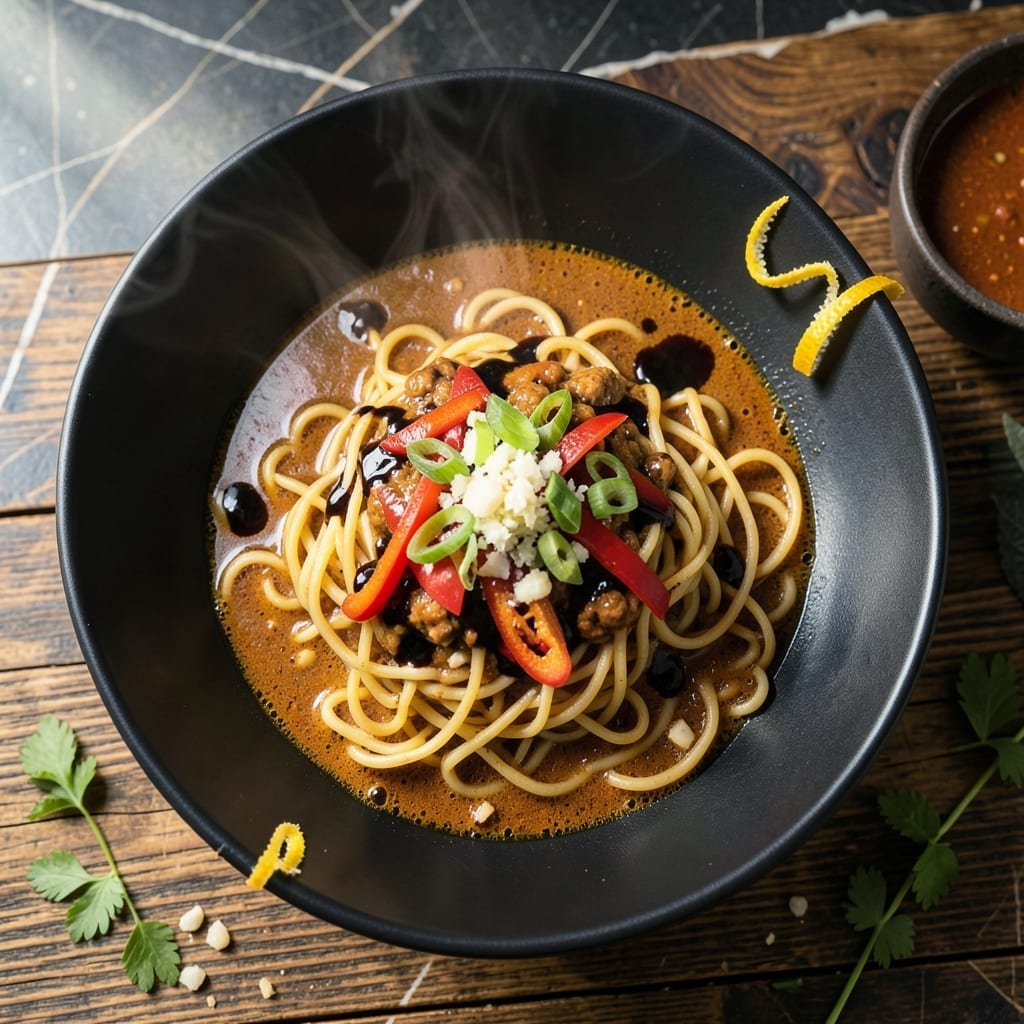
There’s nothing quite like a steaming bowl of curry noodles to bring warmth and comfort to any meal. This single-serve creation transforms humble ingredients into a deeply satisfying dish with minimal effort.
The magic lies in the balance of spices, which infuse the broth with rich, aromatic depth. I’ve perfected this method to ensure every bite delivers bold flavor without overwhelming heat.
What you’ll get is tender noodles swimming in a velvety, spiced broth, with each component harmonizing beautifully. The simplicity of the process makes it ideal for a quick yet indulgent lunch or late-night meal.
Customize with your favorite protein or vegetables for a dish that feels both comforting and personal. Here’s how to make it.
Ingredients for Curry Pot Noodle
A handful of humble ingredients transforms into a deeply comforting, single-serve bowl.
| Ingredient | Amount | Notes |
|---|---|---|
| Ramen Noodles 🍜 | 1 package | Discard seasoning packet |
| Curry Powder 🌶️ | 1 ½ tsp | Mild or hot variety |
| Garlic Cloves 🧄 | 2 cloves | Minced for maximum flavor |
| Fresh Ginger 🌿 | 1 tsp | Grated, peeled first |
| Soy Sauce 🫒 | 1 tbsp | Low-sodium preferred |
| Vegetable Broth 🥣 | 1 ½ cups | Low-sodium or homemade |
| Coconut Milk 🥥 | ½ cup | Full-fat for creaminess |
| Brown Sugar 🍚 | 1 tsp | Light or dark works |
| Lime Juice 🍈 | 1 tbsp | Freshly squeezed |
| Scallions 🧅 | 2 whole | Thinly sliced for garnish |
| Cilantro 🌿 | ¼ cup | Fresh, chopped |
| Red Chili Flakes 🔥 | ¼ tsp | Adjust for heat preference |
| Sesame Oil 🫒 | ½ tsp | Toasted for best flavor |
The curry powder is doing most of the heavy lifting here. Penzeys or a well-stocked bulk bin (like at Whole Foods) will give you the freshest punch. I always check the date on those little tins—spices lose their magic after a year. Ginger and garlic should be fresh (that jarred stuff just doesn’t compare). The coconut milk? Full-fat is non-negotiable for that velvety texture.
No curry powder? Mix cumin, coriander, turmeric, and a pinch of cinnamon—not perfect but close. Out of fresh ginger? Ground ginger at half the amount works. Vegetable broth can be swapped for chicken broth (if that’s your thing), but keep it low-sodium. The noodles can be any quick-cooking type—udon or soba if you’re feeling fancy (or whatever’s in the pantry).
This is best eaten fresh, but leftovers keep 2-3 days in the fridge. The noodles soak up broth, so add a splash of water when reheating. Not one for freezing—the texture suffers.
Why You’ll Love This Recipe
- One Pot Wonder: I toss everything into a single pot—ramen, curry powder, garlic, ginger—and it’s ready before I even set the table.
- Flavor Bomb: The garlic and ginger bloom in the broth, while the curry powder gives it this deep, warm kick that’s way better than takeout.
- Weeknight Hero: Honestly, it’s my go-to for busy evenings—filling, fast, and my kids actually eat the veggies I sneak in.
- Pennywise Fix: A pack of ramen and a few pantry staples stretch into a meal that’s easy on the wallet but still tastes like I put in real effort.
Step-by-Step Instructions for Curry Pot Noodle
Here’s the method I use to build layers of flavor in this single-serve dish.
Step 1: Prepare the Aromatic Base
Discard the seasoning packet from the ramen noodles and set the noodles aside. In a small pot over medium heat, add the 1.5 tsp curry powder, 2 cloves minced garlic, and 1 tsp grated fresh ginger. Toast these for 30-45 seconds until the spices become fragrant.
This step is crucial—blooming the spices in the dry pot intensifies their flavors and prevents a raw, chalky taste. Watch carefully to avoid burning; the garlic should just start to turn light golden at the edges.
Step 2: Build the Broth
Pour in the 1.5 cups vegetable broth, 1 tbsp soy sauce, 1 tsp brown sugar, and 0.5 cup coconut milk. Stir well to dissolve the sugar and combine all the ingredients. Bring the mixture to a gentle simmer over medium-high heat.
Once simmering, reduce the heat to medium-low and let it cook for 3-4 minutes. The broth should develop a rich, golden color and the spices will fully infuse into the liquid. Taste and adjust sweetness or saltiness if needed.
Step 3: Cook the Noodles
Add the ramen noodles to the simmering broth. Submerge them completely and cook for 2-3 minutes, stirring occasionally, until the noodles are tender but still slightly chewy. This timing ensures they absorb the maximum flavor without turning mushy.
If the broth reduces too much before the noodles are done, add a splash of water to loosen it. The noodles should be fully coated in the creamy, spiced broth by the time they’re finished.
Step 4: Finish and Garnish
Remove the pot from heat and stir in the 1 tbsp lime juice and 0.5 tsp sesame oil. The lime adds a bright, tangy note that cuts through the richness of the coconut milk. Let the dish sit for 1 minute to allow the flavors to meld.
Divide the noodles and broth between two bowls. Top with the 2 sliced scallions, 0.25 cup chopped cilantro, and 0.25 tsp red chili flakes. The herbs add freshness, while the chili flakes provide a subtle heat. Serve immediately while hot.
Pro Tips For Making Curry Pot Noodle
- Bloom the Curry: Heat your curry powder in the oil for 30 seconds before adding liquids—I learned this the hard way after my first few batches tasted flat instead of deep and aromatic.
- Grate the Ginger: Skip the slices and grate your fresh ginger fine, about 1 tablespoon per serving, so it disperses evenly and infuses every bite with that sharp, warm kick.
- Undercook the Noodles: Pull the ramen 1 minute early from boiling, then finish in the curry sauce—this keeps them from turning to mush while soaking up all that flavor.
- Salt with Soy: Use soy sauce as your primary seasoning, but add it in two stages: half early for depth, half at the end to brighten the flavors without overpowering the dish.
Pro Cooking Tips for This Dish
Spice Blooming
Always toast the 1.5 tsp curry powder with garlic and ginger in a dry pot first. This 30-45 second step unlocks the spices’ oils and prevents a raw, dusty flavor. I use medium heat to avoid burning the garlic. 🌡️
Broth Balance
The 1.5 cups vegetable broth to 0.5 cup coconut milk ratio creates a creamy yet light consistency. I add the 1 tsp brown sugar early so it fully dissolves while the broth simmers.
Noodle Timing
Cook the noodles for only 2-3 minutes in the simmering broth to prevent mushiness. If the liquid reduces too much, add a splash of water. The noodles should be slightly chewy when done.
Final Touches
Always finish with 1 tbsp lime juice and 0.5 tsp sesame oil off heat. This preserves their bright, aromatic qualities. The 1-minute rest lets flavors meld before serving.
Garnish with fresh herbs right before eating for maximum freshness. 💡
Nutrition Facts
Frequently Asked Questions
Can I use a different type of noodle?
Udon or soba noodles work great. Just adjust the cooking time to 3-4 minutes for thicker noodles. The key is cooking them directly in the broth for maximum flavor absorption.
How do I make it less spicy?
Use mild curry powder and skip the chili flakes. For extra creaminess to balance heat, increase the coconut milk to 3/4 cup. Always taste as you go and adjust.
Can I add protein to this dish?
Yes! Add 1/2 cup cooked chicken, shrimp, or tofu when heating the broth. For raw protein, cook it in the broth for 5-7 minutes before adding noodles.
Why did my broth turn out too thick?
Coconut milk can separate when boiled. Stir frequently and keep heat at medium-low. If too thick, thin with 1/4 cup water or extra broth.

- 6 Oz Chocolate Chip Cookie Recipe: Perfectly Balanced Crispy Edges and Chewy Hearts - September 25, 2026
- 6-Inch Coffee Cake Recipe: Vanilla Bean Swirls and Buttery Streusel Topping - September 25, 2026
- 1 Hour Soup Recipe: Velvety Richness Without the Wait - September 25, 2026