
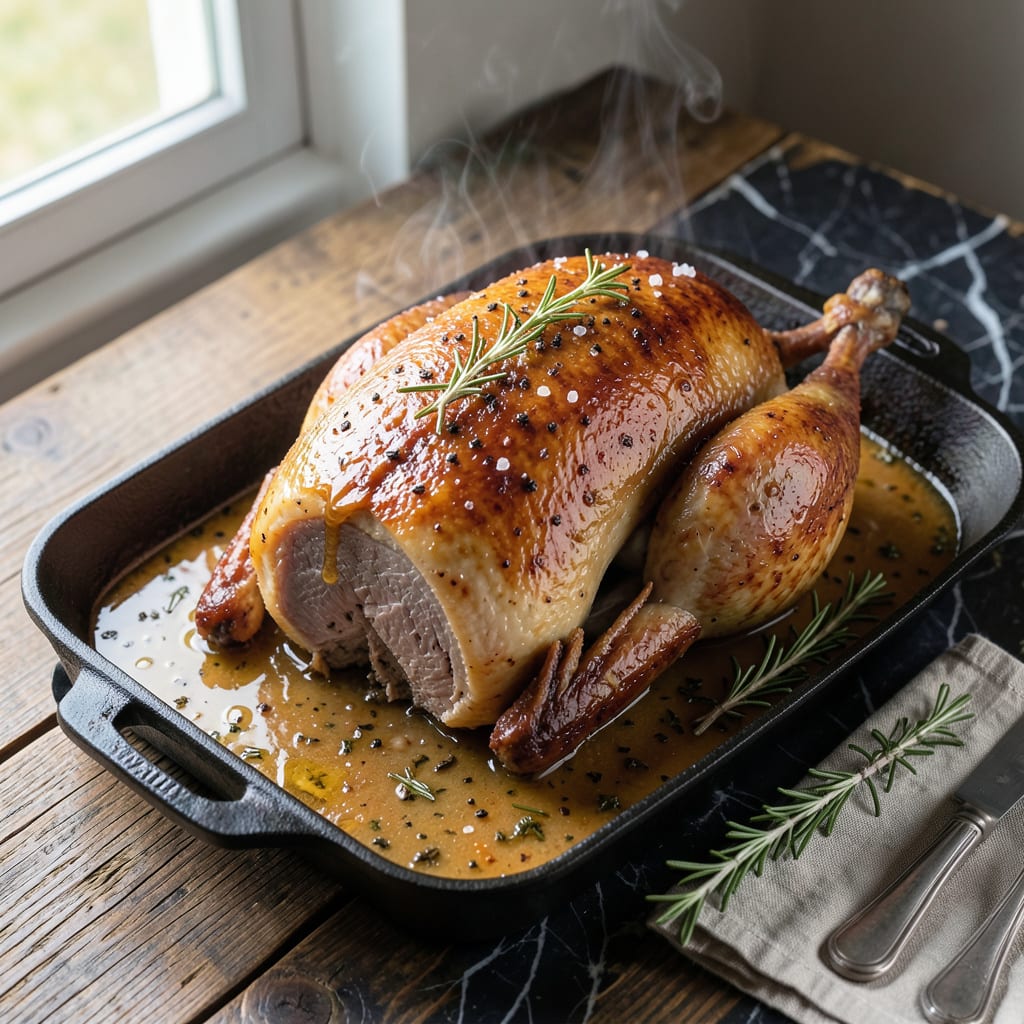
This holiday turkey recipe transforms your centerpiece with an indulgent twist. Duck fat basting creates a golden, crispy skin while keeping the meat impossibly juicy.
I’ve perfected this method for a succulent bird that’s rich in flavor without overpowering the natural taste of the turkey. The result is a showstopping roast that’s both elegant and unforgettable.
Ingredients for Duck Fat Turkey
Elevate your holiday centerpiece with rich duck fat and aromatic herbs for unforgettable flavor.
| Ingredient | Amount | Notes |
|---|---|---|
| Whole Turkey 🦃 | 12 lb | Fresh or thawed, giblets removed |
| Duck Fat 🦆 | 1 cup | Rendered and strained for basting |
| Unsalted Butter 🧈 | ½ cup | Softened for additional basting |
| Kosher Salt 🧂 | 2 tbsp | Diamond Crystal preferred for seasoning |
| Freshly Ground Black Pepper 🌶️ | 1 tbsp | Coarse grind for texture |
| Fresh Rosemary 🌿 | 4 sprigs | Stems removed, roughly chopped |
| Fresh Thyme 🍃 | 6 sprigs | Stems removed, roughly chopped |
| Fresh Sage Leaves 🌿 | 8 pieces | Lightly bruised for aroma |
| Garlic Cloves 🧄 | 6 cloves | Peeled and smashed for infusion |
| Yellow Onion 🧅 | 1 whole | Quartered for cavity aromatics |
| Lemon 🍋 | 1 whole | Halved for cavity moisture |
| Celery Stalks 🥬 | 3 pieces | Roughly chopped for stuffing |
| Carrots 🥕 | 2 whole | Roughly chopped for stuffing |
| Low-Sodium Chicken Broth 🥣 | 2 cups | For pan juices and basting |
The duck fat is non-negotiable for that golden, crispy skin. D’Artagnan offers high-quality rendered duck fat, or render your own from duck legs (save the meat for another meal). For the turkey, fresh is ideal—look for a bird with clear, plump skin and no off odors. The herbs should be vibrant and fragrant; Whole Foods or a local farmers market often has the freshest selection.
No duck fat? Ghee or a mix of butter and oil can substitute, though the flavor won’t be as rich. Fresh herbs can be swapped for dried at one-third the amount. If fresh sage is unavailable, rubbed sage works well. The onion, lemon, and celery stuffing can be adjusted—fennel or apples add a nice twist. Just keep the aromatics balanced.
Store the turkey in the fridge uncovered for 24 hours before roasting to dry the skin. Leftover duck fat keeps in the fridge for 3 months or freezes indefinitely. Fresh herbs wrapped in damp paper towels last 5 days in the fridge.
Why You’ll Love This Recipe
- Set It & Forget: The turkey practically cooks itself once it’s rubbed with duck fat and popped in the oven.
- Rich & Decadent: That duck fat makes the skin so crispy and the meat so juicy it’s ridiculous.
- Holiday Star: I serve this for Thanksgiving and my guests still talk about it months later.
- Leftovers for Days: Honestly, the sandwiches I make with the extras might be even better than the main meal.
Step-by-Step Instructions for Duck Fat Turkey
This method delivers a holiday centerpiece with unmatched richness and juiciness through precise technique.
Step 1: Prepare and Season the Turkey
Begin by removing the giblets from the 12 lb Whole Turkey and patting it completely dry with paper towels. This critical step ensures crispy skin. Season the cavity generously with 2 tbsp Kosher Salt and 1 tbsp Freshly Ground Black Pepper, making sure to reach all areas.
Next, rub the exterior with the remaining salt and pepper. I focus on getting seasoning into every crevice, including under the wings and legs. This creates a flavor foundation that permeates the meat as it roasts.
Step 2: Prepare Aromatics and Truss
Combine the 4 sprigs Fresh Rosemary, 6 sprigs Fresh Thyme, 8 pieces Fresh Sage Leaves, 6 cloves Garlic Cloves, 1 whole Yellow Onion (quartered), 1 whole Lemon (halved), 3 pieces Celery Stalks, and 2 whole Carrots (all roughly chopped) in a bowl. Stuff this mixture into the turkey cavity, distributing evenly.
Truss the turkey legs together with kitchen twine and tuck the wings under the body. This compact shape promotes even cooking and protects the breast meat. The aromatics will infuse the bird from the inside out as it roasts.
Step 3: Initial Roasting Phase
Preheat your oven to 325°F. Place the turkey breast-side up on a roasting rack set in a heavy roasting pan. Pour 1 cup Duck Fat and 2 cups Low-Sodium Chicken Broth into the pan – these create the basting liquid and prevent drying.
Roast uncovered for 2 hours. After this time, begin basting every 30 minutes with the pan juices. I use a bulb baster to draw up the duck fat and low-sodium chicken broth mixture, ensuring the skin stays moist and develops a deep golden color.
Step 4: Finish with Butter Basting
After 3 hours of total roasting time, increase the oven temperature to 400°F. Add the 0.5 cup Unsalted Butter to the pan, allowing it to melt into the juices. Baste the turkey with this enriched mixture every 15 minutes until the skin is a deep mahogany color.
Continue roasting until the thickest part of the thigh reaches 165°F on an instant-read thermometer, about 3.5-4 hours total. The duck fat and butter combination creates a self-basting effect that results in exceptionally moist meat and gloriously crisp skin.
Step 5: Rest and Carve
Transfer the turkey to a cutting board and tent loosely with foil. Let it rest for at least 45 minutes before carving. This allows the juices to redistribute throughout the meat, ensuring every slice is moist and flavorful.
Carve the turkey by first removing the legs and thighs, then slicing the breast meat against the grain. Serve with the pan juices strained and reduced slightly if desired. The result should be a perfectly cooked bird with golden, crisp skin and meat that’s succulent throughout.
Pro Tips For Making Duck Fat Turkey
- Dry the Skin Well: Pat the turkey completely dry before rubbing with duck fat—any moisture will steam the skin instead of crisping it. I learned this the hard way after serving sad, soggy skin three Thanksgivings in a row.
- Warm the Duck Fat: Soften the duck fat slightly (about 10 seconds in the microwave) before rubbing it under and over the skin—it spreads easier and clings better than cold fat.
- Skip the Butter Overload: Resist the urge to add too much butter with the duck fat; the rich duck fat alone gives deeper flavor, and extra butter can make the skin greasy instead of golden.
- Rest Before Carving: Let the turkey rest 30-40 minutes after roasting—this keeps the juices locked in, and the duck fat will have worked its magic into every bite.
Flavor Customization for This Dish
Herb Infusions
Swap the fresh herbs for dried Provence herbs—use 2 tbsp total, tied in cheesecloth. This French twist adds lavender notes. I love how it complements the duck fat’s richness without overpowering it. 🌿
Citrus Variations
Replace the lemon with orange halves and add 2 strips of orange zest to the cavity. The citrus oils brighten the duck fat’s depth. For extra zing, mix 1 tbsp orange juice into the basting liquid.
Spice Blends
Create a dry rub with 1 tbsp smoked paprika, 1 tsp cumin, and ½ tsp cinnamon for warmth. Rub it under the skin before roasting. This works beautifully with the duck fat’s natural richness. 🔥
Pan Sauce Upgrade
After roasting, skim ¼ cup duck fat from the pan and whisk in 2 tbsp Dijon mustard and 1 tbsp maple syrup for a glaze. Baste the turkey in the last 30 minutes for a glossy, tangy finish.
Garlic Boost
Add 2 whole garlic bulbs (halved horizontally) to the pan with the turkey. The roasted cloves will caramelize in the duck fat, adding sweet, mellow depth to the pan juices.
Smoky Depth
Place 2 tbsp wood chips (hickory or apple) in a foil pouch with holes poked in it. Add to the pan during roasting for subtle smokiness that pairs perfectly with the duck fat’s savory notes.
Nutrition Facts
Frequently Asked Questions
Can I use store-bought duck fat?
Look for rendered duck fat in jars at specialty grocers. D’Artagnan is a trusted brand. Just strain it first to remove any impurities for the crispiest skin.
How do I prevent the skin from burning?
Tent the turkey with foil if it browns too quickly. Start at 325°F and only increase to 400°F in the final hour. Baste frequently to distribute heat evenly.
What if my turkey isn’t fully thawed?
Never roast a partially frozen bird. Thaw it in the fridge for 24 hours per 4-5 lbs. For faster thawing, use the cold water method, changing water every 30 minutes.
Can I make this in a slow cooker?
Not recommended. The duck fat’s magic comes from high-heat roasting. A slow cooker won’t crisp the skin or achieve the same depth of flavor.

- 8 Bean Soup Recipe Crock Pot: Hearty Vegetable Medley in One Pot - September 25, 2026
- 4C Bread Crumbs Meatballs Recipe: Crispy Crust and Juicy Centers - September 25, 2026
- 6 Oz Chocolate Chip Cookie Recipe: Perfectly Balanced Crispy Edges and Chewy Hearts - September 25, 2026