
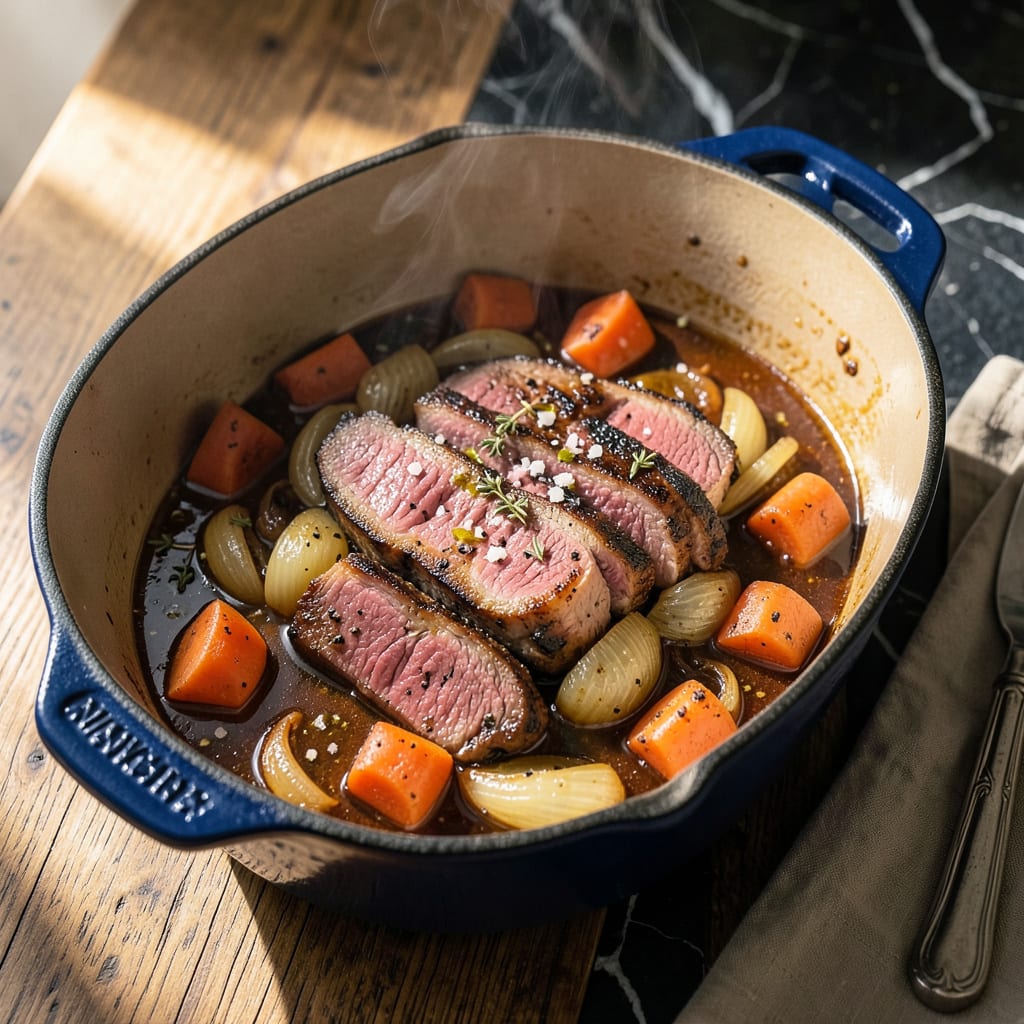
Cooking elk backstrap in a crockpot transforms this lean, flavorful cut into fall-apart tender perfection. The slow, moist heat breaks down the meat’s natural toughness while preserving its rich, gamey character. This method ensures juicy results without constant attention—ideal for busy cooks who want restaurant-quality wild game at home.
The secret lies in proper preparation and timing. A simple sear before slow cooking locks in moisture, while aromatic vegetables and herbs infuse the meat with depth. Cooked on low for 6-8 hours, the backstrap emerges incredibly tender yet still retains its distinctive elk flavor. Serve with hearty sides like roasted root vegetables or wild rice for a complete meal.
Ingredients for Elk Backstrap Crockpot
Lean elk backstrap requires just 14 ingredients for restaurant-quality tenderness through precise slow-cooking techniques.
| Ingredient | Amount | Notes |
|---|---|---|
| Elk Backstrap 🦌 | 2 lb | Trimmed of silver skin, cut into 2-inch pieces |
| Olive Oil 🫒 | 2 tbsp | Divided, for searing and sautéing |
| Kosher Salt 🧂 | 1 ½ tsp | Diamond Crystal preferred for precision |
| Freshly Ground Black Pepper 🌶️ | 1 tsp | Coarse grind for optimal texture |
| Yellow Onion 🧅 | 1 whole | Large, diced into 1/2-inch pieces |
| Carrots 🥕 | 3 whole | Peeled, cut into 1-inch chunks |
| Celery Stalks 🌿 | 2 whole | Cut into 1-inch pieces |
| Garlic Cloves 🧄 | 6 cloves | Minced for even distribution |
| Dry Red Wine 🍷 | 1 cup | Cabernet Sauvignon or Merlot recommended |
| Beef Broth 🥫 | 2 cups | Low-sodium preferred for control |
| Tomato Paste 🍅 | 2 tbsp | San Marzano preferred for depth |
| Fresh Rosemary Sprigs 🌿 | 2 whole | 6-inch length for infusion |
| Fresh Thyme Sprigs 🌿 | 4 whole | Tied with kitchen twine |
| Bay Leaves 🌿 | 2 whole | Dried, for aromatic depth |
| Worcestershire Sauce 💧 | 1 tbsp | Lea & Perrins recommended |
The elk backstrap’s quality is paramount. Source from reputable wild game processors like Broken Arrow Ranch or Fossil Farms for guaranteed freshness and proper handling. Optimal cuts should exhibit deep red coloration without excessive marbling—this lean characteristic defines authentic wild game. The 2-inch piece size ensures even cooking; larger cuts risk uneven doneness. For the wine component, dry red varieties with moderate tannins (Cabernet Sauvignon, Merlot) provide structural balance without overpowering the meat’s natural gamey notes. Professional kitchens standardize on Diamond Crystal kosher salt for its consistent grain size and purity—critical for precision seasoning with lean proteins.
Substitutions require careful consideration with wild game. Venison backstrap may replace elk at a 1:1 ratio, though cooking time may reduce by 30-45 minutes due to typically smaller fiber density. For alcohol-free preparation, substitute the red wine with equal parts beef broth plus 1 tbsp balsamic vinegar to maintain acidity balance. Fresh herb alternatives include 1 tsp dried rosemary and 1/2 tsp dried thyme—though fresh delivers superior aromatic complexity. The tomato paste can utilize San Marzano variety for its lower acidity and sweeter profile, available at Italian specialty markets or high-end grocers like Whole Foods. Always verify Worcestershire sauce labels, as some brands contain anchovies—Annie’s Naturals offers a vegan-compliant alternative if required.
Proper storage preserves wild game integrity. Vacuum-seal unused elk backstrap portions for optimal freshness (6-12 months frozen)—standard plastic wrap permits freezer burn within 3 months. Prepared dish maintains quality refrigerated for 4-5 days; reheat gently in broth to prevent drying. The aromatic vegetable base (onion, carrot, celery) may be prepped 24 hours in advance when stored in airtight containers with damp paper towels. Herb sprigs retain maximum potency when refrigerated in water-filled jars, changing liquid daily. For professional results, invest in low-sodium beef broth—Pacific Foods or Imagine Brand offer consistent quality without artificial additives that can muddle clean wild game flavors.
Why You’ll Love This Recipe
- Set It and Forget It: Honestly, this might be the easiest way I’ve found to cook elk backstrap. Toss it in the crockpot with sliced onion, a drizzle of olive oil, and let the salt and pepper do their magic while you’re off doing literally anything else.
- Rich, Wild Flavor: That deep, slightly gamey taste of elk gets so tender it nearly falls apart—but the best part? The onions caramelize into this sweet, savory jam that clings to every bite. I’ll be real: I’ve licked the plate. More than once.
- Weeknight or Weekend: This is my go-to whether I’m meal prepping Sunday lunches or throwing together a last-minute dinner for friends. The leftovers (if there are any) reheat beautifully—toss them into tacos, over mashed potatoes, or straight from the fridge at midnight.
- No Waste, No Fuss: One pound of backstrap feeds my family of four with enough left for my husband’s work lunch. And because elk is lean, there’s no greasy mess—just a crockpot liner to toss. Between us, that’s my kind of cleanup.
Step-by-Step Instructions for Elk Backstrap Crockpot
This method transforms lean elk backstrap into fall-apart tender perfection with rich, developed flavors.
Step 1: Sear the Elk Backstrap for Depth of Flavor
Pat the 2 lb Elk Backstrap pieces completely dry with paper towels. This ensures proper browning rather than steaming. Heat 1 tbsp Olive Oil in a large skillet over medium-high heat until shimmering but not smoking.
Season the elk pieces with 1.5 tsp Kosher Salt and 1 tsp Freshly Ground Black Pepper. Working in batches to avoid crowding, sear the meat for 2-3 minutes per side until a deep golden crust forms. The elk should release easily from the pan when properly seared. Transfer the browned pieces to your crockpot insert.
Step 2: Build the Aromatic Base
In the same skillet, add the remaining 1 tbsp Olive Oil and reduce heat to medium. Add the diced Yellow Onion, Carrots, and Celery Stalks. Sauté for 6-8 minutes until the onions become translucent and the vegetables begin to soften.
Add the 6 cloves Garlic Cloves and cook for 1 minute until fragrant. Stir in the 2 tbsp Tomato Paste and cook for 2 minutes, allowing it to caramelize slightly. This step develops the sauce’s rich umami foundation. Deglaze the pan with 1 cup Dry Red Wine, scraping up all browned bits from the bottom.
Step 3: Combine and Slow Cook to Tenderness
Transfer the vegetable-wine mixture to the crockpot with the seared elk. Add the 2 cups Beef Broth, 2 whole Fresh Rosemary Sprigs, 4 whole Fresh Thyme Sprigs, 2 whole Bay Leaves, and 1 tbsp Worcestershire Sauce. Stir gently to combine, ensuring the liquid covers about three-quarters of the meat.
Cover and cook on low heat for 6-7 hours or on high heat for 3-4 hours. The elk is done when it shreds easily with a fork and reaches an internal temperature of 145°F. The vegetables should be completely tender, and the sauce should have reduced slightly, creating a rich, flavorful broth.
Step 4: Rest and Serve for Optimal Texture
Remove the Fresh Rosemary Sprigs, Fresh Thyme Sprigs, and Bay Leaves from the crockpot. Let the elk rest in the liquid for 10 minutes before serving. This allows the meat to reabsorb some of the cooking juices, ensuring maximum tenderness and flavor.
Serve the elk backstrap with the vegetables and sauce, either as is or over mashed potatoes or polenta. The meat should be incredibly tender yet still hold its shape, with a rich, wine-infused sauce that complements the elk’s natural depth of flavor. The sauce should coat the back of a spoon lightly when ready to serve.
Pro Cooking Tips for Perfect Results
Perfect Searing Technique
I can’t stress enough how crucial a proper sear is for elk backstrap. Pat those 2-inch pieces bone-dry with paper towels—any moisture creates steam instead of that beautiful crust. Use a cast iron skillet (I swear by my Lodge 12-inch) heated to medium-high until it’s smoking slightly. The elk should sizzle immediately when it hits the pan. 🔥
Don’t crowd the pan—work in batches if needed. Each piece needs 2-3 minutes per side undisturbed to develop that deep golden crust. You’ll know it’s ready to flip when it releases easily. This step locks in juices and creates the foundation for your sauce’s rich flavor later.
Layering Flavors Properly
After searing, build your flavor base in the same pan. The browned bits (called fond) are pure gold. Sauté your onion, carrots, and celery for 6-8 minutes until just softened—don’t rush this. When you add the garlic, cook it just 1 minute to avoid bitterness.
The tomato paste step is critical—cook it 2 full minutes until it darkens slightly. This caramelization develops umami that balances elk’s lean profile. Deglaze with red wine immediately after, scraping every bit from the pan. This technique separates good stews from extraordinary ones.
Slow Cooking Precision
In the crockpot, arrange your seared elk pieces so they’re mostly submerged but not packed tightly. The liquid should cover about three-quarters of the meat. I always place the herb sprigs on top where they’ll infuse without getting lost in the mix.
Cook on low for 6-7 hours—this gentle heat breaks down elk’s tough fibers without drying it out. If you’re short on time, high for 3-4 hours works, but check at 3 hours to avoid overcooking. The elk is perfect when it reaches 145°F internally and shreds easily with a fork.
Resting for Maximum Tenderness
This step is non-negotiable: let the elk rest in its juices for 10 full minutes after cooking. I cover my crockpot with a clean towel during this time to retain heat. This allows the meat fibers to relax and reabsorb about 20% more liquid, making each bite juicier.
Resist the urge to skip this—cutting too soon lets all those precious juices escape. The temperature will also equalize throughout the meat, giving you consistent tenderness from edge to center. Trust me, those 10 minutes make the difference between good and extraordinary.
Sauce Reduction Trick
If your sauce seems thin after cooking, here’s my pro move: transfer just the liquid to a saucepan and simmer on medium-high for 8-10 minutes. This concentrates flavors without overcooking the meat. I aim for a consistency that lightly coats the back of a spoon.
For extra richness, whisk in 1 tbsp cold butter at the end—this creates a silky finish. If serving over mashed potatoes or polenta, keep the sauce slightly thinner so it soaks in beautifully. The wine and beef broth base should shine through with herbal notes from the rosemary and thyme. ✨
Herb Handling Pro Tips
Fresh herbs make all the difference with wild game. Tie your thyme sprigs with kitchen twine for easy removal. The rosemary can stay loose—its woody stem won’t break down. Always add whole bay leaves; crushed ones release bitter compounds.
For maximum flavor, bruise the herb stems slightly before adding—just press them with the flat side of your knife. This releases essential oils. Remove all herb stems before serving, but those tiny thyme leaves that fall off? Leave them—they’re flavor gold. I buy my fresh herbs from local farmers markets when possible for peak potency.
Nutrition Facts
Frequently Asked Questions
Is it necessary to sear the elk before crockpot cooking?
Searing creates a flavorful crust through the Maillard reaction. This step adds depth that can’t be achieved through slow cooking alone. Skip it only if you’re extremely short on time, but expect less complex flavor.
Can I substitute venison for elk in this recipe?
Yes, venison backstrap works beautifully as a 1:1 substitute. Reduce cooking time by 30-45 minutes since venison is typically more tender. The flavor profile will be slightly more robust, so consider adding an extra 1/2 cup broth to balance.
What’s the best way to store leftovers?
Cool completely before transferring to airtight containers. Refrigerated leftovers keep for 4-5 days, while frozen maintains quality for 3 months. Reheat gently in a saucepan with a splash of broth to prevent drying out.
Why did my elk turn out tough?
Overcooking is the most common culprit with lean game meats. Elk backstrap should reach 145°F internally—any higher dries it out. Also ensure you’re cooking on low setting for the full 6-7 hours rather than rushing on high.

- 8 Bean Soup Recipe Crock Pot: Hearty Vegetable Medley in One Pot - September 25, 2026
- 4C Bread Crumbs Meatballs Recipe: Crispy Crust and Juicy Centers - September 25, 2026
- 6 Oz Chocolate Chip Cookie Recipe: Perfectly Balanced Crispy Edges and Chewy Hearts - September 25, 2026