
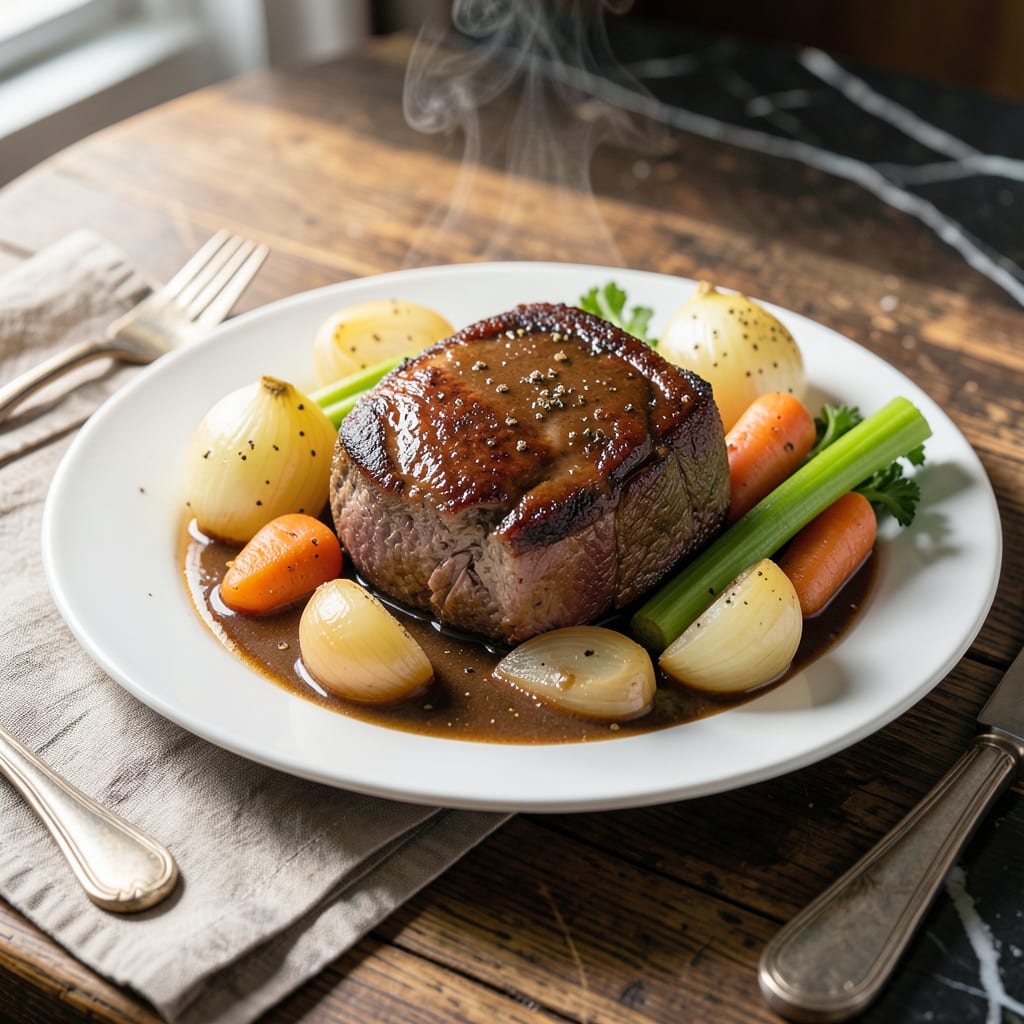
This slow-braised pot roast delivers melting tenderness that falls apart at the touch of a fork. The secret lies in the long, gentle cooking process that transforms tough cuts into succulent, flavorful meat.
With simple ingredients and a few hours of patience, you’ll achieve a dish that rivals any restaurant. The result is rich, savory, and deeply satisfying, with every bite infused with the warmth of slow-cooked perfection.
Ingredients for Excellent Pot Roast
Transform tough cuts into succulent perfection with these essential ingredients for slow-braised excellence.
| Ingredient | Amount | Notes |
|---|---|---|
| Chuck Roast 🥩 | 3 lb | Well-marbled for best results |
| Kosher Salt 🧂 | 2 tsp | Diamond Crystal preferred |
| Freshly Ground Black Pepper 🌶️ | 1 tsp | Coarsely ground for texture |
| All-Purpose Flour 🌾 | ¼ cup | For dredging meat |
| Vegetable Oil 🫒 | 2 tbsp | High smoke point required |
| Yellow Onions 🧅 | 2 whole | Large, sliced thick |
| Garlic Cloves 🧄 | 6 cloves | Peeled and smashed |
| Carrots 🥕 | 3 whole | Peeled, cut into chunks |
| Celery Stalks 🌿 | 3 whole | Cut into large pieces |
| Beef Broth 💧 | 3 cups | Low-sodium preferred |
| Red Wine 🍷 | 1 ½ cups | Dry variety recommended |
| Tomato Paste 🍅 | 2 tbsp | For depth of flavor |
| Fresh Thyme Sprigs 🍃 | 3 whole | Plus extra for garnish |
| Bay Leaves 🌿 | 2 whole | Dried, for aroma |
| Unsalted Butter 🧈 | 2 tbsp | Optional for finishing |
The chuck roast is non-negotiable—look for generous marbling at your butcher or Whole Foods meat counter. Avoid lean cuts like round; they’ll stay tough no matter how long you cook them. Costco often has well-marbled chuck at a great price. For the wine, any bold, dry red (Cabernet, Merlot) will deepen the sauce beautifully. Don’t waste expensive stuff here; cooking wine is fine.
No red wine? Substitute with 1 cup beef broth plus 1 tbsp balsamic vinegar. Short on time? Pre-cut mirepoix from the grocery store works (though fresh is better). For gluten-free, swap the flour for cornstarch at half the quantity. The tomato paste can be from a tube—San Marzano brand adds a subtle sweetness. Fresh rosemary can replace thyme if that’s what you have.
This tastes even better the next day. Store in the fridge for up to 4 days or freeze for 3 months. To reheat, warm gently on the stove with a splash of broth. The butter finish is optional but adds a luxurious sheen to the sauce.
Why You’ll Love This Recipe
- One Pot Wonder: I toss the chuck roast in flour, sear it in oil, and let the oven do the rest—hardly any dishes to wash.
- Feeds Everyone: I’ve served this for Sunday dinner and weeknight leftovers—equally loved by my picky nephew and my meat-and-potatoes dad.
- Stretches Far: One chuck roast makes sandwiches, tacos, and stew the next day—my grocery budget thanks me.
Step-by-Step Instructions for Slow-Braised Pot Roast
Master the technique that transforms tough cuts into fork-tender perfection every time.
Step 1: Sear and Season the Chuck Roast
Pat the 3 lb Chuck Roast dry with paper towels, then season generously with the 2 tsp Kosher Salt and 1 tsp Freshly Ground Black Pepper. The dry surface ensures a proper sear rather than steaming the meat.
Dredge the chuck roast in the 0.25 cup All-Purpose Flour, shaking off excess. Heat the 2 tbsp Vegetable Oil in a Dutch oven over medium-high heat until shimmering. Sear the roast on all sides, turning occasionally, until deeply browned—about 8-10 minutes total. This creates a flavorful fond that will enrich the braising liquid.
Step 2: Sauté Aromatics for Depth of Flavor
Reduce heat to medium and add the 2 whole Yellow Onions, 3 whole Carrots, and 3 whole Celery Stalks to the pot. Cook, stirring occasionally, for 5-7 minutes until the onions begin to soften and develop color.
Add the 6 cloves Garlic Cloves and 2 tbsp Tomato Paste, stirring constantly for 1-2 minutes until the tomato paste darkens slightly. This step builds a complex flavor base that defines the finished dish.
Step 3: Deglaze and Begin Braising
Pour in the 1.5 cups Red Wine, scraping the bottom of the pot to release all browned bits. Bring to a simmer and cook for 5 minutes to reduce the wine by half, allowing the alcohol to cook off while concentrating its flavor.
Add the 3 cups Beef Broth, 3 whole Fresh Thyme Sprigs, and 2 whole Bay Leaves. Return the chuck roast to the pot, ensuring it’s mostly submerged. The liquid should come about two-thirds up the side of the meat.
Step 4: Slow-Braise to Melting Tenderness
Cover the pot and transfer to a 325°F oven. Braise for 2.5 to 3 hours, turning the roast halfway through, until the meat yields easily to a fork. The low, steady heat breaks down the connective tissue without drying the meat.
Check occasionally to ensure the liquid maintains a gentle simmer. If it reduces too much, add a splash of water or broth. The roast is done when it reaches 195-200°F internally and shreds easily with a fork.
Step 5: Finish and Rest Before Serving
Carefully remove the chuck roast to a serving platter. Skim excess fat from the surface of the braising liquid, then stir in the 2 tbsp Unsalted Butter for a silky finish. Taste and adjust seasoning with additional kosher salt if needed.
Let the pot roast rest for 15-20 minutes before slicing or pulling apart. This allows the juices to redistribute, ensuring each serving delivers the promised melting tenderness. Serve with the vegetable-laden braising liquid spooned over the top.
Pro Tips For Making Excellent Pot Roast
- Sear it Hard: Crank the heat to medium-high and don’t move the chuck roast for 3-4 minutes per side—you want a deep brown crust, not a pale one. I learned this the hard way after years of gray, sad pot roast.
- Dry the Meat: Pat the chuck roast bone-dry with paper towels before seasoning. Sounds tedious, but it’s the only way to get that flour coating to stick and brown properly.
- Skip Cold Roast: Pull the chuck roast out of the fridge 30-45 minutes before searing. Cold meat seizes up and steams instead of browning, and nobody wants a pot roast with a steamed exterior.
- Use Enough Oil: Don’t skimp—use about 2 tablespoons of vegetable oil to coat the bottom of your pot. After burning a batch because the oil pooled unevenly, I finally wised up and started measuring.
Serving Suggestions for This Dish
Classic Mashed Potatoes
Creamy mashed potatoes are the perfect partner for this dish. I use 2 lbs Yukon Gold potatoes for their buttery texture, boiled and mashed with ½ cup warm milk and 4 tbsp butter. The richness balances the savory braising liquid beautifully. 💛
Crusty Bread
A warm baguette or sourdough loaf from your local bakery is essential for soaking up every last drop of sauce. Toast slices lightly and rub with a garlic clove for extra flavor. I always keep some Whole Foods sourdough on hand for this purpose.
Simple Green Salad
A crisp green salad cuts through the richness. Toss 6 cups mixed greens with a simple vinaigrette of 3 tbsp olive oil, 1 tbsp red wine vinegar, and 1 tsp Dijon mustard. The acidity refreshes your palate between bites. 🥗
Roasted Vegetables
For a heartier meal, add roasted root vegetables. Toss 4 cups chopped carrots and parsnips with 2 tbsp olive oil, salt, and pepper, then roast at 400°F for 25 minutes until caramelized.
Red Wine Pairing
Serve with the same dry red wine you used for cooking. A bold Cabernet Sauvignon or Merlot complements the rich flavors. I find the wine’s tannins soften when paired with the tender meat.
Nutrition Facts
Frequently Asked Questions
What’s the best cut for this dish?
Use chuck roast for ideal results. Its high marbling breaks down beautifully during the slow braise, creating that signature tenderness. Avoid lean cuts like round or sirloin.
Can I make this in a slow cooker?
Yes! Brown the meat first, then transfer everything to a slow cooker. Cook on low for 8-10 hours or high for 5-6 hours. The texture will be slightly different but still delicious.
Why is my sauce too thin?
Simmer uncovered for 10-15 minutes after cooking to reduce. Alternatively, mix 1 tbsp cornstarch with 2 tbsp water and stir in. The sauce should coat the back of a spoon.
How do I know when it’s done?
The meat should pull apart easily with a fork and reach 195-200°F internally. If it resists, give it more time—patience is key for perfect tenderness.

- 4C Bread Crumbs Meatballs Recipe: Crispy Crust and Juicy Centers - September 25, 2026
- 6 Oz Chocolate Chip Cookie Recipe: Perfectly Balanced Crispy Edges and Chewy Hearts - September 25, 2026
- 6-Inch Coffee Cake Recipe: Vanilla Bean Swirls and Buttery Streusel Topping - September 25, 2026