
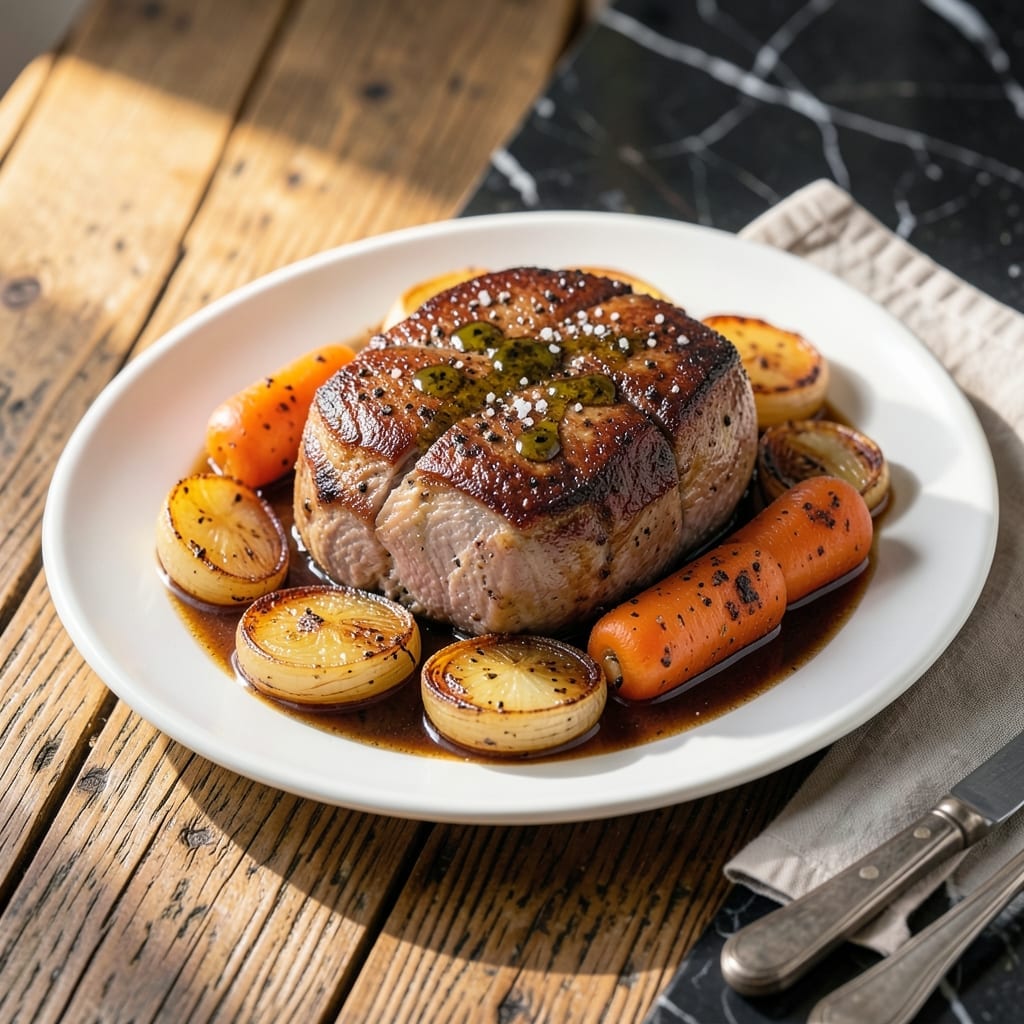
Transforming eye of round into a fork-tender masterpiece is simpler than most realize. This lean cut becomes incredibly succulent through slow braising, turning tough fibers into melt-in-your-mouth perfection.
The secret lies in patience and technique. A long, gentle cook time allows the connective tissue to break down completely, while aromatic vegetables and rich liquid create a flavorful braising environment that penetrates every bite.
What emerges is a pot roast with a deep, beefy flavor and a texture so tender it falls apart at the touch of a fork. The lean eye of round absorbs all the savory goodness of the braising liquid without becoming greasy.
Serve with the natural juices spooned over the top for maximum flavor. This method delivers restaurant-quality results with minimal active cooking time.
Ingredients for Eye of Round Pot Roast
Lean beef and aromatic vegetables create this fork-tender braised masterpiece with minimal effort.
| Ingredient | Amount | Notes |
|---|---|---|
| Eye of Round Roast 🥩 | 2 lb | Trimmed of excess fat |
| Olive Oil 🫒 | 2 tbsp | Divided for searing and braising |
| Kosher Salt 🧂 | 1 ½ tsp | Plus more to taste |
| Black Pepper 🌶️ | 1 tsp | Freshly ground preferred |
| Yellow Onion 🧅 | 1 whole | Large, roughly chopped |
| Carrots 🥕 | 3 whole | Peeled, cut into chunks |
| Celery Stalks 🌿 | 2 whole | Cut into large pieces |
| Garlic Cloves 🧄 | 4 cloves | Smashed, peeled |
| Beef Broth 🥣 | 3 cups | Low-sodium preferred |
| Red Wine 🍷 | 1 cup | Dry variety like Cabernet |
| Tomato Paste 🍅 | 2 tbsp | For depth of flavor |
| Dried Thyme 🌿 | 1 tsp | Or substitute fresh |
| Bay Leaves 🍃 | 2 whole | For aromatic braising |
| Fresh Parsley 🌿 | ¼ cup | Chopped, for garnish |
The beef is the foundation here. Eye of round is lean but benefits from slow cooking to break down its fibers. Look for a well-marbled piece at Whole Foods or your local butcher—avoid anything with excessive fat caps. The roast should be uniform in thickness for even cooking. Most supermarkets carry this cut pre-packaged, but ask them to trim it if you want to save time.
No red wine? Extra beef broth with a splash of balsamic vinegar works as a substitute. Fresh thyme can replace dried at one-third the amount. If you’re missing tomato paste, 1 tbsp ketchup plus 1 tsp Worcestershire sauce gets you close. The vegetables can be swapped for any root veggies you have on hand—parsnips or potatoes work well too.
This dish tastes even better the next day. Store leftovers in an airtight container in the fridge for up to 4 days, or freeze for 3 months. Reheat gently on the stove with a splash of broth to restore moisture.
Why You’ll Love This Recipe
- I’ll be real: one roast means leftovers for sandwiches, tacos, or stew all week.
- Set It and Forget: Honestly, just sear the eye of round, toss in onions, and let the oven do the work.
- Deep, Rich Flavor: The olive oil and slow roasting turn the simple salt and pepper into something ridiculously good.
- Feeds a Crowd: I’ll be real: one roast means leftovers for sandwiches, tacos, or stew all week.
Step-by-Step Instructions for Eye of Round Pot Roast
Here’s how I achieve fork-tender results with this lean cut every time.
Step 1: Sear the Eye of Round Roast
Pat the 2 lb Eye of Round Roast completely dry with paper towels. This removes surface moisture that would otherwise prevent proper browning. Season all sides generously with the 1.5 tsp Kosher Salt and 1 tsp Black Pepper, pressing the seasoning into the meat so it adheres well.
Heat 1 tbsp Olive Oil in a heavy Dutch oven over medium-high heat until shimmering. Add the roast and sear undisturbed for 3-4 minutes per side until deeply browned. You’re looking for a rich, dark crust that forms the flavor foundation for this dish. Transfer the roast to a plate.
Step 2: Sauté the Aromatic Vegetables
In the same pot, add the remaining 1 tbsp Olive Oil. Add the 1 whole Yellow Onion, 3 whole Carrots, and 2 whole Celery Stalks. Cook for 5-6 minutes, stirring occasionally, until the onion begins to soften and brown slightly at the edges.
Add the 4 cloves Garlic Cloves and 2 tbsp Tomato Paste, stirring constantly for 1 minute until the tomato paste darkens slightly and becomes fragrant. This step develops the deep, rich base flavors that will infuse the entire dish during braising.
Step 3: Deglaze and Begin Braising
Pour in the 1 cup Red Wine and scrape up all the browned bits from the bottom of the pot with a wooden spoon. These fond bits contain concentrated flavor that will dissolve into the braising liquid. Bring to a simmer and cook for 2-3 minutes until the liquid reduces by about half.
Add the 3 cups Beef Broth, 1 tsp Dried Thyme, and 2 whole Bay Leaves. Return the seared roast to the pot along with any accumulated juices. The liquid should come about halfway up the sides of the meat—this ensures even cooking and maximum flavor absorption.
Step 4: Braise Until Fork-Tender
Bring the liquid to a gentle simmer, then cover the pot tightly. Reduce heat to low and maintain a slow simmer. Cook for 2.5 to 3 hours, turning the roast every 45 minutes to ensure even cooking. You’ll know it’s ready when a fork slides in and out with no resistance.
The braising liquid should reduce slightly but still remain saucy. If it reduces too much during cooking, add a splash of water to maintain the level. This slow, moist cooking method transforms the lean eye of round into a melt-in-your-mouth experience.
Step 5: Rest and Serve
Carefully transfer the roast to a cutting board and tent loosely with foil. Let it rest for 15 minutes before slicing. This allows the juices to redistribute throughout the meat, ensuring every bite is moist and flavorful.
Skim excess fat from the braising liquid if desired, then spoon the vegetables and sauce over the sliced roast. Garnish with the 0.25 cup Fresh Parsley for a pop of color and freshness. Serve immediately while hot, with extra sauce on the side.
Pro Tips For Making Eye Of Round Pot Roast
- Sear It Hard: Use high heat and don’t move the roast for at least 3-4 minutes per side to get a deep brown crust—this is the only way to coax flavor out of lean eye of round.
- Slice Against Grain: After cooking, slice the roast thinly against the grain to shorten the muscle fibers, which makes the tougher cut more tender.
- Don’t Overcrowd Pan: I learned this the hard way—if your pot is too small for the roast and onions, they’ll steam instead of brown, and you’ll lose that rich fond for the sauce.
- Use a Thermometer: Pull it at 130°F for medium-rare; eye of round dries out fast if you guess, and nobody wants a pot roast that tastes like shoe leather.
Essential Equipment for This Recipe
Heavy Dutch Oven
A 5-7 quart enameled cast iron Dutch oven is non-negotiable for even heat distribution. I swear by my Le Creuset—it retains heat perfectly for the 2.5-3 hour braise. The heavy lid creates a tight seal, trapping moisture for that fall-apart texture. 🔥
Tongs and Wooden Spoon
Use 12-inch locking tongs to turn the 2 lb roast safely during searing and braising. A wooden spoon is essential for deglazing—it won’t scratch your pot while scraping up those flavorful browned bits.
Instant-Read Thermometer
Though not traditional, I always use a ThermoWorks Instant Read to confirm doneness. The roast is ready at 195-205°F internal temperature, when connective tissue fully breaks down. This takes the guesswork out of timing.
Sharp Chef’s Knife
A 8-inch chef’s knife makes quick work of the aromatics. I prefer Wüsthof for its balance when chopping the 1 whole onion, 3 carrots, and 2 celery stalks. Dull knives crush rather than slice, releasing bitter flavors.
Fat Separator
After cooking, a gravy separator helps skim excess fat from the braising liquid. I pour the sauce into mine and let it settle for 5 minutes before pouring the defatted juices back over the sliced roast.
Cutting Board
Use a large, stable board—mine’s maple wood—for slicing the rested roast. The grooves catch juices, and the size gives you room to work with the 15-minute rested meat before serving. 💡
Nutrition Facts
Frequently Asked Questions
What’s the best way to slice this after cooking?
Always slice against the grain into 1/2-inch thick pieces. This shortens muscle fibers for maximum tenderness. Use a sharp knife and cut cleanly through without sawing.
Can I make this in a slow cooker instead?
Yes! Sear the meat first, then transfer to a slow cooker with all ingredients. Cook on low for 7-8 hours or high for 4-5 hours. The texture will be slightly different but still delicious.
Why is my pot roast tough instead of tender?
This usually means it didn’t cook long enough. The connective tissue needs 2.5-3 hours to break down. Also, ensure you’re maintaining a gentle simmer, not a boil.
What can I substitute for the red wine?
Use 1 cup beef broth plus 1 tbsp balsamic vinegar for similar depth. Or try 1 cup apple cider with 1 tsp lemon juice for a different but tasty twist.

- 4C Bread Crumbs Meatballs Recipe: Crispy Crust and Juicy Centers - September 25, 2026
- 6 Oz Chocolate Chip Cookie Recipe: Perfectly Balanced Crispy Edges and Chewy Hearts - September 25, 2026
- 6-Inch Coffee Cake Recipe: Vanilla Bean Swirls and Buttery Streusel Topping - September 25, 2026