
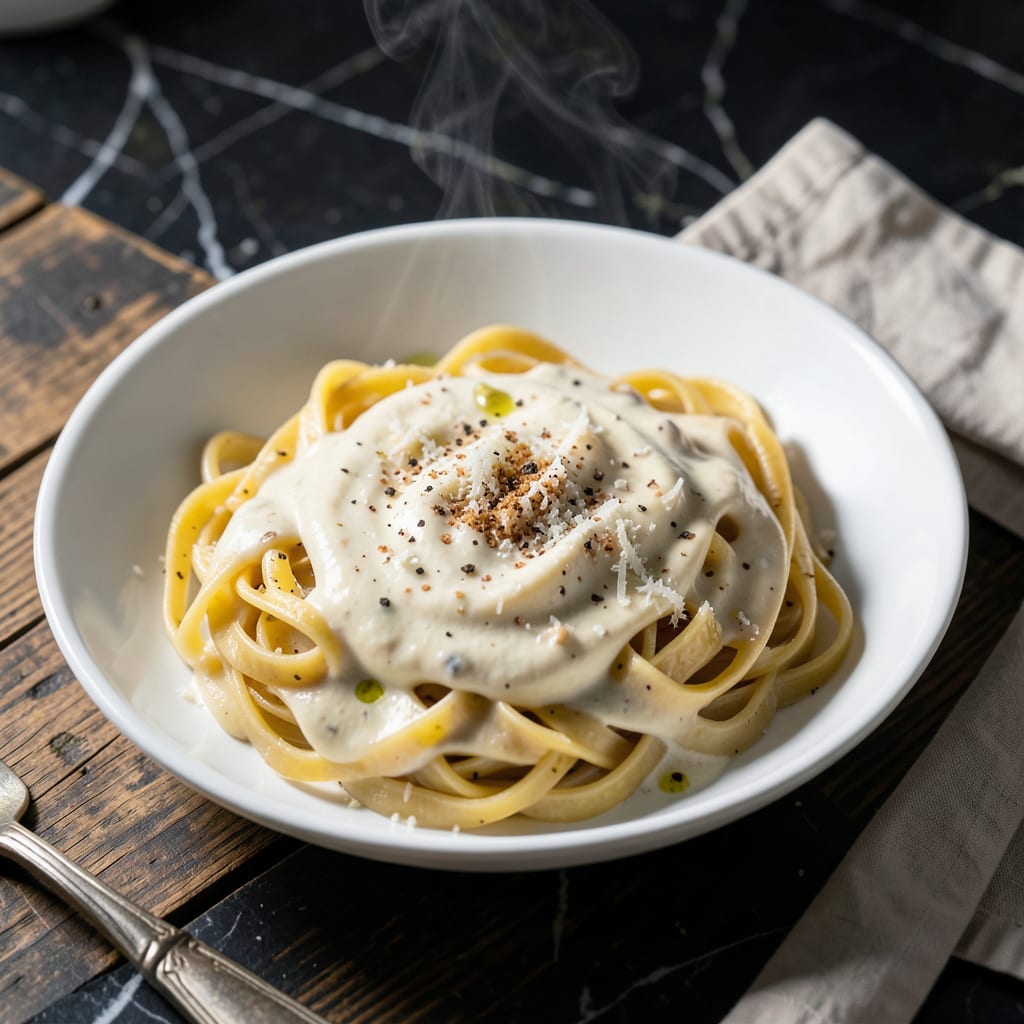
This alfredo sauce delivers silky smooth richness without cream or butter. The secret lies in a simple base of milk and flour, carefully cooked to create a velvety texture.
What you get is a light yet satisfying sauce that clings to pasta perfectly. It proves that indulgent flavor doesn’t require heavy ingredients—just the right technique.
Ingredients for Fat Free Alfredo Sauce
Nine simple ingredients create a velvety, light sauce with no heavy dairy.
| Ingredient | Amount | Notes |
|---|---|---|
| Nonfat Milk 🥛 | 2 cups | Whole milk works too |
| All-Purpose Flour 🌾 | 3 tbsp | For thickening the sauce |
| Garlic Cloves 🧄 | 4 cloves | Minced for depth of flavor |
| Parmesan Cheese 🧀 | ½ cup | Freshly grated for best texture |
| Low-Fat Cream Cheese 🧀 | 4 oz | Softened for creaminess |
| Salt 🧂 | ½ tsp | Adjust to taste |
| Black Pepper 🌶️ | ¼ tsp | Freshly ground preferred |
| Nutmeg 🌰 | 0.125 tsp | Ground, for warmth |
| Onion Powder 🧅 | ½ tsp | Adds savory depth |
The milk quality impacts texture most. Organic nonfat milk from Whole Foods or Trader Joe’s yields the best results due to higher protein content. For the Parmesan, freshly grated Parmigiano-Reggiano is non-negotiable—pre-shredded contains anti-caking agents that prevent smooth melting. The cream cheese should be Philadelphia brand for consistency you can rely on.
No nonfat milk? 2% or whole milk works but may require slightly less flour to thicken. Skip the Parmesan for a vegan version and use nutritional yeast at half the amount. The nutmeg can be omitted if you dislike its warmth, but a pinch truly elevates the sauce. For garlic, jarred minced saves time (though fresh is superior).
Sauce keeps 4-5 days refrigerated in an airtight container. Reheat gently with a splash of milk to restore creaminess. Freezes for 1 month, though texture may separate slightly upon thawing. Stir well before using.
Why You’ll Love This Recipe
- One Pot Wonder: I just stir flour into warm nonfat milk, add the rest, and boom—creamy alfredo without a single extra pan.
- Garlicky Richness: The fresh garlic and parmesan make it taste indulgent, even though it’s light.
- Meals for Days: Toss it with pasta tonight, use leftovers as a veggie dip tomorrow—it keeps beautifully.
- Dollar Stretcher: Nonfat milk and a little cream cheese give that luxurious texture for pennies compared to takeout.
Step-by-Step Instructions for Fat Free Alfredo Sauce
This method delivers a velvety sauce using clever techniques to replace traditional heavy ingredients.
Step 1: Create a Flour and Milk Roux Base
In a medium saucepan, whisk together the 2 cups Nonfat Milk and 3 tbsp All-Purpose Flour until completely smooth. I use a wire whisk for this—it breaks up any lumps immediately and ensures a uniform mixture before heat is applied.
Place the saucepan over medium heat and cook, stirring constantly, until the mixture begins to thicken. You’ll notice it transforming from a thin liquid to a creamy consistency that coats the back of a spoon. This process should take about 5-7 minutes—don’t rush it by increasing the heat.
Step 2: Incorporate Aromatics and Seasonings
Once the base has thickened, add the minced 4 cloves Garlic Cloves, 0.5 tsp Salt, 0.25 tsp Black Pepper, 0.125 tsp Nutmeg, and 0.5 tsp Onion Powder. Stir well to distribute these flavor builders evenly throughout the sauce.
Cook for an additional 2-3 minutes to allow the garlic to mellow and the spices to bloom. You’ll smell the aromatic transformation as the raw garlic sharpness softens into a sweeter, more complex profile. Keep the heat at medium to prevent scorching.
Step 3: Blend in Cream Cheese for Body
Reduce the heat to low and add the 4 oz Low-Fat Cream Cheese. I cut it into small pieces first for faster melting and easier incorporation. Stir constantly as it melts into the sauce—this step adds the luxurious mouthfeel without the fat of traditional Alfredo.
The cream cheese will create a glossy, thick texture. Continue stirring until the mixture is completely smooth and any visible pieces have dissolved, about 3-4 minutes. Be patient; the cream cheese needs time to fully integrate without creating lumps.
Step 4: Finish with Parmesan for Authentic Flavor
Gradually sprinkle in the 0.5 cup Parmesan Cheese while stirring continuously. Adding it slowly prevents clumping and ensures even distribution. The sauce will thicken further as the cheese melts—stop adding if it becomes too thick, as it will continue to set slightly as it cools.
Once all the Parmesan is incorporated, taste and adjust the seasoning if needed. The sauce should be rich and velvety, with a balanced savory profile from the cheese and spices. If it’s too thick, whisk in a splash of warm milk to reach your desired consistency.
Step 5: Serve Immediately for Best Texture
Remove the sauce from heat as soon as it reaches the perfect consistency. Alfredo sauce is best served immediately while hot and creamy. If you need to hold it, place the saucepan in a warm water bath to maintain the right temperature without further cooking.
The final sauce should coat pasta beautifully, with a smooth, silky texture that clings to each strand. This version delivers all the comfort of traditional Alfredo with a fraction of the fat, proving that clever technique can match rich ingredients.
Pro Tips For Making Fat Free Alfredo Sauce
- Whisk Constantly: Nonfat milk scorches easily—keep that whisk moving the entire time it’s heating, especially once the flour goes in. I learned this the hard way after scraping burnt bits off the bottom of my saucepan more times than I care to admit.
- Grate Your Parmesan: Pre-shredded parmesan has anti-caking agents that make the sauce grainy. Freshly grated melts smoothly into the low-fat cream cheese for that creamy texture you actually want.
- Skip the Boil: Resist the urge to crank the heat—medium-low is your sweet spot. Boiling nonfat milk causes it to curdle, and once that happens, there’s no saving your alfredo.
- Soften the Cream Cheese: Let the low-fat cream cheese sit at room temp for 15 minutes before starting. Sounds weird, but it blends into the sauce effortlessly instead of leaving frustrating little lumps.
Common Mistakes When Making Great fat free alfredo sauce
Skipping the Roux
Many home cooks try to thicken this sauce with cornstarch instead of flour. I’ve learned this creates a glossy, almost gel-like texture that doesn’t cling to pasta as well. Stick with 3 tbsp All-Purpose Flour whisked into cold milk for that authentic, velvety consistency. 💡
Overheating the Milk
Boiling the milk too aggressively causes it to curdle, ruining the smooth texture. Keep your heat at medium and stir constantly. If you see tiny bubbles forming at the edges, reduce heat immediately. Patience is key for a lump-free sauce.
Adding Cold Cream Cheese
Tossing in straight-from-the-fridge 4 oz Low-Fat Cream Cheese creates stubborn lumps that refuse to melt. Always let it soften at room temperature for 30 minutes first, or cut it into small cubes for faster, smoother integration.
Rushing the Parmesan
Dumping all the 0.5 cup Parmesan Cheese at once leads to clumping. Instead, sprinkle it in gradually while stirring. This prevents a grainy texture and ensures the cheese melts evenly throughout the sauce. 🧀
Skipping the Seasoning
This sauce needs more than just cheese for depth. Don’t skip the 0.125 tsp Nutmeg or 0.5 tsp Onion Powder—they add warmth and complexity. Taste as you go and adjust the 0.5 tsp Salt to your preference.
Letting It Sit Too Long
Unlike tomato-based sauces, this one thickens as it cools. If left sitting, it can become gluey. Serve it immediately or keep it warm in a double boiler. If it thickens too much, whisk in a splash of warm milk to restore the perfect consistency.
Nutrition Facts
Frequently Asked Questions
Can I use a dairy-free milk alternative?
Yes, but choose unsweetened almond or soy milk for best results. They have higher protein content than other options, which helps with thickening. Avoid coconut milk as it adds unwanted flavor.
Why does my sauce turn out grainy?
Graininess usually means the cheese didn’t melt properly. Always add Parmesan gradually while stirring, and remove from heat as soon as it’s smooth. Low heat is crucial.
How do I store leftovers?
Store in an airtight container in the fridge for 4-5 days. Reheat gently with a splash of milk to restore creaminess. Avoid freezing as it may separate.
Can I make this sauce ahead of time?
It’s best fresh, but you can prep components in advance. Make the roux base and store it separately, then add cheese and seasonings just before serving.

- 8 Bean Soup Recipe Crock Pot: Hearty Vegetable Medley in One Pot - September 25, 2026
- 4C Bread Crumbs Meatballs Recipe: Crispy Crust and Juicy Centers - September 25, 2026
- 6 Oz Chocolate Chip Cookie Recipe: Perfectly Balanced Crispy Edges and Chewy Hearts - September 25, 2026