
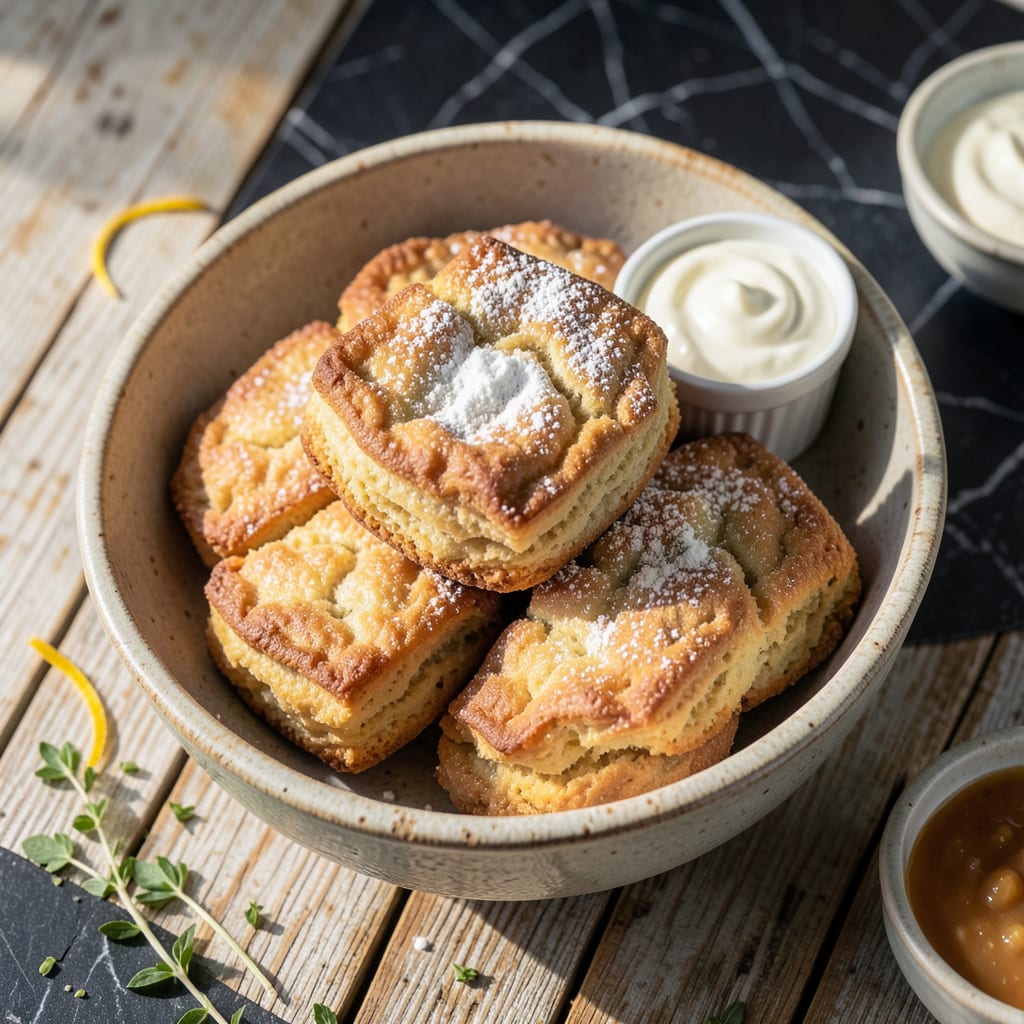
This recipe proves you can have tender, flaky biscuits without any fat. The secret lies in using non-fat Greek yogurt and baking powder for lift.
You’ll get golden-brown layers that rise beautifully in the oven, with a texture so light you won’t believe they’re guilt-free. Perfect for breakfast or alongside any meal.
Ingredients for Fat Free Biscuit
Just a handful of pantry staples creates these light, flaky layers with zero guilt.
| Ingredient | Amount | Notes |
|---|---|---|
| All-Purpose Flour 🌾 | 2 cups | Plus extra for dusting |
| Baking Powder 🧂 | 1 tbsp | Ensures proper rise |
| Baking Soda 🧂 | ½ tsp | Balances acidity |
| Non-Fat Greek Yogurt 🥛 | 1 cup | Plain, unsweetened variety |
| Salt 🧂 | ½ tsp | Fine sea salt preferred |
| Sugar 🍚 | 1 tsp | Optional, for slight sweetness |
| Buttermilk 🥛 | ½ cup | Low-fat or non-fat |
| Cornstarch 🌽 | 1 tbsp | For extra tenderness |
The Greek yogurt is non-negotiable here—Fage 0% or Chobani Non-Fat work best. Get the plain, unsweetened kind (vanilla adds weird flavor). Most grocery stores stock these in the dairy aisle. For the flour, King Arthur is my go-to for consistent results. Buttermilk can be tricky to find non-fat, so I often make my own with a splash of vinegar in milk.
No Greek yogurt? Plain non-fat yogurt works in a pinch (just strain it first). Swap buttermilk for low-fat milk plus vinegar—same tang, less fat. The cornstarch adds tenderness, but you can skip it if you must. For extra flakiness, fold the dough a few times before cutting—don’t overwork it though.
Biscuits are best fresh out of the oven. Leftovers? Wrap tightly and reheat at 350°F for 5 minutes. The dough can be made ahead and refrigerated overnight. Keeps 2-3 days at room temperature in an airtight container.
Why You’ll Love This Recipe
- 5-Minute Mix: I just dump flour, baking powder, and Greek yogurt in a bowl—no cutter, no rolling, no fuss.
- Flaky & Light: The yogurt trick gives them that buttery texture without a drop of oil or butter.
- Breakfast to Dinner: I’ve served these with jam at dawn and as shortcake at dessert.
- Pantry Stable: Flour and yogurt are always in my fridge, so I can bake a fresh batch any time.
Step-by-Step Instructions for Fat Free Biscuits
Here’s the method I use to create light, flaky layers without any added fat.
Step 1: Combine Dry Ingredients for Structure
In a large mixing bowl, whisk together the 2 cups All-Purpose Flour, 1 tbsp Baking Powder, 0.5 tsp Baking Soda, 0.5 tsp Salt, 1 tsp Sugar, and 1 tbsp Cornstarch. The cornstarch is my secret weapon—it tenderizes the gluten, creating that melt-in-your-mouth texture you expect from traditional biscuits.
Make sure to break up any lumps in the flour mixture. The baking powder and baking soda work together to create lift, while the salt and sugar balance the flavors. This dry blend forms the foundation of your biscuits’ structure.
Step 2: Create the Wet Mixture for Moisture
In a separate bowl, combine the 1 cup Non-Fat Greek Yogurt and 0.5 cup Buttermilk. The yogurt replaces the fat typically found in biscuits while providing protein for structure, and the buttermilk adds the necessary acidity to activate the baking soda.
Whisk these together until smooth. The mixture will look thick and creamy—this is exactly what you want. The acidity in these ingredients also helps create that classic tangy flavor that pairs so well with biscuits.
Step 3: Form the Dough with Minimal Handling
Create a well in the center of your dry ingredients and pour in the wet mixture. Using a wooden spoon or silicone spatula, gently fold the ingredients together until just combined. The dough will be shaggy and slightly sticky—that’s perfect.
Turn the dough out onto a lightly floured surface dusted with some of the extra All-Purpose Flour. Pat it into a 1-inch thick rectangle. Avoid overworking the dough, as this develops gluten and will make your biscuits tough rather than tender.
Step 4: Layer and Cut for Flaky Texture
Fold the dough rectangle in half, like you’re closing a book, then gently pat it back to 1-inch thickness. Repeat this folding process two more times. This layering creates the flaky texture you’re after—each fold builds layers that will separate during baking.
Using a 2.5-inch biscuit cutter dusted with flour, press straight down to cut out biscuits. Don’t twist the cutter, as this seals the edges and prevents proper rise. Gather the scraps, gently re-pat, and cut more biscuits until all dough is used.
Step 5: Bake to Golden Perfection
Preheat your oven to 425°F. Place the biscuits on a parchment-lined baking sheet, touching each other slightly. This encourages them to rise upward rather than outward, creating taller biscuits.
Bake for 12-15 minutes until the tops are light golden brown and the biscuits have nearly doubled in height. The layers should be clearly visible on the sides. Serve warm for the best texture and flavor.
Pro Tips For Making Fat Free Biscuit
- Chill the Yogurt: Take the Greek yogurt straight from the fridge—cold fat-free dairy keeps the biscuits tender instead of tough. I learned this the hard way after my first batch turned out dense and rubbery.
- Measure Flour Right: Spoon the all-purpose flour into your measuring cup and level it off—scooping straight from the bag packs too much, and your biscuits will be dry. Sounds picky, but it actually changes the outcome.
- Don’t Overmix: Stir just until the dough comes together, even if there are a few floury spots. After overworking one batch, I finally figured out why my biscuits were brick-hard.
- Bake Immediately: Get the biscuits in the oven as soon as the dough is shaped—the baking powder and soda start working the second they hit the yogurt. Waiting even 10 minutes means flatter, less fluffy results.
Pro Cooking Tips for This Recipe
Yogurt Temperature
Use cold Non-Fat Greek Yogurt straight from the fridge. Warmer yogurt can start activating the baking powder prematurely, leading to less lift. I always pull my Fage 0% right before mixing.
Dough Handling
Work quickly and gently—overmixing develops gluten. The dough should be shaggy, not smooth. I use a silicone spatula to fold the wet and dry ingredients just 8-10 times.
Folding Technique
Fold the dough like a business letter 3 times for maximum flakiness. Dust with flour between folds to prevent sticking. This creates those beautiful layers without added fat.
Cutting Method
Press the biscuit cutter straight down—no twisting! Twisting seals the edges, which prevents proper rise. I use a 2.5-inch cutter for standard-sized biscuits. 💡
Oven Position
Bake on the middle rack at 425°F for even heat distribution. If your oven runs hot, check at 12 minutes. The tops should be light golden brown.
Rotate the pan halfway through for uniform browning if needed.
Nutrition Facts
Frequently Asked Questions
Can I use regular yogurt instead of Greek?
You can, but strain it first to remove excess liquid. Greek yogurt works best because its thickness provides structure. Regular yogurt may make the dough too wet and dense.
Why did my biscuits turn out tough?
Overmixing develops gluten, which makes biscuits dense. Fold the dough just until combined, and handle it as little as possible for tender results.
How do I make them extra flaky?
Fold the dough 3 times like a letter before cutting. This creates layers that puff up in the oven. Keep the folds gentle to avoid pressing out the air.
Can I make these ahead of time?
Shape and cut the biscuits, then refrigerate overnight. Bake straight from the fridge, adding 1-2 minutes to the cooking time.

- 8 Bean Soup Recipe Crock Pot: Hearty Vegetable Medley in One Pot - September 25, 2026
- 4C Bread Crumbs Meatballs Recipe: Crispy Crust and Juicy Centers - September 25, 2026
- 6 Oz Chocolate Chip Cookie Recipe: Perfectly Balanced Crispy Edges and Chewy Hearts - September 25, 2026