
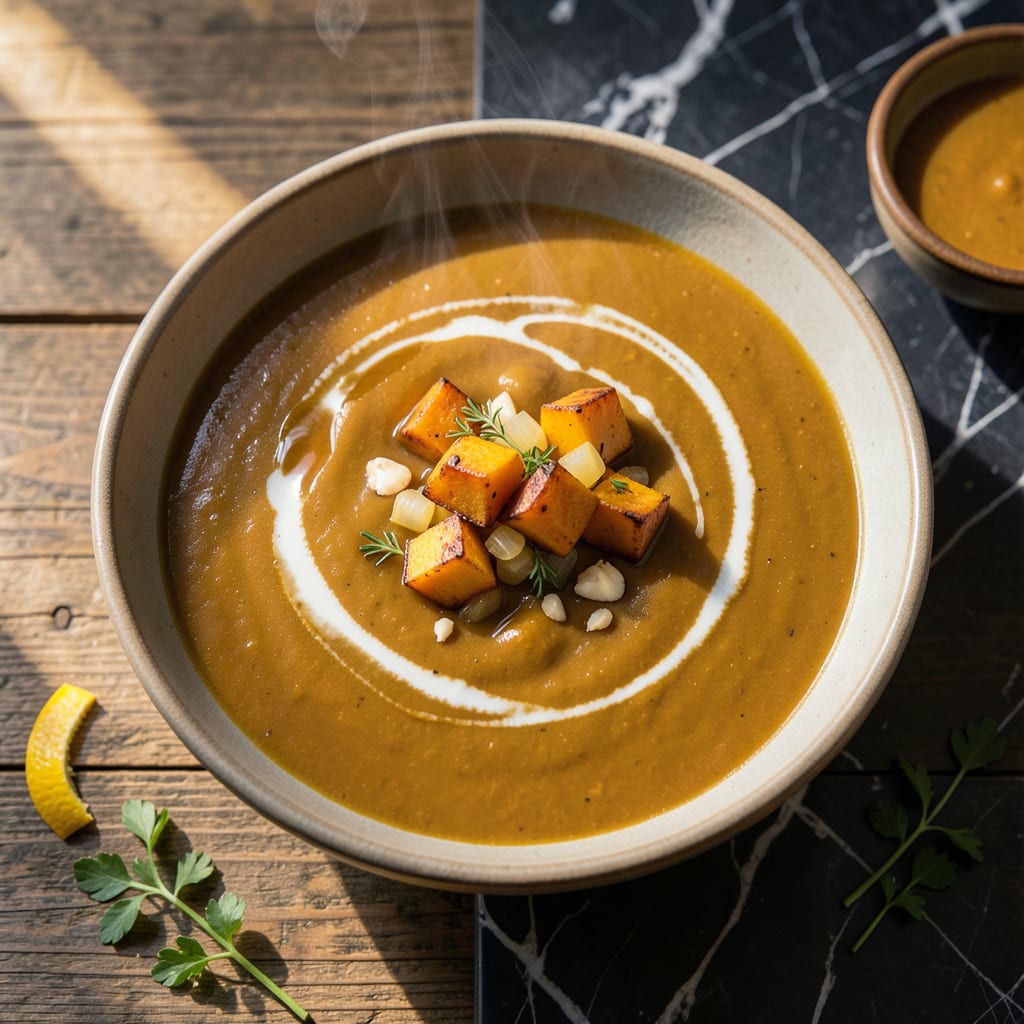
This velvety smooth soup delivers roasted depth without a drop of fat, proving that rich flavor and healthy eating can coexist beautifully.
By roasting the butternut squash first, we unlock natural sweetness and complexity that forms the perfect base for a creamy, satisfying bowl.
Ingredients for Fat Free Butternut Squash Soup
Roasted squash and warm spices make this soup rich without any added fat.
| Ingredient | Amount | Notes |
|---|---|---|
| Butternut Squash 🎃 | 3 lb | Peeled, seeded, cubed |
| Yellow Onion 🧅 | 1 whole | Medium, roughly chopped |
| Garlic Cloves 🧄 | 4 cloves | Peeled, smashed |
| Vegetable Broth 🥣 | 4 cups | Low-sodium preferred |
| Canned Diced Tomatoes 🍅 | 1 can | 14.5 oz, undrained |
| Apple Cider Vinegar 🍏 | 1 tbsp | Or lemon juice |
| Ground Cinnamon 🌿 | ½ tsp | Optional, for warmth |
| Ground Nutmeg 🌰 | ¼ tsp | Freshly grated best |
| Dried Thyme 🍃 | 1 tsp | Or 1 tbsp fresh |
| Smoked Paprika 🌶️ | ½ tsp | Adds depth |
| Sea Salt 🧂 | 1 tsp | Adjust to taste |
| Black Pepper 🌶️ | ½ tsp | Freshly ground |
| Olive Oil 🫒 | 1 tbsp | For roasting only |
The squash is everything here. Pick heavy, firm butternut squash with a matte (not shiny) skin—means it’s ripe and sweet. Whole Foods and Trader Joe’s usually have great ones in fall. Roasting concentrates the natural sugars, so don’t skip that step ( worth the extra minute ). I grab the pre-cubed stuff when I’m lazy, but whole tastes better.
No butternut? Acorn or kabocha squash work too—just peel carefully. Short on broth? Water plus a bouillon cube saves the day. The tomatoes add acidity, so if you’re out, 1 tbsp more vinegar balances it. For creaminess without dairy, a splash of coconut milk (the canned, full-fat kind) at the end is a game-changer.
This keeps 5 days in the fridge—flavors get richer. Freezes beautifully for 3 months. I portion into jars so I can grab and reheat. The olive oil is just for roasting, so it’s still fat-free in the bowl.
Why You’ll Love This Recipe
- One Pot Wonder: I just dump everything in, simmer, and blend—no fancy steps or extra pans to wash.
- Roasted Depth: The caramelized squash and garlic give it this rich, almost nutty flavor without a drop of oil.
- Meal Prep Hero: I make a double batch on Sunday and it tastes even better by Wednesday’s lunch.
- Pennywise Perfection: A whole pot costs less than takeout and feeds us for days. Honestly, my wallet’s favorite soup.
Step-by-Step Instructions for Butternut Squash Soup
This method builds layers of flavor while keeping the soup light and velvety smooth.
Step 1: Roast the Vegetables for Maximum Depth
Preheat your oven to 400°F and line a baking sheet with parchment. Toss the 3 lb Butternut Squash cubes and 1 whole Yellow Onion chunks with the 1 tbsp Olive Oil until evenly coated. Spread them in a single layer on the prepared sheet.
Roast for 25-30 minutes, flipping halfway, until the squash is tender and caramelized at the edges. The onion should soften and develop golden-brown spots. This roasting step intensifies the natural sweetness and adds complexity to the final soup.
Step 2: Bloom the Spices and Sauté Aromatics
In a large pot, heat the roasted yellow onion and add the 4 cloves Garlic Cloves, 1 tsp Dried Thyme, 0.5 tsp Smoked Paprika, 0.5 tsp Ground Cinnamon, and 0.25 tsp Ground Nutmeg. Sauté over medium heat for 1-2 minutes until fragrant.
This brief toasting of spices releases their essential oils and deepens their flavor. Be careful not to let the garlic burn—it should turn just slightly golden at the edges. The aroma will be intoxicating, a sign you’re building a solid flavor foundation.
Step 3: Simmer with Broth and Tomatoes
Add the roasted butternut squash to the pot along with the 4 cups Vegetable Broth, 1 can Canned Diced Tomatoes, 1 tsp Sea Salt, and 0.5 tsp Black Pepper. Bring to a boil, then reduce heat to medium-low and simmer for 15-20 minutes.
The canned diced tomatoes add a subtle acidity that balances the squash’s sweetness. You’ll know it’s ready when the squash breaks apart easily with a wooden spoon and the broth has taken on a rich, deep orange hue from the vegetables.
Step 4: Blend Until Silky Smooth
Remove the pot from heat and let cool slightly for 5 minutes. Using an immersion blender, purée the soup until completely smooth. For extra creaminess without dairy, blend in the 1 tbsp Apple Cider Vinegar at the end.
The vinegar brightens the flavors and enhances the velvety texture. If you don’t have an immersion blender, carefully transfer the soup in batches to a regular blender, filling only halfway each time to avoid pressure buildup. The final consistency should be thick enough to coat the back of a spoon.
Pro Tips For Making Fat Free Butternut Squash Soup
- Roast the Squash First: Toss cubed butternut squash with a pinch of salt and roast at 400°F for 25 minutes before blending—it deepens the flavor without adding fat.
- Sauté Onions Low: Cook the yellow onions on medium-low heat for at least 8-10 minutes until golden; rushing this step leaves them raw-tasting in the final soup.
- Drain the Tomatoes: I learned this the hard way—drain and rinse the canned diced tomatoes first, or your soup will taste watery instead of rich and balanced.
- Blend in Batches: Fill your blender no more than halfway with hot liquid to avoid a messy explosion—I skip this when I’m lazy, but the cleanup isn’t worth it.
Troubleshooting Great fat free butternut squash soup
Too Thin or Watery
If your soup lacks body, simmer uncovered for 5-10 minutes to reduce the liquid. For a quicker fix, mash a few boiled potatoes into the pot. I often add ½ cup cooked white beans for thickness and protein without altering flavor. 💡
Not Sweet Enough
Roasting concentrates natural sugars, but if your squash was bland, add 1 tsp maple syrup or a diced apple during simmering. The acidity from the tomatoes can sometimes mask sweetness, so balance with a pinch of salt first.
Grainy Texture
This usually means the squash wasn’t fully cooked before blending. Return the soup to medium heat and cook for another 10 minutes. For an ultra-smooth finish, strain through a fine-mesh sieve after blending to catch any stubborn fibers.
Bland or Flat
Boost flavor with 1 tsp apple cider vinegar or a squeeze of lemon. I often add a dash of smoked paprika or cinnamon to deepen the flavor profile. Remember, salt enhances all flavors—taste and adjust in ¼ tsp increments. ✨
Too Thick
Stir in ½ cup vegetable broth or water until reaching your desired consistency. If you accidentally over-reduced, add liquid gradually while reheating over low heat. The soup will thin slightly as it cools.
Spice Overload
If you’ve gone overboard with spices, balance with 1 cup additional broth or a splash of coconut milk. The natural sweetness of the squash will help mellow the heat. I always start with half the recommended spice amount and adjust to taste.
Nutrition Facts
Frequently Asked Questions
Can I make this soup without roasting?
While you can simmer raw squash, roasting at 400°F for 25-30 minutes develops deeper, caramelized flavors that make this dish special. Skip it only if absolutely necessary.
What can I use instead of vegetable broth?
Low-sodium chicken broth works, or use 4 cups water plus 1 bouillon cube. For extra richness, try mushroom broth. Avoid beef broth as it overpowers the squash.
How do I make it creamier without dairy?
Blend in ½ cup cooked white beans or a splash of coconut milk at the end. These add body while keeping it fat-free. The vinegar also helps achieve that velvety texture.
Why does my soup taste bland?
Start with 1 tsp apple cider vinegar to brighten flavors, then adjust salt in ¼ tsp increments. Roasting the squash longer or adding smoked paprika can also help.

- 8 Bean Soup Recipe Crock Pot: Hearty Vegetable Medley in One Pot - September 25, 2026
- 4C Bread Crumbs Meatballs Recipe: Crispy Crust and Juicy Centers - September 25, 2026
- 6 Oz Chocolate Chip Cookie Recipe: Perfectly Balanced Crispy Edges and Chewy Hearts - September 25, 2026