
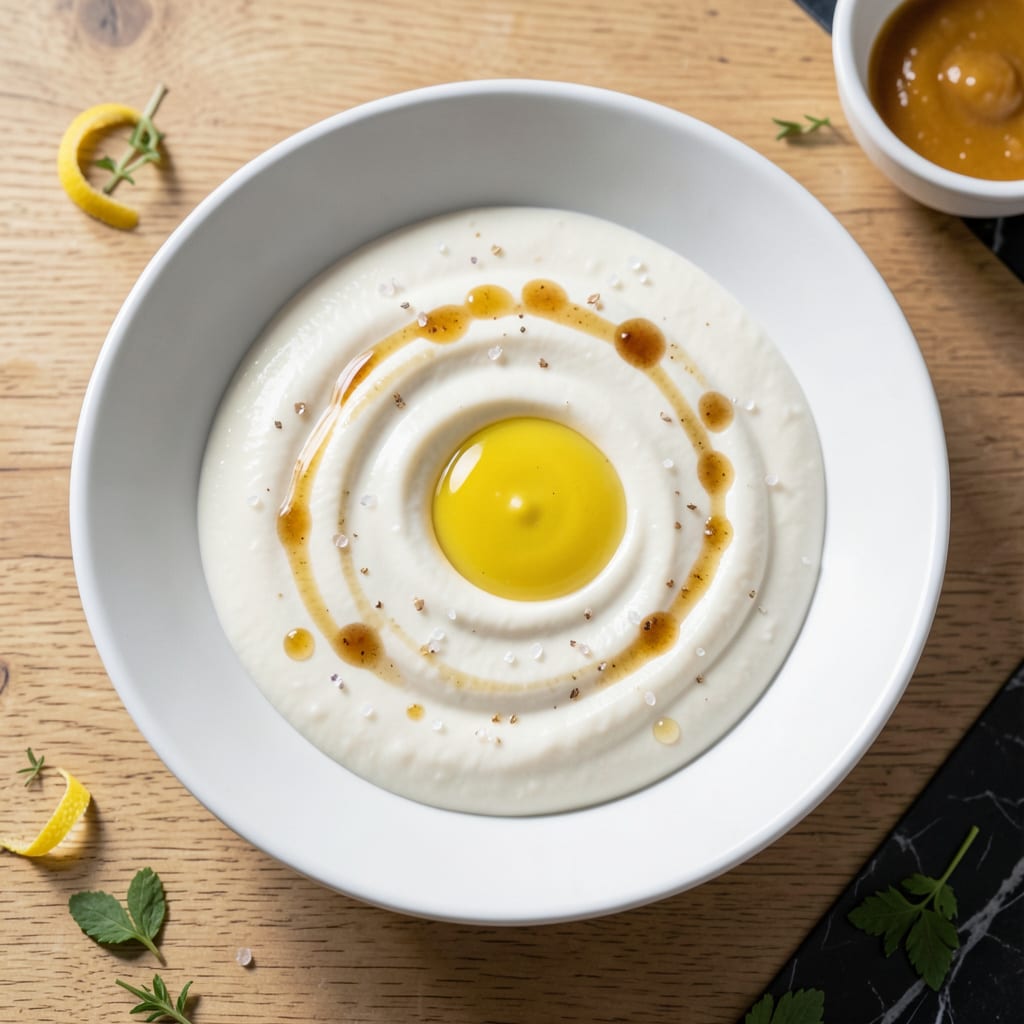
Creating a creamy mayonnaise without oil might sound impossible, but this recipe delivers a silky texture through a clever emulsification technique. The secret lies in using aquafaba as the base, which provides the perfect structure for a light, fluffy result.
This version proves that you can achieve the same rich mouthfeel as traditional mayo while keeping it completely fat free. The process is straightforward, and the end product works beautifully in sandwiches, dressings, or as a dip.
Ingredients for Fat Free Mayonnaise
Eight simple ingredients transform aquafaba into silky, fat-free mayonnaise with perfect texture and flavor balance.
| Ingredient | Amount | Notes |
|---|---|---|
| Aquafaba 🥄 | ½ cup | From canned chickpeas, unsalted |
| White Vinegar 💧 | 1 tbsp | Or apple cider vinegar |
| Dijon Mustard 🟡 | 1 tsp | Smooth, not whole grain |
| Lemon Juice 🍋 | 1 tbsp | Freshly squeezed preferred |
| Agave Nectar 🍯 | ½ tsp | Or maple syrup for sweetness |
| Salt 🧂 | ½ tsp | Fine sea salt preferred |
| Garlic Powder 🧄 | ¼ tsp | Optional, for flavor depth |
| Onion Powder 🧅 | ¼ tsp | Optional, complements garlic |
Aquafaba quality is critical here. Use the liquid from canned chickpeas—homemade often lacks the starch concentration needed for proper emulsification. Eden Organic or Westbrae Natural brands work exceptionally well. Ensure it’s unsalted; any sodium in the liquid will throw off your seasoning. For best results, chill the aquafaba before whipping to improve volume and stability.
No aquafaba? Flaxseed gel or silken tofu can work, though the texture differs slightly. Vinegar swaps are flexible—rice vinegar at half the amount for milder taste, or white wine vinegar for complexity. Skip the agave if you prefer savory mayo. The mustard is non-negotiable though—it’s the emulsifier that binds everything together.
Store in an airtight container in the fridge for up to 1 week. The mixture may separate slightly over time—a quick whisk restores the creamy texture. Freezing isn’t recommended as it breaks the emulsion. Use it just like traditional mayo in all your favorite applications.
Why You’ll Love This Recipe
- One Bowl Wonder: I just dump everything in a blender—aquafaba, vinegar, mustard—and let it do the work.
- Tangy Perfection: The lemon and Dijon give it that classic mayo zing without a drop of oil.
- Meal Prep Hero: I make a batch Sunday and use it all week on sandwiches, salads, you name it.
- Pantry Friendly: Between us, I always have chickpeas, so aquafaba is basically free mayo waiting to happen.
Step-by-Step Instructions for Fat Free Mayonnaise
This emulsification process transforms simple ingredients into a rich, creamy condiment with no added fat.
Step 1: Prepare the Aquafaba Base
Measure exactly 0.5 cup Aquafaba into a mixing bowl. I prefer using the liquid from unsalted canned chickpeas for the cleanest flavor. Ensure your bowl and whisk are completely clean and free of any grease, as this can prevent proper emulsification.
Using a hand mixer or immersion blender, whip the Aquafaba on high speed for 2-3 minutes until it becomes frothy and slightly thickened. You’re looking for soft peaks to form—this indicates the Aquafaba is ready to accept the other ingredients while maintaining stability.
Step 2: Incorporate Acidic Components
With the mixer still running on medium speed, slowly drizzle in the 1 tbsp White Vinegar and 1 tbsp Lemon Juice. Add them gradually over 30 seconds to allow the mixture to absorb the liquids without breaking.
Next, add the 1 tsp Dijon Mustard, 0.5 tsp Agave Nectar, 0.5 tsp Salt, 0.25 tsp Garlic Powder, and 0.25 tsp Onion Powder. The mustard acts as an emulsifier, while the agave balances the acidity. Mix for another 1-2 minutes until the mixture thickens noticeably and becomes pale in color.
Step 3: Achieve Full Emulsification
Continue mixing on high speed for an additional 3-5 minutes. At this stage, the mixture should begin to resemble traditional mayonnaise, with a smooth, creamy texture. You’ll notice it becomes thicker and more opaque as air incorporates into the emulsion.
If the mixture appears too thin, it may need more whipping time. If it looks grainy or separated, stop mixing immediately—this indicates the emulsion has broken. In that case, start over with fresh Aquafaba, ensuring all tools are perfectly clean.
Step 4: Test and Adjust Consistency
Stop the mixer and let the mixture sit for 1 minute. A properly emulsified mayonnaise will hold its shape briefly when the whisk is lifted. If it’s still too thin, resume mixing for another 2-3 minutes.
Taste and adjust seasoning if needed, though be conservative with additional salt as the flavor will intensify over time. The final product should be glossy, smooth, and spreadable, with a neutral base that allows the tangy and slightly sweet notes to shine through.
Step 5: Store for Optimal Texture
Transfer the mayonnaise to an airtight container. For the best texture, refrigerate for at least 1 hour before using. This chilling period allows the mixture to fully set and develop its characteristic creamy consistency.
Your creation will keep in the refrigerator for up to 5 days. If separation occurs during storage, simply rewhip briefly with a whisk or mixer to restore the smooth texture. This version maintains all the richness of traditional mayonnaise without any added oil.
Pro Tips For Making Fat Free Mayonnaise
- Chill the Aquafaba: I learned this the hard way—using room temperature aquafaba makes the mayo thin and sad. Pop the can in the fridge overnight or at least 2 hours before blending for a thicker, creamier result.
- Drip, Don’t Pour: Add the oil substitute (if using any) or additional liquid ingredients drop by drop while blending. Sounds tedious, but it actually changes the outcome from a runny mess to a smooth, stable emulsion.
- Skip the Cold Vinegar: After burning a few batches, I finally figured out that cold white vinegar can shock the emulsion. Let it sit at room temp for 10 minutes before mixing to avoid that weird, separated look.
- Whisk Before Blending: My grandmother swore by this, and she was right: whisk the aquafaba and Dijon mustard together by hand for 30 seconds before using the blender. It jumpstarts the emulsification and saves you from over-processing.
Troubleshooting Perfect Results
Thin or Runny Texture
If your mixture remains thin after 5 minutes of whipping, check your aquafaba quality first. I’ve found Eden Organic or Westbrae Natural brands yield the best results. Also, ensure your mixing bowl and tools are completely grease-free—any residue can sabotage emulsification.
Grainy or Broken Emulsion
This usually happens when liquids are added too quickly. Drizzle the vinegar and lemon juice over 30 seconds while mixing. If it breaks, start fresh with chilled aquafaba and add ingredients even more slowly. Patience is key here.
Too Tangy or Sweet
Balance is everything. If it’s too sharp, add an extra ¼ tsp agave nectar. Too sweet? A splash of white vinegar can bring it back. Taste as you go—I often adjust in ⅛ tsp increments for precision. 💡
Separation After Storage
This is normal! Just whisk for 30 seconds to restore the creamy texture. If it’s stubborn, use an immersion blender for 10-15 seconds. Store in a glass jar for easy rewhipping.
Weak or Flat Flavor
Boost depth with a pinch of garlic powder or onion powder. If using, add them at the same time as the mustard. I prefer freshly squeezed lemon juice for brighter flavor.
Short Shelf Life
For maximum freshness, use within 5 days and always refrigerate. If you notice any off smells or mold, discard it immediately—better safe than sorry. ❄️
Nutrition Facts
Frequently Asked Questions
Can I use a different liquid instead of aquafaba?
Yes, but results vary. Silken tofu or flaxseed gel can work, though the texture may be slightly different. Aquafaba remains the best choice for that classic mayo consistency.
Why does my mixture look thin after mixing?
It likely needs more whipping time. Ensure you mix on high speed for at least 5 minutes. Also, check that your bowl and tools are completely clean and grease-free.
How do I fix a broken emulsion?
Start fresh with chilled aquafaba. Add liquids very slowly while mixing. If it breaks mid-process, you’ll need to discard it and begin again.
Can I make this ahead of time?
Store it in an airtight container in the fridge for up to 5 days. Rewhisk briefly if separation occurs before using.

- 8 Bean Soup Recipe Crock Pot: Hearty Vegetable Medley in One Pot - September 25, 2026
- 4C Bread Crumbs Meatballs Recipe: Crispy Crust and Juicy Centers - September 25, 2026
- 6 Oz Chocolate Chip Cookie Recipe: Perfectly Balanced Crispy Edges and Chewy Hearts - September 25, 2026