
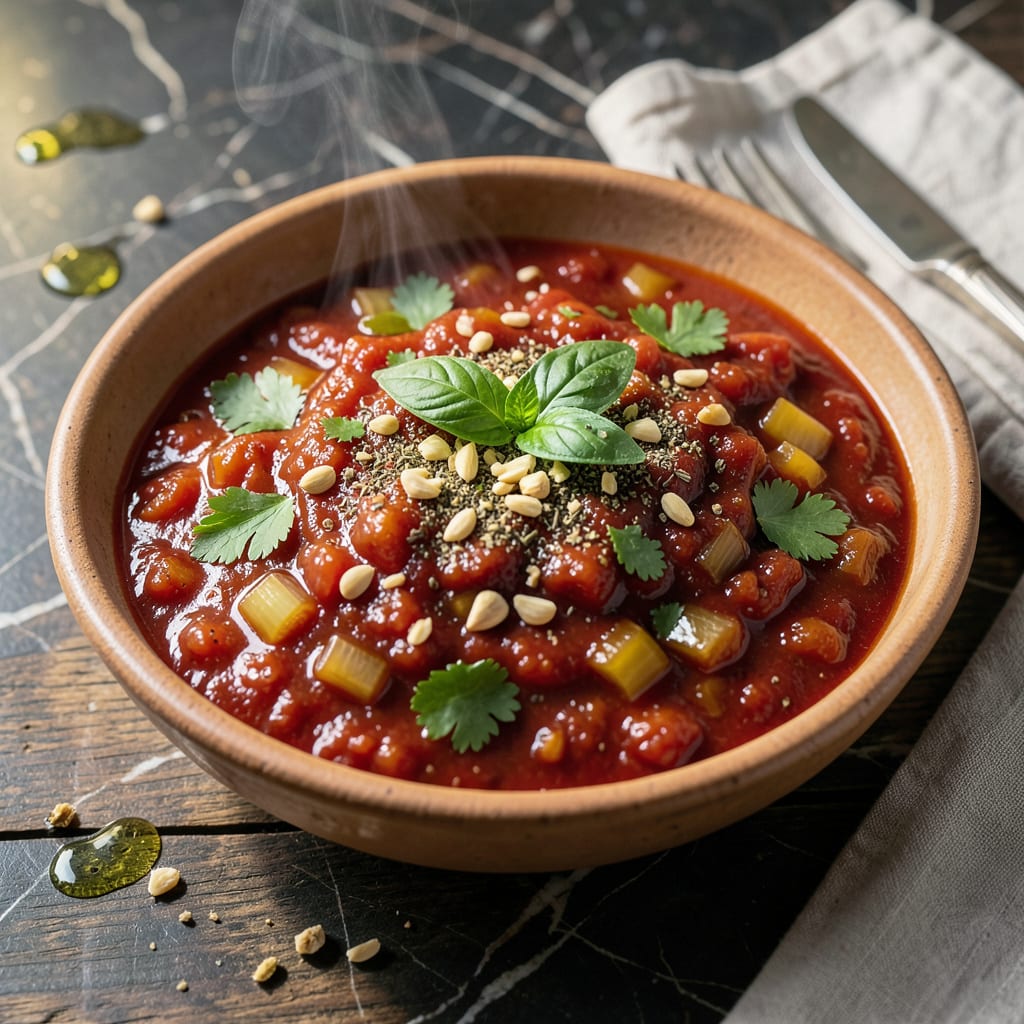
This sauce proves that fat-free doesn’t mean flavor-free. By focusing on ripe tomatoes, fresh herbs, and aromatic vegetables, we build layers of taste without a drop of oil.
The secret lies in slow simmering to concentrate natural sweetness and depth. What emerges is a robust, versatile pasta sauce that clings beautifully to noodles while keeping every bite light and satisfying.
Ingredients for Fat Free Pasta Sauce
Ten ingredients, zero oil, all flavor. Builds complexity through slow simmering.
| Ingredient | Amount | Notes |
|---|---|---|
| Canned Crushed Tomatoes 🍅 | 28 oz | San Marzano preferred for sweetness |
| Yellow Onion 🧅 | 1 whole | Finely diced for base flavor |
| Garlic Cloves 🧄 | 6 cloves | Minced for aromatic depth |
| Fresh Basil Leaves 🌿 | ½ cup | Packed, stems removed |
| Fresh Flat-Leaf Parsley 🍃 | ¼ cup | Chopped, for brightness |
| Dried Oregano 🌿 | 2 tsp | Mediterranean variety preferred |
| Red Pepper Flakes 🌶️ | ½ tsp | Adjust for heat preference |
| Vegetable Broth 🥕 | ½ cup | Low-sodium for control |
| Balsamic Vinegar 🍷 | 2 tbsp | For acidity and depth |
| Tomato Paste 🍅 | 2 tbsp | For concentrated tomato flavor |
The tomatoes are the foundation here. San Marzano cans from Whole Foods or Trader Joe’s have the best balance of sweetness and acidity (and they’re consistently good quality). If you’re using fresh tomatoes, go for ripe Roma or vine-ripened—they have less water. The onion and garlic form the aromatic base, so don’t rush the sauté (even without oil, they’ll soften with a splash of broth).
No fresh herbs? Dried basil and parsley at one-third the amount work in a pinch. Swap the balsamic for red wine vinegar if that’s what you’ve got. For extra umami without fat, add a pinch of mushroom powder (find it at Penzeys or natural food stores). The red pepper flakes can be skipped, but they add a nice warmth that balances the sweetness.
This sauce actually improves overnight as the flavors meld. Keeps 5-6 days in the fridge, freezes beautifully for 3 months. Portion into freezer bags for easy weeknight meals (lay flat to save space).
Why You’ll Love This Recipe
- Five-Minute Prep: I just dump crushed tomatoes, onion, garlic, and herbs into a pot—no fancy steps.
- Garlic-Herb Magic: The fresh basil and parsley make it taste like Nonna’s kitchen, honestly.
- Weeknight MVP: Between us, I keep a batch in the fridge for emergency dinners.
- Pantry Friendly: Canned tomatoes and basic herbs mean I can make this anytime, even on a tight budget.
Step-by-Step Instructions for Fat Free Pasta Sauce
Here’s the method. Straightforward, tested, works every time.
Step 1: Sauté Aromatics Until Translucent
Heat a large, heavy-bottomed pot over medium heat. Finely dice the yellow onion and add it to the dry pot. The natural moisture will release, allowing it to soften without added fat. Cook for 5-6 minutes, stirring occasionally, until the onion turns translucent and just begins to caramelize.
Add the minced 6 cloves garlic cloves and cook for 1 minute until fragrant. Watch carefully—garlic burns easily without oil. You want it to soften and release its aroma, not brown or crisp. This builds the aromatic foundation for the entire sauce.
Step 2: Build the Tomato Base
Stir in the 2 tbsp tomato paste and cook for 2 minutes, stirring constantly. This step deepens the tomato flavor and removes any raw taste. The paste will darken slightly and start to stick to the bottom of the pot—this is normal and adds complexity.
Pour in the 28 oz canned crushed tomatoes and 0.5 cup vegetable broth. Use a wooden spoon to break up any large chunks of tomato and scrape up any browned bits from the bottom of the pot. These fond bits will dissolve into the sauce, adding layers of flavor.
Step 3: Simmer and Develop Flavor
Add the 2 tsp dried oregano, 0.5 tsp red pepper flakes, and 2 tbsp balsamic vinegar. Stir well to combine. The balsamic vinegar adds a subtle sweetness and acidity that balances the richness of the tomatoes.
Bring the mixture to a gentle simmer, then reduce the heat to low. Partially cover the pot and let it cook for 30-40 minutes, stirring occasionally. You want the sauce to thicken slightly and the flavors to meld together. The sauce should reduce by about a quarter and develop a deeper, more concentrated flavor.
Step 4: Finish with Fresh Herbs
Remove the pot from the heat. Stir in the chopped 0.25 cup fresh flat-leaf parsley and the packed 0.5 cup fresh basil leaves. The residual heat will wilt the herbs just enough to release their essential oils without turning them bitter.
Taste and adjust the seasoning if needed. The herbs should add a bright, fresh note that cuts through the richness of the tomatoes. Let the sauce sit for 5-10 minutes before serving to allow the flavors to fully integrate. This resting time ensures every bite is packed with robust, well-balanced flavor.
Pro Tips For Making Fat Free Pasta Sauce
- Sauté Onions Slowly: Cook the yellow onion on medium-low for at least 8-10 minutes until soft and translucent—I learned this the hard way when my sauce tasted harsh from undercooked onions.
- Crush Garlic Last: Don’t chop the garlic until the onions are nearly done, or it’ll burn before the sauce even starts simmering. Sounds weird, but it works.
- Simmer Uncovered: Let the sauce reduce uncovered for 20-25 minutes to thicken naturally without adding oil—your future self will thank you when it clings to pasta perfectly.
- Tear Basil by Hand: Resist the urge to chop fresh basil with a knife; tearing it releases the oils better and keeps it from turning bitter in the sauce.
Wine and Beer Pairings for These Flavors
Light White Wines
I love pairing this sauce with a crisp Pinot Grigio from Northern Italy. The bright acidity and citrus notes cut through the tomato richness without overpowering the fresh herbs. Look for bottles from Alto Adige for the best balance. 🍷
Medium-Bodied Reds
A light Chianti or Sangiovese works beautifully here. The red fruit flavors complement the tomatoes while the subtle tannins cleanse your palate. Banfi makes an affordable, reliable Chianti I always keep on hand.
Sparkling Options
For a celebratory touch, try a dry Prosecco. The bubbles lift the sauce’s acidity and refresh your palate between bites. La Marca is my go-to for consistent quality and approachable price.
Crisp Lagers
A light Italian lager like Peroni or Birra Moretti offers a clean, refreshing contrast to the sauce’s depth. The carbonation helps cut through the richness while the mild hop bitterness complements the herbs. 🍺
Wheat Beers
Try a German Hefeweizen with its banana and clove notes. The slight sweetness balances the acidity in the sauce, while the creamy texture contrasts nicely. Weihenstephaner is a classic choice.
Non-Alcoholic Pairings
Sparkling water with a squeeze of lemon works surprisingly well. I also enjoy San Pellegrino Aranciata—its citrus notes echo the balsamic vinegar in the sauce. The effervescence cleanses your palate just like wine would.
Nutrition Facts
Frequently Asked Questions
Can I use fresh tomatoes instead of canned?
Yes! Use 8-10 ripe Roma tomatoes, peeled and crushed. Simmer for 10-15 minutes longer to concentrate flavors, as fresh tomatoes contain more water.
Why does the sauce stick to the pot without oil?
The natural sugars in tomatoes and onions caramelize when dry-sautéed. Stir frequently and add a splash of broth if needed. This builds deep flavor without fat.
How do I prevent the sauce from being too watery?
Simmer uncovered for the full 30-40 minutes. Use San Marzano tomatoes (thicker flesh) and avoid adding extra liquid until the end.
Can I make this ahead and freeze it?
Cool completely, then freeze in airtight containers for up to 3 months. Thaw overnight in the fridge before reheating.

- 4C Bread Crumbs Meatballs Recipe: Crispy Crust and Juicy Centers - September 25, 2026
- 6 Oz Chocolate Chip Cookie Recipe: Perfectly Balanced Crispy Edges and Chewy Hearts - September 25, 2026
- 6-Inch Coffee Cake Recipe: Vanilla Bean Swirls and Buttery Streusel Topping - September 25, 2026