
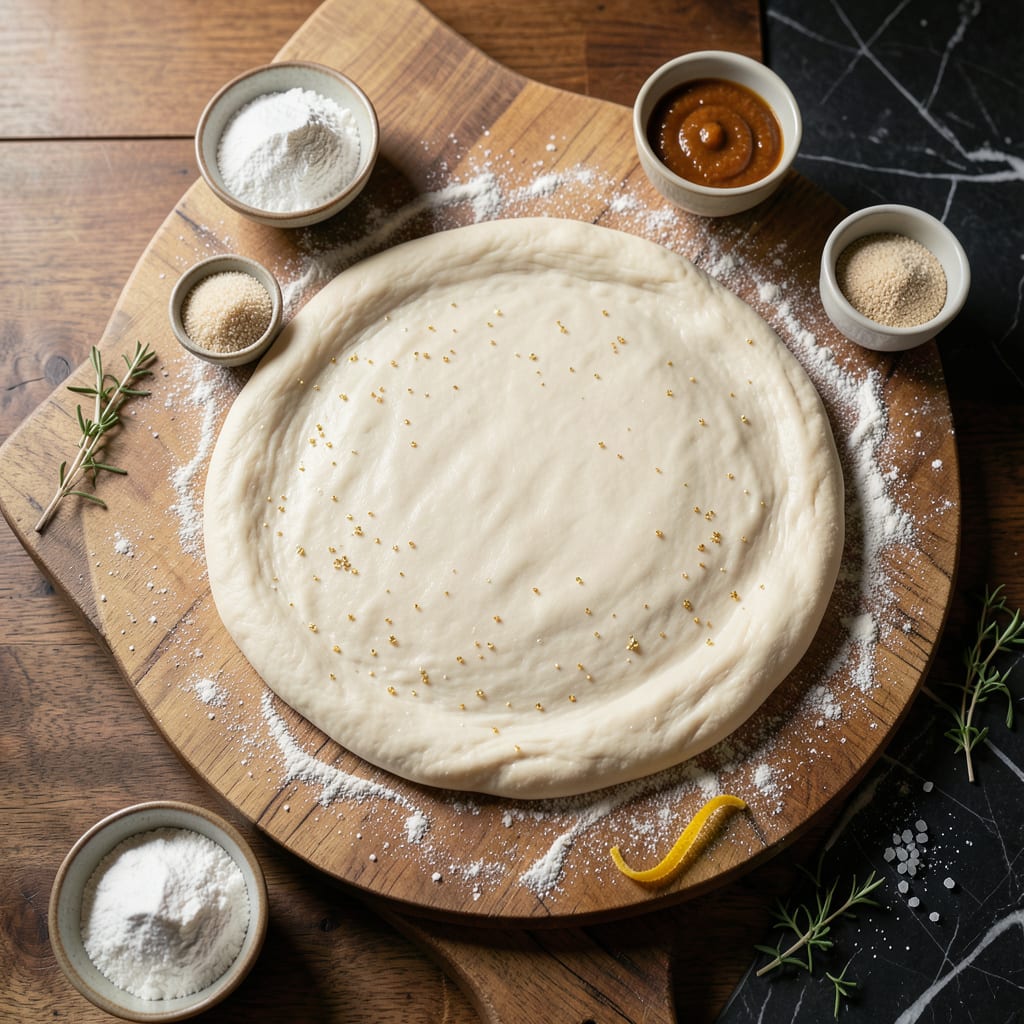
I’ve developed a fat free pizza dough that delivers a light, airy crust without any oil or dairy. The secret lies in precise hydration and proper gluten development through careful kneading.
This dough bakes into a fluffy yet sturdy base, perfect for holding all your favorite toppings. It’s vegan-friendly and proves you don’t need fat for great texture. Ready in under 2 hours with minimal effort.
Ingredients for Fat Free Pizza Dough
Nine simple ingredients for a light, fluffy crust without any oil or dairy.
| Ingredient | Amount | Notes |
|---|---|---|
| All-Purpose Flour 🌾 | 3 ½ cups | Bread flour works too for chewier texture |
| Active Dry Yeast 🍞 | 2 ¼ tsp | One standard packet, proofed in warm water |
| Granulated Sugar 🍚 | 1 tsp | Feeds the yeast for activation |
| Kosher Salt 🧂 | 2 tsp | Diamond Crystal preferred for consistency |
| Warm Water 💧 | 1 ½ cups | 110°F to 115°F for yeast activation |
| Semolina Flour 🌾 | ¼ cup | For dusting, prevents sticking |
| Olive Oil Spray 🫒 | 1 can | For greasing bowl only, optional |
| Cornmeal 🌽 | ¼ cup | For pizza peel, prevents sticking |
| Vital Wheat Gluten 🌾 | 1 tbsp | Optional for extra chewiness |
| Apple Cider Vinegar 🍎 | 1 tsp | Enhances gluten development |
[recipeingredientscaler]
The flour is the foundation here. King Arthur or Bob’s Red Mill all-purpose are my go-tos—consistent protein content means reliable results. Yeast freshness matters more than you’d think: check the expiration date, and if it’s been in your pantry for a year, grab a new packet from Whole Foods or your local grocery. The sugar isn’t for sweetness (there’s barely any), it’s just to wake up the yeast.
No all-purpose flour? Bread flour at a 1:1 ratio gives you a chewier crust. Out of yeast? This isn’t a no-yeast recipe—don’t bother with baking powder substitutes. The warm water temp is critical: too hot kills the yeast, too cold takes forever. 110°F to 115°F is the sweet spot. A pinch of sugar in the water helps you gauge if the yeast is alive (it should foam within 5-10 minutes).
Dough keeps in the fridge for 3 days (it’ll develop more flavor) or freezes for 1 month in an airtight bag. Let it come to room temp before shaping. The semolina and cornmeal are optional but worth it—they add that crispy, non-stick base you get from pizzerias.
Why You’ll Love This Recipe
- No-Fuss Mixing: I just dump flour, yeast, sugar, salt, and warm water in a bowl—no fancy gadgets, no stress.
- Crisp Yet Light: The yeast and sugar work magic, giving that perfect airy crust without a trace of grease.
- Endless Toppings: Honestly, it’s my blank canvas for anything from margarita to loaded veggie nights.
- Pennywise Feast: Five basic pantry staples stretch into multiple pizzas, and leftovers? Still delicious the next day.
Step-by-Step Instructions for Fat Free Pizza Dough
This method delivers a light, airy crust without any added fat—just follow these proven steps.
Step 1: Activate the Yeast Properly
In a small bowl, combine the 1.5 cups warm water (it should feel like warm bath water, between 110°F to 115°F) with the 1 tsp granulated sugar and 2.25 tsp active dry yeast. Stir gently and let it sit for 5-7 minutes until the mixture becomes frothy and bubbly.
This step is non-negotiable—the sugar feeds the yeast, and the frothy cap confirms it’s active. If it doesn’t foam, your yeast may be expired, and your dough won’t rise. I always use a thermometer to check the water temperature; too hot and you’ll kill the yeast, too cold and it won’t activate.
Step 2: Mix and Knead the Dough
In a large mixing bowl, whisk together the 3.5 cups all-purpose flour, 2 tsp kosher salt, 1 tbsp vital wheat gluten, and 1 tsp apple cider vinegar. The vinegar enhances gluten development, which is especially important in fat-free doughs to create structure.
Pour in the activated yeast mixture and stir with a wooden spoon until a shaggy dough forms. Turn it out onto a clean surface and knead for 8-10 minutes until smooth and elastic. The dough should be slightly tacky but not stick to your hands—if it does, add a teaspoon of flour at a time.
Step 3: Let the Dough Rise
Lightly grease a large bowl with the olive oil spray (this is optional but helps prevent sticking). Place the dough in the bowl, cover it with a damp kitchen towel, and let it rise in a warm, draft-free spot for 1 to 1.5 hours, or until doubled in size.
I like to turn my oven on to the lowest setting (170°F or so), then turn it off and place the bowl inside. The residual warmth creates the perfect environment for rising. Resist the urge to punch it down early—wait until it’s truly doubled for the best texture.
Step 4: Shape and Prepare for Baking
Once risen, punch down the dough to release the air and divide it into 4 equal portions for individual pizzas. On a surface dusted with 0.25 cup semolina flour or 0.25 cup cornmeal, roll out each portion to your desired thickness. The semolina or cornmeal adds texture and prevents sticking when transferring to the oven.
Let the shaped dough rest for 10-15 minutes before adding toppings. This final rest relaxes the gluten, making it easier to stretch and preventing the crust from shrinking during baking. Your dough is now ready for the oven—no oil needed for a crisp, fat-free crust.
Pro Tips For Making Fat Free Pizza Dough
- Test Yeast First: I learned this the hard way—always proof your yeast in the warm water with sugar for 5-10 minutes until foamy before adding flour. If it doesn’t bubble, your dough won’t rise.
- Use Hotter Water: Sounds weird, but it works: use water around 110°F (not just warm) to wake up the yeast faster without killing it. A kitchen thermometer is worth it here.
- Skip Over-Flouring: Resist the urge to dump extra flour on the counter when kneading—it makes the dough tough. Stick to just enough to prevent sticking, even if it’s messy.
- Rest the Dough: After kneading, let it rise in a warm spot for at least 1 hour, or until doubled. I skip this when I’m lazy, but the texture suffers every time.
Flavor Customization for This Recipe
Herb-Infused Crust
Mix 1 tbsp dried Italian herbs or 2 tbsp fresh basil and oregano into the flour before adding wet ingredients. This creates a fragrant, savory base that pairs perfectly with tomato-based toppings. I often add 1 tsp garlic powder for extra depth. 🌿
Spicy Kick
For heat lovers, add ½ tsp red pepper flakes or 1 tsp cayenne to the dry ingredients. This subtle spice lingers in the crust, complementing bold toppings like pepperoni or sautéed peppers. Balance with a sprinkle of Parmesan-free cheese if desired.
Citrus Zest Brightness
Add 1 tbsp lemon or orange zest to the dough for a bright, fresh flavor. This works especially well with veggie-heavy pizzas or white sauce bases. The citrus oils enhance the dough’s natural sweetness without adding sugar.
Cheesy Flavor Boost
Stir in 2 tbsp nutritional yeast for a cheesy, umami taste. This vegan-friendly addition mimics the flavor of traditional cheese doughs. It’s my go-to for creating that classic pizzeria aroma in a fat-free version.
Seed Topping Crunch
Before baking, sprinkle 1 tbsp sesame, poppy, or flax seeds over the rolled dough. Press lightly so they adhere. These add texture and visual appeal while keeping the crust oil-free. Toast the seeds first for deeper flavor. ✨
Sweet Dessert Base
Add 1 tbsp cinnamon and 1 tbsp sugar to the dough for a sweet version. Top with apple slices, a drizzle of honey, and a sprinkle of walnuts. This transforms your creation into a guilt-free dessert pizza.
Nutrition Facts
Frequently Asked Questions
Why does this dough work without oil?
Vital wheat gluten and apple cider vinegar boost gluten development, creating structure and elasticity. The high hydration also helps maintain a light, airy texture.
Can I make this without yeast?
No, yeast is essential for rise and texture. Baking powder won’t replicate the same chewy, airy crust. Stick with active dry yeast for best results.
How do I prevent sticking when rolling?
Use semolina or cornmeal on your work surface and pizza peel. These create a barrier and add a crispy texture to the crust.
Can I freeze the dough?
Yes! Wrap tightly in plastic and freeze for up to 1 month. Thaw overnight in the fridge before shaping.

- 8 Bean Soup Recipe Crock Pot: Hearty Vegetable Medley in One Pot - September 25, 2026
- 4C Bread Crumbs Meatballs Recipe: Crispy Crust and Juicy Centers - September 25, 2026
- 6 Oz Chocolate Chip Cookie Recipe: Perfectly Balanced Crispy Edges and Chewy Hearts - September 25, 2026