
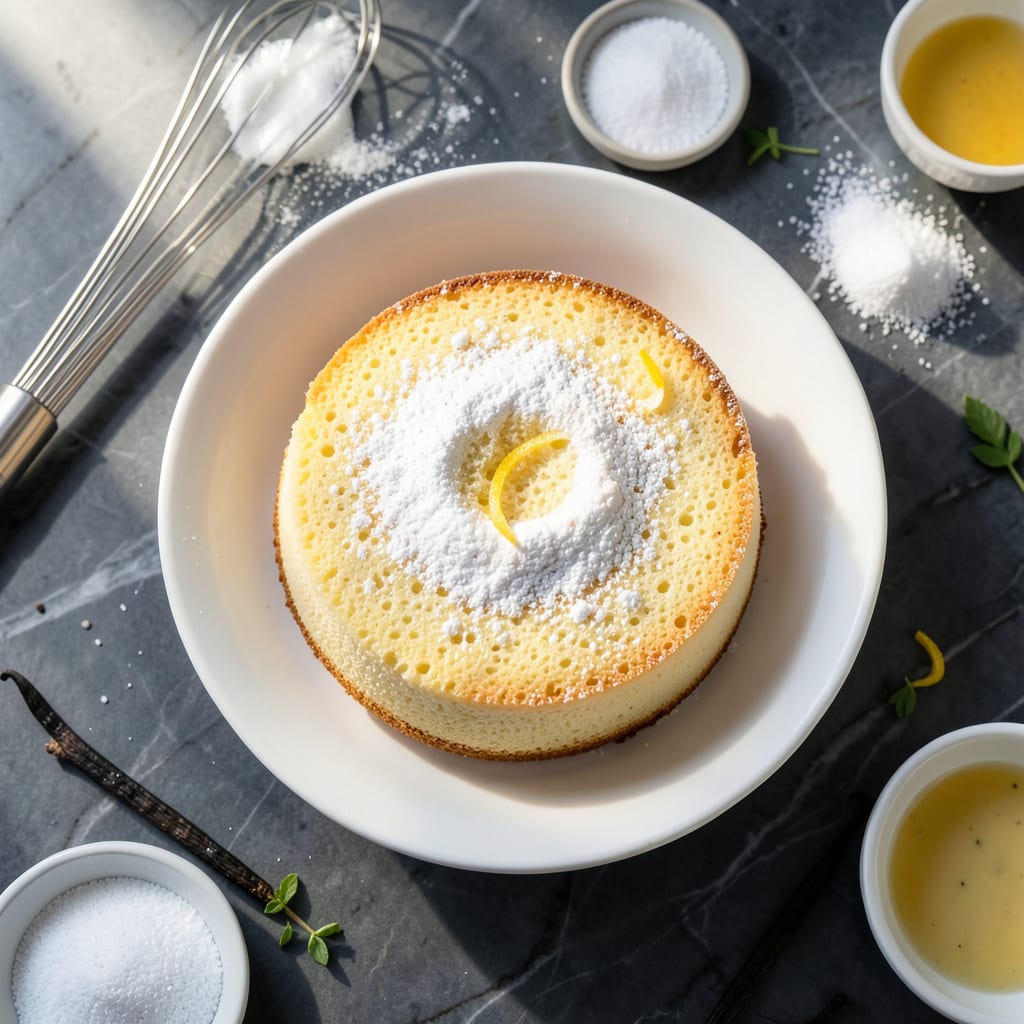
Achieving a light, airy sponge without butter is not only possible—it’s a game-changer for guilt-free baking. This recipe relies on precise technique and simple ingredients to create a tender crumb.
The secret lies in properly whipped eggs and sugar, which trap air for lift. With no added fat, you’ll still get a soft, delicate texture that rivals traditional versions.
Ingredients for Fat Free Sponge
Simple ingredients create a light, airy texture without any added fat.
| Ingredient | Amount | Notes |
|---|---|---|
| Large Eggs 🥚 | 6 whole | Room temperature, separated |
| Granulated Sugar 🍚 | ¾ cup | Superfine for best results |
| All-Purpose Flour 🌾 | 1 cup | Sifted, spooned and leveled |
| Vanilla Extract 🌿 | 1 tsp | Pure vanilla for best flavor |
| Cream of Tartar 🧂 | ¼ tsp | Stabilizes egg whites |
| Salt 🧂 | 0.125 tsp | Fine sea salt preferred |
| Lemon Juice 🍋 | ½ tsp | Freshly squeezed |
| Baking Powder 🧂 | ½ tsp | Ensures proper rise |
| Almond Extract 🌰 | ¼ tsp | Optional, enhances flavor |
| Powdered Sugar 🍚 | 2 tbsp | For dusting (optional) |
The eggs are critical here—room temperature whips up better. Large eggs provide the right balance of yolk and white. Most grocery stores carry cream of tartar in the baking aisle, but King Arthur’s brand is reliable if you’re stocking up. Superfine sugar dissolves faster, though regular granulated works with a bit more whisking. Look for vanilla extract labeled ‘pure’ for the best flavor profile.
No cream of tartar? White vinegar at one-third the amount provides similar stability. For a nut-free version, omit the almond extract and add an extra 0.25 tsp vanilla. The flour can be swapped for cake flour at a 1:1 ratio for a finer crumb. If you’re out of baking powder, baking soda plus cream of tartar can substitute in a pinch.
This keeps well at room temperature for 2-3 days in an airtight container. For longer storage, wrap tightly and freeze for up to 1 month. Dust with powdered sugar just before serving to maintain freshness.
Why You’ll Love This Recipe
- Whisk & Go: I love that it’s just eggs, sugar, flour, and a splash of vanilla—no butter, no fuss.
- Air Light Texture: The cream of tartar works magic, giving it that cloud-like rise without a gram of fat.
- Dress It Up: Honestly, it’s my blank canvas for jam, fruit, or even a dusting of powdered sugar for tea time.
- Pocket Friendly: Five simple ingredients I always have on hand, and it still feels like a treat.
Step-by-Step Instructions for Fat Free Sponge
Master the technique for a light, airy texture without any added fat—precision is everything.
Step 1: Separate and Prepare the Eggs
Begin by separating the 6 whole Large Eggs while they’re still cold—this makes the process easier and reduces the risk of yolk contamination. Place the yolks in one large bowl and the whites in another. Allow both to come to room temperature for 15-20 minutes.
Room temperature egg whites whip up to a greater volume with more stability, which is critical for achieving that signature airy structure. I always add the 0.5 tsp Lemon Juice to the whites at this stage—the acidity helps stabilize the foam as it forms.
Step 2: Whip the Egg Whites to Stiff Peaks
To the bowl of egg whites, add the 0.25 tsp Cream of Tartar and 0.125 tsp Salt. Using a stand mixer or hand mixer, beat on medium-high speed until foamy. Gradually increase to high speed and whip until soft peaks form.
With the mixer running, slowly add the 0.75 cup Granulated Sugar in a thin, steady stream. Continue whipping until the meringue reaches stiff, glossy peaks—this should take 8-10 minutes. The mixture should hold its shape when the whisk is lifted, with the tip standing straight up. This stability is what gives your sponge its structure.
Step 3: Incorporate the Yolks and Dry Ingredients
In a separate bowl, whisk together the 1 cup All-Purpose Flour and 0.5 tsp Baking Powder. Sift this mixture to aerate it and prevent lumps. In the bowl with the yolks, add the 1 tsp Vanilla Extract and 0.25 tsp Almond Extract, then whisk until smooth and slightly thickened.
Gently fold the yolk mixture into the meringue using a silicone spatula, being careful not to deflate the egg whites. Work in three additions, folding just until no streaks remain. Then, sift the flour mixture over the batter and fold gently until just combined. Overmixing at this stage will collapse the air you’ve worked so hard to incorporate.
Step 4: Bake to Perfection
Pour the batter into an ungreased 10-inch tube pan and smooth the top with a spatula. Bake in a preheated 325°F oven for 45-50 minutes, or until the top springs back when lightly pressed and a toothpick inserted near the center comes out clean.
Resist the urge to open the oven door during the first 30 minutes—temperature fluctuations can cause the sponge to collapse. The low oven temperature ensures even baking without over-browning the exterior before the interior is fully set.
Step 5: Cool and Finish
Immediately invert the pan onto a cooling rack or over the neck of a bottle to prevent the sponge from collapsing as it cools. Let it cool completely upside down for 1-2 hours. This step is non-negotiable for maintaining the airy texture.
Once fully cooled, run a thin knife around the edges and center tube to release the sponge. Dust with the 2 tbsp Powdered Sugar if desired. The result should be a tall, light cake with a fine, even crumb—perfect for layering or serving as is.
Pro Tips For Making Fat Free Sponge
- Whip Eggs Longer: Beat the eggs and sugar until they’re pale, thick, and hold a ribbon-like trail for at least 5 seconds—this traps air for a light sponge. I learned this the hard way after my first few came out dense.
- Sift the Flour: Always sift your all-purpose flour before folding it in to prevent lumps and ensure a smooth, airy texture. After burning three batches with clumpy flour, I finally figured out why.
- Skip Cold Eggs: Use room-temperature eggs—they whip up better and hold more air. Sounds weird, but it works: I was skeptical until I tried it and saw the difference.
- Fold, Don’t Stir: Gently fold the flour into the egg mixture with a spatula to keep the air in. Stirring vigorously collapses the bubbles, and your sponge won’t rise.
Common Mistakes When Making fat free sponge
Overmixing the Batter
Folding is the key word here—gentle folding. Once you start combining the yolk mixture and flour with the meringue, use a silicone spatula and stop as soon as everything is incorporated. Overmixing deflates the air bubbles, resulting in a dense cake instead of a light, airy one. 💡
Underwhipped Egg Whites
Your egg whites need to reach stiff, glossy peaks before folding in other ingredients. If they’re underwhipped, the structure won’t hold, and your sponge will collapse. I always check by stopping the mixer and lifting the whisk—the peaks should stand straight up without drooping.
Opening the Oven Early
Resist the temptation to peek during the first 30 minutes of baking. The sudden drop in temperature can cause the sponge to fall. Trust the process and rely on the visual cues, like a golden top and a clean toothpick, to determine doneness.
Skipping the Inversion
Inverting the pan immediately after baking prevents the sponge from collapsing as it cools. Use a cooling rack or a bottle to prop it upside down. I learned this the hard way—my first few attempts sank in the middle because I skipped this step. ⏰
Using Cold Eggs
Room temperature eggs whip up to a much greater volume. If you start with cold eggs, your meringue won’t reach the necessary stability. Let them sit out for 15-20 minutes after separating to ensure the best results.
Incorrect Pan Prep
An ungreased tube pan is essential for this recipe. Greasing the pan prevents the sponge from climbing the sides, which helps it rise properly. The non-stick surface of a well-seasoned pan is all you need for easy release after baking.
Frequently Asked Questions
Why do eggs need to be room temperature?
Room temperature eggs whip up to a greater volume with more stability. Cold eggs won’t achieve the necessary lift for an airy texture.
Can I use a different pan?
A 10-inch tube pan is ideal, but an angel food pan works too. Avoid bundt pans—they can trap air and cause uneven baking.
What if my sponge collapses?
Collapsing usually means underwhipped egg whites or skipping the inversion step. Ensure stiff peaks before folding and cool upside down.
How do I store leftovers?
Keep in an airtight container at room temperature for 2-3 days. For longer storage, freeze for up to 1 month.

- 8 Bean Soup Recipe Crock Pot: Hearty Vegetable Medley in One Pot - September 25, 2026
- 4C Bread Crumbs Meatballs Recipe: Crispy Crust and Juicy Centers - September 25, 2026
- 6 Oz Chocolate Chip Cookie Recipe: Perfectly Balanced Crispy Edges and Chewy Hearts - September 25, 2026