
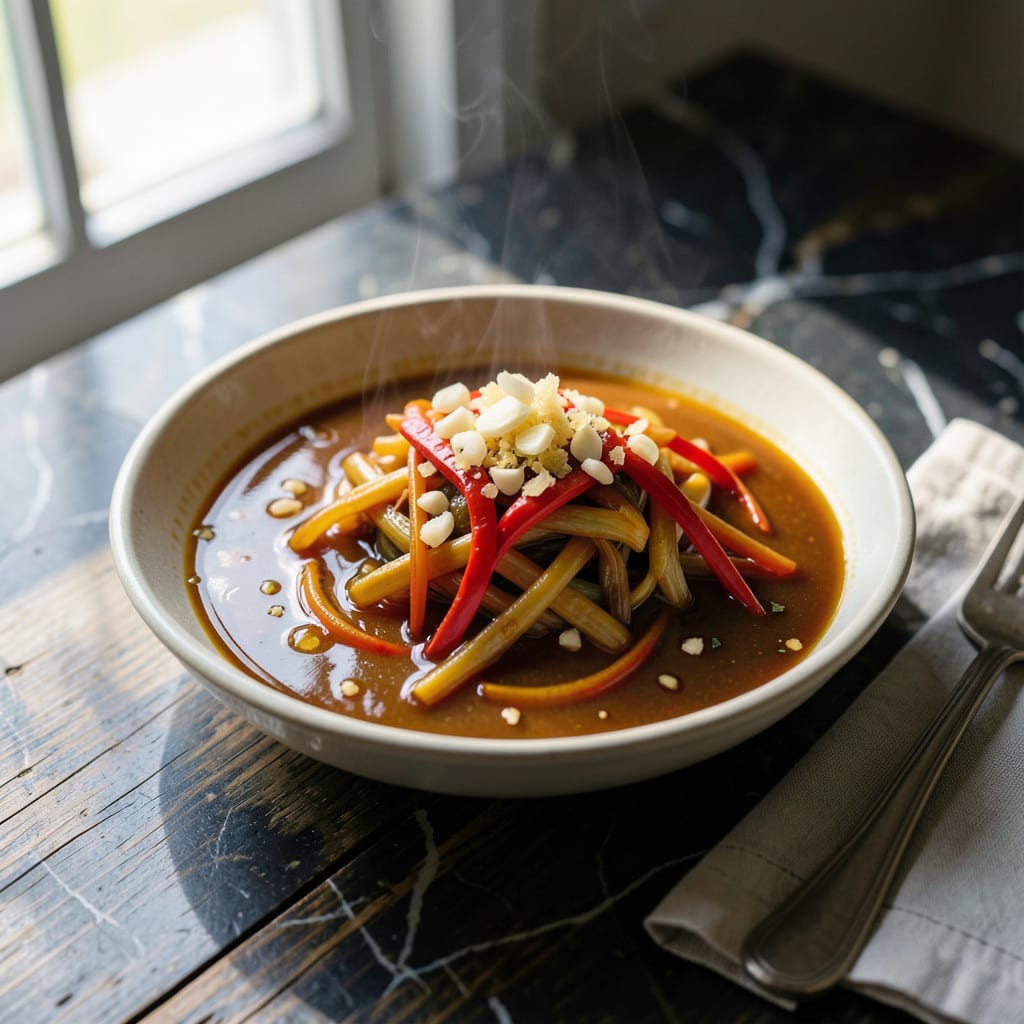
This sauce delivers bold umami flavor without a drop of oil, proving that fat-free doesn’t mean flavor-free. The secret lies in balancing soy sauce with aromatic garlic and ginger.
Whisk it together in 5 minutes, then use it to transform any stir fry into a restaurant-quality dish. Stores perfectly in the fridge for up to a week.
Ingredients for Fat Free Stir Fry Sauce
Nine simple ingredients create this bold, oil-free sauce in minutes.
| Ingredient | Amount | Notes |
|---|---|---|
| Low-Sodium Soy Sauce 🥢 | ½ cup | Tamari for gluten-free option |
| Rice Vinegar 🧂 | ¼ cup | Unseasoned variety preferred |
| Fresh Garlic Cloves 🧄 | 4 cloves | Minced finely for even distribution |
| Fresh Ginger Root 🌿 | 1 tbsp | Peeled and grated |
| Maple Syrup 🍁 | 2 tbsp | Balances sodium with natural sweetness |
| Sriracha Hot Sauce 🌶️ | 1 tbsp | Adjust to preferred spice level |
| Sesame Seeds 🌰 | 1 tsp | Toasted for enhanced aroma |
| Garlic Powder 🧄 | ½ tsp | Intensifies garlic flavor |
| Ground Black Pepper 🌶️ | ¼ tsp | Freshly ground for best results |
The soy sauce is non-negotiable for that deep umami base. Kikkoman low-sodium is widely available and consistent in quality. For gluten-free, San-J tamari is an excellent substitute. Fresh garlic and ginger are essential—their aromatics form the backbone of this sauce. Asian markets typically carry the freshest ginger root, often at better prices than standard grocers.
No maple syrup? Agave nectar or brown sugar at a 1:1 ratio works well. Sriracha can be replaced with gochujang at half the amount for a deeper, fermented heat. The rice vinegar is key for acidity—apple cider vinegar in a pinch, though it’s slightly fruitier. Skip the sesame seeds if needed, but they add a subtle nutty finish worth including.
This sauce keeps 7-10 days in an airtight container in the fridge. Freeze in ice cube trays for up to 3 months—perfect for portioning. Shake or stir before each use, as ingredients may settle over time.
Why You’ll Love This Recipe
- 5-Minute Whisk: No chopping, no fuss—just throw the soy sauce, vinegar, and maple syrup in a bowl and stir. Honestly, it’s ready before the takeout guy even pulls into the driveway.
- Umami Bomb: The fresh garlic and ginger hit differently, that sharp, warm depth cutting through the sweetness of the syrup. I’ll be real: it tastes way more complex than its ingredient list.
- Meal Prep MVP: I batch this on Sunday and it keeps all week, brightening up veggies, tofu, or chicken. Between us, it’s my secret to not getting bored of leftovers.
- Pantry Hero: Everything’s shelf-stable except the garlic and ginger, which I always have on hand. Saves me a grocery run and still packs a punch.
Step-by-Step Instructions for Fat Free Stir Fry Sauce
This straightforward method ensures a perfectly balanced sauce with deep umami flavor and no added fat.
Step 1: Mince Aromatics and Prepare Base Ingredients
Begin by finely mincing the 4 cloves fresh garlic cloves and grating the 1 tbsp fresh ginger root. This fine texture ensures even distribution throughout the sauce and prevents large chunks in the final product.
In a small bowl, combine the 0.5 cup low-sodium soy sauce and 0.25 cup rice vinegar. The vinegar’s acidity will brighten the soy sauce’s saltiness while creating the foundation for your sauce’s complexity.
Step 2: Build the Flavor Profile with Sweet and Spicy Elements
To the soy-vinegar mixture, add the 2 tbsp maple syrup and 1 tbsp sriracha hot sauce. Stir thoroughly until the maple syrup fully dissolves—this may take 30-45 seconds of vigorous whisking.
The maple syrup provides natural sweetness that counters the sodium, while the sriracha introduces a subtle heat that lingers. Here’s the thing—taste now and adjust the spice level if needed, but remember the flavors will intensify slightly as the sauce rests.
Step 3: Incorporate Aromatics and Dry Seasonings
Add the minced garlic, grated ginger, 0.5 tsp garlic powder, and 0.25 tsp ground black pepper to the liquid mixture. The garlic powder might seem redundant, but it deepens the garlic presence without adding moisture.
Whisk for 1 minute until all ingredients are fully integrated and no ginger fibers remain visible on the surface. The sauce should appear smooth with a rich, mahogany color from the soy and maple syrup combination.
Step 4: Finish with Sesame Seeds and Rest
Stir in the 1 tsp sesame seeds. If using untoasted seeds, you’ll notice they’ll float initially—this is normal. For enhanced aroma as mentioned in the ingredients, toast the seeds in a dry pan for 30-45 seconds until fragrant before adding.
Let the sauce rest at room temperature for 10-15 minutes to allow the flavors to meld completely. You’ll notice the sauce thickens slightly during this time as the ginger and garlic infuse the liquid. This resting period is crucial for achieving the depth of flavor promised in fat-free sauces.
Step 5: Strain and Store for Optimal Texture
For a perfectly smooth consistency, strain the sauce through a fine-mesh sieve into a clean container. This removes any remaining ginger fibers or garlic pieces, ensuring a silky texture that clings beautifully to vegetables and proteins.
Transfer to an airtight container and store in the refrigerator for up to 1 week. The flavors will continue to develop over time, with the spice from the sriracha becoming more pronounced after 24 hours. Stir well before each use as the ingredients may settle.
Pro Tips For Making Fat Free Stir Fry Sauce
- Bloom the Aromatics: I learned this the hard way—sauté the minced garlic and ginger in a splash of water for 30 seconds before adding liquids to wake up their flavors. Raw garlic and ginger can taste harsh in the finished sauce.
- Balance the Sweetness: Maple syrup can overpower, so start with half the amount you think you need, then adjust. I was skeptical until I tried it, but the sauce tastes more complex when it’s not cloying.
- Skip the Boil: After burning two batches, I finally figured out that high heat caramelizes the sugar in maple syrup too fast. Simmer gently to thicken without scorching.
- Use Fresh Ginger: Sounds weird, but it works: powdered ginger just doesn’t have the bright, zesty kick fresh does. Grate a 1-inch piece—it only takes a minute and actually changes the outcome.
Serving Suggestions for Leftovers
Plating with Fresh Herbs
Drizzle this sauce over steamed broccoli or sautéed bell peppers for a vibrant presentation. I love finishing with thin-sliced green onions and a sprinkle of toasted sesame seeds for added texture and color. The fresh herbs brighten the dish beautifully. 🌿
Protein Pairings
This sauce clings perfectly to tofu cubes or shrimp in stir fries. For a heartier meal, try it with thinly sliced chicken breast or lean beef strips. The umami depth makes even simple proteins taste restaurant-worthy.
Marinate proteins in 2 tbsp of this sauce for 30 minutes before cooking for extra flavor penetration.
Rice and Noodle Bases
Serve over steamed jasmine rice or brown rice to soak up every last drop. For a low-carb option, cauliflower rice works surprisingly well. The sauce also tosses beautifully with rice noodles or udon for a quick noodle bowl.
Garnish Ideas
Add a pop of color with red pepper flakes or cilantro leaves. A squeeze of lime juice right before serving adds a bright citrus note that complements the sauce’s depth. These small touches elevate the dish significantly. ✨
Serving Temperature
This sauce tastes best at room temperature or slightly warm. If refrigerated, let it sit out for 10-15 minutes before using. Cold sauce can mute the flavors and make the dish taste flat.
Nutrition Facts
Frequently Asked Questions
Can I use honey instead of maple syrup?
Yes, substitute 2 tbsp honey for the maple syrup. The flavor will be slightly different but still balanced. Just warm the honey first to help it mix smoothly with the other ingredients.
How long does this sauce last in the fridge?
It stays fresh for 7-10 days in an airtight container. For longer storage, freeze in ice cube trays for up to 3 months. Stir well before each use as ingredients may settle.
What if my sauce is too salty?
Balance it by adding a touch more rice vinegar or maple syrup. Start with 1 tsp at a time and adjust to taste. The acidity and sweetness will help mellow the saltiness.
Can I make this sauce spicier?
Increase the sriracha to 2 tbsp or add 1/2 tsp red pepper flakes. For a different heat profile, try substituting gochujang at half the amount.

- 8 Bean Soup Recipe Crock Pot: Hearty Vegetable Medley in One Pot - September 25, 2026
- 4C Bread Crumbs Meatballs Recipe: Crispy Crust and Juicy Centers - September 25, 2026
- 6 Oz Chocolate Chip Cookie Recipe: Perfectly Balanced Crispy Edges and Chewy Hearts - September 25, 2026