
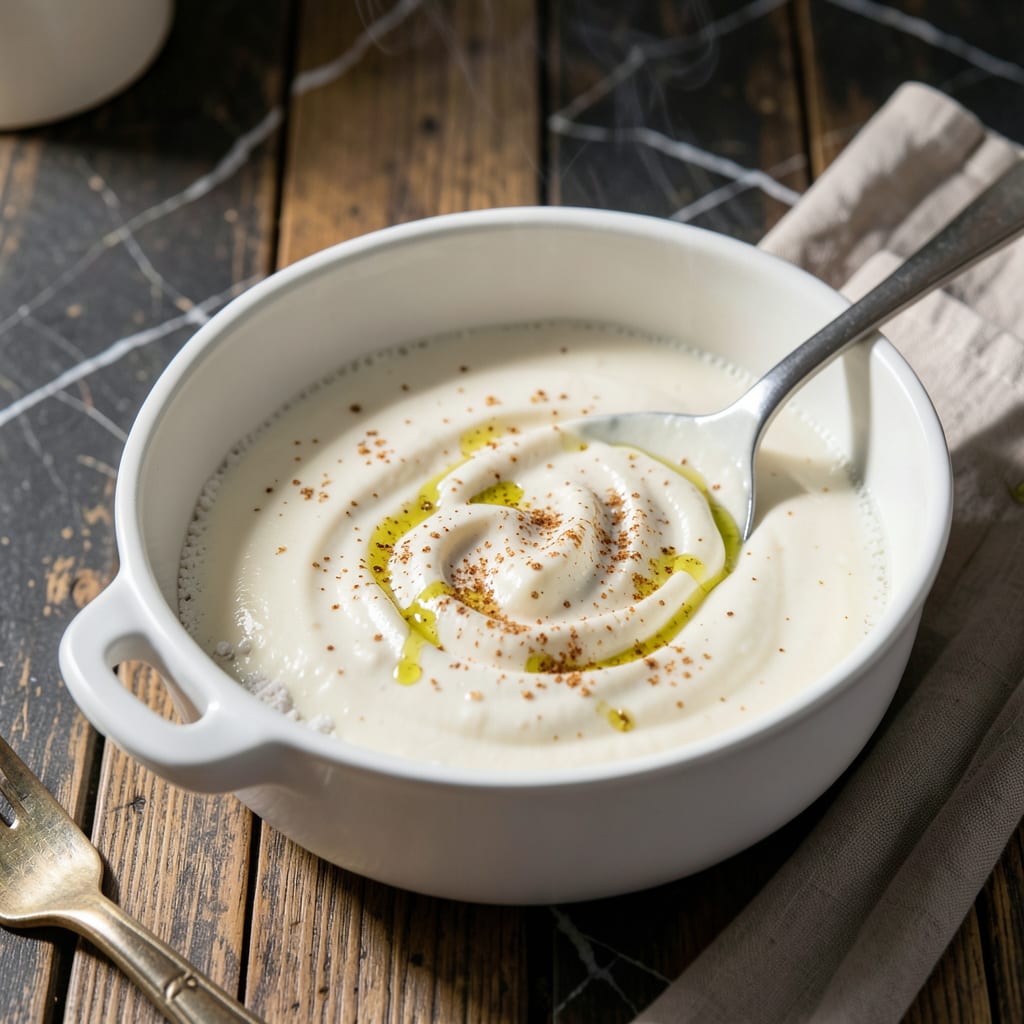
This sauce delivers a surprisingly rich velvety texture without a drop of cream or butter. I developed it as a healthier alternative that doesn’t compromise on flavor or consistency.
Perfect for pasta, casseroles, or as a base for other creamy dishes, this version uses simple pantry ingredients. It stores well in the fridge and reheats beautifully, making it a versatile addition to your cooking repertoire.
Ingredients for Fat Free White Sauce
Nine simple pantry ingredients create this surprisingly rich, velvety sauce without any dairy.
| Ingredient | Amount | Notes |
|---|---|---|
| All-Purpose Flour 🌾 | 3 tbsp | For thickening base |
| Low-Sodium Vegetable Broth 💧 | 2 cups | Warm for best results |
| Unsweetened Almond Milk 🥛 | 1 cup | Or any plant-based milk |
| Nutritional Yeast 🧀 | 2 tbsp | Adds cheesy depth |
| Garlic Powder 🧄 | 1 tsp | Fresh minced works too |
| Onion Powder 🧅 | 1 tsp | Enhances savory flavor |
| White Pepper 🌶️ | ½ tsp | For subtle heat |
| Salt 🧂 | ½ tsp | Adjust to taste |
| Dijon Mustard 🟡 | 1 tsp | Brightens the sauce |
The flour is your foundation here—Bob’s Red Mill is my go-to for consistent results. For the broth, Better Than Bouillon vegetable base (the low-sodium one) mixed with water works great. The almond milk needs to be unsweetened—sweetened versions will throw off the flavor balance completely. Nutritional yeast is the magic ingredient (find it in the bulk section at Whole Foods or any natural foods store).
No almond milk? Soy or oat milk work just as well. Missing nutritional yeast? A dash of miso paste adds that umami depth. For a nut-free version, rice milk is a good swap. The Dijon can be yellow mustard in a pinch, though it won’t have the same sharpness. White pepper is subtle but worth it—black pepper works too if that’s all you’ve got.
This keeps beautifully in the fridge for 5-6 days. Stir before using as it thickens when cold. Freezes for up to 3 months—portion into ice cube trays for easy single servings. Reheats smoothly on the stove with a splash of milk to thin if needed.
Why You’ll Love This Recipe
- 5-Minute Whisk: Honestly, it’s just flour, broth, and a quick stir—no roux stress, no butter, no waiting.
- Garlicky Depth: That nutritional yeast plus garlic powder combo hits like a creamy, umami bomb without a drop of dairy.
- Mac & Cheese Upgrade: I toss it with pasta for a lighter mac, or thin it for soups—works every time.
- Pantry MVP: All shelf-stable staples, costs pennies, and keeps for days in the fridge for last-minute sauces.
Step-by-Step Instructions for Fat Free White Sauce
This method delivers creaminess without dairy—simple technique, big flavor.
Step 1: Create a Smooth Roux Base
In a medium saucepan over medium heat, whisk together the 3 tbsp all-purpose flour with ¼ cup of the low-sodium vegetable broth. This small amount of liquid helps prevent lumps as you build your base.
Cook for 1-2 minutes, stirring constantly with a whisk, until the mixture thickens slightly and becomes smooth. You’re not looking for color development here—just a uniform paste that coats the back of a spoon. This step removes the raw flour taste and sets the stage for your sauce.
Step 2: Gradually Incorporate Remaining Liquids
Slowly pour in the remaining 1¾ cups low-sodium vegetable broth and the 1 cup unsweetened almond milk, whisking vigorously as you add each addition. This gradual incorporation prevents lumps and ensures a silky texture.
Bring the mixture to a gentle simmer, then reduce heat to medium-low. Continue whisking frequently as it thickens—you’ll notice it transforming from a thin liquid to a velvety sauce that beautifully coats your whisk. This should take about 5-7 minutes of consistent stirring.
Step 3: Build Flavor with Seasonings
Once the sauce has thickened, stir in the 2 tbsp nutritional yeast, 1 tsp garlic powder, 1 tsp onion powder, 0.5 tsp white pepper, 0.5 tsp salt, and 1 tsp Dijon mustard. The nutritional yeast adds that essential cheesy depth, while the mustard brings a subtle tang that brightens the whole sauce.
Cook for an additional 2-3 minutes, stirring constantly, until the sauce reaches your desired consistency. It should be thick enough to coat the back of a spoon but still pourable. Taste and adjust seasoning if needed—remember that the flavors will intensify slightly as it cools.
Step 4: Finish and Serve
Remove the sauce from heat and let it sit for 1-2 minutes—this allows it to thicken slightly more as it cools. The ideal texture should be rich and velvety, with no floury aftertaste. If it’s too thick, whisk in a splash more unsweetened almond milk to reach your preferred consistency.
Use immediately over pasta, vegetables, or as a base for casseroles. The sauce will continue to thicken as it stands, so if you’re making it ahead, you may need to reheat it with a small amount of additional low-sodium vegetable broth to restore its creamy texture.
Pro Tips For Making Fat Free White Sauce
- Whisk Constantly: I learned this the hard way—flour burns fast in a dry pan, so keep whisking as you toast it for 30 seconds before adding liquids.
- Warm the Milk: After burning three batches, I finally figured out cold almond milk makes the sauce lumpy—heat it first for a smooth finish.
- Skip the Rush: Resist the urge to dump all the broth at once; add it slowly while stirring to prevent clumps.
- Boost with Yeast: Sounds weird, but adding an extra teaspoon of nutritional yeast gives this sauce a richer, cheesier depth without dairy.
Essential Equipment for This Dish
Saucepan Selection
I always reach for my 3-quart stainless steel saucepan with a heavy bottom—it distributes heat evenly, preventing hot spots that could scorch your sauce. All-Clad is my brand of choice, but Cuisinart MultiClad offers great performance at a lower price point. 💛
Whisk Matters
A good whisk is non-negotiable for lump-free sauce. I use a balloon whisk from OXO—the wide surface area helps incorporate air while breaking up any flour clumps. The silicone handle stays cool even when the sauce is simmering.
Measuring Tools
Precision matters here, so I keep my 1 tbsp and 1 tsp measuring spoons from Pyrek within reach. For the liquids, a 2-cup glass measuring cup with clear markings helps with accurate pouring. I also keep a ¼ cup measure handy for the initial roux.
Thermometer for Precision
While not strictly necessary, a candy thermometer clipped to the pan helps monitor temperature. Your sauce should stay between 160-180°F to thicken properly without scorching. I use a Taylor Classic model that’s easy to read.
Storage Containers
For leftovers, I transfer the sauce to glass mason jars—they’re airtight and let me see the sauce at a glance. Ball jars with wide mouths make scooping easy. If freezing, I use silicone ice cube trays for perfect single-serving portions.
Reheating Aids
A small sauce pot is perfect for reheating portions. I add a splash of unsweetened almond milk and heat over low-medium heat, whisking constantly. The OXO silicone spatula helps scrape every last bit from the pan.
Nutrition Facts
Frequently Asked Questions
Can I use regular milk instead of plant-based?
Yes, but it will no longer be dairy-free. Whole milk adds richness, while skim works but may yield a thinner result. Stick with unsweetened to avoid altering the flavor.
Why did my sauce turn lumpy?
Lumps usually form from adding liquid too quickly or not whisking enough. Always pour liquids slowly while whisking constantly. If lumps appear, strain through a fine-mesh sieve.
How long does this sauce last in the fridge?
Stored in an airtight container, it keeps for 5-6 days. Stir before using as it thickens when chilled. For longer storage, freeze for up to 3 months.

- 8 Bean Soup Recipe Crock Pot: Hearty Vegetable Medley in One Pot - September 25, 2026
- 4C Bread Crumbs Meatballs Recipe: Crispy Crust and Juicy Centers - September 25, 2026
- 6 Oz Chocolate Chip Cookie Recipe: Perfectly Balanced Crispy Edges and Chewy Hearts - September 25, 2026