
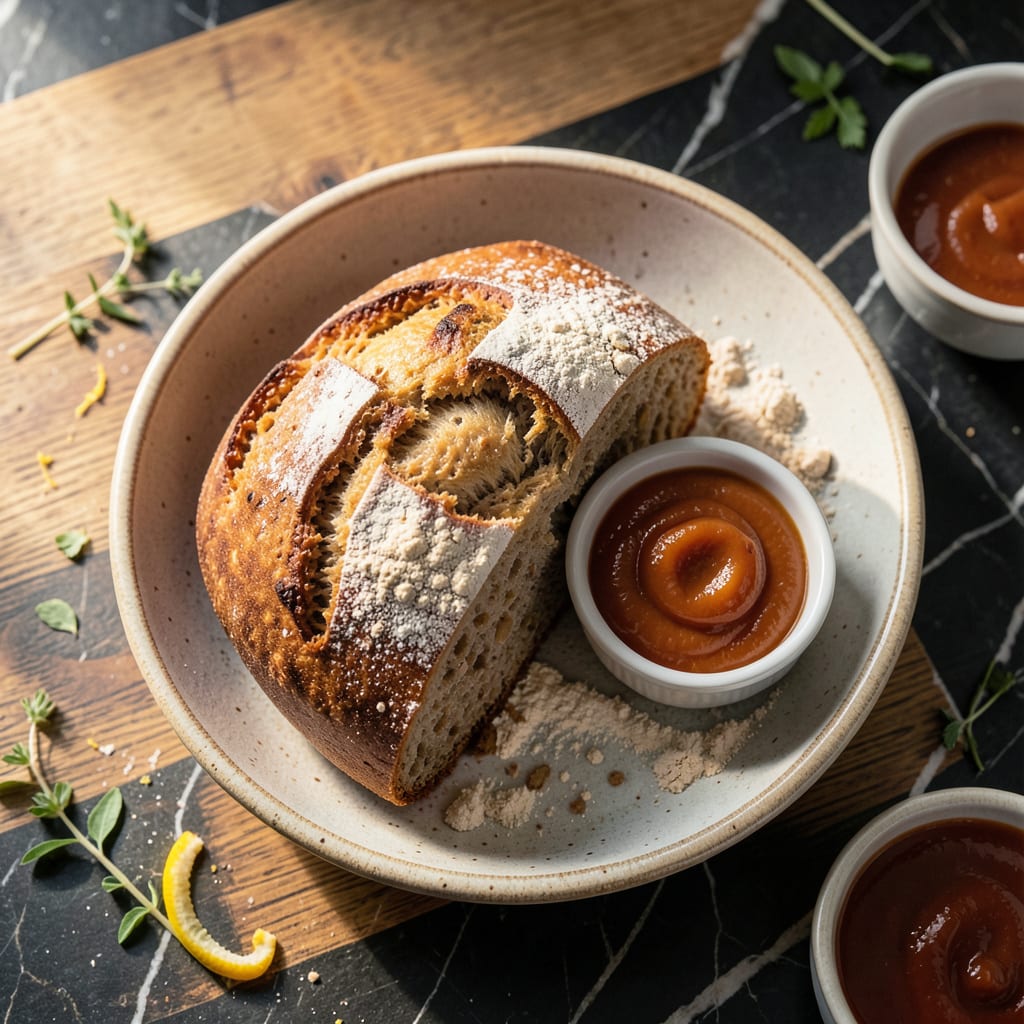
This whole wheat bread proves you don’t need butter or oil to achieve a soft, tender loaf. The secret lies in the right balance of ingredients and precise kneading.
With just a handful of pantry staples and 2 hours of rising time, you’ll have a guilt-free loaf that’s perfect for sandwiches or toast. The texture stays light and moist without added fat.
Ingredients for Fat Free Whole Wheat Bread
Pantry staples come together for a soft, fat-free whole wheat loaf.
| Ingredient | Amount | Notes |
|---|---|---|
| Whole Wheat Flour 🌾 | 4 cups | Freshly milled if possible |
| Active Dry Yeast 🍞 | 2 ¼ tsp | One packet, proofed in warm water |
| Warm Water 💧 | 1 ½ cups | 110°F for yeast activation |
| Salt 🧂 | 1 ½ tsp | Fine sea salt preferred |
| Sugar 🍚 | 2 tbsp | Granulated, feeds the yeast |
| Unsweetened Applesauce 🍎 | ½ cup | Replaces oil for moisture |
| Vital Wheat Gluten 🌾 | 2 tbsp | Improves texture and rise |
| Honey or Maple Syrup 🍯 | 1 tbsp | Vegan option: use maple syrup |
| Lemon Juice 🍋 | 1 tbsp | Enhances gluten development |
| Cornmeal 🌽 | 2 tbsp | For dusting baking surface |
The flour is key here—freshly milled whole wheat gives the best texture and rise. King Arthur Flour is my go-to for consistent quality. The yeast needs to be active (check the expiration date), and warm water at 110°F is non-negotiable—too hot kills the yeast, too cold won’t activate it. Vital wheat gluten might sound fancy, but it’s worth tracking down at Whole Foods or a bulk store. Makes all the difference in keeping this bread light.
No applesauce? Mashed banana or pumpkin puree work as fat replacers too. Skip the honey if you’re strictly vegan—maple syrup at a 1:1 ratio does the job. Out of vital wheat gluten? The bread will still work, just expect a slightly denser texture. The lemon juice might seem odd, but don’t skip it—it’s the secret to that tender crumb without added fat.
Store flour in an airtight container in a cool, dark place for up to 3 months. Yeast keeps in the fridge for 6 months or freezer for 1 year. The loaf stays fresh wrapped in a towel for 3-4 days or freeze for 2 months (slice first for easy toasting).
Why You’ll Love This Recipe
- Five Ingredients: I love that I only need whole wheat flour, yeast, water, salt, and sugar—no fancy add-ins or hard-to-find items.
- Warm Slice Heaven: The nutty whole wheat flavor with just a hint of sweetness makes this bread irresistibly cozy fresh from the oven.
- Meal Prep Hero: I bake two loaves on Sunday and use one for sandwiches, the other for toast all week—no preservatives, just good bread.
- Penny Wise: Honestly, it costs cents per slice compared to store-bought, and I control exactly what goes in.
Step-by-Step Instructions for Fat Free Whole Wheat Bread
Here’s the method I swear by for a soft, guilt-free loaf every time.
Step 1: Activate the Yeast and Mix Wet Ingredients
In a large mixing bowl, combine the 1.5 cups Warm Water, 2 tbsp Sugar, and 2.25 tsp Active Dry Yeast. Let it sit for 5-10 minutes until the mixture becomes frothy—that’s how you know the yeast is alive and ready to work.
Once the yeast is activated, stir in the 0.5 cup Unsweetened Applesauce, 1 tbsp Honey or Maple Syrup, and 1 tbsp Lemon Juice. The applesauce keeps the bread moist without added fat, and the lemon juice helps develop the gluten structure.
Step 2: Combine Dry Ingredients and Form the Dough
In a separate bowl, whisk together the 4 cups Whole Wheat Flour, 1.5 tsp Salt, and 2 tbsp Vital Wheat Gluten. The vital wheat gluten is key here—it compensates for the lower gluten content in whole wheat flour, ensuring a lighter texture.
Gradually add the dry ingredients to the wet mixture, stirring until a shaggy dough forms. It’ll look rough at first, but that’s normal. Let it rest for 10 minutes to allow the flour to fully hydrate before kneading.
Step 3: Knead the Dough Until Smooth
Turn the dough out onto a lightly floured surface and knead for 8-10 minutes until it’s smooth and elastic. Whole wheat dough is stickier than white bread dough, so don’t be tempted to add too much extra flour—just keep your hands lightly dusted.
You’ll know it’s ready when the dough springs back slowly when pressed with a finger. This step builds the gluten network that gives the bread its structure, so don’t skip it.
Step 4: First Rise Until Doubled in Size
Place the dough in a lightly oiled bowl, cover it with a damp towel, and let it rise in a warm place for 1 to 1.5 hours, or until doubled in volume. I like to preheat my oven to 200°F for 1 minute, turn it off, and let the dough rise inside—it speeds up the process.
Whole wheat dough takes a bit longer to rise than white bread dough, so be patient. The dough should look puffy and jiggle slightly when gently shaken.
Step 5: Shape, Second Rise, and Bake
Punch down the dough to release the air, then shape it into a loaf and place it in a greased loaf pan dusted with 2 tbsp Cornmeal. The cornmeal adds a nice texture to the crust. Cover and let it rise again for 30-45 minutes until it domes about 1 inch above the pan.
Preheat your oven to 375°F. Bake for 30-35 minutes until the top is golden brown and the loaf sounds hollow when tapped. Let it cool in the pan for 5 minutes, then transfer to a wire rack to cool completely before slicing.
Pro Tips For Making Fat Free Whole Wheat Bread
- Test Your Yeast: Always bloom your active dry yeast in warm water (110°F max) with a pinch of sugar first—I learned this the hard way after wasting a whole batch when the yeast was dead.
- Use Fine Flour: Sift your whole wheat flour or pulse it in a blender for a lighter texture, otherwise your loaf can turn out dense and heavy.
- Skip Cold Water: Warm water activates yeast properly, but too hot kills it; aim for bathwater temperature (about 110°F) for reliable rising.
- Let It Rest: After kneading, give the dough a full 1-2 hour rise in a warm spot—rushing this step leaves you with a flat, sad loaf.
Regional Styles of This fat free whole wheat bread
New England Tradition
In Maine and Vermont, whole wheat bread often includes maple syrup instead of honey for a regional twist. The syrup adds a subtle depth that pairs perfectly with local cheeses and apple butters. I love how it enhances the loaf’s natural sweetness.
Midwest Heartland
The Great Plains approach uses molasses in place of sugar for a richer, darker loaf. This version has been popular since the 1800s when molasses was more accessible than refined sugar. It gives the bread a slightly denser texture that holds up well for hearty sandwiches.
Southwest Flavor
In Arizona and New Mexico, bakers add 1 tsp ground cumin and ½ tsp chili powder to the dough for a Southwestern flair. This variation works beautifully with the applesauce base, creating a loaf that’s perfect for tacos or as a side to spicy stews. 🌶️
Pacific Northwest
Seattle bakers often incorporate 1 tbsp flaxseeds and 1 tbsp sunflower seeds into their dough. These additions provide extra nutrition and a delightful crunch. The seeds complement the whole wheat flour’s nuttiness, making it a favorite at local farmers’ markets.
Southern Comfort
In the Deep South, a touch of cornmeal is mixed directly into the dough rather than just dusting the pan. This creates a bread with a slightly gritty texture that’s reminiscent of traditional cornbread. I find it particularly good with a smear of jam.
Nutrition Facts
Frequently Asked Questions
What can I use instead of applesauce?
Mashed banana or pumpkin puree work perfectly as fat replacers. Use the same ½ cup measurement. These keep the bread moist while maintaining the fat-free quality.
Why is my bread dense?
Under-kneading or old yeast are common culprits. Knead for the full 8-10 minutes and check yeast expiration dates. Vital wheat gluten also helps prevent a heavy texture.
How do I store the loaf?
Wrap in a clean towel for 3-4 days at room temperature. For longer storage, slice and freeze for up to 2 months. Toast slices directly from frozen.
Can I make this without vital wheat gluten?
Yes, but the texture will be denser. The gluten strengthens whole wheat flour’s structure. If skipping, add 2 extra tbsp flour to compensate.

- 8 Bean Soup Recipe Crock Pot: Hearty Vegetable Medley in One Pot - September 25, 2026
- 4C Bread Crumbs Meatballs Recipe: Crispy Crust and Juicy Centers - September 25, 2026
- 6 Oz Chocolate Chip Cookie Recipe: Perfectly Balanced Crispy Edges and Chewy Hearts - September 25, 2026