
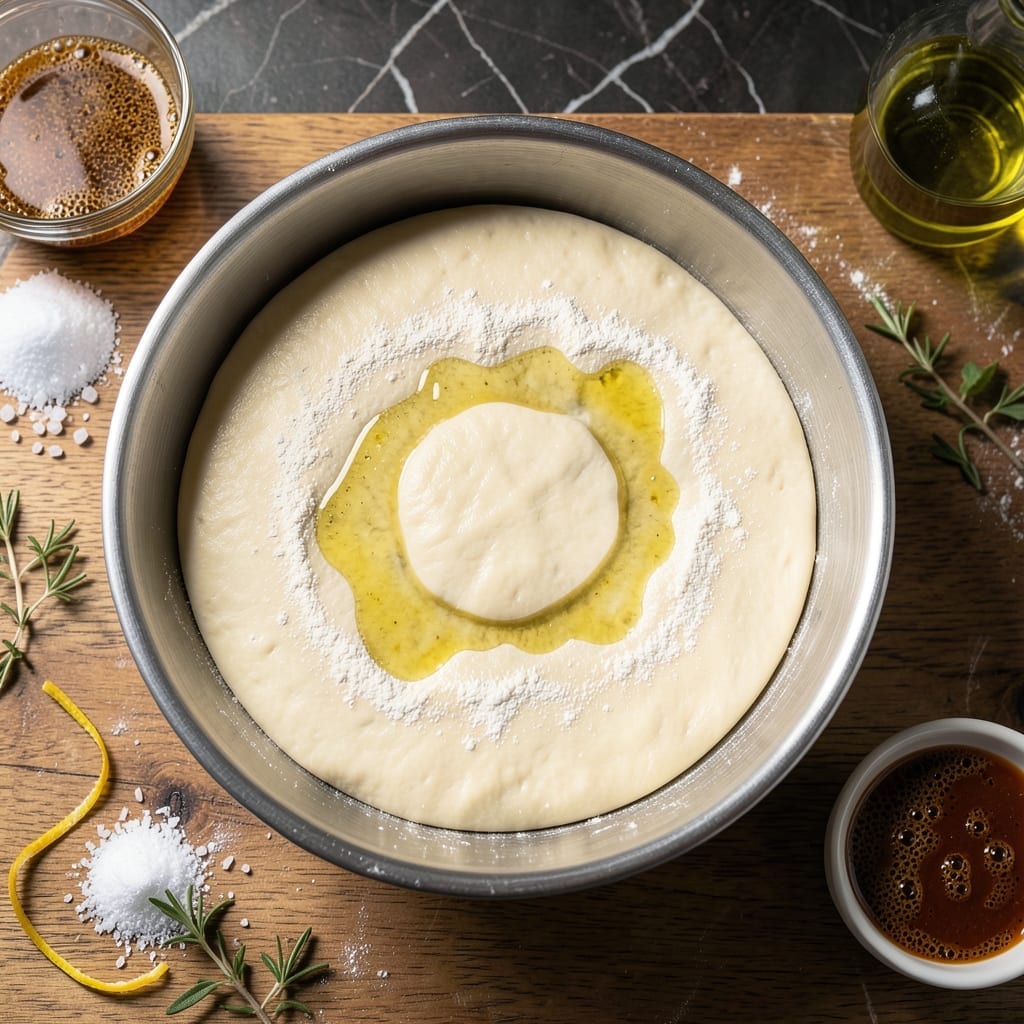
This proven dough method delivers a light and airy crust that rivals your favorite pizzeria. The slow fermentation develops complex flavors while creating that signature airy texture.
With just a few simple ingredients and patience, you’ll achieve a professional-quality base perfect for traditional homemade pies. The extended rise time ensures maximum flavor development.
Ingredients for Father Dominic Pizza Dough
A few basic ingredients and time create that signature airy, pizzeria-style crust at home.
| Ingredient | Amount | Notes |
|---|---|---|
| Bread Flour 🌾 | 3 ½ cups | High protein content preferred |
| Active Dry Yeast 🍞 | 1 tsp | Or instant yeast, same amount |
| Kosher Salt 🧂 | 1 ½ tsp | Diamond Crystal preferred |
| Sugar 🍚 | 1 tsp | Granulated white sugar |
| Extra-Virgin Olive Oil 🫒 | 2 tbsp | Plus extra for bowl |
| Warm Water 💧 | 1 ¼ cups | 110-115°F for yeast activation |
| Semolina Flour 🌾 | ½ cup | For dusting work surface |
| All-Purpose Flour 🌾 | ½ cup | For adjusting dough consistency |
The flour is non-negotiable here. King Arthur Bread Flour is my go-to—high protein gives you that chewy structure. Yeast needs to be fresh; check the expiration date (yes, it matters). Diamond Crystal kosher salt dissolves beautifully and seasons evenly. If your grocery store only carries table salt, cut the amount by half. Warm water should feel like bathwater, not hot—too hot and you’ll kill the yeast.
No bread flour? All-purpose in a pinch, but add an extra tablespoon of vital wheat gluten per cup for similar results. Out of yeast? This isn’t the time for sourdough discard—just wait until you have the real stuff. The olive oil can be any extra-virgin you like (I won’t judge your grocery store brand). Sugar helps feed the yeast, but honey works too if that’s what you’ve got.
Dough balls keep in the fridge for 3 days or freeze for 1 month. Let them come to room temp before shaping—cold dough fights back. The semolina is just for dusting, but cornmeal works too (and adds a nice crunch).
Why You’ll Love This Recipe
- Minimal Effort: I mix just five pantry staples—bread flour, yeast, salt, sugar, olive oil—and let time do the rest.
- Crisp Yet Chewy: The olive oil gives it that golden crust with a soft, airy bite that’s impossible to resist.
- Endless Possibilities: I’ve used it for thin crust, thick, even focaccia. Honestly, it’s my blank canvas for any toppings.
- Budget Winner: A few cents’ worth of ingredients makes enough dough for two large pizzas. Here’s what sold me—no specialty flour required.
Step-by-Step Instructions for Father Dominic Pizza Dough
Here’s how I get that perfect light and airy crust every time.
Step 1: Activate the Yeast
In a small bowl, combine the 1.25 cups Warm Water, 1 tsp Sugar, and 1 tsp Active Dry Yeast. Let it sit for 5-10 minutes until the mixture becomes foamy and bubbly. This is your visual confirmation that the yeast is alive and active.
If after 10 minutes you don’t see any bubbles, your yeast might be dead. Start over with fresh yeast. The water temperature is crucial here—it should feel warm but not hot to the touch, between 110-115°F. Too hot and you’ll kill the yeast; too cold and it won’t activate properly.
Step 2: Mix and Knead the Dough
In a large mixing bowl, combine the 3.5 cups Bread Flour, 1.5 tsp Kosher Salt, the activated yeast mixture, and 2 tbsp Extra-Virgin Olive Oil. Stir with a wooden spoon until a shaggy dough forms. The bread flour’s high protein content is what gives this dough its chewy texture and structure.
Turn the dough out onto a surface dusted with 0.5 cup Semolina Flour. Knead for 8-10 minutes until smooth and elastic. If the dough feels too sticky, sprinkle in some of the 0.5 cup All-Purpose Flour, 1 tablespoon at a time, until it becomes manageable. You want the dough to be slightly tacky but not stick to your hands.
Step 3: First Rise
Lightly oil a clean bowl with extra-virgin olive oil. Place the dough in the bowl, turning to coat it with oil. Cover with a damp kitchen towel and let it rise in a warm, draft-free place for 1-2 hours, or until doubled in size.
For the best results, I like to let it rise in an oven with the light on—it creates the perfect warm environment. The dough should spring back slowly when poked with a finger. If it springs back quickly, it needs more time. If it doesn’t spring back at all, it might have overproofed.
Step 4: Shape and Second Rise
Punch down the dough to release the air. Turn it out onto a surface dusted with semolina flour. Divide the dough into 4 equal portions for individual pizzas, or leave it whole for a large pie.
Shape each portion into a ball and place them on a baking sheet dusted with semolina flour. Cover with the damp towel and let rise for another 30-45 minutes. During this second rise, the dough will relax, making it easier to stretch without tearing.
Step 5: Stretch and Prepare for Baking
Preheat your oven to its highest setting, typically 500-550°F, with a pizza stone or inverted baking sheet inside. While the oven heats, stretch one dough ball on a surface dusted with semolina flour.
Use your fingertips to press and stretch the dough from the center outward, leaving a slightly thicker border for the crust. If the dough resists, let it rest for 5 minutes and try again. The semolina flour prevents sticking and adds a nice texture to the crust. Once stretched to your desired size, add your toppings and bake immediately.
Pro Tips For Making Father Dominic Pizza Dough
- Proof Properly: Give the dough a full 1.5-2 hours to rise in a warm spot—I learned this the hard way when my first few pizzas came out dense and flat.
- Use Bread Flour: Skip the all-purpose; bread flour’s higher protein content actually changes the outcome, giving you that chewy texture Father Dominic’s recipe is known for.
- Don’t Over-Oil: About 2 tablespoons of olive oil is plenty—enough to coat the bowl but not so much that the dough turns greasy and hard to handle.
- Warm Your Water: Use water around 110°F to activate the yeast without killing it—any hotter and you’ll end up with a lifeless dough, as I did my first attempt.
Regional Styles of father dominic pizza dough
New York Style
For a classic NY slice, I stretch the dough thinner—about ⅛ inch thick—and bake at 550°F on a preheated stone. The high heat creates that iconic crisp-chewy texture. Fold those wide slices like a true New Yorker. 🗺️
Neapolitan Approach
This version requires Caputo 00 flour instead of bread flour for an authentic Italian crust. Bake at 700°F+ in a wood-fired oven or on a steel for just 60-90 seconds. The result is a soft, slightly charred crust with a delicate chew.
Sicilian Thick Crust
Press the dough into an oiled 9×13-inch pan and let it rise until puffy. Bake at 425°F for 20-25 minutes until golden. The thick, focaccia-like base is perfect for hearty toppings.
Chicago Deep Dish
Use a 10-inch deep-dish pan and press the dough up the sides. After baking the crust alone for 10 minutes at 375°F, add toppings and bake another 25-30 minutes. The buttery crust holds up to the weight.
Detroit Style
Oil a 9×13-inch steel pan heavily and stretch the dough to the edges. Bake at 550°F until the cheese caramelizes on the edges—about 15-20 minutes. The crispy, cheesy edges are the hallmark.
California Thin
Roll it paper-thin and bake at 500°F for just 8-10 minutes. The ultra-crisp base lets gourmet toppings shine. I love this with fresh arugula and prosciutto after baking. ✨
Nutrition Facts
Frequently Asked Questions
Can I use all-purpose flour instead of bread flour?
Yes, but add 1 tablespoon vital wheat gluten per cup to mimic bread flour’s protein. The crust won’t be quite as chewy, but it’ll still be delicious.
Why does my dough not rise?
Old yeast or water that’s too hot/cold are common culprits. Check your yeast’s expiration date and ensure water is 110-115°F. A warm rising spot helps too.
How long can I refrigerate the dough?
Up to 3 days in an oiled, airtight container. For longer storage, freeze for up to 1 month. Thaw overnight in the fridge before using.

- 4C Bread Crumbs Meatballs Recipe: Crispy Crust and Juicy Centers - September 25, 2026
- 6 Oz Chocolate Chip Cookie Recipe: Perfectly Balanced Crispy Edges and Chewy Hearts - September 25, 2026
- 6-Inch Coffee Cake Recipe: Vanilla Bean Swirls and Buttery Streusel Topping - September 25, 2026