
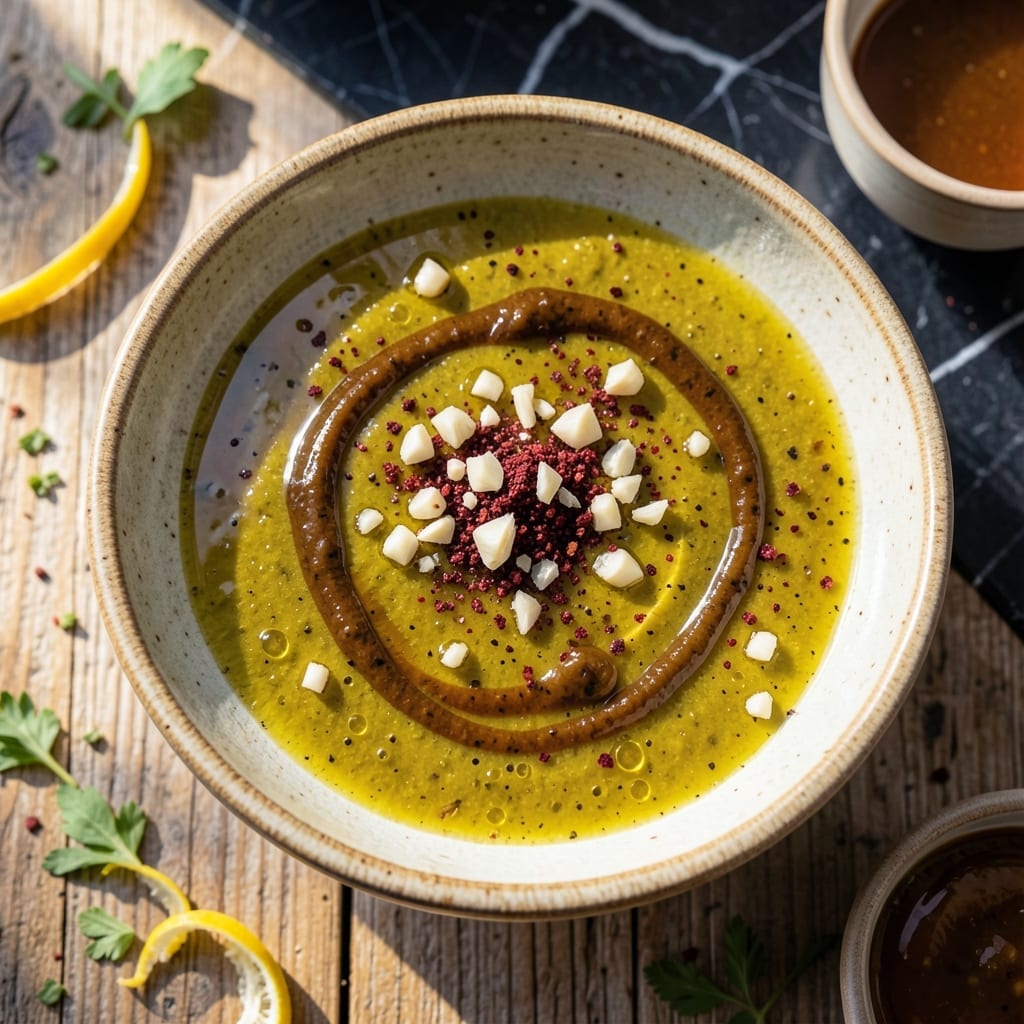
This dressing captures the essence of Middle Eastern flavors with its bright, tangy profile. Sumac and fresh lemon create a perfect balance of acidity and earthiness.
With just a few simple ingredients, this vegan condiment transforms any salad into an authentic fattoush experience. Store in the fridge for up to a week.
Ingredients for Fattoush Salad Dressing
Nine ingredients deliver Middle Eastern brightness with tangy sumac and fresh lemon at the heart.
| Ingredient | Amount | Notes |
|---|---|---|
| Extra-Virgin Olive Oil 🫒 | ½ cup | High quality, cold-pressed |
| Fresh Lemon Juice 🍋 | ¼ cup | Newly squeezed preferred |
| Sumac 🌶️ | 1 tbsp | Ground, for tangy earthiness |
| Garlic Cloves 🧄 | 2 cloves | Peeled and minced |
| Dijon Mustard 🟡 | 1 tsp | Smooth, no additives |
| Apple Cider Vinegar 🍏 | 1 tbsp | Raw, unfiltered preferred |
| Maple Syrup 🍁 | 1 tbsp | Grade A for sweetness |
| Sea Salt 🧂 | ½ tsp | Fine grain for dissolving |
| Ground Black Pepper 🌶️ | ¼ tsp | Freshly ground preferred |
Sumac is non-negotiable for authentic flavor. Middle Eastern markets or Penzeys carry the best quality—look for deep red color and strong citrus aroma. The olive oil should be extra-virgin and cold-pressed; California Olive Ranch or Colavita are reliable. Fresh lemon juice is essential (bottled lacks brightness). Meyer lemons add a floral note if available.
No sumac? Lemon zest plus a pinch of salt mimics the tang (not perfect, but close). Maple syrup can be swapped for agave or date syrup. Apple cider vinegar? White wine vinegar works, but reduce to 2 tsp. Dijon mustard is flexible—yellow mustard in a pinch, though the flavor profile shifts slightly.
This dressing keeps 7 days refrigerated in an airtight jar. The olive oil may solidify—let it sit at room temperature for 10 minutes before using. Shake well before each use to redistribute the sumac and herbs.
Why You’ll Love This Recipe
- Five-Minute Whisk: I just dump everything in a jar, shake it, and it’s ready—no blender, no fuss.
- Sumac Zing: The tangy sumac and sharp garlic make this dressing so bright it wakes up any salad.
- Dressing for Days: I make a big batch and keep it in the fridge for up to a week—perfect for quick lunches.
- Pantry Staples: Between us, I always have olive oil, lemon, and Dijon on hand, so this costs almost nothing to throw together.
Step-by-Step Instructions for Fattoush Salad Dressing
This method ensures a perfectly balanced emulsion with vibrant Middle Eastern flavors.
Step 1: Prepare the Aromatic Base
Mince the 2 cloves Garlic Cloves until finely textured. The smaller the mince, the more evenly the garlic flavor will distribute throughout the dressing. I prefer using the flat side of a chef’s knife to crush the cloves first, then rock the blade back and forth for a consistent texture.
Transfer the minced garlic to a medium bowl. This will be your foundation for building the complex flavor profile that defines this dressing. The garlic’s pungency will mellow slightly as it sits with the acid, creating a balanced backdrop for the other ingredients.
Step 2: Combine Acidic Components
Add the 0.25 cup Fresh Lemon Juice, 1 tbsp Apple Cider Vinegar, and 1 tbsp Sumac to the bowl with the garlic. The sumac provides the characteristic tangy earthiness that distinguishes fattoush dressing from other vinaigrettes. Whisk these ingredients together thoroughly.
At this stage, you’ll notice the sumac’s deep red color beginning to infuse the mixture. Let it sit for 2-3 minutes to allow the flavors to meld. This brief resting period helps extract the sumac’s full aromatic potential before you add the remaining ingredients.
Step 3: Incorporate Sweet and Pungent Elements
Add the 1 tbsp Maple Syrup and 1 tsp Dijon Mustard to the acid mixture. The maple syrup’s subtle sweetness will balance the dressing’s tartness, while the Dijon mustard serves as both flavor enhancer and natural emulsifier. Whisk vigorously for 30 seconds until fully combined.
The mustard’s emulsifying properties will begin to thicken the mixture slightly. You should see the ingredients coming together into a more cohesive liquid. This step is crucial for creating a stable emulsion that won’t separate when combined with the olive oil.
Step 4: Create the Emulsion
With one hand, begin whisking the acid mixture continuously. With the other, slowly drizzle in the 0.5 cup Extra-Virgin Olive Oil in a thin, steady stream. This gradual incorporation is essential for creating a proper emulsion that will coat your salad ingredients evenly.
As you add the oil, the mixture will transform from a thin liquid to a slightly thicker, creamy dressing. Continue whisking for an additional 30 seconds after all the oil has been incorporated to ensure complete emulsification. The dressing should have a smooth, velvety texture.
Step 5: Season and Finish
Add the 0.5 tsp Sea Salt and 0.25 tsp Ground Black Pepper to the emulsion. Whisk once more to distribute the seasonings evenly. Taste and adjust if needed—though the precise measurements should yield a perfectly balanced dressing.
Let the dressing rest for 5-10 minutes before using. This final resting period allows all the flavors to fully harmonize. The dressing should be vibrant and aromatic, with a beautiful balance of tangy, sweet, and savory notes that will elevate any fattoush salad.
Pro Tips For Making Fattoush Salad Dressing
- Bloom the Garlic: Lightly sauté the minced garlic in 1 tablespoon of the olive oil for 30 seconds until fragrant—raw garlic can overpower the dressing, and this mellows it out without adding bitterness.
- Zest Before Juicing: Grate the lemon zest into the dressing first, then juice the same lemon. The zest carries oils that add depth, and it’s a shame to waste them.
- Skip the Bottled Juice: Bottled lemon juice tastes flat and can make the dressing taste dull. Freshly squeezed juice is brighter and actually changes the outcome.
- Whisk in Sumac Last: Sumac can clump if added too early. Whisk it in at the end after the oil and lemon have emulsified, so it distributes evenly and keeps the dressing vibrant.
Creative Variations of fattoush salad dressing
Zesty Pomegranate Twist
Add 2 tbsp pomegranate molasses to the finished dressing for a deep, fruity complexity. This Syrian variation creates a stunning magenta color and adds layers of sweet-tart flavor. I love how it pairs with roasted beets in my fattoush. 💫
Herb-Infused Version
Blend in ¼ cup fresh mint leaves and 2 tbsp chopped dill after emulsifying. This Lebanese approach brightens the dressing with fresh herbal notes. Strain through a fine-mesh sieve if you prefer a smoother texture.
Spicy Harissa Kick
Whisk in 1 tsp harissa paste for a North African-inspired heat. The smoky, spicy notes complement the sumac beautifully. Start with ½ tsp if you’re sensitive to heat, then adjust to taste.
Creamy Tahini Base
Replace ¼ cup olive oil with 3 tbsp tahini for a richer, creamier texture. This Palestinian variation creates a velvety dressing that clings beautifully to greens. Thin with 1-2 tbsp water if needed.
Sweet Date Addition
Add 1 tbsp finely chopped Medjool dates for natural sweetness. This Persian-inspired version pairs wonderfully with walnuts and arugula. Soak dates in warm water for 10 minutes first to soften.
Smoky Grilled Flavor
Use smoked olive oil instead of regular for a subtle barbecue essence. This Turkish variation adds depth that works especially well with grilled vegetables in your salad. 🔥
Nutrition Facts
Frequently Asked Questions
Can I make this without sumac?
Yes, though the flavor won’t be as authentic. Use 1 tbsp lemon zest plus ½ tsp salt as a substitute. The citrus notes will mimic sumac’s tang, but expect a slightly different profile.
How long does homemade dressing last?
Store it in an airtight container in the fridge for up to 7 days. Shake well before each use as the oil may separate.
Why did my dressing separate?
Separation is normal! Just whisk vigorously or shake the jar for 30 seconds to re-emulsify. For better stability, add the oil more slowly next time.
Can I use honey instead of maple syrup?
Use 1 tbsp honey as a 1:1 swap. Note that this makes it non-vegan.

- 4C Bread Crumbs Meatballs Recipe: Crispy Crust and Juicy Centers - September 25, 2026
- 6 Oz Chocolate Chip Cookie Recipe: Perfectly Balanced Crispy Edges and Chewy Hearts - September 25, 2026
- 6-Inch Coffee Cake Recipe: Vanilla Bean Swirls and Buttery Streusel Topping - September 25, 2026