
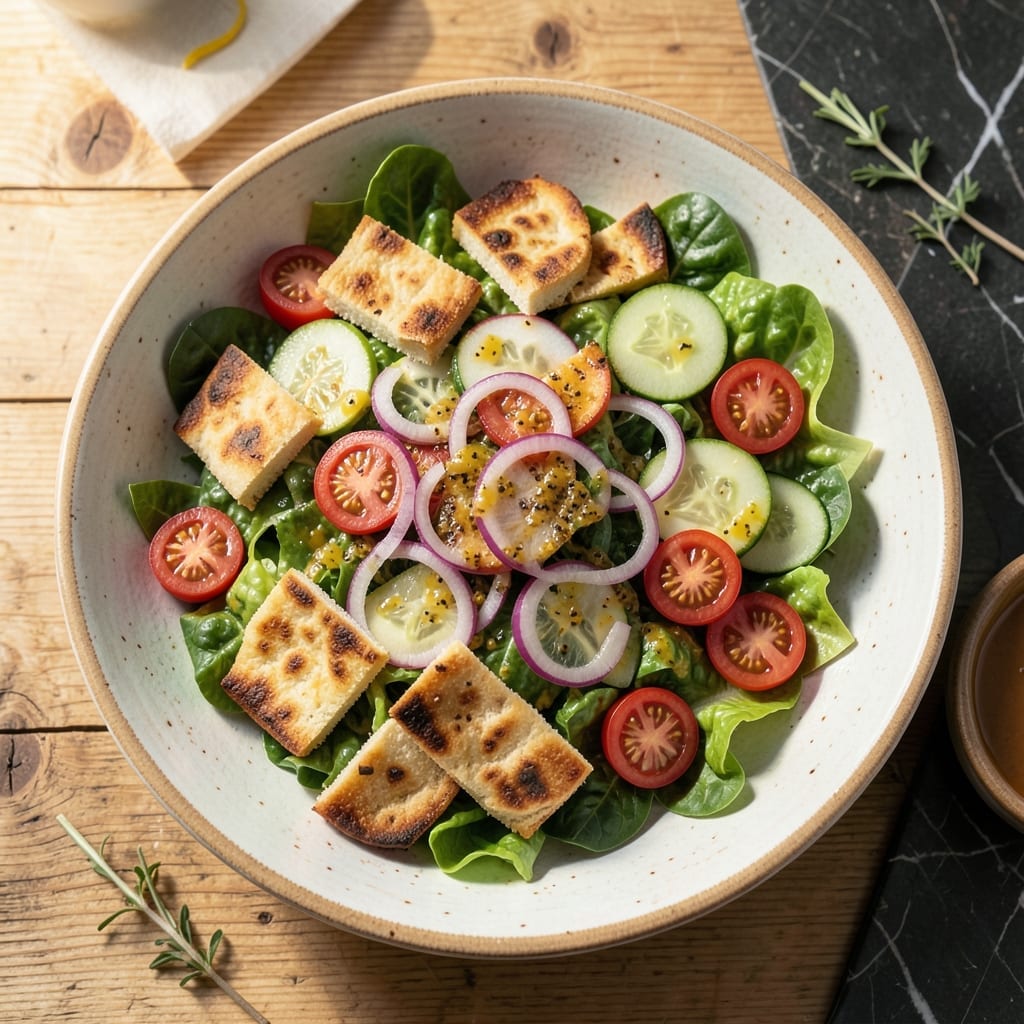
This traditional Middle Eastern salad delivers a perfect balance of crisp textures and bright, herbaceous flavors. The secret lies in the contrast between fresh vegetables, toasted pita, and a tangy sumac-lemon dressing.
I’ve refined this version to highlight authentic Arabic ingredients while keeping it simple and vegan. The result is a refreshing dish that’s as vibrant as it is satisfying.
Ingredients for Fattoush Salad Recipe Arabic
Bright vegetables meet crisp pita with a tangy sumac-lemon dressing for authentic Arabic flavor.
| Ingredient | Amount | Notes |
|---|---|---|
| Pita Bread 🥙 | 2 pieces | Whole wheat or white, toasted |
| Romaine Lettuce 🥬 | 1 whole | Chopped into bite-sized pieces |
| Cucumber 🥒 | 1 whole | English or Persian, diced |
| Radishes 🌱 | 4 whole | Thinly sliced for crunch |
| Cherry Tomatoes 🍅 | 1 cup | Halved for sweetness |
| Red Onion 🧅 | ½ whole | Thinly sliced, soaked in cold water |
| Fresh Parsley 🌿 | 1 cup | Flat-leaf, roughly chopped |
| Fresh Mint Leaves 🌿 | ½ cup | Loosely packed, torn |
| Sumac 🌶️ | 1 ½ tbsp | Ground, for tangy dressing |
| Extra-Virgin Olive Oil 🫒 | ½ cup | High-quality for dressing |
| Lemon Juice 🍋 | 3 tbsp | Freshly squeezed for brightness |
| Garlic Cloves 🧄 | 2 cloves | Minced for dressing |
| Ground Cumin 🌿 | ½ tsp | Lightly toasted for warmth |
| Salt 🧂 | 1 tsp | Sea salt or kosher salt |
| Black Pepper 🌶️ | ½ tsp | Freshly ground preferred |
The pita must be stale or thoroughly toasted to achieve that signature crisp texture—fresh pita will turn soggy. For authentic Arabic flavor, source sumac from Middle Eastern markets or Whole Foods. Look for vibrant, deep red color as a quality indicator. The parsley and mint should be fresh and fragrant—avoid wilted or yellowed leaves. Organic produce enhances the herbaceous notes this dish is known for.
No sumac? Lemon zest plus a pinch of salt mimics the tangy flavor. Substitute arugula or spinach if romaine isn’t available. Gluten-free pita works for dietary needs, though texture may vary. For the dressing, apple cider vinegar at half the amount can replace lemon juice in a pinch. The cumin is optional but recommended for depth.
Best served immediately after assembly to maintain crispness. Leftovers keep in an airtight container for 1-2 days, though the pita will soften. Store sumac in a cool, dark place for up to 6 months. Fresh herbs should be used within 5 days for optimal flavor.
Why You’ll Love This Recipe
- No Fuss Assembly: I just tear the pita, chop the veggies, and toss—no fancy techniques or tools needed.
- Zesty Crunch: The sumac and lemon dressing makes every bite of crisp lettuce and toasted pita ridiculously good.
- Potluck Star: Honestly, it’s the first dish to disappear at gatherings, and it pairs with everything from grilled meats to hummus.
- Stretches Far: One batch feeds my family of four with leftovers for lunch the next day, and the ingredients are all budget-friendly staples.
Step-by-Step Instructions for Fattoush Salad
Master the technique for balancing crisp textures with bright, herbaceous flavors in this traditional preparation.
Step 1: Toast the Pita Bread to Crisp Perfection
Preheat your oven to 375°F. Split the 2 pieces pita bread in half horizontally to create thin rounds. Place them directly on the oven rack or on a baking sheet for 8-10 minutes until golden brown and completely crisp.
Watch closely during the last 2 minutes—the pita can go from perfectly toasted to burnt quickly. Once cool enough to handle, break into 1-inch irregular pieces. The toasted pita should be dry and brittle; if it bends, return it to the oven for another 2-3 minutes. This crispness is essential for the salad’s signature texture.
Step 2: Prepare and Soak the Red Onion
Thinly slice the 0.5 whole red onion into half-moons. Place the slices in a small bowl of ice water and let soak for 10-15 minutes. This mellows the onion’s sharp bite while preserving its vibrant color and adding a refreshing crunch to the final dish.
While the onion soaks, chop the 1 whole romaine lettuce into bite-sized pieces, dice the 1 whole cucumber, thinly slice the 4 whole radishes, and halve the 1 cup cherry tomatoes. Drain and pat the onion dry just before assembling to prevent diluting the dressing.
Step 3: Make the Sumac-Lemon Dressing
In a small bowl, whisk together the 0.5 cup extra-virgin olive oil, 3 tbsp lemon juice, minced 2 cloves garlic cloves, 1.5 tbsp sumac, 0.5 tsp ground cumin, 1 tsp salt, and 0.5 tsp black pepper. The sumac should dissolve slightly, creating a vibrant, tangy emulsion with a deep reddish hue.
Let the dressing sit for 5 minutes to allow the flavors to meld. The sumac’s citrusy astringency should be pronounced but balanced by the richness of the olive oil. Taste and adjust the seasoning if needed, though the sumac and salt typically provide sufficient flavor.
Step 4: Combine Vegetables, Herbs, and Dressing
In a large serving bowl, combine the chopped romaine, diced cucumber, sliced radishes, halved cherry tomatoes, soaked red onion, 1 cup fresh parsley, and 0.5 cup fresh mint leaves. The herbs should be roughly chopped to release their aromatic oils without overpowering the other ingredients.
Pour about three-quarters of the dressing over the vegetables and herbs. Toss gently but thoroughly to coat every piece evenly. The leaves should glisten with dressing, but avoid oversaturating to prevent wilting. Reserve the remaining dressing for the final assembly.
Step 5: Assemble with Crisp Pita and Serve Immediately
Just before serving, add the toasted pita pieces to the bowl. Drizzle with the remaining dressing and toss once more to incorporate. The pita should retain its crispness, providing a satisfying contrast to the tender vegetables and herbs.
Transfer to individual plates and serve immediately. Fattoush is best enjoyed fresh, as the pita will soften over time. Each bite should offer a harmony of textures—crunchy, crisp, and tender—with the bright, tangy dressing tying all the elements together.
Pro Tips For Making Fattoush Salad Recipe Arabic
- Toast the pita: Tear the pita into bite-sized pieces and toast in a 375°F oven for 8-10 minutes until deeply golden and crisp—I learned this the hard way after ending up with soggy bread in my salad.
- Salt the veggies: After chopping the cucumbers, radishes, and tomatoes, sprinkle them with a pinch of salt and let sit for 5 minutes to draw out excess water, then pat dry.
- Skip the soggy bread: Add the toasted pita to the salad just before serving, not a second earlier—my grandmother swore by this, and she was right.
- Use stale pita: Sounds weird, but it works: stale pita toasts up crispier and holds its texture better in the dressing than fresh.
Troubleshooting This Dish
Pita Too Soft
If your pita isn’t crisp, it wasn’t toasted long enough. Return 1-inch pieces to a 375°F oven for 3-5 more minutes. I check every 2 minutes to avoid burning. Properly toasted pita should snap when broken. 🔥
Dressing Too Thick
If your sumac-lemon dressing seems pasty, whisk in 1-2 tbsp water until smooth. The 1.5 tbsp sumac needs liquid to dissolve fully. Let it sit for 5 minutes—the sumac will absorb moisture and soften naturally.
Soggy Salad
This happens when dressed too early. Keep vegetables, herbs, and pita separate until serving. If already combined, add fresh crisp pita pieces and toss. Store components separately in the fridge for up to 2 hours before assembly.
Bitter Onion
If the red onion is too sharp, you may have skipped the soaking step. Soak thin slices in ice water for 10-15 minutes to mellow the flavor. For extra mildness, rinse under cold water after soaking and pat dry thoroughly.
Flat Flavor
If the salad tastes dull, your sumac may be old. Fresh sumac has a vibrant, tangy aroma. Add an extra ½ tsp sumac and 1 tbsp lemon juice to revive the dressing. Taste and adjust salt—sea salt enhances all flavors beautifully.
Wilted Herbs
Fresh parsley and mint should stay bright. If wilting occurs, you may have overdressed. Use ¾ of the dressing first, then add more to taste. Store herbs in a damp paper towel in the fridge until ready to use. 💡
Nutrition Facts
Frequently Asked Questions
Can I make this salad ahead of time?
Prepare components separately up to 2 hours ahead, but keep pita and dressing apart until serving. The toasted pita will lose its crispness if mixed too early. Store everything covered in the fridge.
What can I use instead of sumac?
Mix 1 tsp lemon zest with ½ tsp salt for a similar tangy flavor. In a pinch, a splash of pomegranate molasses also works, though it’s sweeter. The dressing won’t be identical but will still taste bright.
Why is my dressing grainy?
Sumac needs liquid to dissolve fully. Whisk in 1-2 tbsp warm water and let it sit for 5 minutes. If it persists, strain the dressing to remove undissolved bits.

- 4C Bread Crumbs Meatballs Recipe: Crispy Crust and Juicy Centers - September 25, 2026
- 6 Oz Chocolate Chip Cookie Recipe: Perfectly Balanced Crispy Edges and Chewy Hearts - September 25, 2026
- 6-Inch Coffee Cake Recipe: Vanilla Bean Swirls and Buttery Streusel Topping - September 25, 2026