
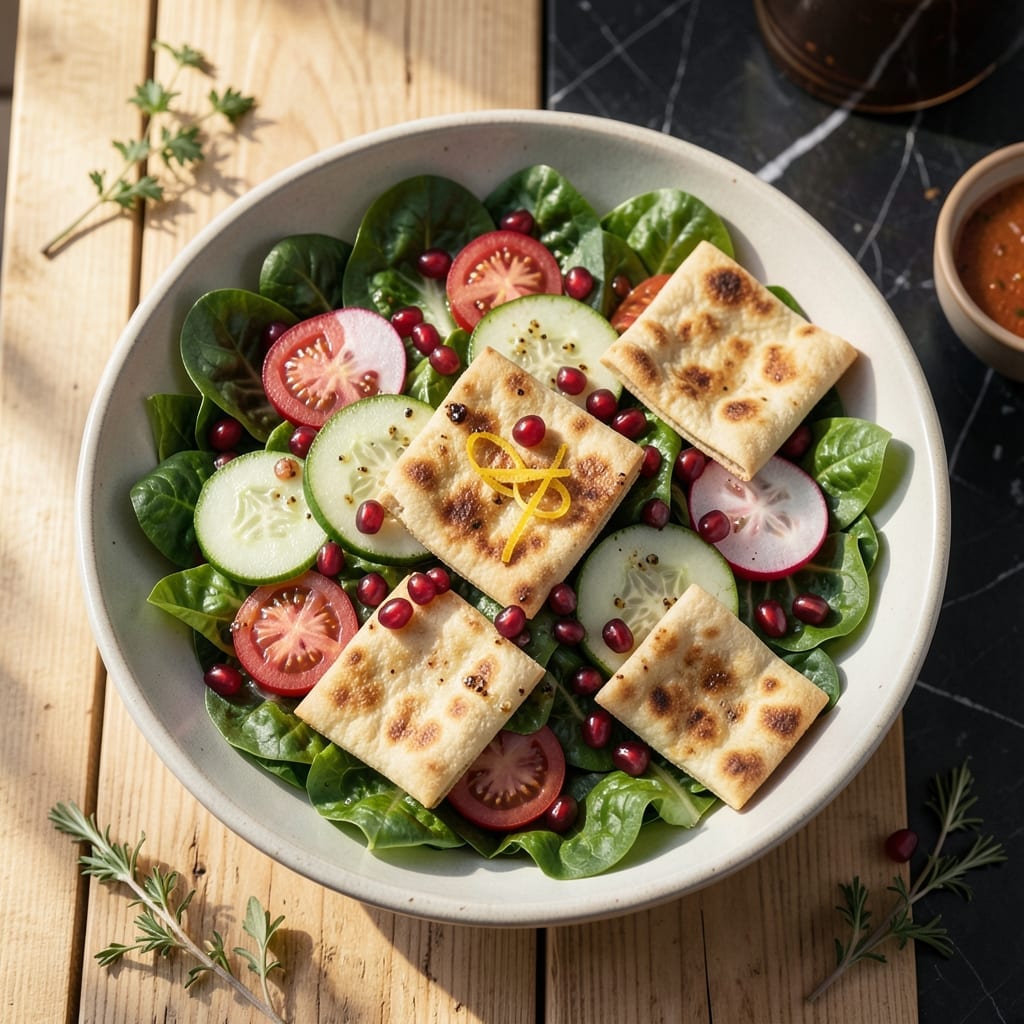
This vibrant salad brings Middle Eastern flavors to life with crisp vegetables, toasted pita, and juicy pomegranate seeds. The secret lies in the tangy sumac dressing that ties everything together.
You’ll love how the crunchy textures and bright colors create a dish that’s as beautiful as it is delicious. Perfect for a light lunch or as part of a larger spread.
Ingredients for Fattoush Salad Recipe with Pomegranate
Bright, fresh ingredients create this colorful Middle Eastern masterpiece with every bite.
| Ingredient | Amount | Notes |
|---|---|---|
| Pita Bread 🥙 | 2 whole | Stale or lightly toasted, torn into pieces |
| Romaine Lettuce 🥬 | 1 whole | Chopped into bite-sized pieces |
| English Cucumber 🥒 | 1 whole | Diced, unpeeled for crunch |
| Cherry Tomatoes 🍅 | 1 cup | Halved for sweetness |
| Red Radishes 🌱 | 4 whole | Thinly sliced for sharpness |
| Red Onion 🧅 | ½ whole | Thinly sliced, soaked in cold water |
| Fresh Parsley 🌿 | ½ cup | Chopped, flat-leaf preferred |
| Fresh Mint 🍃 | ¼ cup | Chopped for brightness |
| Pomegranate Seeds 🍇 | ¾ cup | Fresh, for juicy bursts |
| Extra-Virgin Olive Oil 🫒 | ⅓ cup | High quality for dressing |
| Lemon Juice 🍋 | 3 tbsp | Freshly squeezed for tang |
| Sumac 🌶️ | 1 ½ tsp | Ground, for signature tang |
| Dijon Mustard 🟡 | 1 tsp | For dressing depth |
| Garlic Cloves 🧄 | 2 cloves | Minced for dressing |
| Salt 🧂 | ½ tsp | Sea salt preferred |
The pita is key here. Use slightly stale or day-old pita—it crisps up better than fresh. I grab mine from Trader Joe’s or any Middle Eastern bakery. The sumac is non-negotiable for that authentic tang; look for it in the spice aisle at Whole Foods or online at Penzeys. Pomegranate seeds add jewel-like color, so pick the plumpest fruit you can find (they should feel heavy for their size).
No pomegranate? Dried cranberries or fresh raspberries add a similar pop. Sumac shortage? Extra lemon zest at half the amount gets you close. Out of fresh herbs? Dried mint and parsley at one-third the quantity work in the dressing—just rehydrate them in warm water first. The radishes? Swap in daikon or jicama if you want to mix it up.
The salad holds up surprisingly well—stores in the fridge for 2-3 days though the pita softens. Dress it just before serving. Leftover sumac dressing? Keeps for 5 days in a jar (the oil might separate, just shake it up).
Why You’ll Love This Recipe
- No Fuss Assembly: Honestly, just toss chopped veggies with toasted pita and pomegranate seeds—no cooking required beyond the toaster.
- Bright & Zesty: The tangy sumac and fresh pomegranate make every bite pop with that perfect sweet-tart crunch.
- Weeknight Hero: I throw this together for lunch or dinner, and it’s just as good packed for work the next day.
- Budget Stretcher: One pita and a handful of veggies feed four, and the leftovers actually taste better after a night in the fridge.
Step-by-Step Instructions for Fattoush Salad With Pomegranate
This vibrant salad comes together quickly with just a few simple techniques.
Step 1: Toast and Tear the Pita Bread
Preheat your oven to 375°F. Place the 2 whole Pita Bread directly on the oven rack and toast for 5-7 minutes until lightly golden and crisp. Watch them carefully—they go from toasted to burnt quickly.
Remove from the oven and let cool completely. Once cool, tear the pita into bite-sized pieces by hand. The irregular shapes add rustic texture. If your pita is already stale, you can skip the toasting step entirely.
Step 2: Prep All Vegetables and Herbs
Chop the 1 whole Romaine Lettuce into bite-sized pieces and place in a large bowl. Dice the 1 whole English Cucumber (peeling is optional, but I leave it on for extra crunch). Halve the 1 cup Cherry Tomatoes and thinly slice the 4 whole Red Radishes.
Thinly slice the 0.5 whole Red Onion and soak in cold water for 10 minutes to mellow the sharpness. Chop the 0.5 cup Fresh Parsley and 0.25 cup Fresh Mint. Drain the onion well before adding to the bowl with the other vegetables.
Step 3: Make the Sumac Lemon Dressing
In a small bowl, whisk together the 0.33 cup Extra-Virgin Olive Oil, 3 tbsp Lemon Juice, 1.5 tsp Sumac, 1 tsp Dijon Mustard, 2 cloves minced Garlic Cloves, and 0.5 tsp Salt. Whisk vigorously until the dressing is well emulsified and slightly thickened.
The sumac gives this dressing its signature Middle Eastern tang, while the Dijon mustard helps it cling to the vegetables. Taste and adjust the seasoning if needed, though the sumac and salt should provide enough flavor.
Step 4: Combine and Toss Gently
Add the torn pita pieces to the bowl with the vegetables. Pour the dressing over everything and toss gently but thoroughly to coat. The pita will soften slightly as it absorbs the dressing, but should retain some crunch.
Finally, sprinkle the 0.75 cup Pomegranate Seeds over the top and give it one last gentle toss. The pomegranate seeds add juicy bursts of color and sweetness that perfectly balance the tangy dressing and crisp vegetables.
Step 5: Rest and Serve
Let the salad sit for 10-15 minutes before serving. This resting time allows the pita to absorb the dressing and the flavors to meld together. The romaine will soften slightly but still retain its crispness.
Serve immediately while the pita is still slightly crisp. Fattoush is best enjoyed fresh, as the pita will continue to soften over time. Leftovers will keep in the refrigerator for up to 2 days, though the pita will lose its crunch.
Pro Tips For Making Fattoush Salad Recipe With Pomegranate
- Toast the Pita: Tear the pita into bite-sized pieces and toast in a 375°F oven for 8-10 minutes until golden and crisp—I learned this the hard way after my first soggy fattoush attempt.
- Salt the Cucumbers: Toss sliced cucumbers with ½ teaspoon salt and let sit for 10 minutes before dressing, then squeeze out excess water. Sounds weird, but it keeps your salad from turning into a watery mess.
- Seed the Tomatoes: Halve the cherry tomatoes and scoop out seeds with a small spoon—it’s the thing that matters most for preventing a diluted dressing.
- Add Pomegranate Last: Sprinkle the pomegranate arils just before serving to keep them from bleeding color into the salad. I skip this when I’m lazy, but the dish looks and tastes noticeably better when I don’t.
Best Sauces and Condiments for This Dish
Sumac Lemon Dressing
The star is the dressing itself—tangy sumac and bright lemon juice create that signature Middle Eastern flavor. I always make extra because it’s delicious on everything from grilled meats to roasted vegetables. 🌟
Garlic Yogurt Sauce
A cool garlic yogurt sauce balances the salad’s acidity perfectly. Whisk 1 cup Greek yogurt with 1 minced garlic clove, 1 tbsp lemon juice, and a pinch of salt. Drizzle over individual servings for a creamy contrast.
Pomegranate Molasses
For extra depth, I drizzle 1-2 tsp pomegranate molasses over the finished salad. Its thick, sweet-tart intensity amplifies the fresh pomegranate seeds. Look for it at Middle Eastern markets or Whole Foods.
Harissa Paste
Add a spicy kick with ½ tsp harissa paste mixed into the dressing. This North African chili paste brings heat and complexity. I love Dea brand—it has the perfect balance of spice and smokiness.
Tahini Dressing
A creamy tahini dressing makes a rich alternative. Whisk 3 tbsp tahini with 2 tbsp water, 1 tbsp lemon juice, and 1 minced garlic clove. Thin with more water if needed for drizzling consistency.
Herb-Infused Oil
For restaurant-style flair, drizzle with herb-infused olive oil. Heat ¼ cup olive oil with 2 sprigs rosemary until fragrant, then cool. The aromatic oil adds a subtle herbal note that complements the fresh herbs in the salad. 💡
Nutrition Facts
Frequently Asked Questions
Can I use a different type of bread?
Yes, but pita is traditional. Naan or flatbread work too, though they may turn soggy faster. For best texture, use stale bread or toast until very crisp before adding.
How do I remove pomegranate seeds easily?
Cut the fruit in half and hold cut-side down over a bowl. Tap the back firmly with a wooden spoon to release the seeds. This prevents messy splatters and saves time.
Why soak the red onion?
Soaking in cold water for 10 minutes removes the harsh bite while keeping the crisp texture. Skip this step only if you love a stronger onion flavor.
Can I make this ahead of time?
Prep veggies and dressing separately up to 1 day ahead, but keep pita and pomegranate separate until serving to maintain crunch.

- 4C Bread Crumbs Meatballs Recipe: Crispy Crust and Juicy Centers - September 25, 2026
- 6 Oz Chocolate Chip Cookie Recipe: Perfectly Balanced Crispy Edges and Chewy Hearts - September 25, 2026
- 6-Inch Coffee Cake Recipe: Vanilla Bean Swirls and Buttery Streusel Topping - September 25, 2026