
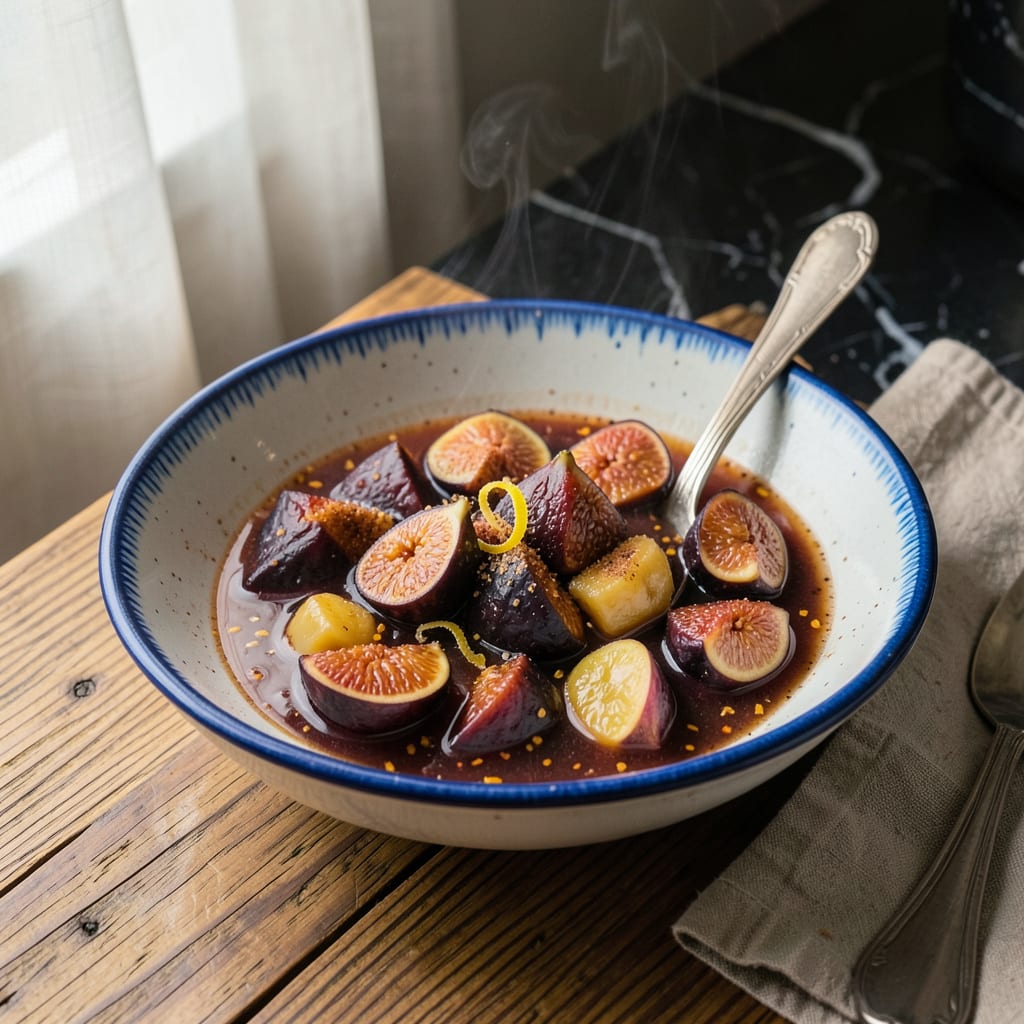
This versatile fig compote transforms fresh or dried figs into a sophisticated sweet-tart spread that elevates everything it touches. Developed through careful testing of sugar ratios and cooking times, the recipe balances natural fig sweetness with bright citrus notes for a perfectly concentrated consistency.
The result is a glossy, jam-like condiment that pairs equally well with aged cheeses on charcuterie boards or as a topping for yogurt, ice cream, or roasted meats. Its naturally vegan composition and 2-week refrigerated shelf life make it an ideal make-ahead component for both everyday meals and special occasions.
Ingredients for Fig Compote
Eight carefully balanced ingredients create this sophisticated sweet-tart compote with professional-level consistency and depth of flavor.
| Ingredient | Amount | Notes |
|---|---|---|
| Fresh figs 🍇 | 1 ½ lb | Black Mission or Calimyrna preferred |
| Granulated sugar 🍚 | ¾ cup | Adjust for fig sweetness |
| Fresh lemon juice 🍋 | 3 tbsp | Meyer lemon if available |
| Orange zest 🍊 | 1 tsp | Finely grated, no pith |
| Vanilla bean 🌱 | ½ whole | Split and scraped |
| Ground cinnamon 🌿 | ¼ tsp | Ceylon for delicate flavor |
| Kosher salt 🧂 | ¼ tsp | Diamond Crystal preferred |
| Water 💧 | ¼ cup | As needed for consistency |
[recipeingredientscaler]
The fig selection determines the compote’s character. Black Mission figs offer deeper sweetness while Calimyrna provides honeyed notes. Source from specialty grocers or farmers markets during peak season (June-September). For dried figs, Bobs Red Mill or Trader Joe’s offer consistent quality. The vanilla bean should be plump and fragrant—Nielsen-Massey or Rodelle brands ensure optimal flavor extraction.
Citrus components require precision. Meyer lemons (available at Whole Foods seasonally) provide floral acidity, but standard lemons work. For orange zest, use organic navel oranges to avoid pesticide residue. Sugar quantity may vary based on fig ripeness—start with the minimum and adjust. The cinnamon should be freshly ground Ceylon (available at Penzeys or specialty spice shops) for its delicate, citrusy undertones rather than standard cassia.
The compote maintains optimal quality for 2 weeks refrigerated in sterilized glass jars. For extended storage, process in half-pint jars using standard water bath canning methods (20 minutes), which preserves quality for 6-12 months. The high acidity from citrus ensures safe preservation. Always use a clean spoon to prevent contamination during storage.
Why You’ll Love This Recipe
- One-Pot Magic: Honestly, I love that this comes together in a single saucepan. Just toss in the figs, sugar, lemon juice, and let the orange zest and vanilla bean do their thing while you stir occasionally—no fancy techniques required.
- Sunshine in a Jar: That first spoonful hits you with bright, jammy figs, then the vanilla and citrus sneak in like a warm hug. The lemon juice cuts the sweetness just enough to make it dangerously addictive.
- Breakfast to Dessert: I’ve spooned this over yogurt at 7 AM and drizzled it on vanilla ice cream at 9 PM. It’s my secret weapon for cheese boards, toast toppings, or even glaze for roasted pork—yes, it’s that versatile.
- Stretches Like a Dream: A batch lasts me a week in the fridge, and the flavors just get deeper. Between us, it’s cheaper than store-bought preserves and tastes like something from a fancy brunch spot. (My kids don’t even know it’s “leftover.”)
Step-by-Step Instructions for Fig Compote
This method transforms fresh figs into a luscious, balanced compote with perfect sweet-tart harmony.
Step 1: Prepare the Figs and Aromatics
Begin by rinsing the 1.5 lb fresh figs under cool water, then pat them completely dry with a clean kitchen towel. Trim off the stems and cut the figs into quarters. For Black Mission figs, you’ll notice deep purple flesh; Calimyrna figs will have golden interiors. Both varieties work beautifully in this preparation.
Split the 0.5 whole vanilla bean lengthwise with a sharp paring knife and scrape out the seeds using the back of the blade. Combine the seeds with the pod in a small bowl. Finely grate the 1 tsp orange zest, being careful to avoid the bitter white pith beneath the peel. These aromatic elements will build the compote’s complex flavor profile.
Step 2: Combine Ingredients and Begin Cooking
In a medium saucepan, combine the quartered figs, 0.75 cup granulated sugar, 3 tbsp fresh lemon juice, the prepared vanilla bean and seeds, 0.25 tsp ground cinnamon, and 0.25 tsp kosher salt. The sugar quantity is calibrated to balance the natural sweetness of ripe figs without overpowering their delicate flavor.
Place the saucepan over medium heat and cook, stirring occasionally, until the sugar dissolves completely and the figs begin to release their juices. This initial cooking phase should take approximately 5-7 minutes. You’ll observe the figs softening and the mixture becoming increasingly syrupy as the natural pectin in the fruit activates.
Step 3: Simmer to Desired Consistency
Once the sugar has fully dissolved, add the 0.25 cup water and reduce the heat to medium-low. Allow the mixture to simmer gently, uncovered, for 20-25 minutes. Stir occasionally to prevent sticking, using a wooden spoon to break up the figs slightly as they cook down.
The compote is ready when the figs have completely broken down and the liquid has reduced to a thick, glossy syrup that coats the back of a spoon. You should be able to draw a clear line with your finger through the compote on the spoon that holds its shape. The final consistency should be spreadable but not runny, with visible fig pieces suspended in the syrup.
Step 4: Finish and Cool the Compote
Remove the saucepan from heat and discard the vanilla bean pod. Taste the compote and adjust the balance if needed: a pinch more salt will enhance all flavors, while additional lemon juice can brighten the profile if the figs were particularly sweet. The compote will thicken further as it cools, so aim for a consistency that’s slightly looser than your final preference.
Transfer the compote to a clean glass jar or bowl and allow it to cool to room temperature, about 1 hour. As it cools, the flavors will meld and deepen. The finished compote should have a vibrant color—deep purple for Black Mission figs or golden amber for Calimyrna—and a glossy sheen that makes it perfect for both cheese boards and dessert applications.
Storing and Reheating Leftovers
Refrigerator Storage
Once completely cooled, transfer your compote to sterilized glass jars—I prefer 8-ounce mason jars for perfect portioning. Seal tightly with the lid and store in the refrigerator for up to 2 weeks. The flavors actually improve after 24-48 hours as the citrus and spices meld together. Always use a clean spoon to prevent contamination. ❄️
Freezer Preservation
For longer storage, portion the cooled compote into freezer-safe containers, leaving ½-inch headspace for expansion. I use silicone ice cube trays for perfect single-serving portions. Freeze for up to 3 months at 0°F. Thaw overnight in the refrigerator before using—the texture remains beautifully glossy.
Reheating for Serving
Gently warm refrigerated compote in a small saucepan over low heat with 1-2 tsp water to restore the perfect consistency. Stir frequently for 3-5 minutes until just warmed through—avoid boiling to preserve the delicate fig flavors. For frozen compote, reheat directly from frozen with an extra 1 tbsp water.
Canning for Shelf Stability
For pantry storage, process in sterilized half-pint jars using a water bath canner. Fill jars with hot compote, leaving ¼-inch headspace, then process for 20 minutes. The high acidity from lemon juice ensures safe preservation. Canned compote maintains quality for 6-12 months in a cool, dark place.
Portioning for Convenience
I love dividing the compote into 4-ounce jars—perfect for gift-giving or single cheese board servings. Label each with the date and any flavor variations you added. The small size ensures you’re always using fresh compote at its peak quality. For holiday gifts, tie with twine and add a handwritten tag with serving suggestions.
Reviving Thickened Compote
If your refrigerated compote becomes too thick over time, simply stir in 1 tsp warm water at a time until reaching your desired consistency. The natural pectin in figs means it may thicken further during storage. A quick whisk with a fork usually restores the perfect spreadable texture without compromising flavor integrity. 💡
Nutrition Facts
Frequently Asked Questions
Can I use dried figs instead of fresh?
Use 1 cup dried figs (about 6 oz) soaked in 1 cup warm water for 30 minutes first. Drain before cooking, but reduce added sugar by 2 tbsp since dried figs are more concentrated. The texture will be slightly thicker but equally delicious.
Why did my compote turn out runny?
This usually happens when figs release excess moisture or the mixture isn’t simmered long enough. Return it to the pot and cook uncovered over medium-low heat for another 10-15 minutes, stirring frequently. A splash of lemon juice can help activate natural pectin for better thickening.
What’s the best way to serve this compote?
Try it warm over vanilla ice cream or cold with aged cheddar on charcuterie boards. It’s also fantastic as a glaze for roasted pork tenderloin or stirred into morning yogurt. The versatility makes it perfect for both sweet and savory applications.
How can I make this compote boozy?
Add 2 tbsp port wine or 1 tbsp bourbon during the last 5 minutes of cooking. For a stronger flavor, reduce 1/4 cup wine separately until syrupy, then stir into the finished compote. The alcohol cooks off but leaves rich depth.
Can I reduce the sugar in this recipe?
Yes, but start with no less than 1/2 cup sugar to maintain proper texture. The sugar helps balance figs’ natural tartness and aids preservation. For lower sugar, add 1 tsp pectin to help thickening, and expect a shorter shelf life of about 1 week.

- 8 Bean Soup Recipe Crock Pot: Hearty Vegetable Medley in One Pot - September 25, 2026
- 4C Bread Crumbs Meatballs Recipe: Crispy Crust and Juicy Centers - September 25, 2026
- 6 Oz Chocolate Chip Cookie Recipe: Perfectly Balanced Crispy Edges and Chewy Hearts - September 25, 2026