
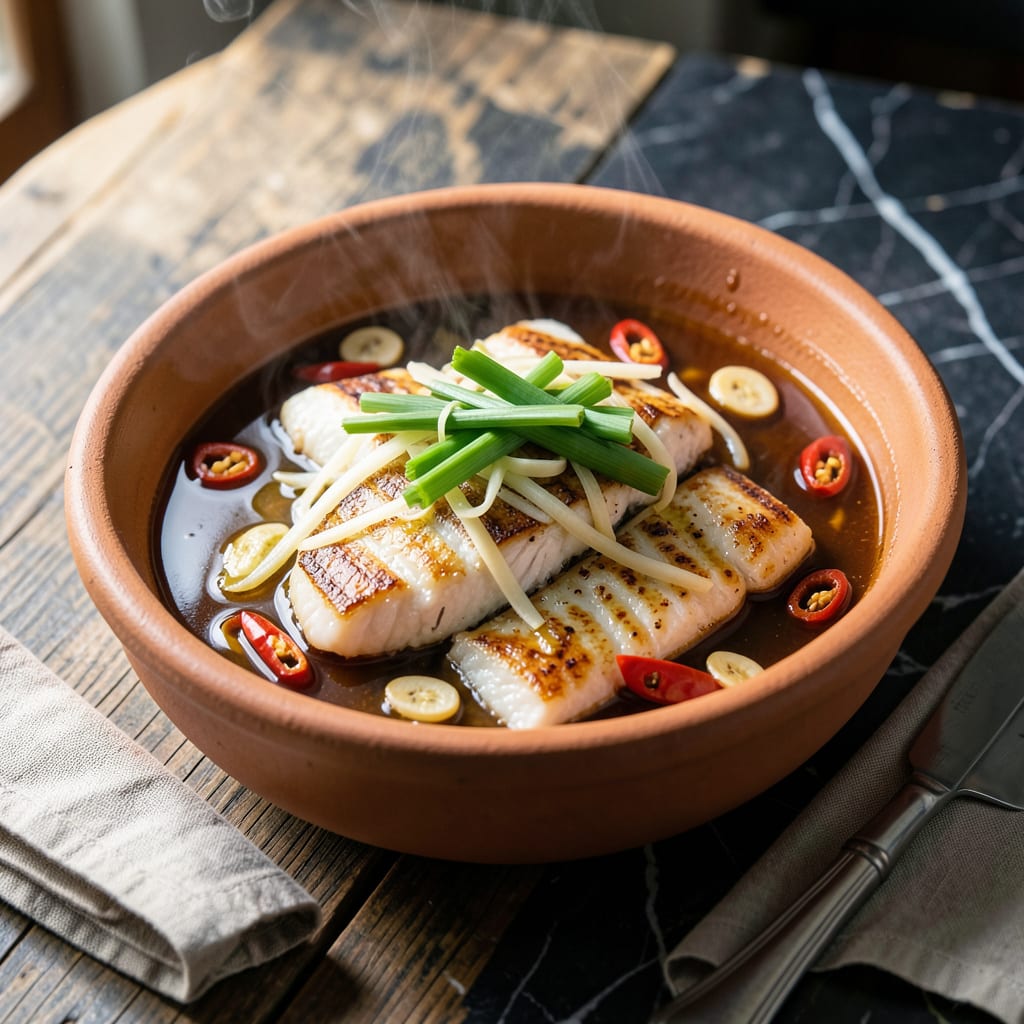
This traditional Chinese steamed fish in clay pot delivers authentic flavors with a simple yet precise method. The clay pot enhances the natural sweetness of the fish while preserving its delicate texture.
Using fresh ingredients and proper steaming time ensures a tender result. This dish honors classic techniques while remaining accessible for home cooks seeking restaurant-quality results.
Ingredients for Fish Clay Pot
Traditional Chinese flavors start with fresh fish and aromatic herbs for an authentic steamed delicacy.
| Ingredient | Amount | Notes |
|---|---|---|
| White Fish Fillets 🐟 | 1 ½ lb | Cod, snapper, or sea bass preferred |
| Ginger Root 🌿 | 2 whole | Peeled and julienned |
| Scallions 🧅 | 4 whole | Cut into 2-inch pieces |
| Garlic Cloves 🧄 | 4 cloves | Thinly sliced |
| Soy Sauce 💧 | 3 tbsp | Light soy sauce preferred |
| Shaoxing Wine 🍶 | 2 tbsp | Dry sherry as substitute |
| Sesame Oil 🫒 | 1 tbsp | Toasted variety for depth |
| Vegetable Oil 🫒 | 2 tbsp | For clay pot preparation |
| Fresh Cilantro 🌿 | ½ cup | Roughly chopped for garnish |
| Red Chili Peppers 🌶️ | 2 whole | Thinly sliced, optional for heat |
| Water 💧 | 1 cup | For steaming in clay pot |
| Kosher Salt 🧂 | 1 tsp | To taste for seasoning |
[recipeingredientscaler]
The fish is paramount here. Cod, snapper, or sea bass deliver the ideal texture and mild flavor. Source from a reputable fishmonger or the seafood counter at Whole Foods—ensure the fillets are firm, translucent, and smell of the ocean (not fishy). Freshness is non-negotiable. Ginger and scallions should be crisp and fragrant; avoid any with soft spots or wilting. The clay pot itself should be unglazed for optimal heat retention.
No Shaoxing wine? Dry sherry is an acceptable substitute, though the flavor profile will differ slightly. Light soy sauce is traditional, but tamari works for gluten-free needs. For heat, jalapeños or serranos can replace red chilies. The sesame oil must be toasted—Kadaya or Koon Chun brands are reliable. If using frozen fish, thaw completely and pat dry to avoid steaming in excess moisture.
This dish is best served immediately, but leftovers keep for 1-2 days in the fridge. Reheat gently in a covered skillet with a splash of water to prevent drying. The clay pot should be cleaned with warm water only—never soap—to preserve its seasoning. Fresh herbs like cilantro are best added just before serving.
Why You’ll Love This Recipe
- One Pan Magic: I just dump the fish, ginger, scallions and garlic in the clay pot with soy sauce and let it work its magic—no fancy techniques.
- Umami Bomb: That first bite with the garlic-soy broth soaking into the flaky fish? Ridiculously good.
- Weeknight Hero: Honestly, it’s my go-to for busy Tuesdays when I need dinner fast but still want restaurant-quality flavor.
- Budget Friendly: White fish fillets stretch far, and the ingredients are pantry staples. Feeds four for the cost of takeout.
Step-by-Step Instructions for Fish Clay Pot
Master this traditional technique for perfectly steamed fish with aromatic depth and delicate texture.
Step 1: Prepare the Aromatics and Fish
Begin by peeling and julienning the 2 whole Ginger Root into fine matchsticks. Cut the 4 whole Scallions into 2-inch pieces, and thinly slice the 4 cloves Garlic Cloves and 2 whole Red Chili Peppers. These aromatics form the flavor foundation of your dish.
Pat the 1.5 lb White Fish Fillets completely dry with paper towels—this ensures even cooking and prevents the flesh from sticking to the clay pot. Lightly score the surface of the fillets in a crosshatch pattern to allow the flavors to penetrate deeply. Season both sides with 1 tsp Kosher Salt.
Step 2: Heat the Clay Pot and Sear the Aromatics
Place your clay pot on the stove over medium-high heat and add the 2 tbsp Vegetable Oil. Once the oil shimmers, add the julienned ginger, scallion pieces, sliced garlic, and red chili peppers. Stir-fry for 1-2 minutes until the aromatics are fragrant and the edges of the scallions begin to soften.
This step builds a rich aromatic base that will infuse the fish with complex flavors. Be careful not to burn the garlic—it should turn just light golden at the edges. The clay pot should be very hot at this point, which is essential for the next steps.
Step 3: Add Liquids and Fish to the Clay Pot
Pour in the 2 tbsp Shaoxing Wine and 3 tbsp Soy Sauce, then add the 1 cup Water. Bring the mixture to a gentle simmer. Carefully place the seasoned white fish fillets into the pot, ensuring they are mostly submerged in the liquid. The liquid should come about halfway up the fillets.
Drizzle the 1 tbsp Sesame Oil evenly over the fish. This adds a nutty depth to the dish. Cover the clay pot with its lid and reduce the heat to medium-low to maintain a steady, gentle simmer.
Step 4: Steam to Perfection
Allow the fish to steam in the covered clay pot for 8-10 minutes. The fish is done when the flesh turns opaque and flakes easily with a fork. Avoid overcooking—fish continues to cook slightly after being removed from heat.
During this time, the clay pot’s porous material will absorb and radiate heat evenly, ensuring the fish cooks gently and retains its moisture. The aromatics will continue to infuse the liquid, creating a flavorful broth that complements the fish beautifully.
Step 5: Garnish and Serve
Once the fish is cooked, carefully transfer the fillets to a serving dish. Spoon the hot aromatic broth over the fish to keep it moist. Scatter the 0.5 cup Fresh Cilantro, roughly chopped, over the top for a fresh, vibrant finish.
Serve immediately while hot, with extra broth on the side if desired. The cilantro adds a bright, herbal note that balances the rich, savory flavors of the dish. The fish should be tender and flaky, with every bite infused with the aromatic essence of ginger, scallions, and garlic.
Pro Tips For Making Fish Clay Pot
- Preheat the Clay Pot: Always start with a hot, dry clay pot—about 3-4 minutes over medium heat before adding oil. I learned this the hard way after my fish stuck to the pot in two separate batches.
- Pat Fish Dry: Use paper towels to thoroughly dry the white fish fillets before cooking. Sounds tedious, but it prevents the fillets from steaming in their own juices instead of searing.
- Skip Overcrowding: Resist the urge to cram all the fillets in at once—give each piece at least an inch of space. After burning three batches, I finally figured out that spacing matters more than speed.
- Bloom Aromatics First: Cook the ginger, scallions, and garlic in oil for 30-45 seconds until fragrant before adding the fish. My grandmother swore by this, and she was right: it deepens the flavor base for the soy sauce.
Perfect Pairings for These Flavors
Rice Accompaniments
Steamed jasmine or basmati rice is perfect for soaking up the aromatic broth. I cook 1 cup rice with 1½ cups water for fluffy results. The neutral flavor lets the fish shine while adding hearty texture to your meal. 🥗
Vegetable Sides
Stir-fried bok choy with garlic pairs beautifully. Sauté 4 baby bok choy in 1 tbsp sesame oil for 2-3 minutes until tender-crisp. Alternatively, quick-pickled cucumbers add a refreshing crunch to cut through the richness.
Wine Pairings
A crisp white wine like Riesling or Pinot Grigio complements the delicate fish flavors. The slight sweetness of Riesling balances the savory soy sauce, while Pinot Grigio’s acidity cleanses your palate. 🍷
Beer Options
Light beers such as Sapporo or Asahi work wonderfully. Their mild carbonation and subtle hoppiness enhance the dish without overpowering it. For craft lovers, a Belgian witbier offers citrus notes that pair well.
Finishing Touches
Serve with extra cilantro and red chili slices on the side for customizable heat. A wedge of lime for squeezing adds brightness. I also love adding crushed peanuts for a satisfying crunch contrast. 💫
Nutrition Facts
Frequently Asked Questions
What type of clay pot works best?
Use an unglazed clay pot for optimal heat retention and even cooking. Glazed versions won’t absorb heat as effectively. Soak new clay pots in water for 30 minutes before first use to prevent cracking.
Can I use frozen fish fillets?
Yes, but thaw completely in the fridge overnight first. Pat dry thoroughly to remove excess moisture which could dilute the broth. Avoid refreezing after thawing.
How do I know when the fish is done?
The flesh should turn opaque and flake easily with a fork after 8-10 minutes of steaming. Remove from heat immediately to prevent overcooking.
What can I substitute for Shaoxing wine?
Dry sherry is the best substitute with similar depth. In a pinch, use 1 tbsp rice vinegar plus 1 tbsp water for acidity without the alcohol.

- 4C Bread Crumbs Meatballs Recipe: Crispy Crust and Juicy Centers - September 25, 2026
- 6 Oz Chocolate Chip Cookie Recipe: Perfectly Balanced Crispy Edges and Chewy Hearts - September 25, 2026
- 6-Inch Coffee Cake Recipe: Vanilla Bean Swirls and Buttery Streusel Topping - September 25, 2026