
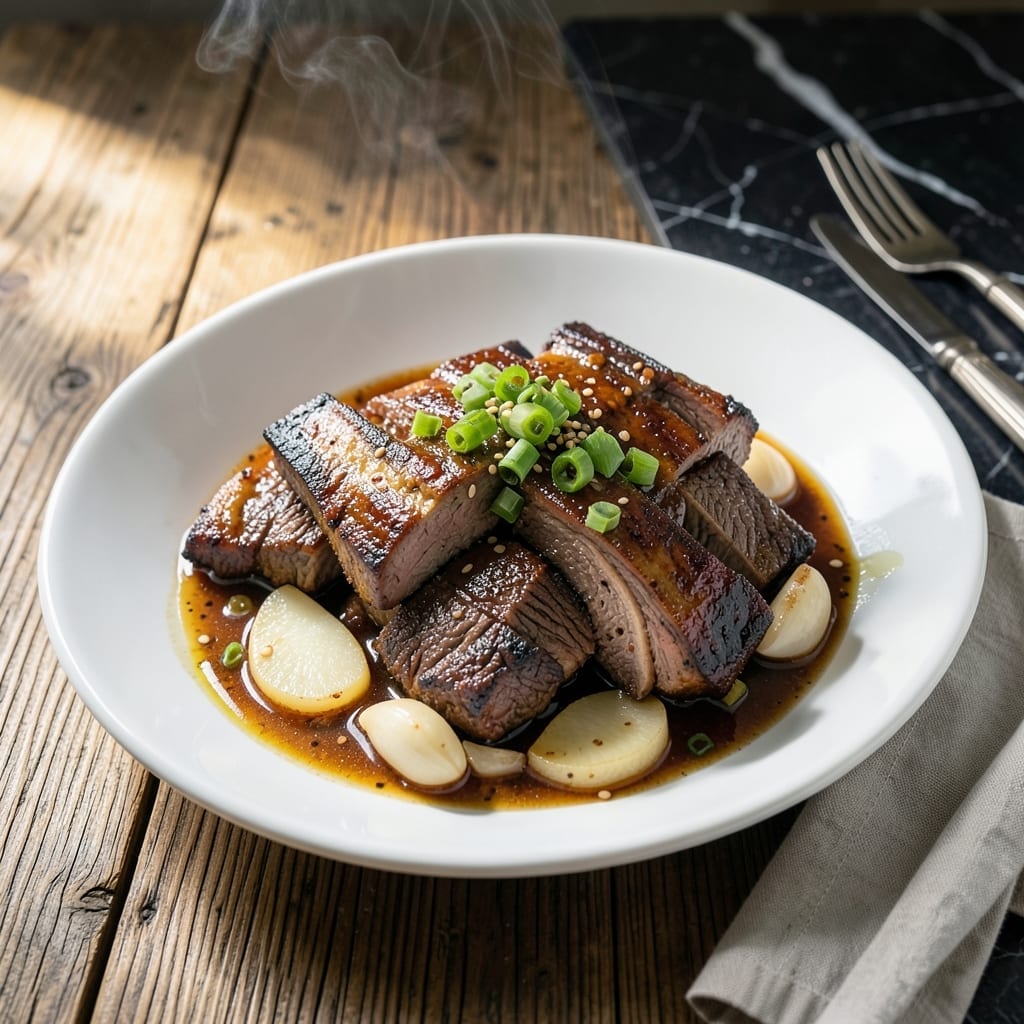
This Instant Pot version of traditional Korean galbijjim delivers all the rich, complex flavors of the classic dish in a fraction of the time. The pressure cooker tenderizes the short ribs perfectly while concentrating the sweet-savory glaze.
I’ve streamlined the process without compromising authenticity, using simple ingredients like soy sauce, brown sugar, and Asian pear to build layers of flavor. The ribs emerge fall-off-the-bone tender, coated in a glossy, caramelized sauce.
The beauty of this method is its efficiency—no long simmering required. In under 90 minutes, you’ll have a dish that tastes like it’s been cooking all day. The Instant Pot locks in moisture while infusing every bite with deep, umami-rich flavor.
Serve with steamed rice to soak up every last drop of the sauce. This recipe brings restaurant-quality results to your home kitchen.
Ingredients for Galbijjim Instant Pot
Quality ingredients like beef short ribs and Asian pear create this dish’s signature sweet-savory depth and fall-off-the-bone tenderness.
| Ingredient | Amount | Notes |
|---|---|---|
| Beef Short Ribs 🥩 | 2 ½ lb | Bone-in, cut into 3-inch pieces |
| Soy Sauce 🫒 | ¾ cup | Low-sodium preferred for balance |
| Brown Sugar 🍚 | ½ cup | Light or dark, packed |
| Asian Pear 🍐 | 1 whole | Peeled, grated for sauce |
| Garlic Cloves 🧄 | 8 cloves | Minced for deep flavor infusion |
| Fresh Ginger 🌿 | 1 tbsp | Grated, skin removed |
| Onion 🧅 | 1 whole | Medium, thinly sliced |
| Carrots 🥕 | 2 whole | Cut into 2-inch chunks |
| Sesame Oil 🫒 | 1 tbsp | Toasted variety for aroma |
| Rice Wine 🍶 | ¼ cup | Mirin or dry sherry acceptable |
| Sesame Seeds 🌰 | 1 tbsp | Toasted, for garnish |
| Green Onions 🧅 | 3 whole | Thinly sliced for garnish |
| Water 💧 | 1 cup | For pressure cooking liquid |
| Vegetable Oil 🫒 | 1 tbsp | Neutral flavor for searing |
| Black Pepper 🌶️ | ½ tsp | Freshly ground preferred |
The short ribs are critical—look for bone-in Korean-style (flanken cut) at H Mart or Asian markets. The marbling should be visible, which guarantees tenderness. USDA Choice grade is ideal. If your butcher doesn’t carry pre-cut, ask them to slice across the bones into 3-inch pieces. The Asian pear adds natural sweetness and acts as a tenderizer (Bosc or Korean varieties work best).
No Asian pear? Bartlett pear or 1/4 cup grated apple can substitute. For a quicker version, 1/4 cup pineapple juice adds similar enzyme tenderizing. Low-sodium soy sauce is preferred, but regular works if you reduce the final seasoning. The rice wine can be replaced with dry white wine or additional water plus a splash of vinegar for acidity.
The ribs taste even better the next day as the flavors meld. Store in an airtight container for up to 4 days in the fridge or freeze for 3 months. Reheat gently on the stovetop with a splash of water to loosen the sauce (microwaving can dry out the meat).
Why You’ll Love This Recipe
- I’ll be real: it’s even better the next day, and the flavors deepen overnight for easy lunches.
- Set It and Forget: The Instant Pot does all the work—just sear the ribs and let the pressure cooker transform them into fall-off-the-bone perfection.
- Sweet-Savory Magic: The brown sugar and Asian pear melt into the soy sauce, creating a glossy, finger-licking glaze that coats every bite.
- Weeknight Hero: Honestly, this tastes like a fancy Korean feast but comes together faster than ordering takeout.
Step-by-Step Instructions for Korean-Style Short Ribs
Here’s the method. Precise, tested, delivers authentic flavor with modern convenience.
Step 1: Sear the Beef Short Ribs
Set your Instant Pot to the Sauté function and add the 1 tablespoon vegetable oil. Once hot, add the 2.5 lb beef short ribs in a single layer, working in batches if necessary. Sear undisturbed for 3-4 minutes per side until deeply browned.
This step builds the foundation of flavor through the Maillard reaction. Don’t rush it—proper browning ensures a rich, caramelized crust that will infuse the sauce as it cooks. The ribs should release easily from the pot when properly seared.
Step 2: Build the Sauce Base
Remove the beef short ribs and set aside. In the same pot, add the thinly sliced onion, 2-inch carrot chunks, minced 8 cloves garlic cloves, and 1 tablespoon grated fresh ginger. Sauté for 2-3 minutes until the onion softens and becomes translucent.
Add the 0.75 cup soy sauce, 0.5 cup brown sugar, 0.25 cup rice wine, 1 whole peeled and grated Asian pear, and 1 cup water. Stir to combine, scraping up any browned bits from the bottom of the pot. The Asian pear adds natural sweetness and acts as a tenderizer, breaking down the collagen in the ribs.
Step 3: Pressure Cook to Tenderness
Return the beef short ribs to the pot, ensuring they are mostly submerged in the liquid. Secure the lid and set the Instant Pot to High Pressure for 35 minutes. Allow the pressure to release naturally for 10 minutes, then quick-release any remaining pressure.
The ribs are done when they are fork-tender and nearly falling off the bone. If they aren’t tender enough, seal the pot again and cook for an additional 5-10 minutes under pressure. The natural release ensures the meat reabsorbs some of the cooking liquid, keeping it moist and flavorful.
Step 4: Reduce and Glaze
Remove the beef short ribs and set aside. Switch the Instant Pot back to the Sauté function and simmer the sauce for 8-10 minutes until it thickens and reduces by about one-third. Stir in the 1 tablespoon sesame oil and 0.5 teaspoon black pepper.
Return the ribs to the pot and coat them thoroughly in the glaze. The sauce should cling to the meat with a glossy finish. This reduction step concentrates the flavors, transforming the cooking liquid into a rich, sticky glaze that defines this dish.
Step 5: Garnish and Serve
Transfer the beef short ribs to a serving platter. Sprinkle with the 1 tablespoon toasted sesame seeds and thinly sliced 3 whole green onions for a fresh, vibrant finish. The sesame seeds add a nutty crunch, while the green onions provide a bright, oniony contrast to the deep, savory flavors of the dish.
Serve immediately with steamed rice to soak up the remaining sauce. Each bite should deliver tender, fall-off-the-bone meat coated in a balanced, sweet-savory glaze with layers of umami and aromatic depth.
Pro Tips For Making Galbijjim Instant Pot
- Sear the Ribs: Brown the short ribs in batches on the Instant Pot’s sauté function before pressure cooking—this builds deep flavor and prevents a watery sauce. I learned this the hard way after making a bland, pale batch.
- Grate the Pear: Use a fine grater for the Asian pear so it dissolves completely into the sauce, thickening it naturally and adding subtle sweetness. My grandmother swore by this, and she was right.
- Skip Overcrowding: Don’t stack the ribs or exceed the max fill line—steer clear of this and you’ll avoid uneven cooking and potential burns. After burning two batches, I finally figured out the Instant Pot needs room to work.
- Use More Garlic: Double the garlic cloves for this dish—sounds like a lot, but the flavor mellows beautifully during pressure cooking and actually changes the outcome. I was skeptical until I tried it.
Flavor Customization for This galbijjim instant pot
Spice It Up
For a spicier kick, add 1-2 tablespoons gochujang (Korean chili paste) to the sauce. I stir it in during the reduction step for even distribution. You can also add ½ teaspoon red pepper flakes when building the sauce base for a milder heat. 🌶️
Sweet Variations
Swap the brown sugar for ½ cup honey for a deeper, floral sweetness. Alternatively, use ½ cup maple syrup for a subtle earthy note. Both pair beautifully with the soy sauce and Asian pear.
Umami Boost
Enhance the depth by adding 2 tablespoons oyster sauce or 1 tablespoon fish sauce to the sauce base. I prefer Maekruang oyster sauce for its rich, concentrated flavor. This adds complexity without overpowering the dish.
Citrus Twist
Brighten the flavors with 1 tablespoon orange zest or 2 tablespoons orange juice added during the reduction step. The citrus lifts the richness and adds a refreshing contrast to the savory sauce.
Nutty Flavor
For a toasty depth, stir in 1 tablespoon toasted pine nuts or 2 tablespoons crushed peanuts after glazing. I sprinkle them over the top with the sesame seeds for added texture and flavor. 💛
Herb Infusion
Add 2-3 sprigs fresh thyme or 1 teaspoon dried thyme to the sauce base for an earthy note. Remove the sprigs before serving. This subtle addition complements the traditional Korean flavors beautifully.
Nutrition Facts
Frequently Asked Questions
Can I use boneless short ribs instead?
Yes, but bone-in ribs add more flavor to the sauce. Boneless will cook faster, so reduce pressure time to 25 minutes.
They may not be as rich but still deliver great texture and taste.
What if I don’t have an Asian pear?
Substitute with 1/4 cup grated apple or 1/4 cup pineapple juice. Both add natural sweetness and tenderizing enzymes.
How do I thicken the sauce faster?
After pressure cooking, use the Sauté function uncovered. Stir in 1 teaspoon cornstarch mixed with water for a quicker glaze.
Can I make this ahead of time?
The flavors deepen overnight. Store in an airtight container for up to 4 days in the fridge or freeze for 3 months.

- 6 Oz Chocolate Chip Cookie Recipe: Perfectly Balanced Crispy Edges and Chewy Hearts - September 25, 2026
- 6-Inch Coffee Cake Recipe: Vanilla Bean Swirls and Buttery Streusel Topping - September 25, 2026
- 1 Hour Soup Recipe: Velvety Richness Without the Wait - September 25, 2026