
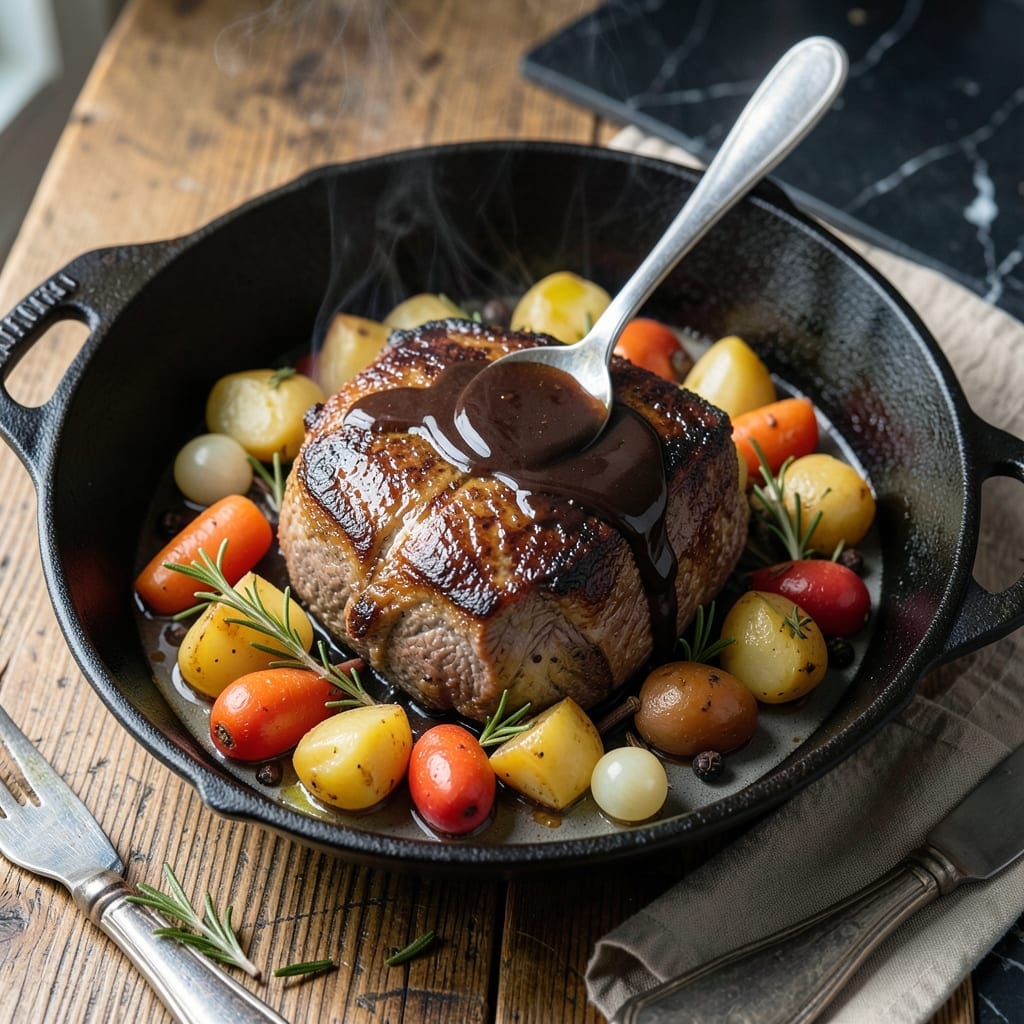
This German-style pot roast delivers deep, complex flavors through a slow braise with traditional spices. The technique ensures tender beef that falls apart at the touch of a fork, infused with rich, aromatic notes.
I’ve refined this method to balance bold seasoning without overpowering the natural beef flavor. A long, gentle cook in a Dutch oven allows the meat to absorb the spices while creating a velvety gravy that’s perfect for soaking into mashed potatoes or bread.
The result is a hearty, comforting dish that feels special enough for Sunday dinner but simple enough for any night. The aroma alone will draw everyone to the table.
Serve with buttered spaetzle or roasted root vegetables to complete the meal.
Ingredients for German Style Pot Roast
Hearty beef and bold German spices create this comforting slow-cooked classic in your Dutch oven.
| Ingredient | Amount | Notes |
|---|---|---|
| Beef Chuck Roast 🥩 | 3 lb | Boneless, well-marbled preferred |
| Kosher Salt 🧂 | 2 tsp | Diamond Crystal preferred |
| Black Pepper 🌶️ | 1 tsp | Freshly ground |
| Juniper Berries 🌿 | 1 tsp | Lightly crushed |
| Bay Leaves 🍃 | 2 whole | Dried, whole leaves |
| Cloves 🌰 | 4 whole | Whole cloves |
| Yellow Onion 🧅 | 2 whole | Large, quartered |
| Carrots 🥕 | 3 whole | Peeled, cut into chunks |
| Celery Stalks 🌿 | 3 whole | Cut into large pieces |
| Red Wine Vinegar 🍷 | ¼ cup | For acidity balance |
| Dark Beer 🍺 | 1 cup | Stout or porter preferred |
| Beef Stock 🥣 | 2 cups | Low-sodium preferred |
| Tomato Paste 🍅 | 2 tbsp | For depth of flavor |
| Vegetable Oil 🫒 | 2 tbsp | For searing beef |
| Fresh Thyme Sprigs 🌿 | 4 whole | For aromatic flavor |
The beef chuck roast is non-negotiable here—look for good marbling at the butcher counter or Whole Foods meat section. Well-marbled fat means tender meat after the long braise. I prefer boneless for easier slicing, but bone-in adds extra flavor. For the spices, Penzeys or a well-stocked bulk section ensures freshness. Juniper berries and cloves might seem unusual, but they’re traditional in German cooking.
No dark beer? Red wine works in a pinch—use a dry variety like Cabernet Sauvignon. Don’t have juniper berries? Skip them entirely rather than substituting, as they have a unique piney flavor. If you’re out of fresh thyme, dried thyme at one-third the amount works. The tomato paste can be from a can or those convenient squeeze tubes from Trader Joe’s.
This tastes even better the next day, so make it ahead if you can. Keeps for 4-5 days in the fridge or 3 months in the freezer. The gravy will thicken as it cools—just reheat gently with a splash of water or stock.
Why You’ll Love This Recipe
- Set It and Forget: I toss the chuck roast in the pot with salt, pepper, juniper berries, and bay leaves, then let the oven do the work for hours—no babysitting required.
- Deep, Earthy Richness: That beef soaks up the juniper and bay like a sponge, turning every bite into a warm, aromatic hug.
- Feeds the Whole Crew: I make it for Sunday dinner, then pack leftovers for lunches all week—it reheats like a dream.
- Budget Stretcher: A cheap cut of beef turns into a showstopper with just a handful of pantry staples. Honestly, it feels like a steal.
Step-by-Step Instructions for German-Style Pot Roast
This method ensures tender beef with rich, spiced braising liquid every time.
Step 1: Sear and Season the Beef
Pat the 3 lb Beef Chuck Roast dry with paper towels. This step is crucial for achieving a deep sear. Season generously with the 2 tsp Kosher Salt and 1 tsp Black Pepper, pressing the seasoning into the meat so it adheres well during cooking.
Heat the 2 tbsp Vegetable Oil in a large Dutch oven over medium-high heat until shimmering. Add the beef and sear for 4-5 minutes per side until deeply browned. Don’t rush this—you want a dark, flavorful crust that will translate into your final dish.
Step 2: Build the Aromatic Base
Remove the beef and set aside. In the same pot, add the 2 whole Yellow Onion, 3 whole Carrots, and 3 whole Celery Stalks. Cook for 5-6 minutes until the vegetables soften and begin to caramelize around the edges.
Add the 2 tbsp Tomato Paste and cook for 1-2 minutes, stirring constantly. This step deepens the tomato flavor and prevents a raw taste in your finished sauce. The paste should darken slightly and coat the vegetables.
Step 3: Deglaze and Add Braising Liquid
Pour in the 0.25 cup Red Wine Vinegar, scraping up all the browned bits from the bottom of the pot. These fond bits are packed with flavor. Add the 1 cup Dark Beer and 2 cups Beef Stock, along with the 1 tsp Juniper Berries, 2 whole Bay Leaves, 4 whole Cloves, and 4 whole Fresh Thyme Sprigs.
Return the beef to the pot, ensuring it’s mostly submerged in the liquid. The braising liquid should come about two-thirds of the way up the roast. This guarantees even cooking and maximum flavor infusion.
Step 4: Braise to Tender Perfection
Bring the liquid to a gentle simmer, then reduce heat to low. Cover and cook for 3-3.5 hours, turning the beef occasionally. You want the internal temperature to reach 195-200°F for that fall-apart tenderness.
The beef is done when it shreds easily with a fork. The braising liquid should have reduced slightly and taken on a rich, deep color from the spices and meat. Skim any excess fat from the surface if desired before serving.
Pro Tips For Making German Style Pot Roast
- Sear the Meat Hard: I learned this the hard way—get your pan screaming hot before adding the chuck roast, and don’t move it for at least 3-4 minutes per side. A deep brown crust on that beef is what builds the rich foundation for the juniper and bay leaves to shine.
- Crush the Juniper: Sounds weird, but it works: lightly crush 6-8 juniper berries with the flat of your knife before adding them. This releases their piney aroma and prevents them from tasting like a Christmas tree in your pot roast.
- Skip the Boiling: After browning, resist the urge to boil the liquid—keep it at a gentle simmer, around 180-190°F. Boiling toughens the beef, while a slow bubble lets the chuck break down into that fork-tender texture you want.
- Rest Before Slicing: Pull the roast when it’s just shy of falling apart, then let it rest under foil for 15-20 minutes. I used to slice it right away and watched all those juices run out—now I wait, and the meat stays moist and holds its shape.
Wine and Beer Pairings for This Recipe
German Beers
For authentic pairing, I love a malty Dunkel or Dopplebock with this dish. The caramel notes complement the beef’s richness beautifully. Ayinger Altbairisch or Paulaner Salvator are excellent choices that balance the spices without overpowering. 🍺
Red Wine Options
A German Spätburgunder (Pinot Noir) works wonders with its bright acidity cutting through the fat. For a bolder option, try a Dornfelder—its dark fruit and gentle tannins stand up to the juniper and cloves. Serve slightly chilled at 60-65°F. 🍷
White Wine Surprise
Don’t overlook a dry German Riesling like Dr. Loosen Blue Slate. Its crisp acidity and mineral notes cleanse your palate between bites. The slight petrol note in aged Riesling actually enhances the dish’s depth.
Non-Alcoholic Pairing
For those avoiding alcohol, try Apfelschorle—a German mix of apple juice and sparkling water. The effervescence and sweet-tart flavor work surprisingly well. I also enjoy black cherry soda for a similar effect.
Beer Temperature
Serve your beer at 45-50°F to bring out its full flavor profile. Too cold and you’ll mute the malt complexity. I pull my beer from the fridge 10 minutes before serving to let it warm slightly.
Garnish with Beer
Use a splash of the same dark beer you’re serving to deglaze the pan for extra depth. This ties the flavors together beautifully. Just ¼ cup added at the end intensifies the beer notes in the gravy.
Nutrition Facts
Frequently Asked Questions
What cut of meat works best?
Use beef chuck roast with good marbling for the most tender results. The fat content keeps the meat moist during the long 3-3.5 hour braise, ensuring it falls apart beautifully.
Can I skip the juniper berries?
Yes, but they add authentic German flavor. If unavailable, omit them entirely rather than substituting. The dish will still be delicious without them.
How do I know when it’s done?
Check for an internal temperature of 195-200°F. The beef should shred easily with a fork. If it resists, continue cooking for another 30 minutes.

- 4C Bread Crumbs Meatballs Recipe: Crispy Crust and Juicy Centers - September 25, 2026
- 6 Oz Chocolate Chip Cookie Recipe: Perfectly Balanced Crispy Edges and Chewy Hearts - September 25, 2026
- 6-Inch Coffee Cake Recipe: Vanilla Bean Swirls and Buttery Streusel Topping - September 25, 2026