
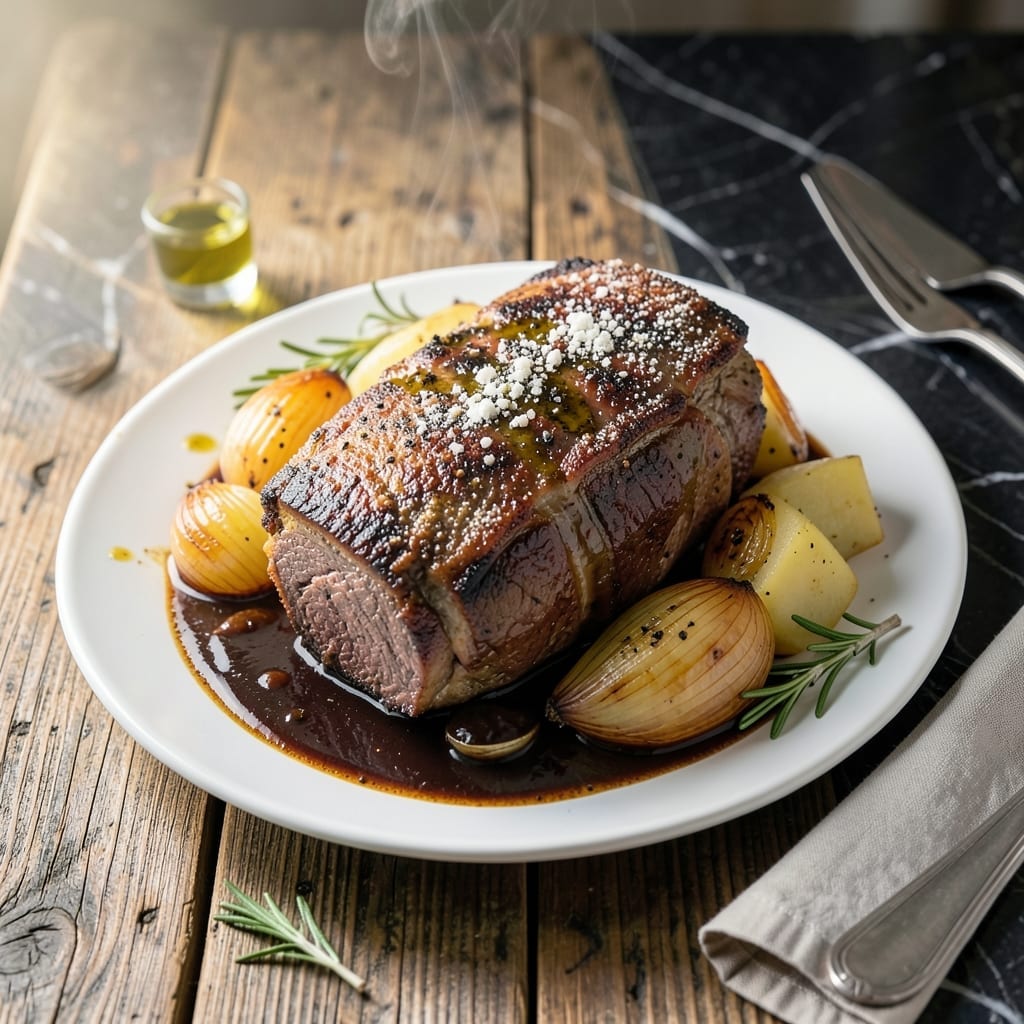
This Italian-inspired pot roast transforms tough cuts into fork-tender perfection through slow, gentle braising. The key is patience—low heat coaxes the beef into submission while rosemary and red wine build layers of flavor that define this dish.
I developed this method after years of testing, learning that proper browning and deglazing create the foundation for rich, complex gravy. The vegetables absorb the meaty essence, becoming as flavorful as the beef itself.
What emerges is a melt-in-your-mouth centerpiece with a sauce so deep it demands crusty bread for soaking up every drop. The rosemary adds an aromatic touch that makes this pot roast distinctly Italian.
Serve it with polenta or mashed potatoes to complete the meal. Here’s how to achieve these results at home.
Ingredients for Giada De Laurentiis Pot Roast
A handful of humble ingredients come together for this Italian-inspired braised masterpiece.
| Ingredient | Amount | Notes |
|---|---|---|
| Beef Chuck Roast 🥩 | 3 lb | Well-marbled, boneless preferred |
| Kosher Salt 🧂 | 2 tsp | Diamond Crystal preferred |
| Freshly Ground Black Pepper 🌶️ | 1 tsp | Coarse grind for texture |
| All-Purpose Flour 🌾 | ¼ cup | For dredging beef |
| Olive Oil 🫒 | 3 tbsp | Divided for browning and deglazing |
| Yellow Onions 🧅 | 2 whole | Medium-sized, roughly chopped |
| Carrots 🥕 | 4 whole | Peeled and cut into chunks |
| Celery Stalks 🌿 | 4 whole | Cut into large pieces |
| Garlic Cloves 🧄 | 6 cloves | Smashed for robust flavor |
| Fresh Rosemary Sprigs 🌿 | 3 pieces | Stems intact for removal |
| Dry Red Wine 🍷 | 2 cups | Bold variety like Chianti |
| Beef Broth 💧 | 2 cups | Low-sodium preferred |
| Tomato Paste 🍅 | 2 tbsp | For depth and richness |
| Bay Leaves 🍃 | 2 pieces | Dried, whole leaves |
The beef is everything here. Chuck roast with good marbling (look for those white fat streaks) transforms into buttery tenderness during the long braise. Whole Foods or Costco usually have well-marbled cuts—avoid lean ones like sirloin or they’ll dry out. Fresh rosemary matters too; Trader Joe’s or local farmers markets have the most fragrant bunches (don’t use the dried stuff).
Out of red wine? Extra beef broth plus a splash of balsamic vinegar gets you 80% there. No fresh rosemary? Dried rosemary at half the amount works, but add it later (it can get bitter). The tomato paste can be swapped for 2 tbsp ketchup in a pinch—not traditional, but it adds the same sweetness and depth. For the flour, all-purpose is ideal, but gluten-free blends work too (just whisk well).
Leftovers taste even better the next day. Store in an airtight container for up to 4 days in the fridge or freeze for 3 months. The gravy thickens as it cools—reheat gently with a splash of water or broth to loosen. Always remove the bay leaves before serving (they’re not edible, and nobody wants to bite into one).
Why You’ll Love This Recipe
- Set It and Forget: The chuck roast just does its thing in the oven while I do mine on the couch.
- Deep Umami: That flour crust in the olive oil locks in a richness that makes the beef taste like it slow-cooked all day.
- Feeds the Whole Table: I’ve served this for Sunday dinner and as leftovers in tacos the next night.
- Leftovers for Days: Honestly, the flavors taste even better reheated, and it stretches to four meals.
Step-by-Step Instructions for Italian-Inspired Braised Beef With Rosemary
Here’s the method I use for fall-apart tender beef every single time.
Step 1: Season and Sear the Beef Chuck Roast
Pat the 3 lb Beef Chuck Roast completely dry with paper towels. This is non-negotiable—wet meat won’t brown properly. Season aggressively with the 2 tsp Kosher Salt and 1 tsp Freshly Ground Black Pepper on all sides. The coarse grind of pepper adds a subtle texture that works beautifully with the long braise.
Dredge the roast in the 0.25 cup All-Purpose Flour, shaking off any excess. Heat 2 tbsp Olive Oil in a Dutch oven over medium-high heat until shimmering. Sear the roast for 4-5 minutes per side until deeply browned. You’re looking for a rich, mahogany crust—this develops the complex flavors that define the dish.
Step 2: Sauté the Aromatic Vegetables
Remove the roast and set aside. In the same Dutch oven, add the remaining 1 tbsp Olive Oil. Add the 2 whole Yellow Onions, 4 whole Carrots, and 4 whole Celery Stalks (all roughly chopped). Cook for 8-10 minutes, stirring occasionally, until the onions begin to soften and everything takes on some color.
Add the 6 cloves Garlic Cloves (smashed) and cook for 1 minute until fragrant. Then stir in the 2 tbsp Tomato Paste and cook for another 2 minutes. The tomato paste should deepen in color slightly—this caramelization adds incredible depth to the sauce.
Step 3: Deglaze and Begin the Braise
Pour in the 2 cups Dry Red Wine, scraping up all those beautiful browned bits from the bottom of the pot with a wooden spoon. Bring to a simmer and let it cook for 3-4 minutes until the liquid reduces by about half. You’ll start to smell the wine’s acidity mellow as it combines with the fond.
Return the roast to the pot. Add the 2 cups Beef Broth, 3 pieces Fresh Rosemary Sprigs, and 2 pieces Bay Leaves. The liquid should come about halfway up the roast. Bring to a gentle simmer, then cover tightly.
Step 4: Braise to Perfection
Transfer the covered pot to a preheated 325°F oven. Braise for 3 to 3½ hours, turning the roast every 45 minutes and basting with the juices. The beef is done when it shreds easily with a fork and the internal temperature reaches 195-200°F.
As it cooks, your kitchen will fill with the incredible aroma of rosemary and wine. The vegetables should be soft enough to crush with a spoon, and the braising liquid will have reduced to a rich, flavorful sauce that coats the back of a spoon.
Step 5: Rest and Serve
Carefully remove the roast from the pot and transfer to a cutting board. Let it rest for 15-20 minutes before slicing or pulling apart. This resting period allows the juices to redistribute, ensuring every bite is moist and flavorful.
Skim any excess fat from the surface of the sauce if desired. Remove the rosemary sprigs and bay leaves. Adjust seasoning with additional salt and pepper if needed. Serve the beef with the vegetables and sauce spooned over the top, ideally with crusty bread or polenta to soak up every last bit.
Pro Tips For Making Giada De Laurentiis Pot Roast
- Sear Until Dark: Get that crust deeply browned—about 4-5 minutes per side on medium-high heat. I learned this the hard way: pale searing means weak flavor in the final dish.
- Pat Beef Dry: Blot the chuck roast with paper towels before seasoning. Sounds tedious, but it guarantees the flour sticks and the sear crisps up properly.
- Skip Cold Oil: Heat the olive oil until it shimmers before adding the meat—about 2 minutes on medium-high. Cold oil just steams the beef instead of browning it.
- Use Enough Flour: Coat the roast thoroughly in flour, tapping off excess but not skimming. After burning a few batches, I realized skimping here leads to a thin, watery sauce.
Regional Styles of This Dish
Tuscan Tradition
In Tuscany, they use Chianti wine and add pancetta for depth. The rosemary is doubled, and they often include fennel bulb for a subtle anise note. I love how the wine reduces to a syrupy consistency that coats the beef beautifully. 🌿
Roman Variation
Roman cooks incorporate San Marzano tomatoes and porcini mushrooms for an earthier profile. They braise at a slightly lower temperature, 300°F, for a more delicate texture. The tomatoes add a bright acidity that balances the richness.
Sicilian Twist
Sicilian versions often include olives and capers for a briny punch. They use Nero d’Avola wine, which is bolder and fruitier than Chianti. The addition of orange zest at the end brightens the dish wonderfully.
Northern Italian Style
In the north, they prefer Barolo wine and add juniper berries for a piney aroma. The braising liquid is often finished with a splash of balsamic vinegar for a touch of sweetness. This version is richer and more complex.
Ligurian Approach
Ligurian cooks use white wine instead of red, and add pine nuts and sage for a nutty, herbal flavor. The result is lighter but still deeply flavorful. I find this version pairs perfectly with pesto pasta. 💛
Venetian Influence
Venetian pot roast often includes polenta in the braising liquid, which thickens the sauce naturally. They also add raisons for a touch of sweetness. The polenta soaks up all the delicious flavors, making every bite hearty.
Nutrition Facts
Frequently Asked Questions
What’s the best cut for this dish?
Use a well-marbled 3 lb beef chuck roast for the most tender results. The fat marbling melts during the long braise, keeping the meat juicy and flavorful. Avoid lean cuts like sirloin, as they tend to dry out.
Can I make this in a slow cooker?
Yes! Brown the meat first, then transfer everything to a slow cooker. Cook on low for 8-10 hours or high for 5-6 hours. The flavors will still develop beautifully, though the texture may be slightly less refined.
How do I know when it’s done?
The roast is ready when it shreds easily with a fork. For precision, use a meat thermometer—it should reach 195-200°F internally. This ensures the collagen has fully broken down.
What if my sauce is too thin?
Remove the beef and vegetables, then simmer the sauce uncovered for 10-15 minutes to reduce. For a quicker fix, mix 1 tbsp cornstarch with cold water and stir it in.

- 6 Oz Chocolate Chip Cookie Recipe: Perfectly Balanced Crispy Edges and Chewy Hearts - September 25, 2026
- 6-Inch Coffee Cake Recipe: Vanilla Bean Swirls and Buttery Streusel Topping - September 25, 2026
- 1 Hour Soup Recipe: Velvety Richness Without the Wait - September 25, 2026