
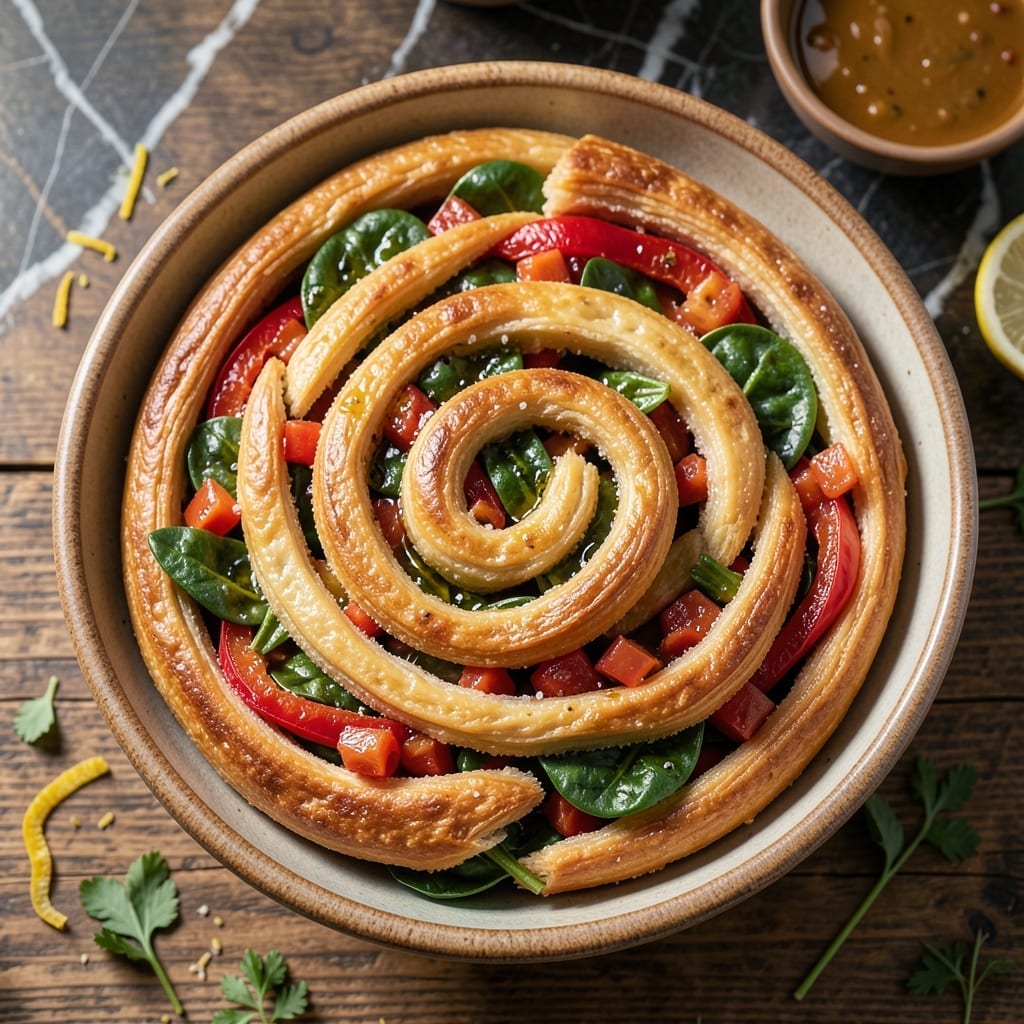
This gluten-free version of the classic Middle Eastern pastry delivers all the savory satisfaction without the wheat. The flaky crust still achieves that signature tender bite, while the spinach filling remains rich and aromatic.
With a few simple adaptations to traditional fatayer dough, you can enjoy these golden, savory pastries without compromise. The secret lies in the right gluten-free flour blend and proper resting time.
Ingredients for Gluten Free Fatayer
A flaky, golden crust wraps around a rich, aromatic spinach and herb filling. Nothing complicated here.
| Ingredient | Amount | Notes |
|---|---|---|
| Gluten-Free All-Purpose Flour Blend 🌾 | 2 ½ cups | Plus extra for dusting |
| Xanthan Gum 🧂 | 1 tsp | Omit if blend includes it |
| Active Dry Yeast 🍞 | 2 ¼ tsp | One packet, proofed in warm water |
| Granulated Sugar 🍚 | 1 tsp | To activate yeast |
| Warm Water 💧 | 1 cup | 110°F for proofing |
| Extra-Virgin Olive Oil 🫒 | ¼ cup | Plus extra for brushing |
| Plain Greek Yogurt 🥛 | ½ cup | Full-fat for tenderness |
| Fresh Spinach Leaves 🍃 | 10 oz | Blanched and finely chopped |
| Yellow Onion 🧅 | 1 whole | Finely diced for filling |
| Garlic Cloves 🧄 | 3 cloves | Minced for filling |
| Lemon Juice 🍋 | 2 tbsp | Freshly squeezed for brightness |
| Ground Sumac 🌶️ | 1 tsp | For Middle Eastern tang |
| Salt 🧂 | 1 ½ tsp | Divided between dough and filling |
| Ground Black Pepper 🌶️ | ½ tsp | Freshly ground preferred |
| Crumbled Feta Cheese 🧀 | ½ cup | Optional, omit for vegan version |
The gluten-free flour blend is critical—Bob’s Red Mill 1-to-1 or King Arthur Measure for Measure work best. Xanthan gum is usually included, but check your bag (if not, add it). Yeast needs to be fresh—test it in the warm water with sugar first. If it doesn’t bubble within 5 minutes, start over. Whole Foods carries excellent GF flours if your regular store’s selection is limited.
No Greek yogurt? Sour cream at equal volume works, or use dairy-free yogurt for a vegan twist. Spinach can be frozen (thaw and drain well—squeeze out all the water), but fresh has better texture. Sumac is the signature spice here; if you can’t find it, a pinch of lemon zest plus paprika gets you close. Feta adds saltiness, so taste before adding extra salt to the filling.
Dough rests 30 minutes at room temp—don’t skip this. Baked fatayer keep 3 days in an airtight container (reheat in oven to crisp). Freeze unbaked pastries on a tray, then transfer to bags for up to 2 months. Always thaw before baking.
Why You’ll Love This Recipe
- One Bowl Wonder: I mix the dry yeast with warm water and sugar, then dump in the gluten-free flour and xanthan gum—no fancy steps, just stir and rest.
- Buttery, Flaky Bite: Honestly, the yeast gives it that light, airy texture I missed in gluten-free baking, and the edges get just crisp enough to satisfy.
- Feeds a Crowd: Between us, I make a double batch and freeze half—perfect for unexpected guests or a last-minute lunchbox treat.
- Budget Stretch: A bag of gluten-free flour and a packet of yeast go a long way here. I’ll be real: it costs pennies per piece compared to store-bought.
Step-by-Step Instructions for Gluten Free Fatayer
Here’s how I make these savory pastries with perfect texture and irresistible filling every time.
Step 1: Proof the Yeast and Mix the Dough
In a small bowl, combine the 2.25 tsp active dry yeast, 1 tsp granulated sugar, and 1 cup warm water. Stir gently and let it sit for 5-7 minutes until the mixture becomes frothy and cloudy. This froth confirms the yeast is active and ready to work its magic.
In a large mixing bowl, whisk together the 2.5 cups gluten-free all-purpose flour blend and 1 tsp xanthan gum until evenly combined. Make a well in the center and add the proofed yeast mixture, 0.25 cup extra-virgin olive oil, and 0.5 cup plain Greek yogurt. Stir until a soft, sticky dough forms.
The dough will be tackier than traditional wheat dough, but this is normal for gluten-free baking. Resist the urge to add more flour—it will firm up as it rests.
Step 2: Prepare the Spinach Filling
Heat a large skillet over medium heat and add the finely diced yellow onion. Sauté for 4-5 minutes until soft and translucent. Add the minced 3 cloves garlic cloves and cook for 1 minute until fragrant, stirring constantly to prevent burning.
Add the blanched and finely chopped 10 oz fresh spinach leaves, 1.5 tsp salt, and 0.5 tsp ground black pepper. Cook for 3-4 minutes until the spinach releases its moisture and it evaporates. Remove from heat and stir in the 2 tbsp lemon juice, 1 tsp ground sumac, and 0.5 cup crumbled feta cheese. Let the filling cool completely before assembling.
Step 3: Shape and Fill the Pastries
Divide the rested dough into 12 equal portions (about the size of a golf ball). On a surface dusted lightly with extra gluten-free all-purpose flour blend, roll each portion into a thin circle, roughly 4-5 inches in diameter. Keep the remaining dough covered to prevent drying out.
Place 1 tablespoon of the cooled spinach filling in the center of each dough circle. Fold the edges up and over the filling, pinching gently to create a triangular shape with the filling partially exposed in the center. This traditionalopen-faced style is what makes fatayer so visually appealing.
Step 4: Bake to Golden Perfection
Preheat your oven to 375°F and line a baking sheet with parchment paper. Arrange the filled pastries on the prepared sheet, leaving about 1 inch between each one. Brush the exposed dough lightly with extra extra-virgin olive oil to encourage browning.
Bake for 20-25 minutes until the dough is golden brown and the edges are crisp. The filling should be heated through, and the exposed spinach will develop a slight char, adding depth of flavor. Rotate the pan halfway through baking for even browning.
Step 5: Cool and Serve Warm
Remove the fatayer from the oven and let them cool on the baking sheet for 5 minutes. This brief rest allows the dough to set slightly, making them easier to handle. The filling will still be wonderfully warm and aromatic.
Transfer to a serving platter and enjoy while still warm. The contrast of the crisp, golden dough with the tangy, savory spinach and feta filling is what makes these pastries so addictive. Serve with a side of labneh or a simple cucumber-tomato salad for a complete meal.
Pro Tips For Making Gluten Free Fatayer
- Activate the Yeast: Use warm water at exactly 110°F—any hotter kills the yeast, any cooler and it won’t rise. I learned this the hard way after my first three batches stayed flat.
- Add Xanthan Gum: Mix 1 teaspoon of xanthan gum per cup of gluten-free flour blend to mimic gluten’s elasticity. Skip it and your fatayer will crumble apart.
- Rest the Dough: Let the dough rise for at least 1 hour in a warm spot—covered with a damp towel. Rushing this step leaves the dough dense and gummy.
- Pre-bake the Shells: Blind-bake the fatayer shells for 8-10 minutes before adding fillings to prevent soggy bottoms. Sounds tedious, but it’s the only way to get that crisp base.
Best Sauces and Condiments for This Recipe
Garlic Yogurt Sauce
Mix 1 cup plain Greek yogurt with 2 minced garlic cloves, 1 tbsp lemon juice, and ½ tsp salt. This creamy sauce balances the savory filling beautifully. I always make extra—it disappears fast. 💛
Tahini Drizzle
Whisk ¼ cup tahini with 2 tbsp warm water, 1 tbsp lemon juice, and ½ tsp ground cumin. The nutty richness complements the sumac in the filling perfectly.
Spicy Harissa Dip
Combine 2 tbsp harissa paste with ¼ cup olive oil and 1 tsp honey. This North African condiment adds a smoky kick that cuts through the feta’s saltiness.
Lemon-Tahini Yogurt
Blend ½ cup yogurt, 2 tbsp tahini, 1 tbsp lemon juice, and 1 minced garlic clove. The tangy depth makes every bite of fatayer more vibrant. 🌟
Herbed Labneh
Strain 1 cup yogurt overnight, then mix with 1 tbsp chopped mint, 1 tbsp olive oil, and ½ tsp salt. Serve as a spread for a refreshing contrast.
Pomegranate Molasses
Drizzle 1-2 tbsp pomegranate molasses over warm fatayer for a sweet-tart finish. The glossy sheen makes the pastries look as good as they taste.
Nutrition Facts
Frequently Asked Questions
Can I use a different gluten-free flour blend?
Yes, but stick to 1-to-1 blends like King Arthur or Bob’s Red Mill. Avoid single flours like almond or coconut, as they lack the structure needed.
Why is my dough too sticky?
Gluten-free dough is naturally tackier. Don’t add extra flour—let it rest 30 minutes to firm up. Use wet hands to handle it more easily.
Can I make these ahead of time?
Shape and fill the pastries, then freeze on a tray before baking. Store in bags for up to 2 months. Bake from frozen, adding 5 minutes.
What if I don’t have sumac?
Substitute with ½ tsp lemon zest and ½ tsp paprika for a similar tangy kick. The flavor won’t be identical but still delicious.

- 4C Bread Crumbs Meatballs Recipe: Crispy Crust and Juicy Centers - September 25, 2026
- 6 Oz Chocolate Chip Cookie Recipe: Perfectly Balanced Crispy Edges and Chewy Hearts - September 25, 2026
- 6-Inch Coffee Cake Recipe: Vanilla Bean Swirls and Buttery Streusel Topping - September 25, 2026