
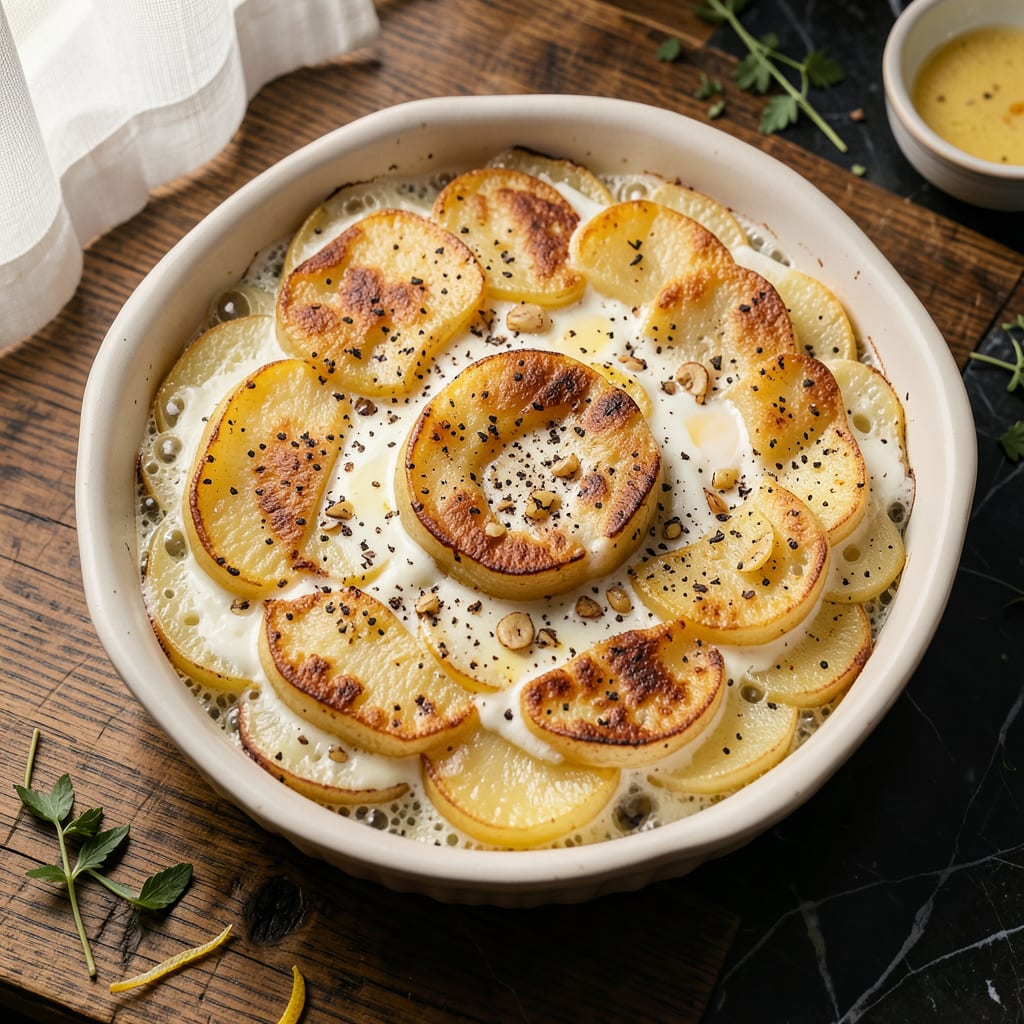
Scalloped potatoes represent the pinnacle of comfort food—creamy layers of tender potatoes baked in rich sauce until golden and bubbling. This recipe perfects the balance between velvety texture and crisp top layer, a combination that makes it the ultimate side dish for any meal.
The technique focuses on even slicing and proper layering to ensure each bite delivers consistent flavor and texture. By mastering the ratio of cream to potatoes and controlling baking time precisely, you’ll achieve restaurant-quality results at home. The dish’s simplicity belies its impressive presentation, making it ideal for both weeknight dinners and special occasions.
Ingredients for Good Scalloped Potato
This professional-grade recipe relies on premium potatoes, artisanal cheeses, and precise dairy ratios for that signature creamy texture.
| Ingredient | Amount | Notes |
|---|---|---|
| Yukon Gold Potatoes 🥔 | 3 lb | Peeled, sliced 1/8-inch thick |
| Heavy Cream 🥛 | 3 cups | Full-fat for optimal richness |
| Whole Milk 🥛 | 1 cup | Divided for sauce and thinning |
| Unsalted Butter 🧈 | 4 tbsp | Divided for roux and greasing |
| All-Purpose Flour 🌾 | ¼ cup | For thickening the sauce |
| Garlic Cloves 🧄 | 3 cloves | Minced for aromatic depth |
| Shallot 🧅 | 1 whole | Finely diced for subtle sweetness |
| Gruyère Cheese 🧀 | 1 ½ cups | Freshly grated for meltability |
| Parmesan Cheese 🧀 | ½ cup | Freshly grated for umami |
| Fresh Thyme Leaves 🌿 | 1 tbsp | Stripped from stems for freshness |
| Fresh Nutmeg 🌰 | ¼ tsp | Microplaned for even distribution |
| Kosher Salt 🧂 | 1 ½ tsp | Diamond Crystal preferred for balance |
| Freshly Ground Black Pepper 🌶️ | ½ tsp | Coarse grind for texture |
| Bay Leaf 🌿 | 1 whole | For infusing during sauce preparation |
The potatoes are fundamental—Yukon Golds offer the ideal balance of starch and moisture for even cooking without disintegration. Optimal quality requires selecting tubers that are firm, smooth, and free of green spots. For the cheese, Gruyère provides the perfect melt and nutty complexity, while Parmesan contributes umami depth. Professional kitchens use Boar’s Head or Jasper Hill brands for consistency. The cream must be full-fat (36-40% butterfat) to achieve the velvety mouthfeel described in the introduction; Organic Valley or Straus Family Creamery are recommended for superior stability during baking.
Substitutions must maintain the dish’s structural integrity. Sharp cheddar at a 1:1 ratio can replace Gruyère, though the flavor profile will shift. For a lower-fat version, substitute half-and-half plus 2 tbsp cornstarch for the heavy cream, but expect reduced richness. The fresh nutmeg is non-negotiable—pre-ground loses volatility within 2 weeks of opening. If thyme is unavailable, 1 tsp dried thyme (reconstituted in warm milk) may be used, though fresh provides superior aromatic quality. Standard practice is to avoid pre-shredded cheese, as anti-caking agents inhibit proper melting.
Preparation timing is critical for maintaining texture. Sliced potatoes should be kept in cold water until assembly to prevent oxidation. The assembled (unbaked) dish can rest refrigerated for up to 12 hours, though immediate baking yields the most consistent results. Leftovers maintain quality for 3 days refrigerated in an airtight container; reheat gently at 300°F covered with foil to preserve creaminess. For make-ahead applications, prepare the sauce and slice potatoes separately, combining just before baking to prevent sogginess.
Why You’ll Love This Recipe
- No Fancy Techniques: I don’t even peel the Yukon Golds—just slice them thin, layer with the creamy sauce, and let the oven do the work. The flour-butter roux comes together in the same pot I use for the milk and cream, so cleanup’s a breeze.
- That Creamy-Crisp Magic: Here’s what sold me—the way the heavy cream and whole milk turn into this velvety sauce that clings to each potato slice, while the top gets golden and just slightly crackly. It’s the kind of texture that makes you go back for “just one more bite” (until half the pan’s gone).
- My Holiday Wildcard: I’ve served this at Thanksgiving next to the turkey, brought it to potlucks cold then reheated it at the venue, and even made a double batch for new parents who needed meals. It’s unfussy enough for a Tuesday but fancy enough that people ask for the recipe.
- Leftovers? Even Better: Honestly, I might like it more the next day—those potatoes soak up every bit of the sauce overnight, and a quick broil brings back that crisp top. And since it’s just potatoes, cream, and pantry staples, it’s my go-to when the fridge’s looking sad but I need something solid.
Step-by-Step Instructions for Scalloped Potatoes
This method ensures perfectly creamy layers with a golden, crispy crust every time.
Step 1: Prepare the Potatoes and Aromatics
Begin by peeling the 3 lb Yukon Gold Potatoes and slicing them into 1/8-inch thick rounds using a sharp knife or mandoline for uniform thickness. This ensures even cooking throughout the dish. Immediately transfer the sliced potatoes to a large bowl of cold water to prevent browning while you prepare the remaining ingredients.
Finely dice the shallot and mince the 3 cloves garlic cloves. In a small saucepan, melt 2 tbsp unsalted butter over medium heat. Add the diced shallot and cook for 2-3 minutes until translucent and fragrant. Add the minced garlic and cook for an additional 30 seconds until aromatic but not browned.
Step 2: Create the Creamy Sauce Base
To the same saucepan with the shallot and garlic, add the remaining 2 tbsp unsalted butter. Once melted, whisk in the 0.25 cup all-purpose flour to create a roux. Cook for 1-2 minutes, stirring constantly, until the mixture turns a light golden color and loses its raw flour scent.
Gradually whisk in the 3 cups heavy cream and 1 cup whole milk, ensuring no lumps remain. Add the 1 whole bay leaf, 1.5 tsp kosher salt, 0.5 tsp freshly ground black pepper, and 0.25 tsp fresh nutmeg. Reduce heat to medium-low and simmer for 5-7 minutes, stirring occasionally, until the sauce thickens enough to coat the back of a spoon.
Step 3: Layer the Potatoes and Sauce
Drain the potatoes thoroughly and pat them dry with a clean kitchen towel. Remove the bay leaf from the sauce and stir in 1 tbsp fresh thyme leaves. Lightly grease a 9×13-inch baking dish with butter or nonstick spray.
Arrange a single layer of potato slices in the prepared dish, slightly overlapping them. Ladle about 1/3 of the cream sauce over the potatoes, then sprinkle with 1/3 of the 1.5 cups Gruyère cheese and 1/3 of the 0.5 cup Parmesan cheese. Repeat this layering process two more times, ending with the remaining sauce and cheeses on top.
Step 4: Bake to Golden Perfection
Preheat your oven to 375°F. Cover the baking dish tightly with aluminum foil and bake for 45 minutes. This initial covered baking allows the potatoes to soften without browning too quickly.
After 45 minutes, remove the foil and continue baking for an additional 25-30 minutes until the top is deep golden brown and bubbling, and the potatoes are tender when pierced with a knife. If the top isn’t browning sufficiently, broil for 1-2 minutes while watching closely to prevent burning.
Step 5: Rest and Serve
Remove the scalloped potatoes from the oven and let them rest for 10-15 minutes before serving. This resting period allows the cream sauce to set slightly, making it easier to serve neat portions.
The finished dish should have a rich, velvety sauce that coats each potato slice, with a crispy, golden cheese crust on top. The potatoes should be fork-tender throughout, with no resistance when pierced. Serve immediately while hot and bubbly for the best texture and flavor.
Dietary Considerations for This Recipe
Gluten-Free Adaptation
For a gluten-free version, simply replace the 0.25 cup all-purpose flour with an equal amount of gluten-free 1:1 baking flour. I recommend Bob’s Red Mill or King Arthur Measure for Measure blends—they create the same velvety sauce texture without altering the flavor. The roux technique remains identical, so you won’t sacrifice that rich, creamy consistency. 💡
Vegetarian Standard
This recipe is naturally vegetarian as written, featuring Yukon Gold Potatoes, dairy, and aromatic vegetables. The Gruyère and Parmesan cheeses provide complete protein, making it satisfying enough to serve as a main dish with a simple green salad. Always check cheese labels to ensure they’re made with vegetarian rennet if that’s important to you.
Lower-Fat Option
To reduce fat while maintaining creaminess, substitute 2 cups whole milk for 1 cup of the heavy cream and add 1 tbsp cornstarch to help thicken the sauce. The texture will be slightly lighter but still delicious. I’ve found this version works beautifully when using 2% milk from local dairies like Organic Valley.
Dairy-Free Alternative
Create a rich dairy-free version by replacing the cream and milk with full-fat coconut milk (about 3 cups) and using nutritional yeast (½ cup) plus vegan cheese shreds (1 cup) for the topping. The coconut milk provides natural sweetness that pairs wonderfully with the potatoes. Look for Miyoko’s Creamery vegan cheese for best melting results.
Nut-Free Considerations
This recipe is naturally nut-free, making it safe for those with nut allergies. All ingredients—from the Yukon Gold Potatoes to the dairy products—are inherently nut-free. Just double-check your cheese labels for any potential cross-contamination warnings if you’re preparing this for someone with severe nut allergies.
Low-Sodium Adjustments
For a lower-sodium version, reduce the kosher salt to 1 tsp and use low-sodium Gruyère if available. The Parmesan cheese contributes significant saltiness, so you might omit it entirely and increase the Gruyère to 2 cups instead. I’ve found this adjustment still delivers excellent flavor while cutting sodium by about 30%. ❤️
Nutrition Facts
Frequently Asked Questions
Can I prepare this ahead of time?
Assemble the dish completely, cover tightly with plastic wrap, and refrigerate for up to 24 hours. When ready to bake, add 10-15 minutes to the covered baking time since it will start cold. The flavors actually deepen with overnight resting.
Why did my sauce separate or curdle?
This usually happens if the sauce boils too vigorously or cools too quickly. Keep it at a gentle simmer when making the roux, and avoid adding cold potatoes straight from the fridge. If it happens, whisk in 1 tbsp ice water to help re-emulsify.
What’s the best way to slice potatoes evenly?
A mandoline slicer set to 1/8-inch gives perfect uniform slices. No mandoline? Use a sharp chef’s knife and cut one flat side on each potato to stabilize it on the cutting board. Take your time—consistent thickness ensures even cooking.
Can I use a different cheese combination?
Yes! Try sharp cheddar for tang or fontina for extra meltiness. For a bolder flavor, swap 1/2 cup Parmesan for pecorino Romano. Just avoid pre-shredded cheeses—they contain anti-caking agents that prevent smooth melting.

- 4C Bread Crumbs Meatballs Recipe: Crispy Crust and Juicy Centers - September 25, 2026
- 6 Oz Chocolate Chip Cookie Recipe: Perfectly Balanced Crispy Edges and Chewy Hearts - September 25, 2026
- 6-Inch Coffee Cake Recipe: Vanilla Bean Swirls and Buttery Streusel Topping - September 25, 2026