
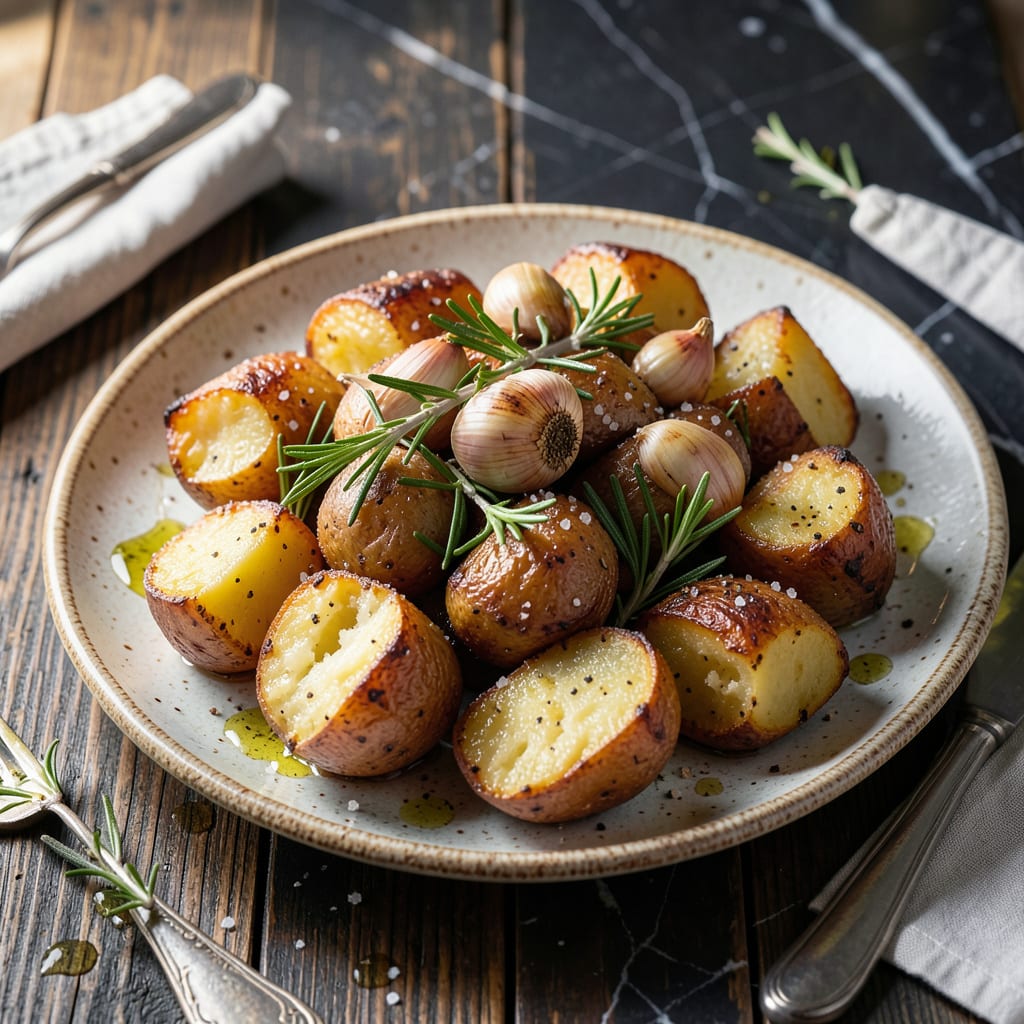
These potatoes deliver the crispy edges and golden perfection that define exceptional roasting. Goose fat creates a rich, flavorful crust that can’t be matched by other oils.
The method is simple but precise: parboiling the potatoes first, then roasting at high heat. This guarantees a crispy exterior with fluffy centers every time.
Ingredients for Goose Fat Roast Potatoes
Russet potatoes and goose fat create that signature crispy, golden crust with fluffy interiors.
| Ingredient | Amount | Notes |
|---|---|---|
| Russet Potatoes 🥔 | 2 ½ lb | Peeled and cut into chunks |
| Goose Fat 🫒 | ½ cup | Rendered and melted |
| Kosher Salt 🧂 | 1 ½ tsp | Diamond Crystal preferred |
| Freshly Ground Black Pepper 🌶️ | 1 tsp | Coarse grind for texture |
| Fresh Rosemary Sprigs 🌿 | 4 pieces | Leaves stripped and chopped |
| Garlic Cloves 🧄 | 6 cloves | Peeled and smashed |
| Semolina Flour 🌾 | 2 tbsp | For extra crispiness |
| Baking Powder 🧂 | ½ tsp | Enhances exterior crisp |
| Dijon Mustard 🟡 | 1 tbsp | Optional for depth |
| Fresh Thyme Sprigs 🌿 | 4 pieces | Optional for garnish |
The potatoes are non-negotiable—Russets are the gold standard for roasting due to their high starch content and low moisture, which guarantees that ultra-crispy exterior. Goose fat is the star here; D’Artagnan or Fatworks offer excellent rendered versions if you don’t render your own. Look for pure, unadulterated fat with no additives. The semolina flour is a professional trick—Bob’s Red Mill carries it in most grocery stores.
No goose fat? Duck fat is the closest substitute, though slightly richer. For a more accessible option, avocado oil or ghee works in a pinch (but won’t deliver the same depth). Swap rosemary for fresh thyme or sage if preferred. The baking powder might seem odd, but it’s key for that extra-crispy crust—don’t skip it. If you’re out of Dijon, a teaspoon of whole-grain mustard adds a nice tang.
Parboiled potatoes can sit in the colander for up to 30 minutes before roasting. Store goose fat in the fridge for up to 6 months. Leftovers reheat beautifully in a 400°F oven for 10-15 minutes—microwaving will make them soggy.
Why You’ll Love This Recipe
- One Pan Magic: I just toss the potatoes with melted goose fat, salt, pepper, and rosemary—then let the oven do the work.
- Crispy & Rich: That goose fat gives them a golden, crackling crust with a fluffy center that’s honestly irresistible.
- Holiday or Tuesday: I serve these with roast chicken on Sundays, but they’re just as good with a weeknight steak.
- Better the Next Day: Leftovers? Cold, they’re still amazing in salads or reheated for breakfast with an egg on top.
Step-by-Step Instructions for Goose Fat Roast Potatoes
Master the technique for achieving ultra-crispy edges and golden perfection with this method.
Step 1: Prepare the Potatoes for Maximum Crispiness
Peel the 2.5 lb Russet Potatoes and cut them into even 2-3 inch chunks. I prefer larger pieces as they yield a crispy exterior with a fluffy interior. Rinse the chunks under cold water to remove excess starch, which helps achieve extra crispiness.
Bring a large pot of salted water to a boil. Add the potato chunks and parboil for 8-10 minutes until the edges just begin to soften but the centers remain firm. Drain thoroughly and return the potatoes to the pot. Shake vigorously to rough up the edges—this creates more surface area for crisping.
Step 2: Season and Coat with Flavor-Enhancing Mixture
While the potatoes are still warm, add the 2 tbsp Semolina Flour, 0.5 tsp Baking Powder, 1.5 tsp Kosher Salt, and 1 tsp Freshly Ground Black Pepper. The baking powder reacts with the potato starch to create an ultra-crispy crust, while semolina adds texture.
Strip the leaves from the 4 pieces Fresh Rosemary Sprigs and chop finely. Smash the 6 cloves Garlic Cloves with the side of your knife. Add the chopped rosemary and smashed garlic to the potatoes and toss to coat evenly. The garlic will infuse the oil with its aroma as it roasts.
Step 3: Roast in Goose Fat for Ultimate Crispiness
Preheat your oven to 425°F. Place the 0.5 cup Goose Fat in a large roasting pan and put it in the oven for 5 minutes to heat. The goose fat must be very hot—it should shimmer but not smoke. Carefully add the seasoned potatoes to the pan, turning to coat them thoroughly in the fat.
Roast for 45-50 minutes, turning the potatoes every 15-20 minutes, until they’re deep golden brown and crispy all over. The edges should be crisp enough to resist when pierced with a fork. The goose fat creates an unmatched richness and crispness that other fats simply can’t replicate.
Step 4: Finish with Optional Depth and Garnish
If using, stir the 1 tbsp Dijon Mustard into the pan during the last 10 minutes of roasting. The mustard adds a subtle tang and depth of flavor that complements the richness of the goose fat. Toss the potatoes to coat evenly in the mustard-infused fat.
Once roasted to perfection, transfer the potatoes to a serving dish. Strip the leaves from the 4 pieces Fresh Thyme Sprigs and sprinkle them over the potatoes as a garnish if desired. Serve immediately while the exterior is at its crispiest. The contrast between the crispy exterior and fluffy interior makes these potatoes irresistible.
Pro Tips For Making Goose Fat Roast Potatoes
- Parboil First: Boil the russets for 8-10 minutes before roasting—they’ll collapse slightly at the edges, creating more surface area for that crispy goose fat crust.
- Heat the Fat: Put the goose fat in the roasting tin and let it get screaming hot in the oven for 5 minutes before adding the potatoes—this prevents soggy spuds.
- Dry Thoroughly: After parboiling, let the potatoes steam-dry in the colander for 5 minutes, then give them a rough shake to fluff the edges—this is what makes them extra crispy.
- Use Enough Fat: Don’t skimp—coat the potatoes generously in the hot goose fat so every nook gets a golden, crackling finish. I learned this the hard way after too many dry batches.
Health Benefits of These Flavors
Rich in Healthy Fats
Goose fat contains a high proportion of monounsaturated fats, which support heart health and help lower bad cholesterol. About 55% of its fatty acids are heart-healthy, similar to olive oil. I love that it adds depth of flavor while offering nutritional benefits. 💪
Vitamin A Source
This fat is one of the few cooking fats naturally rich in vitamin A, with 1 tbsp providing about 10% of your daily needs. Vitamin A supports immune function and eye health. The golden color of roasted potatoes comes partly from this nutrient.
High Smoke Point
With a smoke point around 375°F, goose fat remains stable at high roasting temperatures. This prevents the formation of harmful compounds that can occur with some oils when overheated. Your potatoes will crisp beautifully without any bitter aftertaste.
Energy Boost
The caloric density of goose fat makes it an excellent energy source—about 115 calories per tbsp. This sustained energy release is ideal for active days. I notice I feel more satisfied after meals prepared with it.
Fat-Soluble Vitamins
Using goose fat helps your body absorb fat-soluble vitamins (A, D, E, K) from the potatoes and other ingredients. This is particularly valuable with rosemary, which contains vitamin K. The combination maximizes nutritional uptake. ✨
Minimal Processing
Unlike many commercial cooking oils, traditional rendered goose fat undergoes minimal processing. This preserves its natural nutrients and flavor. Brands like D’Artagnan or Fatworks offer high-quality options with no additives.
Nutrition Facts
Frequently Asked Questions
Can I use another fat if I don’t have goose fat?
Duck fat is the closest substitute with similar richness. For a more accessible option, try avocado oil or ghee, though they won’t deliver the same depth of flavor.
Why do the potatoes need to be parboiled first?
Parboiling softens the edges while keeping centers firm. This creates more surface area when shaken, ensuring maximum crispiness during roasting at 425°F.
How do I prevent soggy leftovers?
Reheat in a 400°F oven for 10-15 minutes to restore crispiness. Avoid microwaving, which will make them mushy.
What’s the purpose of baking powder in the recipe?
It reacts with potato starch to create an extra-crispy crust. This professional trick enhances the texture without altering flavor.

- 8 Bean Soup Recipe Crock Pot: Hearty Vegetable Medley in One Pot - September 25, 2026
- 4C Bread Crumbs Meatballs Recipe: Crispy Crust and Juicy Centers - September 25, 2026
- 6 Oz Chocolate Chip Cookie Recipe: Perfectly Balanced Crispy Edges and Chewy Hearts - September 25, 2026